




Josef Fares Talks AI Limits And Creative Control At Hazelight
 Games
Games Xbox
Xbox PlayStation
 Steam
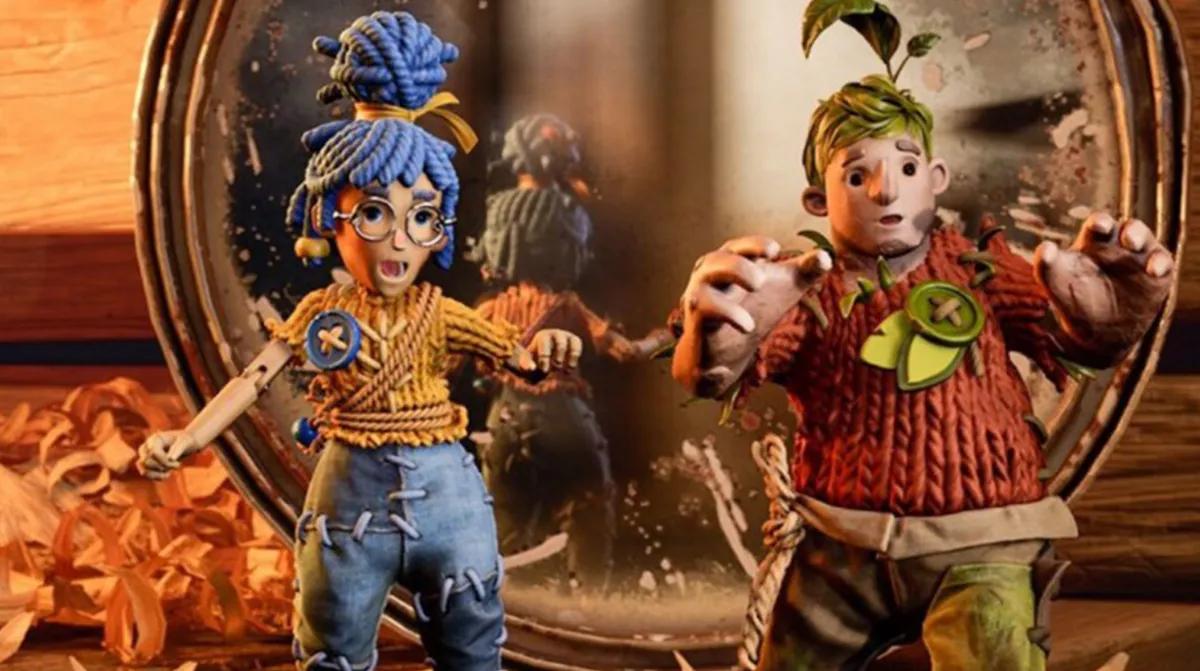
SteamIt Takes Two sits at the center of Josef Fares’ argument about authorship in games. I see it not as a slogan but as proof. Hazelight’s co-op hit has sold more than 27 million copies, and its success frames how Fares talks about artificial intelligence, trends, and creative control. When he discusses AI now, he does so from the position of a director whose games rely on deliberate design choices that resist automation.
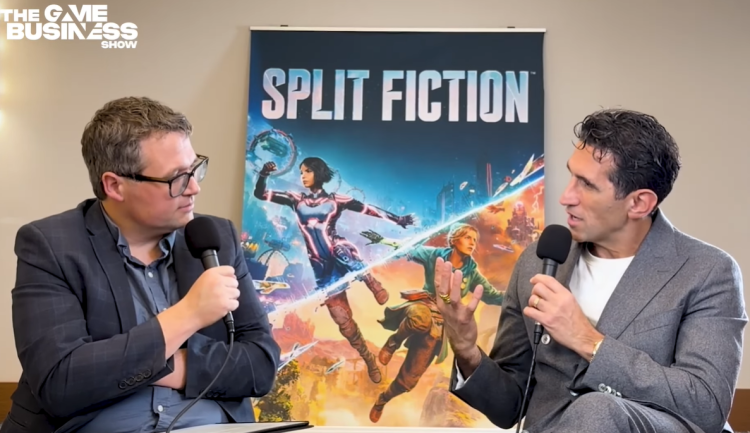
I followed his recent comments during an interview with The Game Business, where he addressed the growing presence of AI in development. He did not dismiss the technology. He also did not embrace it as a replacement for people. His view lands between those poles, grounded in experience rather than speculation.
“We have been working with AI for a long time in game development,” Fares said.
He framed AI as a tool that already exists inside production pipelines, especially in technical and support roles. If an AI system helps teams express a vision faster or more clearly, he sees no reason to reject it. That acceptance stops at generative AI, which he described as the point where concerns begin.
“The problem is the generative AI,” he said.
Fares did not tie that concern to fear of job loss or disruption. Instead, he questioned the ceiling of what generative systems can actually produce. He pointed to Midjourney as an example of a tool that arrived with force and then appeared to plateau.
“When it came out it was so impressive. And five years later… the bar hasn’t gone up much,” he said. “Maybe this is the limit of it.”
I read this less as skepticism and more as caution. Fares acknowledged how easy it is to project dramatic futures onto early technology demos. He challenged the idea that exponential improvement is guaranteed.
“You get someone generating a game concept and saying, ‘oh look what might happen in five years?’ But who knows? In five years, maybe it’s going to be like Midjourney… not much better.”
Despite that uncertainty, he returned to a consistent point. Tools do not replace authorship. Someone still defines the game.
“At the end of the day, you still need someone who has a vision or idea of what game it is. I don’t see AI taking over,” he said. He paused, then added, “But it’s really hard to answer. Who knows what happens in the future?”
That mix of confidence and restraint runs through Hazelight’s history. The studio launched with A Way Out in 2018, a co-op-only narrative game that many publishers had warned against. It sold 12 million copies. It Takes Two followed in 2021 and exceeded expectations again. Split Fiction, released last year, reached four million sales within two months.
I played It Takes Two on a couch, the way it was designed to be played, and the design philosophy is obvious. Mechanics are built around two people sharing responsibility. The game resists shortcuts. That resistance also appears in Hazelight’s business decisions.
Fares has repeatedly said he will never take Hazelight public.
“I will never put Hazelight on the market,” he said. “Because you have to make stupid decisions to make the financials.”
He described Hazelight’s internal balance as a constant negotiation between creative ambition and commercial reality. The Friend Pass system came from that thinking. Only one player needs to own the game for two people to play online. The idea started as a creative principle, then proved commercially effective.
“I felt that if you are playing together on a couch, you shouldn’t pay extra if you’re playing online with someone,” he said. “That didn’t make sense.”
That same clarity shows up in his comments about publishers and scale. Hazelight has worked with EA since the start, and Fares defended the relationship. He said EA “gets more shit than they deserve” and described the people he works with there as gamers rather than corporate overseers. He made clear that Hazelight retains control over its games.
His concern lies elsewhere. He worries about the industry’s habit of chasing trends, especially after the recent attention on AA-scale successes.
“I would not be able to live without a AAA title,” he said.
He argued that large-budget games still matter, both creatively and culturally. He rejected the idea that innovation disappears at scale, pointing to studios like Rockstar, Nintendo, and Naughty Dog as evidence that risk-taking can survive high budgets.
“But once you go over a $100 million dollar budget, you’re going to be like, ‘okay, shit. There’s a lot of money on the table’,” he said.
He called that fear understandable, not inevitable.
Hazelight itself remains relatively small, with around 80 employees. Fares said there are no plans to expand significantly. The studio is already working on its next project, which he described with unusual confidence.
“I can easily say that our next game is better than Split Fiction,” he said.
That confidence does not come from technology promises. It comes from process. Fares described Hazelight’s internal culture as one that pushes people past self-imposed limits. He used blunt language, but the idea was simple: remove fear, encourage exploration, then take responsibility for the result.
For Fares, AI does not change that equation. It may accelerate parts of development. It may assist with production. It does not replace judgment, taste, or intent. Those still sit with people who decide what a game should be.
As conversations about AI grow louder, his position feels grounded in evidence rather than anxiety. It Takes Two did not succeed because of tools. It succeeded because of a clear idea executed without compromise. That, more than any algorithm, remains Hazelight’s advantage.


 Successfully copied... Thank you for sharing our content!:



5% deposit bonus up to 100 gems

a free Gift Case




EGAMERSW - get 11% Deposit Bonus + Bonus Wheel free spin


EXTRA 10% DEPOSIT BONUS + free 2 spins

3 Free Cases + 100% up to 100 Coins on First Deposit


5 Free Cases, Daily FREE & Welcome Bonuses up to 35%

3 free cases and a 5% bonus added to all cash deposits.

+5% to deposit




Comments