




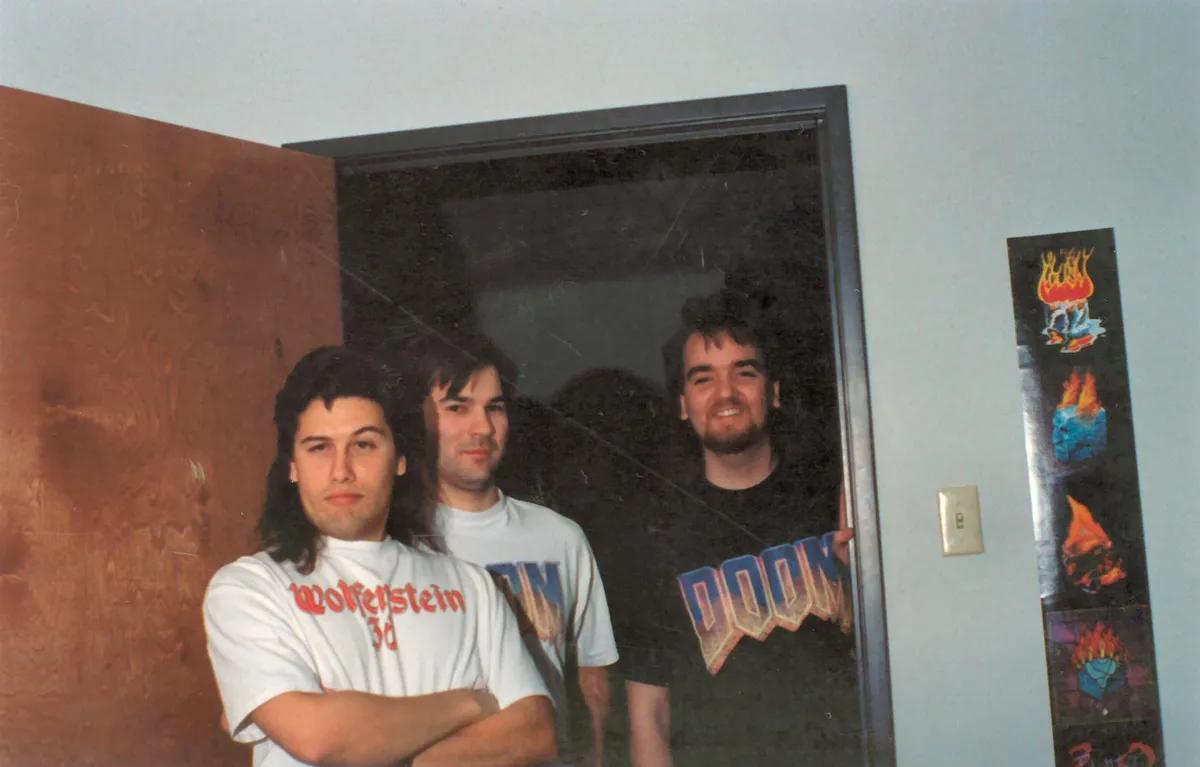
Quake at 30: Discussion With Apologies Between Carmack, Petersen, and Romero
The 30th anniversary of Quake passed on June 22, 2026, and three of id Software's principals from that period used the occasion to revisit how the game broke up the studio. Sandy Petersen, who joined id in 1993, started it with a post on X stating that Quake ruined id Software.
Petersen called Quake an amazing feat of art, programming, and design, and credited the whole team for fulfilling their tasks. The cost, he said, was spiritual. He listed everyone who left within a couple of years of finishing the game: John Romero, Shawn Green, Dave Taylor, Mike Abrash, American McGee, and himself. Some were forced out, some left willingly. His point was that all of them went on to long careers, so the departures could not be blamed on talent.
"Id Software was never the same after. In my opinion (only an opinion), the only other truly great game that id produced was Quake 3, and it was not at the level of the pre-Quake games."
— Sandy Petersen
Petersen said the price was worth paying, because games matter more than the companies that make them and Quake is one of the medium's landmark titles. He still wished id had held the team together.
Carmack, who usually stays out of these exchanges, responded. He called Quake overly ambitious on the technical side and said the team could have built the multiplayer and modding work inside a Doom++ engine, giving designers a stable base instead of having the foundation pulled out from under them twice. He then took responsibility directly.
"I pushed everyone too hard. I didn't appreciate how maturing companies need more slack, and that running people at startup intensity constantly will wear them out."
— John Carmack
Carmack went further on the business side. He wrote that the founders' original stock arrangement and buy/sell agreement was a mistake that created bad incentives, and that the standard Silicon Valley approach of vesting stock would have served them better. He defended one decision: the demand that level designers handle both gameplay and visual design. He credited Romero with setting that bar early. He admitted the studio should have paired artists and designers sooner, and noted that designers who could manage the visuals disparaged those who could not. He closed with two words: "Sorry, Sandy."
The breakup has been documented for years. McGee was reportedly fired by Carmack over his Quake work, though Petersen later argued McGee was set up by another employee. In a separate post, Petersen pointed at Carmack's intensity, describing how Carmack read about a method of focusing a team by putting everyone in one large room. It worked, but it left nobody anywhere to decompress. Petersen said he never had his own office at id, but he believed losing their offices wore down Abrash, Taylor, Green, and Romero.
Romero entered the conversation next, and his account lined up with Carmack's. He agreed they should have stayed with a Doom++ game while the fully 3D Quake engine matured, and said everyone pushed past what was reasonable because that was how id always operated. He singled out McGee as really good at building Quake levels, which carries weight given how McGee's tenure ended.
"There are a hundred things we could have done differently, but we did the best we could do at the time with what we knew. Having a media circus around us certainly didn't help."
— John Romero
I run a channel that lives on open-world and id-lineage games, so a thread like this is the kind of primary-source material I read closely, because the people who built these engines rarely agree on record about what went wrong. I think the most useful thing here is that all three landed in roughly the same place without papering over the blame. Carmack named the stock structure and the workload, Petersen named the open-room policy, and Romero named the pace, and none of them tried to win the argument.
It ended without rancor. PC Gamer highlighted how the exchange closed: after Carmack's apology, Petersen said he did not blame him and told Romero he had done an incredible job on Quake. Romero thanked Petersen for getting them talking and called Quake a hell of a game. id continues, and so do Wolfenstein, Doom, and Quake.
Read also, John Romero marked id Software's 35th anniversary with a video retrospective on Catacomb 3-D, the studio's overlooked early shooter, featuring recollections from Tom Hall, John Carmack, and Adrian Carmack, on the texture-mapping experiments that ran on consumer hardware years before machines like Silicon Graphics workstations made it routine, and on a deal with Softdisk that earned id only $5,000.


 Successfully copied... Thank you for sharing our content!:



5% deposit bonus up to 100 gems

a free Gift Case





EGAMERSW - get 11% Deposit Bonus + Bonus Wheel free spin


EXTRA 10% DEPOSIT BONUS + free 2 spins

3 Free Cases + 100% up to 100 Coins on First Deposit


5 Free Cases, Daily FREE & Welcome Bonuses up to 35%

3 free cases and a 5% bonus added to all cash deposits.

+5% to deposit




Comments