




How John Romero's Vision Navigated The Future Of FPS Games
 Games
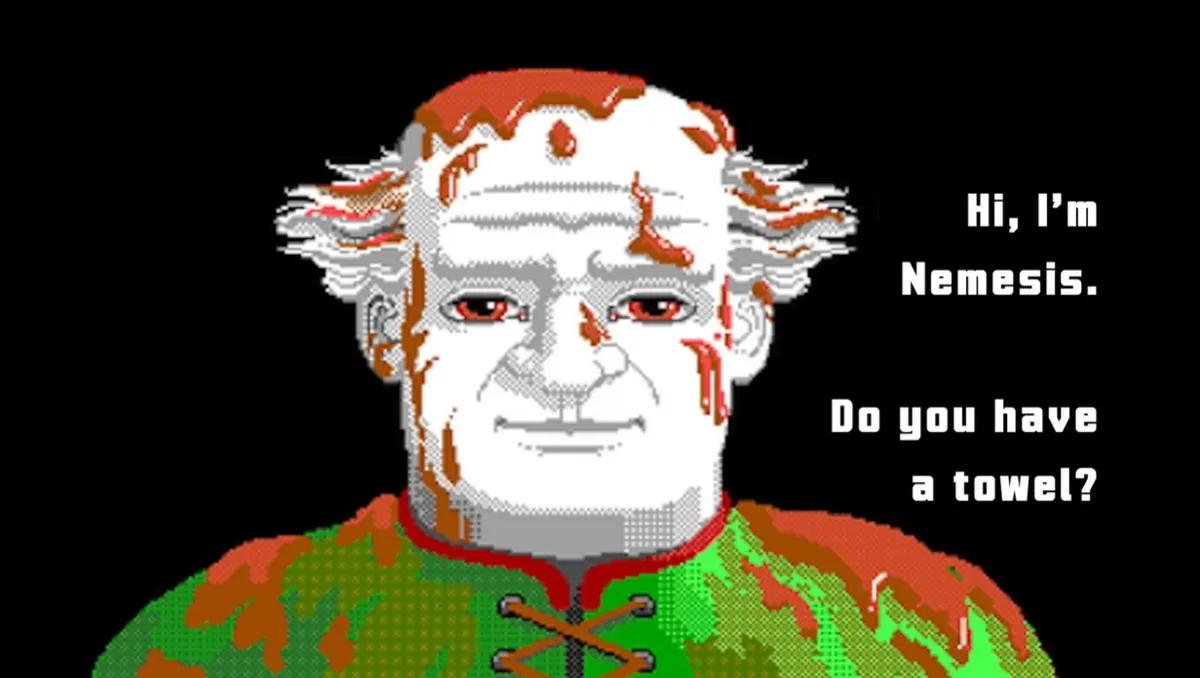
GamesIn celebration of the 35th anniversary of id Software's founding, co-founder John Romero has released a video retrospective on one of id's most unsung games: Catacomb 3-D. The video featured Romero's own recollections, as well as those of id vets Tom Hall, John Carmack, and Adrian Carmack.
id began work on Catacomb 3-D in October 1991, after completing Commander Keen in Aliens Ate My Babysitter. This was during the studio's brief stint in Madison, Wisconsin, after leaving Shreveport, Louisiana, but before settling in Texas for good. Catacomb 3-D was part of a deal id had with its founders' former employer, Softdisk. Some of id's first games were distributed in Gamer's Edge, a monthly, subscription-based demo disk of games put out by the software company.
Catacomb 3-D was not id's first first-person shooter, but it included major advances over Hovertank One. As the team worked on art and design, John Carmack experimented with texture mapping, an aspect of 3D graphics taken for granted today. Before games like Catacomb and Ultima Underworld, this technology could only run on expensive Silicon Graphics workstations, but they made it work on much less powerful consumer hardware.
The term "FPS" was not yet a proper genre at this point. id's early 3D games were often compared to top-down, arcade-style shooters. John Carmack called it "basically a quarter-eater still, put onto the PC" in the video, but also characterized Catacomb as id planting its game design flag.
"It didn't have the overarching story and depth that people felt the PC was better suited for. And we were still kinda striking out and saying: 'No. Action, fast twitch, that still is a great, viable gaming thing to do.' We just had this one, new, super novel new perspective, literally, by putting it in 3D."
— John Carmack
Tom Hall noted that the team opted for a first-person view in its early 3D games partly due to technical limitations. This decision, born from constraints, resulted in something special.
"It was very costly to draw large things on-screen—don't want to slow down the game. We could have done it over the player's shoulder and stuff. But it made it really easy to aim if something's just in the center, and it's very simple, and it's fast to draw. It also increases the player immersion, like 'this is me.'"
— Tom Hall
Romero revealed that id only made $5,000 on Catacomb 3-D through its Gamer's Edge deal. Commander Keen was more profitable and popular, so id launched into the development of Commander Keen 7 at the beginning of 1992, shortly after Catacomb 3-D was completed. But the team was beginning to realize that they had stumbled on something transformative. Both John Carmack and John Romero point to an incident with artist Adrian Carmack as a eureka moment.
"One of my more cherished memories of making Catacomb was Adrian almost falling out of the seat when he turned around right in the face of a troll. This is where we could tell we're starting to get it. This is the future of gaming, rather than looking at the little sprites moving around on the screen and maybe getting tense. But it was the sense of shock. That was the first moment that locked into my mind that we were really onto something in this new genre and style of play."
— John Carmack
"It just automatically sucked you in visually. You couldn't help it. That was just one of the craziest things in a videogame I'd ever seen. We definitely knew that we'd found a new game style, a new game type."
— Adrian Carmack
id abandoned development on Commander Keen 7 after just two weeks and never returned to the series.
"One night, we talked about how Catacomb 3D was just the beginning of a new way to play games, and that the future was 3D. Within an hour, we had decided what our next game would be: Wolfenstein 3-D, the grandfather of first person shooters."
— John Romero
By Romero's reckoning, Catacomb was a critical step on the path to Wolfenstein, Doom, and Quake. "This all began with Catacomb 3-D," Romero concluded. Romero Games is offering a classic-style, PC big box reissue of Catacomb 3-D on its website. After a Microsoft-induced scare, John and Brenda Romero's studio sounds like it's back on track to release their next-gen FPS game, which survived the cancellation period at Xbox.
Read also, Over the last few years, id Software studio has made three standalone single-player DOOM video games, including last year’s DOOM: The Dark Ages, which had the biggest launch in the history of the studio’s activity. And there is a big chance another cult classic shooter may be revived very soon.


 Successfully copied... Thank you for sharing our content!:



5% deposit bonus up to 100 gems

a free Gift Case





EGAMERSW - get 11% Deposit Bonus + Bonus Wheel free spin


EXTRA 10% DEPOSIT BONUS + free 2 spins

3 Free Cases + 100% up to 100 Coins on First Deposit


5 Free Cases, Daily FREE & Welcome Bonuses up to 35%

3 free cases and a 5% bonus added to all cash deposits.

+5% to deposit




Comments