




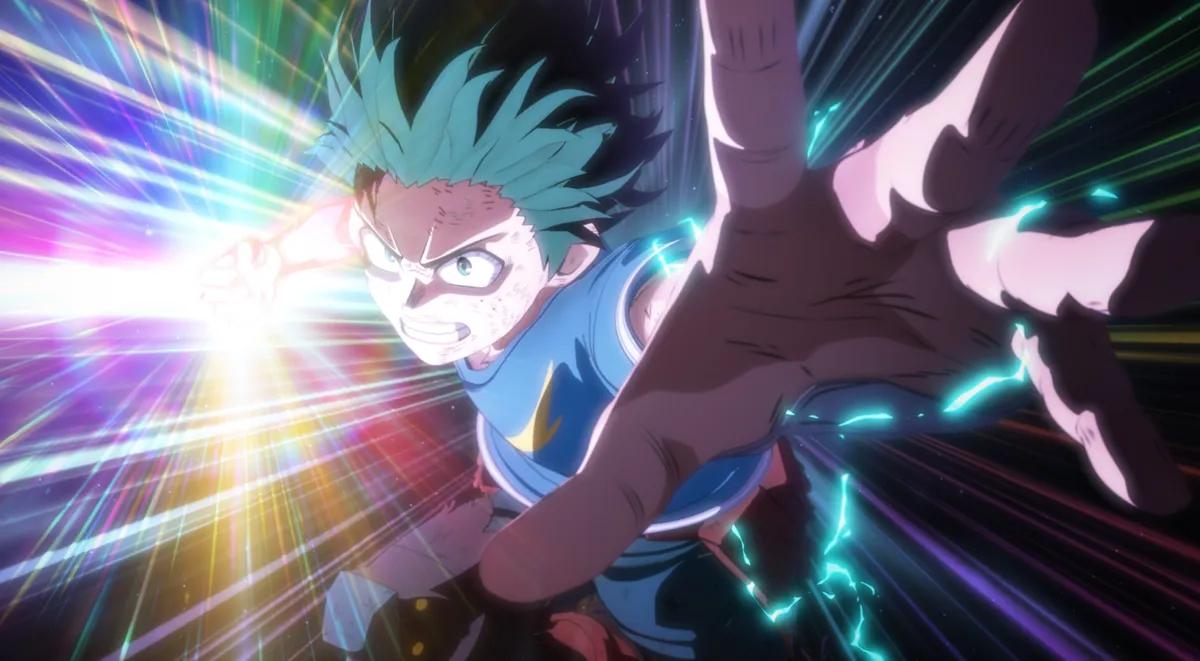
MY HERO ACADEMIA: All's Justice Review
 Steam
Steam PlayStation
 Xbox
Xbox Review
MY HERO ACADEMIA: All's Justice arrives as the anime wraps its final season, adapting the Final War Arc into a tag team arena fighter developed by BYKING and published by Bandai Namco. The game launched on February 6, 2026, for PlayStation, Xbox, and PC, priced at £54.99 for the standard edition. It carries a roster of 68 playable characters, a branching story mode, a new open exploration feature called Team-Up Mission, and over a thousand unlockables ranging from character skins to victory poses.
The question was never whether this game would exist, but whether it could do more than the two One's Justice entries managed.
The Final War Arc Gets a Faithful, Branching Retelling

Story mode drops players into the middle of the anime's seventh season, specifically around episode 144, where the heroes enact their plan to scatter the villains across Japan and engage them in isolated groups. From there, the narrative splits across different battlefields, and each completed branch unlocks new cutscenes and additional fights viewed from opposing perspectives. Finishing a Shigaraki encounter, for example, opens the path to play as Shigaraki and see those same events from his side. This branching approach gives the story real replay pull and covers nearly every confrontation of the arc, from the major set pieces down to smaller skirmishes involving secondary heroes.
The game plays through these events using three distinct presentation formats, depending on where each scene falls in the anime's production timeline. Battles from earlier seasons use full-motion cutscenes rendered in the game's engine, and the most dramatic moments get dedicated cinematic treatment that looks polished. Events from mid-series are shown through animated stills pulled from the anime. Scenes from the final season, which was still airing during the game's development, appear as colored manga panels instead. None of these transitions feel smooth, and the animated stills are the weakest link. Characters "speak" through rapid fire screenshot sequences that look stilted rather than cinematic. For fans who have watched the anime, these moments may pass without much friction. For newcomers, the uneven visual language is harder to parse.
Combat Feels Faster and More Varied Than One's Justice

The core loop is a 3v3 tag team arena fighter. Players build a team from the roster and swap between fighters mid-match, with each teammate's health tracked on the HUD. Attacks land with more weight than in One's Justice 2, movement speed is noticeably faster, and combos connect with less clunkiness between hits. A stamina bar governs blocking and dashing. Deplete it while taking damage, and a stun window opens. Two escape stocks allow players to break free from combos, a Rising meter grants a temporary power boost at full charge, and a three-charge Plus Ultra meter fuels signature attacks that can chain into team follow-ups for extended damage.

Roster variety is where the game separates itself from previous entries. Deku has a variant for nearly every approach. Bakugo mixes close-range explosions with projectile zoning. Hanta Sero lays traps and controls space. Armoured All Might plays like a gadget-heavy tank with ranged tools and defensive options. I think Uraraka is the strongest design of the bunch, pulling up chunks of the ground with her gravity quirk and swinging them as battering rams, which gives her a rhythm unlike anyone else on the roster. With 68 non-DLC characters drawn from the full span of the series, including minor figures like Gentle Criminal and Best Jeanist, there is a lot to test. The gap between competitively viable fighters and roster filler remains wide, and online play will likely narrow the field within weeks of any serious meta forming.

A simplified control scheme lets newcomers execute flashy combos with a single button, while a traditional input method exists for players who want direct control over move selection. This accessibility is a smart call, especially for fans of the source material who may not have years of fighting game experience behind them.
Team-Up Mission Offers Exploration With Uneven Follow-Through

Team-Up Mission is the biggest structural addition to the formula. It places players in a virtual city hub where they can roam freely, talk to characters, collect Hero Cards, and complete side missions to raise their hero rank. Traversal relies on Midoriya's Black Whip quirk, which works like a grappling hook and makes moving through the city feel fast and physical. Recruited characters contribute assist abilities with unique traversal functions. Uraraka's Zero Gravity, for instance, opens access to rooftops that are otherwise out of reach. Why some quest givers are stationed on rooftops is never explained, but the traversal variety itself works.

Recruitment ties into the Hero Cafeteria, where players can revisit shared memories with characters they have added to their team. The mode builds a light progression loop through hero rank and team composition, and it gives the game a spatial quality that pure arena fighters rarely attempt. Hero Cards are scattered throughout the hub world and are also unlocked through normal play. Using certain characters, winning against certain opponents, beating missions, and even logging in all generate rewards. The unlock feed is constant and feeds into outfit, color, voice line, HUD, and victory pose customization.
Where Team-Up Mission falters is repetition. Side missions begin to blur together after the first few hours, and the enemy encounters within the mode lean on super armor and group fights that add frustration without adding depth. The mode works as a change of pace from straight combat, but it does not sustain itself as a standalone draw.
Visuals Deliver on Style, Arenas Create Occasional Problems

The game looks like its source material. Character models are bright, detailed, and color-accurate. Fight animations carry the exaggerated physicality the series is known for, and special moves connect with appropriate visual force. The personality of each character comes through in their movement and attack design, which speaks to the care BYKING put into translating the anime's visual identity.
Arena environments are where problems surface. A cityscape map has raised rooftop edges and street-level handrails that snag character movement mid-fight, forcing jumps or detours at the worst possible times. Certain building geometry blocks both attacks and the camera, leaving players blind to incoming hits. Decorative obstacles in other arenas have no collision with combos at all, meaning a character can be launched through a boulder or wall with no resistance. The visual grounding of the arenas is undercut when the physics ignore them.
Audio Matches the Anime, Online Multiplayer Does Not Match Expectations

The original voice cast returns across both Japanese and English tracks, and cutscene dialogue has the delivery and energy of the anime. The soundtrack fits the tone of the series without standing out independently. Hit effects, quirk activations, and ambient arena sound all register clearly during fights. Nothing in the audio design is exceptional, but nothing is missing.
Local multiplayer runs at the same performance and responsiveness as single player. Free Battle mode supports couch competition and also allows CPU opponents for solo practice. Online multiplayer tells a different story entirely. Player population has been thin since launch, and finding matches over several weeks of play has been inconsistent enough to raise questions about whether the servers are active or simply empty. When a connection does form, matches are stable. But the low numbers make it a hard sell online for anyone buying the game with competitive play in mind. A seasonal leaderboard in the hub world displays top-ranked players and their team compositions, which adds a competitive layer the matchmaking currently cannot support.
Difficulty Spikes in the Final Chapters Undermine the Story

The first half of story mode runs at a fair, escalating pace. Enemies are aggressive but readable, and the difficulty tracks the rising stakes of the narrative. That changes sharply in the final chapters. AI opponents begin dealing roughly double the player's damage, countering attacks with near-perfect reaction timing, and chaining moves that leave almost no recovery window. Multi-enemy encounters compound the issue. Armoured All Might's climactic stand against All For One, framed as one of the story's most dramatic beats, becomes an exercise in restarting after getting locked into unavoidable projectile chains and dying in two hits.
The final boss is the worst offender. Five rounds against a character with super armor, poorly telegraphed specials, and enough damage to kill through a block. Dodging his special attacks requires frame-close timing with no consistent visual tell. After those five rounds comes a second, stronger form with a larger health pool and harder-to-read attack patterns. Failure at any point resets the entire sequence, complete with the same repeated dialogue about making people smile and never giving up. I find this fight to be one of the most poorly calibrated final encounters in recent memory, and it nearly erases the goodwill the earlier chapters build. The spikes feel disconnected from the rest of the game's tuning and turn the story's emotional peaks into sources of repetition and frustration.
Verdict

MY HERO ACADEMIA: All's Justice gets the fundamentals right and delivers the most complete My Hero Academia game to date, even as uneven difficulty and thin online multiplayer keep it from the top of the anime fighter genre. MY HERO ACADEMIA: All's Justice is an 8/10 game.
Pros:
- Combat is faster, heavier, and more combo-friendly than both One's Justice entries.
- The 68-character roster offers real variety in playstyles and team composition.
- Team-Up Mission and branching story mode add structural depth beyond standard arena fighting.
Cons:
- Story mode difficulty spikes in the final chapters are punishing and poorly calibrated.
- Online multiplayer population is too low to support competitive play.
All's Justice is the send-off the series needed, packed with fan service and enough modes to keep players engaged past the credits. The balance problems are real and damaging, but they sit on top of a game that otherwise does its job with care. A few targeted patches could close the gap between what this game is and what it should have been.


 Successfully copied... Thank you for sharing our content!:



5% deposit bonus up to 100 gems

a free Gift Case





EGAMERSW - get 11% Deposit Bonus + Bonus Wheel free spin


EXTRA 10% DEPOSIT BONUS + free 2 spins

3 Free Cases + 100% up to 100 Coins on First Deposit


5 Free Cases, Daily FREE & Welcome Bonuses up to 35%

3 free cases and a 5% bonus added to all cash deposits.

+5% to deposit




Comments