




Monster Hunter Stories 3: Twisted Reflection Lands With a Refined Loop and a Split Critical Verdict
 CAPCOM
 Nintendo
Monster Hunter Stories 3: Twisted Reflection arrived on March 13, 2026, for Nintendo Switch 2, PlayStation 5, Xbox Series X/S, and PC under a Teen rating from Capcom. The third entry in the publisher's turn-based spin-off series carries a heavier narrative premise, a redesigned protagonist, and an interconnected progression system that critics have picked apart with wildly different conclusions — some calling it a franchise peak, others settling at a far more measured position.
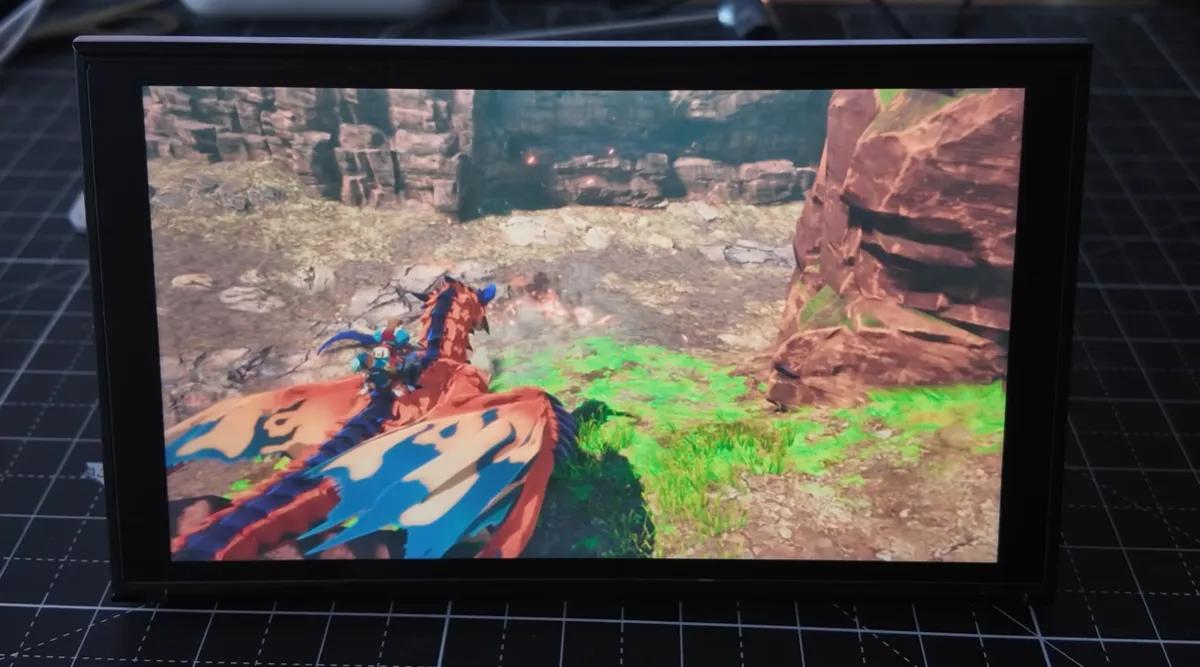
As we said, the game had been generating anticipation since Capcom announced it during the July Nintendo Direct Partner Showcase, confirming a 2026 release window exclusively for the Nintendo Switch 2 at the time. The original announcement introduced a darker, war-torn setting, the mysterious environmental blight called the Encroachment, and footage of the protagonist gliding across the sky on a Rathalos while the fate of an entire kingdom hung in the balance. That trailer also flagged an unusually large monster egg as a central story element — a tease the full game now contextualizes within a broader ecological and political conflict than previous Stories entries attempted.
The story places the player as the heir to the throne of Azuria and captain of the Rangers, an environmentalist unit tasked with studying and protecting the kingdom's ecosystems. The Crystal Encroachment, a destructive blight, has already claimed the neighboring Kingdom of Vermeil and turned its monsters feral. With Vermeil's military massing on Azuria's borders, the stakes extend beyond monster-wrangling into outright war. The framing is more politically textured than anything the Stories series has attempted before, though critics disagree on whether the game follows through. One reviewer described the story as another slight twist on the familiar Monster Hunter template — something bad causes monsters to run amok, you work to stop it — while acknowledging that the bigger-picture political dimension is present but left underdeveloped. A second reviewer called the narrative a coming-of-age for the series with sky-high stakes and a cast brought to life through strong voice performances, arguing the writing hits harder after completing companion-specific side quests that give secondary characters room to develop.
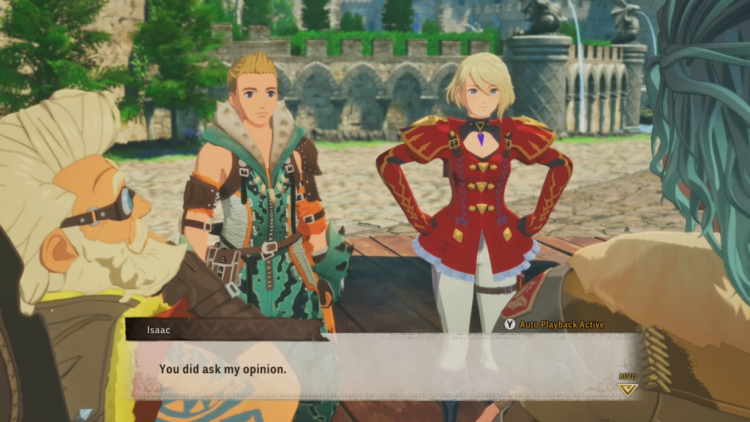
For the first time in the Stories series, the protagonist speaks with their own voice and personality rather than delegating all dialogue to a Felyne companion. The previous games assigned every line to Navirou, a sidekick whose humor was calibrated for younger audiences. Twisted Reflection replaces him with Rudy, a Palico companion who reviewers described as more grounded and sensible — though not universally liked. One critic found Rudy's overprotective outbursts at odds with the otherwise calm, level-headed cast, calling his behavior consistently frustrating when set against characters who respond to conflict with restraint. The adult protagonist also changes how the game delivers its tutorial. Rather than teaching through the lead character being new to the world, Twisted Reflection positions your hero as an experienced ace Rider training a rookie ranger named Thea, absorbing exposition into the story without stopping momentum.
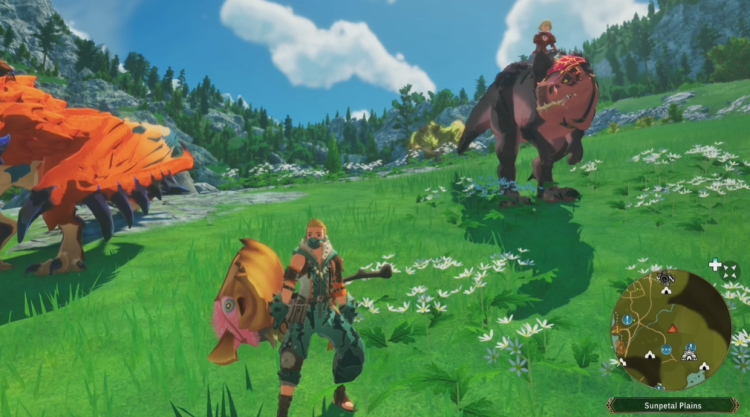
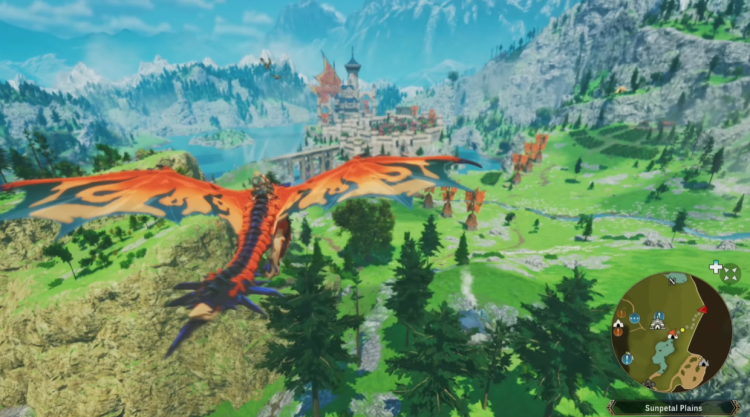
You begin with a fully-grown Rathalos already bonded as your partner, granting the ability to glide across the semi-open world from early in the game. The movement functions more like a controlled descent than true flight, but the map accommodates it through generous updraft placements and fast-travel points set at elevated locations. Each Monstie you recruit can carry multiple Riding Actions — abilities used outside of combat to navigate terrain. Flying handles aerial traversal, Swimming and Climbing clear environmental obstacles, and Roaring stuns overworld monsters so you can pass without engaging. Breath Attacks can knock airborne enemies out of the sky. Multiple reviewers called this multi-action system a meaningful improvement over Monster Hunter Stories 2, where party composition was heavily driven by which Riding Actions each monster provided rather than by combat preference or aesthetics.
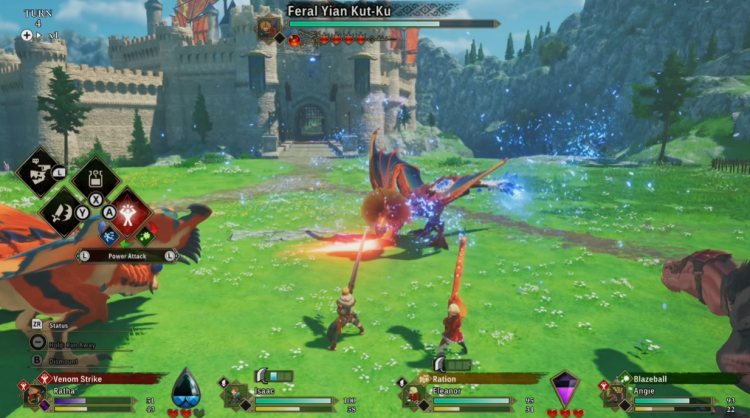
The combat centers on a rock-paper-scissors dynamic — Power beats Technical, Technical beats Speed, Speed beats Power — applied to both your weapon attacks and your Monstie's moves. Monsters typically commit to one attack style until they absorb enough damage to switch, at which point reading the shift becomes a tactical priority. Layered on top is an elemental system: weapon types and Monstie attacks each carry elemental properties interacting with monster resistances and weaknesses. Your character fights using six different weapons adapted from the mainline Monster Hunter series, each carrying its own mechanics. Three weapon damage types map onto specific monster parts, and free mid-battle switching lets you target whichever vulnerability offers the best return for that moment.
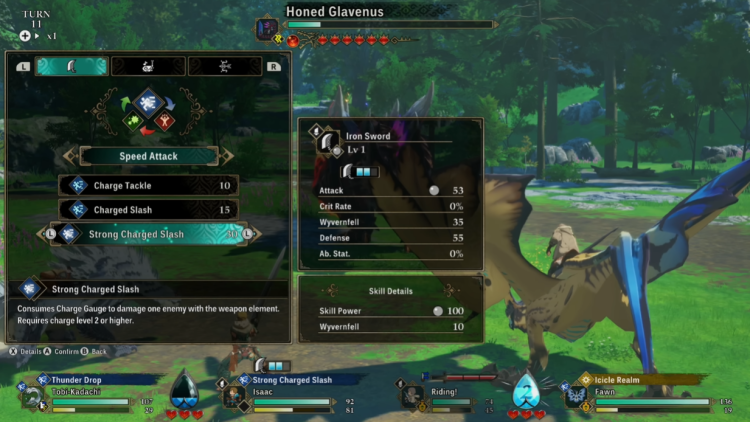
Twisted Reflection adds two mechanical wrinkles absent from Stories 2. The first is the Wyvernsoul Gauge: each enemy carries one, and different attacks deal varying amounts of Wyvernsoul damage. Depleting it stuns the monster and then staggers it, functionally removing its next action from the fight. This creates decisions that go beyond picking the best weapon for a given part, because suppressing the enemy's next move is sometimes more valuable than maximizing output. The second change separates the Kinship Gauge from the Stamina bar. In Stories 2, using skills drew from the same resource as your ultimate attack, penalizing weapon choices like the Hunting Horn that consumed Stamina heavily. The separation removes that conflict and opens playstyles that would have been mechanically punished before. The double animation speed option further keeps pacing manageable, and the option to defeat weak overworld monsters in a single strike — still granting materials and experience — reduces friction when a region has been outleveled.
The game's progression loop relies on den diving, egg hatching, and habitat restoration working together in a cycle that reviewers consistently identified as its defining strength. Monster dens appear across each biome in three rarity levels, each containing eggs of a corresponding rarity. Eggs hatch with a gene board — a three-by-three grid of active and passive skills — determining a Monstie's combat capabilities. Rarer eggs produce more advantageous starting boards. Crucially, unlike in Stories 2, den rarity and egg rarity no longer restrict which species can appear where. One reviewer noted finding an Elder Dragon egg inside a plain den once those species became accessible. Even common eggs produce Monsties viable as party members or as material for the habitat restoration system.
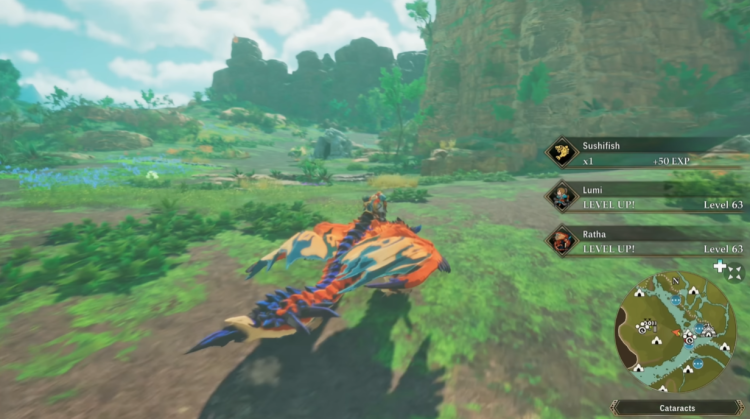
Genes transfer between Monsties and rearrange freely at any camp using the Rite of Channeling, without cost and without limit. Matching three genes of the same color or type on the board triggers a bingo bonus buffing the Monstie's stats. This departs sharply from Stories 2, where transferring a gene consumed the host Monstie entirely and rearranging was not possible — a combination that made the system rigid enough to discourage experimentation. The ability to rebuild and test without permanent consequence is central to how Twisted Reflection structures team-building.
Habitat Restoration gives eggs and Monsties a secondary purpose beyond party use. Establishing a camp in a given area first requires defeating a Feral Monster there — reviewers described these as challenging mini-boss encounters that require tactical preparation. Once a camp is active, you can release Monsties back into that ecosystem. Releasing more of a given species raises the area's ecosystem rank for that species, up to S-Rank. Monsties hatched in an S-Rank area come with three Environment Skills, a special gene category that does not occupy space on the standard gene board. S-Rank areas also produce higher base stats in hatched offspring and unlock Egg Skills, particularly powerful genes available only through the hatch process. Sending existing Monsties on Excursions to other regions lets them acquire Environment Skills from those areas regardless of whether their species has reached S-Rank there, and this applies retroactively to the Rathalos permanently bonded to the player.
Reaching A-Rank or higher in a region shifts a Monstie's elemental affiliation to match the area, changing its color. The first Monster Hunter Stories carried a version of this; Stories 2 removed it. Twisted Reflection restores it in a form reviewers described as less convoluted than the original and more mechanically valuable, since the Monstie retains its original element alongside the region-based one. One reviewer pointed to how distinct each player's party composition ends up looking under this system compared to the uniformity that tends to emerge in RPGs where raw power drives every decision.
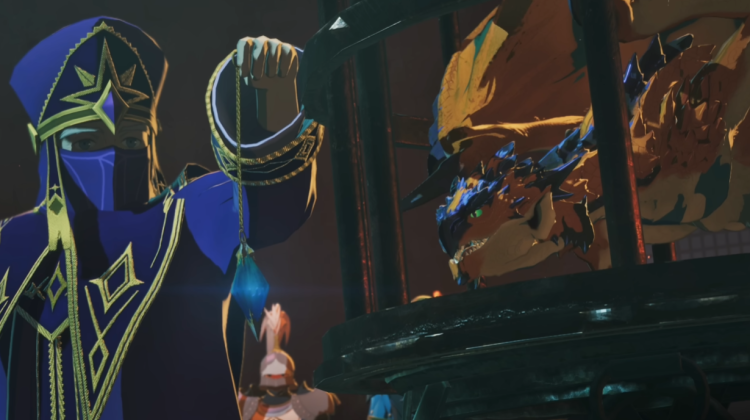
Invasive Species are a distinct encounter type hidden in semi-concealed map locations where Endangered Species nests have been displaced. Finding one requires moving through its territory and collecting clues about how to make it withdraw. The tutorial encounter, a Yian Garuga, required breaking both legs before it retreated — the most straightforward version of the puzzle. Subsequent encounters demand different conditions and carry steeper consequences for failure, since Invasive Species can eliminate the entire party in a single hit if the wrong approach is taken. One reviewer acknowledged photographing in-game tips because there was no way to revisit clues after their initial appearance, and noted that fighting at double animation speed caused them to miss visual cues embedded in the encounter's design — specifically, a temporary color change that signals a roaring Seregios. Failing does produce a hint, though less specific than the original clue text. Defeating an Invasive Species opens access to an Endangered Species egg, which can then be introduced to a habitat and cultivated under specific conditions to produce one or two mutated variant species.
I see the Invasive Species encounters holding together as distinct, puzzle-driven challenges in a way that routine late-game combat does not, where health totals on both sides inflate to the point that individual exchanges feel mechanical. The endgame encounters — slaying Invasive Species at level 75 and taking on Calamitous Elder Dragons at the same tier — are clearly intended to sustain engagement past the credits, which arrive at around player level 65. Elder Dragons have a random chance to spawn at night following combat sessions, and repelling rather than slaying one still rewards a single Elder Dragon material, with only three required to craft the first tier of that creature's armor or weapon. Getting driven off without landing a hit leaves the enemy pre-weakened for the next attempt. Slaying one permanently increases base stats of Monsties hatched in that creature's region, integrating the endgame kills into the progression loop rather than treating them as isolated trophy hunts.
Where the three reviews diverge sharpest is in their overall assessments of the game's depth and payoff over time. The first reviewer, who spent 75 hours, rated it as an exceptional evolution of the series and noted that nearly 20 of those hours went into a single opening area due to optional content alone. A second reviewer placed it at 4.5 out of 5 and called it the point where the spin-off stops functioning as a competent side project and becomes one of the stronger Monster Hunter games available. The third reviewer completed the game in over 60 hours and rated it 7.5 out of 10, crediting its good qualities while noting late-game level spikes that interrupted story momentum, side content that was generally simple and forgettable outside the companion storylines, and a narrative that, while functional, was unlikely to leave much impression once the credits finished.
I think more criticism of the late-game design is warranted — the two instances described where sudden difficulty walls forced hours of grinding to continue the main story are not incidental friction, and in a game built around voluntary engagement with its systems, mandatory grinding that stalls the central narrative represents a structural problem worth naming clearly, not folding into broader praise. Players drawn in by the ecological loop and the den-diving system will likely absorb those hours without much protest, but the disruption is real and disproportionate to the smoothness of everything surrounding it.
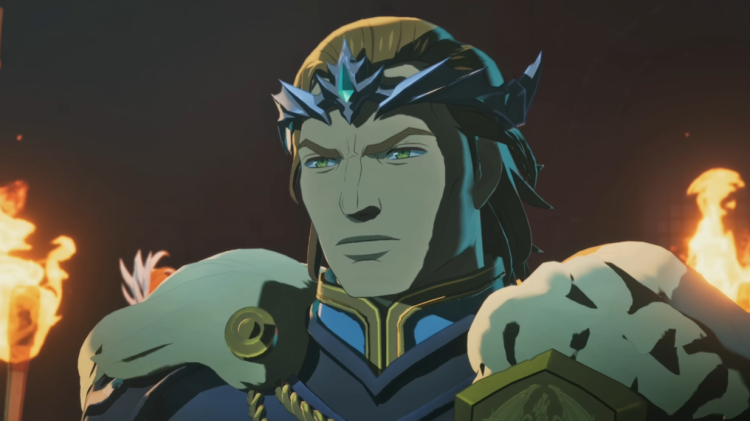
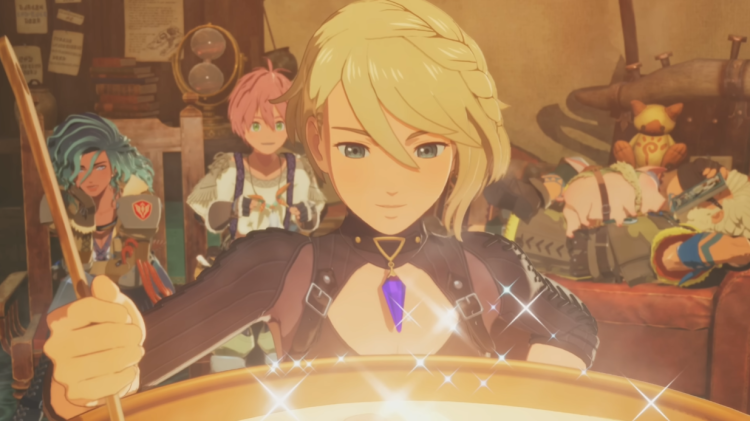
The five ally characters each carry four chapters of companion-specific side quests unlocking as the main story progresses. These missions develop characters who receive insufficient attention in the central narrative, and the rewards are practical: crafting recipes, significant combat upgrades for each ally and their Monsties, and access to mechanics that would otherwise remain locked. One reviewer described these as low-stakes, self-contained filler episodes — a mild endorsement, treating them as useful supplements to the main story rather than as distractions from it.
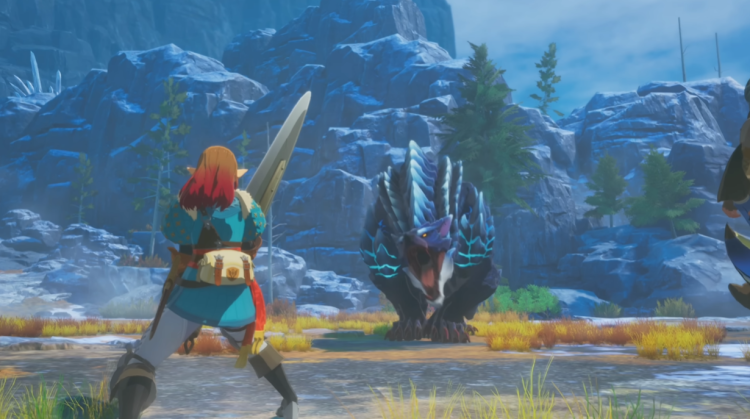
On presentation, all three reviews converge positively while emphasizing different elements. The visual overhaul for the third entry retains the series' bright color palette while adding a more realistic edge. Combination attacks in combat received specific praise for their animation quality, with one reviewer noting they rarely used the skip option because the sequences were compelling enough to watch. Kinship Skills, the ultimate moves each Monstie performs, were praised for visual variation. The Switch 2 version showed texture pop-in after fast travel and during in-world cutscenes, though the reviewer who flagged it noted the issue was absent during combat and did not find it seriously disruptive. Voice acting received strong marks across multiple reviews, with one calling the cast's performances phenomenal and arguing they amplified the main story's larger beats precisely because the companion side missions had already established what was personally at stake for each character.
Twisted Reflection shipped without a post-game multiplayer mode. The first Stories had player-versus-player combat; Stories 2 added cooperative multiplayer dungeons. Neither feature is present at launch. One reviewer expressed disappointment that nothing changes following the credits and speculated about future title updates, while the other two did not foreground the absence. The content available after completing the main story consists of the remaining Invasive Species encounters, the Calamitous Elder Dragon fights, and filling the Monsterpedia by hatching and mutating every Endangered Species in the game — an activity one reviewer had barely started after 10 hours of post-credits play.
Monster Hunter Stories 3: Twisted Reflection is rated Teen by the ESRB and is available now on Nintendo Switch 2, PlayStation 5, Xbox Series X/S, and PC. Capcom developed and published the title.
Read also, Japan's console game market recorded notable year-on-year growth in 2025 with Nintendo Switch 2 at the center of the uptick, contrasting early reports that the hardware was trailing its predecessor's sales curve in the US and Europe, according to data gathered from original reporting by Kadokawa Game Linkage and Famitsu.


 Successfully copied... Thank you for sharing our content!:



5% deposit bonus up to 100 gems

a free Gift Case





EGAMERSW - get 11% Deposit Bonus + Bonus Wheel free spin


EXTRA 10% DEPOSIT BONUS + free 2 spins

3 Free Cases + 100% up to 100 Coins on First Deposit


5 Free Cases, Daily FREE & Welcome Bonuses up to 35%

3 free cases and a 5% bonus added to all cash deposits.

+5% to deposit




Comments