





AI Slop Forces Microsoft CEO To Defend The Purpose Of Generative Systems
 Microsoft
 Companies
 Others
AI Slop has become the defining phrase of the current backlash against generative artificial intelligence, and Microsoft CEO Satya Nadella says the industry needs to move past it. In a recent blog post, Nadella argued that fixation on low-quality output misses what he sees as a more urgent problem: how humans adapt to AI systems that increasingly act as cognitive tools rather than novelty generators.
The term “slop” gained formal recognition late last year when Merriam-Webster named it its word of the year for 2025, citing the flood of low-quality digital content produced at scale by artificial intelligence. The label stuck after months of viral failures across media, games, and entertainment, many of them amplified by major companies promoting AI work as proof of progress.
Microsoft has been among the most visible advocates of large-scale AI deployment, investing tens of billions of dollars in models, infrastructure, and consumer-facing tools. That investment has coincided with mounting criticism from users frustrated by unstable software integrations and from creatives alarmed by the erosion of standards. Nadella’s post reflects an effort to reframe that conversation.
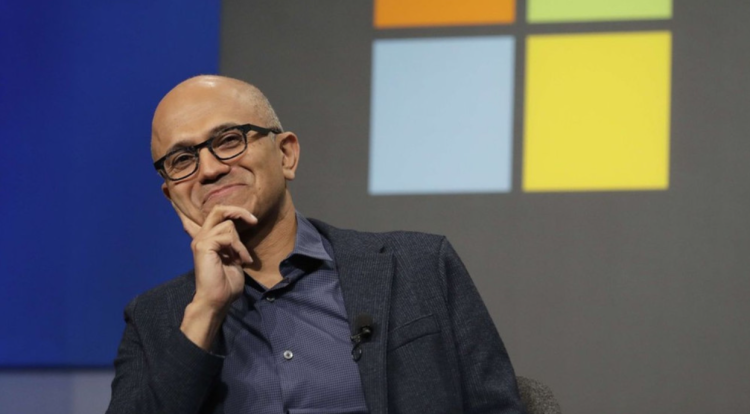
“We have moved past the initial phase of discovery and are entering a phase of widespread diffusion,” Nadella wrote on his sn scratchpad blog (via The Verge).
“We are beginning to distinguish between ‘spectacle’ and ‘substance’. We now have a clearer sense of where the tech is headed, but also the harder and more important question of how to shape its impact on the world.”— Satya Nadella
Nadella argued that debates over AI slop versus sophistication obscure what he described as a deeper design challenge. Drawing on Steve Jobs’ early description of computers as “bicycles for the mind,” he suggested that AI should be understood as a set of cognitive amplifiers whose value depends on how people apply them.
“What matters is not the power of any given model, but how people choose to apply it to achieve their goals,” he wrote.
“We need to get beyond the arguments of slop vs. sophistication and develop a new equilibrium in terms of our ‘theory of the mind’ that accounts for humans being equipped with these new cognitive amplifier tools as we relate to each other.”— Satya Nadella
That framing has not gone unchallenged. Critics point out that much of what users encounter today justifies the slop label, not only because of weak output but because of its effects. Research cited by skeptics, including at least one paper co-authored by Microsoft researchers, suggests that heavy reliance on generative systems can reduce critical thinking and task performance rather than enhance them.
Nadella also outlined a technical shift he believes will define the next stage of AI deployment. Instead of standalone models, he said companies must build integrated systems that coordinate multiple agents, manage memory, and control tool use in safer ways. He described this as the engineering work required to extract real-world value, rather than chasing attention through demos and automated content.
“We are now entering a phase where we build rich scaffolds that orchestrate multiple models and agents; account for memory and entitlements; enable rich and safe ‘tools use’,” Nadella wrote.
“This is the engineering sophistication we must continue to build to get value out of AI in the real world.”— Satya Nadella
The comments arrive as public tolerance for AI-driven spectacle continues to erode. High-profile failures outside Microsoft have reinforced skepticism about the technology’s readiness for creative work. Disney's AI experiments have become a focal point of that backlash, particularly after Lucasfilm unveiled Star Wars: Field Guide, an AI-generated video shown during a TED talk in April. The short reel, meant to preview a “new era of technology,” instead drew criticism for its incoherent visuals and synthetic creatures stitched together from mismatched animal features. The episode fueled broader criticism of corporate enthusiasm outpacing creative judgment, a pattern echoed across film, television, and games.
Nadella acknowledged, indirectly, that public approval is no longer guaranteed. He stressed that the diffusion of AI must be deliberate and justified by measurable outcomes rather than scale alone.
“For AI to have societal permission it must have real world eval impact,” he wrote.
“The choices we make about where we apply our scarce energy, compute, and talent resources will matter.”— Satya Nadella
Despite the optimistic framing, Nadella’s post carried an unusual note of caution. He described AI’s future as uncertain and emphasized conditional language when discussing its potential benefits. After years of confident forecasts from major firms, that restraint stood out.
“Computing throughout its history has been about empowering people and organizations to achieve more, and AI must follow the same path,” he wrote.
“If we do that, it can become one of the most profound waves of computing yet.”— Satya Nadella
The emphasis on “if” reflects the industry’s current position. AI slop has become shorthand for public disappointment, not just with outputs but with promises that failed to materialize. As companies continue to spend heavily on systems whose economic and cultural value remains contested, the gap between ambition and acceptance is widening. Nadella’s call to move beyond the term may signal less a rejection of the critique than an acknowledgment that the industry has yet to earn its way past it.


 Successfully copied... Thank you for sharing our content!:



5% deposit bonus up to 100 gems

a free Gift Case





EGAMERSW - get 11% Deposit Bonus + Bonus Wheel free spin


EXTRA 10% DEPOSIT BONUS + free 2 spins

3 Free Cases + 100% up to 100 Coins on First Deposit


5 Free Cases, Daily FREE & Welcome Bonuses up to 35%

3 free cases and a 5% bonus added to all cash deposits.

+5% to deposit




Comments