




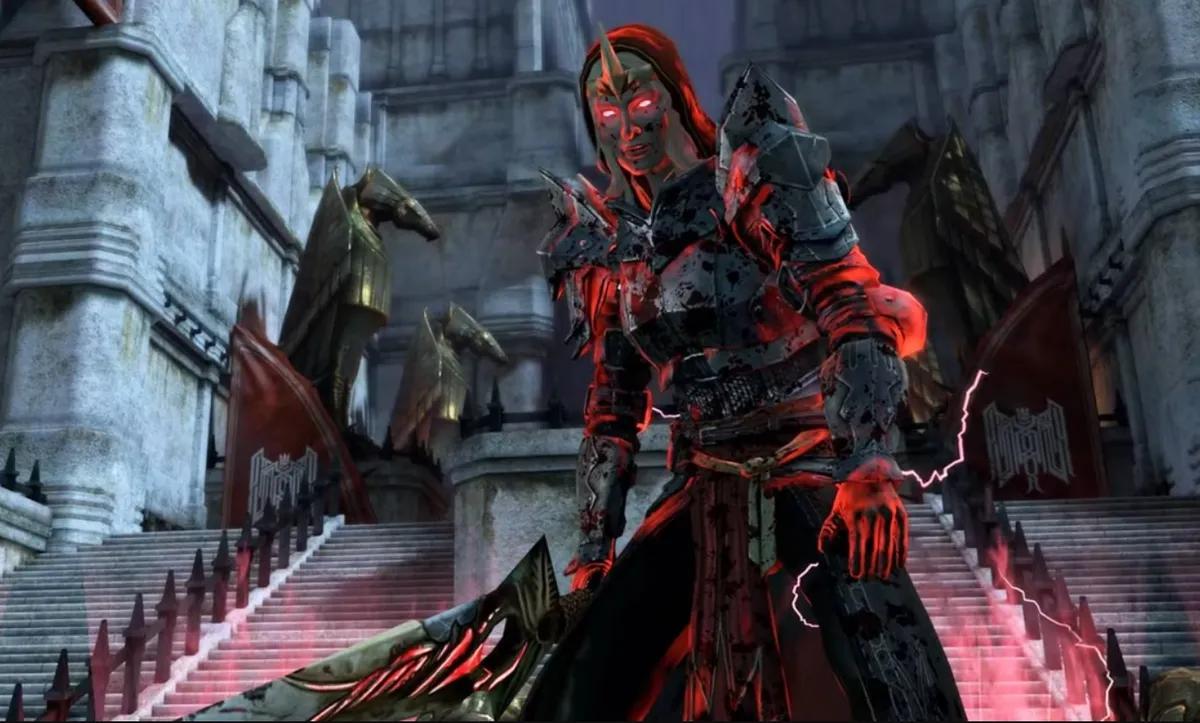
Dragon Age 2 Turns 15: David Gaider on Reactivity, Red Lyrium, and a Game Built From a First Draft
Dragon Age 2 launched fifteen years ago under conditions that should have buried it. BioWare had roughly 14 to 16 months to deliver a full sequel to Dragon Age: Origins — a timeline driven by EA's need to fill a fiscal gap left by delays to Star Wars: The Old Republic. What emerged was a game built almost entirely from first drafts, stripped of half its planned quests, with dungeons reused out of necessity and an entire Varric storyline scrapped before it was finished.
In a conversation with The Gamer, Dragon Age creator and former series lead David Gaider looked back at Dragon Age 2's development, its narrative decisions, and one of the franchise's most persistent structural problems: delivering meaningful reactivity to player choices across multiple games.
"Even to do the amount of reactivity that we did, which went from one line references to character reappears, and you have an entire plot, it always feels like it's never enough... The people who want reactivity, what they really seem to want is a whole diversionary plot."
— David Gaider
Dragon Age 2's reduced scale made this less of a problem at launch. The game is set almost entirely in Kirkwall, spans seven years through time jumps, and follows a fixed protagonist — Hawke — whose human identity was itself a product of budget constraints. There was no time to build race-specific content as Origins had done. So the team committed fully to a set character with a fleshed-out family. That limitation produced some of the series' most debated writing, including the murder of Hawke's mother, Leandra, by a serial killer stitching together a reconstruction of his dead wife. Writer Sheryl Chee took on the scene after Gaider dared her to make it work.
The companions that surrounded Hawke were also shaped by cuts. Velanna, a potential transfer from the Origins expansion Awakening, was dropped after the team concluded players were too indifferent to her. Anders came over without his eventual fusion with the spirit Justice — that element arrived later. Gaider wrote Fenris instead, a formerly enslaved warrior from Tevinter who opposes mage freedom and stands in direct ideological conflict with Anders throughout the game.
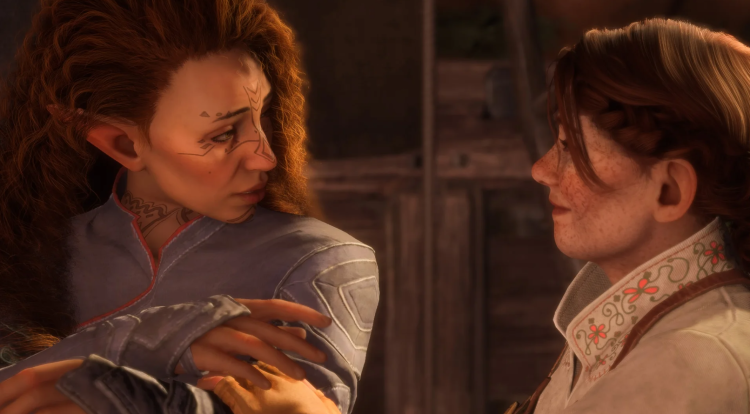
The bisexuality of all romanceable companions — Anders, Fenris, Isabela, Merrill — was a practical decision. With no time to build additional love interests, the existing characters were placed on double duty. The team still tried to differentiate how each character expressed their identity. Anders mentions his ex-partner Karl more readily when Hawke is male, as a way of signaling attraction. Some players read this as inconsistency. Gaider rejected that interpretation directly: the intent was always that these characters are bisexual, with differing levels of openness.
The backlash from some players who objected to Anders' flirting with a male Hawke drew a pointed response from Gaider at the time. A small rivalry penalty was added if the player rejected Anders, a choice he later acknowledged probably should not have survived the rushed development process. On the complaints themselves, he was less sympathetic.
"Some guys felt like they were forced to sleep with him, so Anders didn't hate them, and they complained about it. And I said, 'well, welcome to the mind of every woman who's ever been in a bar.'"
— David Gaider
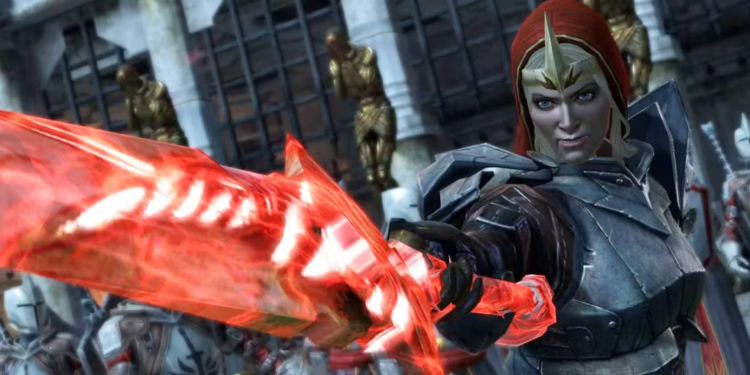
The game's central conflict between mages and templars was always designed to resist a clean resolution. Gaider deliberately removed any path to negotiated peace, having observed in Origins that an objectively superior option — such as using the Circle mages to save the boy in Redcliff — functionally invalidates every other choice. In Dragon Age 2, siding with either faction ends in violence. Knight-Commander Meredith descends into red lyrium-fueled instability. Orsino transforms into an abomination even if Hawke supported the mages. Gaider has since said that Orsino's ending made no narrative sense and that he knew it while writing the dialogue, with voice recording already scheduled.
Meredith's madness was itself a late-stage addition driven by the combat team, who felt a human templar was insufficient as a final boss. Red lyrium was introduced to justify giving her powers, and Gaider acknowledged that the decision collapsed the ideological tension he had been building. Once Meredith is insane, her argument for Templar authority cannot hold. I think that single concession did more damage to the game's thematic balance than almost any other development compromise.
The reactivity problem grew considerably by the time BioWare reached Inquisition. Gaider pointed to Morrigan's Old God Baby as the clearest example of the ceiling imposed by game development scale. Fans who had kept that child alive in Origins expected it to reshape Inquisition's ending in fundamental ways.
"What really wanted was for the Old God baby to have this world-shaking importance... That, if he existed, there's this whole entirely different ending to Inquisition. And I can't do that. As much as I'd like to, I can only do that in the space of a novel."
— David Gaider
I see the same tension running through every BioWare sequel: the more meaningful the original choices feel, the more impossible the follow-up becomes. Gaider summarized it simply — reactivity is "either irrelevant or not enough." The upcoming Mass Effect project will face the same constraint, inheriting a universe with three radically different endings and no realistic path to honoring all of them at the scale players expect.
Dragon Age 2 never had the luxury of that expectation. It was designed under a deadline so tight that the writers committed to cutting content before they knew exactly what they were cutting. The time jumps across seven years survived into the final game despite losing 80 percent of their intended environmental changes. The mage-templar war that defined two subsequent entries began here, in a city that was only supposed to host an expansion.
Read also, a remaster of Dragon Age: Origins has been discussed internally at BioWare, but former franchise boss Mark Darrah has described it as unlikely in the near term, citing EA's resistance to remasters, the complexity of the original engine, and the studio's current focus on Mass Effect 5.


 Successfully copied... Thank you for sharing our content!:



5% deposit bonus up to 100 gems

a free Gift Case





EGAMERSW - get 11% Deposit Bonus + Bonus Wheel free spin


EXTRA 10% DEPOSIT BONUS + free 2 spins

3 Free Cases + 100% up to 100 Coins on First Deposit


5 Free Cases, Daily FREE & Welcome Bonuses up to 35%

3 free cases and a 5% bonus added to all cash deposits.

+5% to deposit




Comments