




Asus ROG Strix G16 (2025) Review
 ASUS
ASUS Review
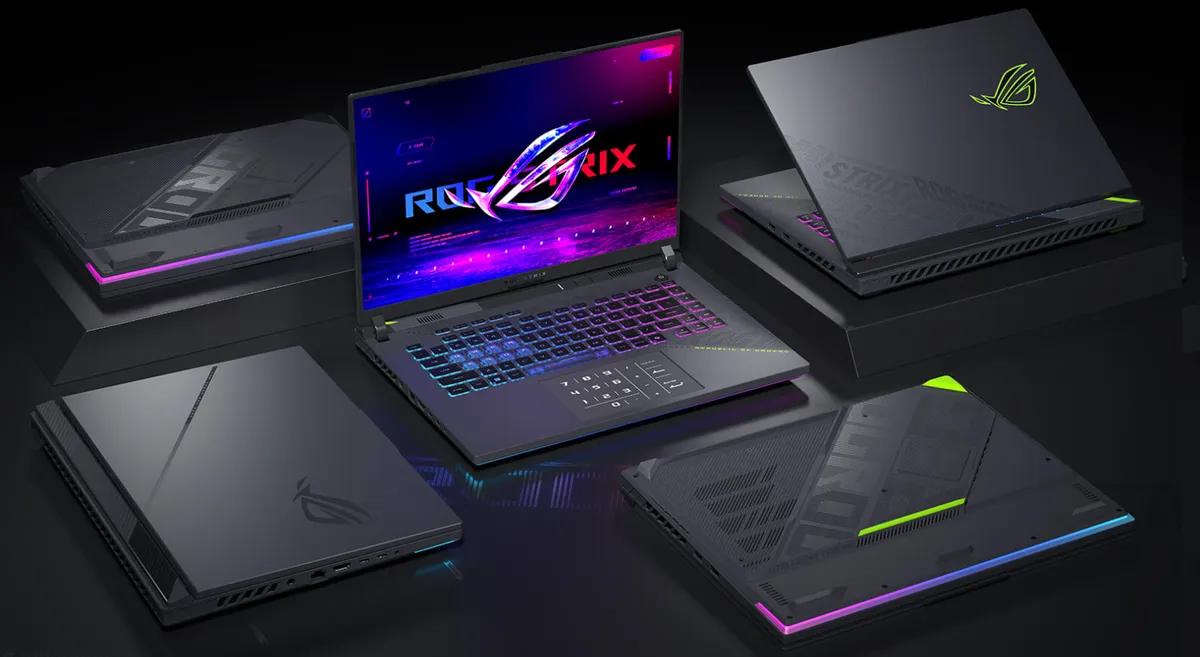
Asus ROG Strix G16 (2025) enters the 2025 gaming laptop market focused on raw performance rather than aggressive redesign. The system combines Nvidia’s RTX 50-series graphics with AMD’s Ryzen 9 9955HX3D processor, aiming to deliver high frame rates without pushing into flagship pricing territory. It is positioned as a middle ground between premium thin-and-light gaming laptops and bulkier desktop replacements.
This coverage draws from testing and analysis conducted by IGN, with thanks to Chris Coke on IGN for the original performance data and evaluation. His review frames the Strix G16 as a familiar design refined through internal upgrades, rather than a dramatic reinvention.
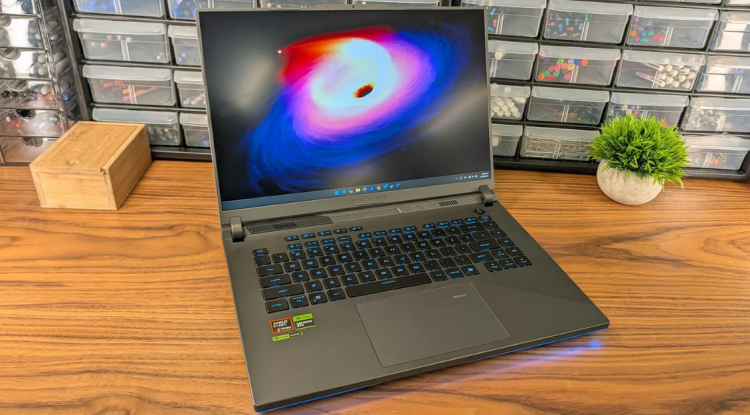
Visually, the Strix G16 adheres to established gaming laptop conventions. It measures 13.94 x 10.39 x 1.2 inches and weighs 5.51 pounds, placing it firmly outside the portable category. RGB lighting features prominently, including a bright keyboard and front LED strip, paired with an aggressive chassis marked by sharp angles and a large ROG logo. The overall look closely mirrors last year’s model, which may disappoint buyers seeking visible changes.
| Component | Specification |
| Display | 16-inch IPS (ROG Nebula Certified), 500 nits |
| Resolution | 2560 × 1600 |
| Refresh Rate | 240Hz |
| Processor | AMD Ryzen 9 9955HX3D |
| Graphics | Nvidia GeForce RTX 5070 Ti |
| Memory | 32GB DDR5-5600 |
| Storage | 2TB NVMe SSD |
| Ports | 2× USB-A 3.2 Gen 2, 2× USB-C (USB4), HDMI 2.1, RJ45, 3.5mm audio |
| Networking | Wi-Fi 6E, Bluetooth 5.3 |
| Webcam | 1080p Full HD |
| Battery | 90Wh |
| Weight | 5.51 pounds |
The AMD configuration tested includes two USB-A ports, two USB4 Type-C ports, HDMI 2.1 output, Ethernet, and a combined audio jack. Only one USB-C port supports charging, and both USB-A ports sit on the right side, which can interfere with mouse use. Memory and storage are user-upgradeable through the removable back panel.
The Ryzen 9 9955HX3D is central to the system’s gaming performance. Its stacked 3D V-Cache design doubles L3 cache to 128MB, reducing latency and improving frame rates in CPU-bound scenarios. In practical testing, this translated into measurable gains over similar systems using standard Ryzen 9 chips, particularly at 1200p and 1600p resolutions.
Cooling on the AMD model relies on a three-fan, heat-pipe design carried over from the previous generation. Liquid metal is applied to the GPU, while airflow enters from the bottom and keyboard area and exhausts through the sides and rear. Under sustained load, recorded peak temperatures reached 85C on the CPU and 87C on the GPU in turbo mode. Fan noise becomes noticeable during gaming, and heat is felt near the mouse area, though it remains manageable.
The display avoids OLED and mini-LED panels, opting instead for a 16-inch IPS screen with 240Hz refresh rate. Peak brightness reaches around 500 nits, and color reproduction is described as vibrant and accurate for both gaming and content creation. The 1600p resolution strikes a balance between clarity and performance, allowing high frame rates without relying on extreme GPU power.
Input and audio quality land in the competent category. The keyboard offers good tactility but lacks the sharp feedback found on some competitors. The trackpad measures 3.4 x 5.1 inches and includes a toggleable number pad, which can activate unintentionally. Speakers deliver higher volume and stronger bass than typical gaming laptops, though competitive play still benefits from a headset.
Battery life remains a limitation. In mixed-use testing, the 90Wh battery lasted just over five hours, while gaming reduced runtime to roughly an hour. USB-C charging up to 100W proved inconsistent during testing, with unexplained power drain even under minimal load. The included 220W power brick adds significant weight, making it a necessary but cumbersome accessory.
“The Asus ROG Strix G16 is a system that puts gaming performance first, at the expense of other features,” wrote Chris Coke.
“But if all you’re after is gaming, it’s a top-pick in its class.”
Performance benchmarks place the Strix G16 in a favorable position for its class. In real-world gaming tests, it achieved frame rates 7 to 16 percent higher than comparable ROG Zephyrus models using the same GPU. The system maintains stable performance under load, though its size and charging quirks reduce its appeal as a daily carry device.
Read also about MSI Claw A8 BZ2EM, which offers a mid-range alternative in the high-end PC handheld market, positioned between the Asus ROG Xbox Ally X and Lenovo Legion Go 2, with a larger display and long battery life but limited differentiation from more established competitors.


 Successfully copied... Thank you for sharing our content!:



5% deposit bonus up to 100 gems

a free Gift Case





EGAMERSW - get 11% Deposit Bonus + Bonus Wheel free spin


EXTRA 10% DEPOSIT BONUS + free 2 spins

3 Free Cases + 100% up to 100 Coins on First Deposit


5 Free Cases, Daily FREE & Welcome Bonuses up to 35%

3 free cases and a 5% bonus added to all cash deposits.

+5% to deposit




Comments