




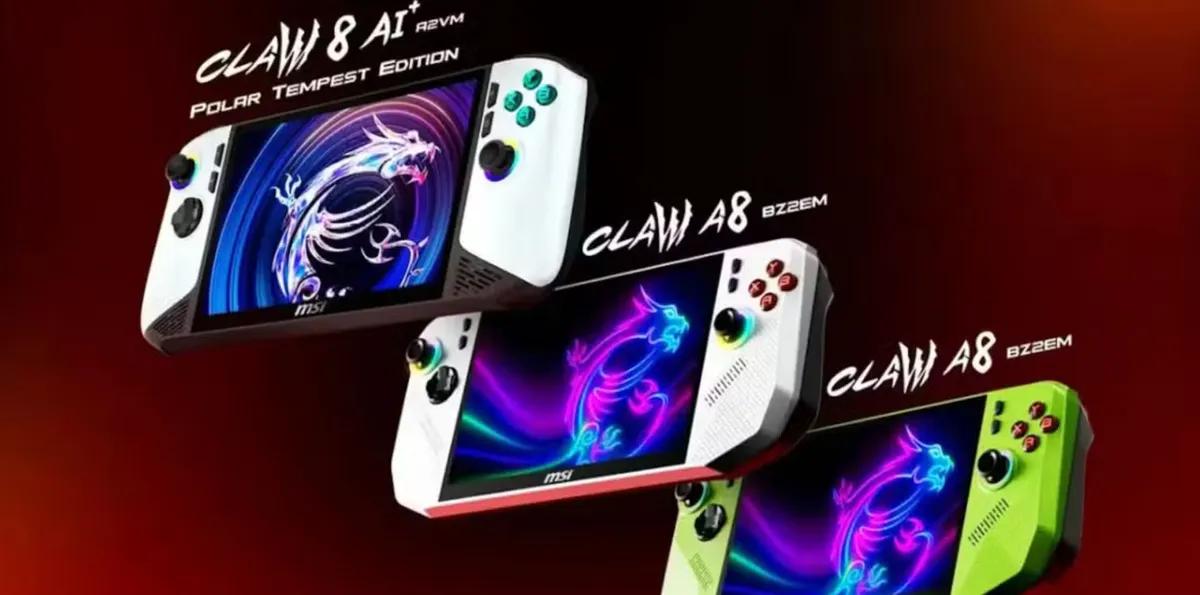
MSI’s Claw A8 BZ2EM Lands Between Rivals Without Shifting The Field
 Review
The MSI Claw A8 BZ2EM enters a crowded field of high-end PC handhelds built around AMD’s Ryzen Z2 Extreme processor. It sits between Asus’ ROG Xbox Ally X and Lenovo’s Legion Go 2 in price, size, and ambition. MSI positions it as a premium alternative with a larger display, long battery life, and native support for the Xbox Full Screen Experience. On paper, the specification sheet matches expectations for a late-2025 flagship handheld. In practice, the device struggles to separate itself from competitors that feel more mature.
This post is based solely on Will Judd’s review published on IGN, which provides the full technical and performance context behind the MSI Claw A8 BZ2EM Review.
The Claw A8 BZ2EM is already available in the UK, priced at £850, with a single configuration that includes a Ryzen Z2 Extreme processor, 24GB of RAM, and a 1TB SSD. In the US, placeholder pricing lists the same model at $1150. There are no lower-cost trims, no storage variants, and no official entry-level option. MSI is betting on a fixed premium package, placing the device £50 above the ROG Xbox Ally X while remaining far cheaper than Lenovo’s £1100 Legion Go 2.
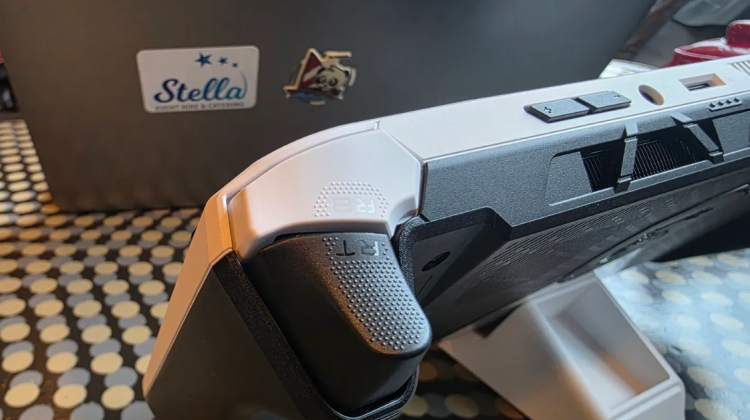
Image: MSI Claw A8 BZ2EM, Will Judd/IGN
Physically, the Claw A8 BZ2EM refines the design language introduced with MSI’s earlier Intel-powered Claw. Button placement has been revised, cooling vents have moved, and the overall layout now mirrors what has become standard among Z2 Extreme handhelds. The chassis remains plastic, offered in white or lime green, with sharp edges that distinguish it from Lenovo’s more rounded design. Grip ridges along the rear improve handling, though the back panel looks plain next to rivals with deeper sculpting. Weight is manageable for extended sessions, but still noticeably heavier than a Nintendo Switch-class device.
Input hardware is one of the Claw’s stronger areas. Hall Effect joysticks and triggers promise longer lifespan and consistent response, addressing wear issues seen in older handheld designs. RGB rings around the sticks are configurable or can be disabled entirely. Two rear buttons add flexibility for custom mappings. Shoulder buttons and triggers are slightly smaller than average, but comfort remains acceptable during long play sessions.
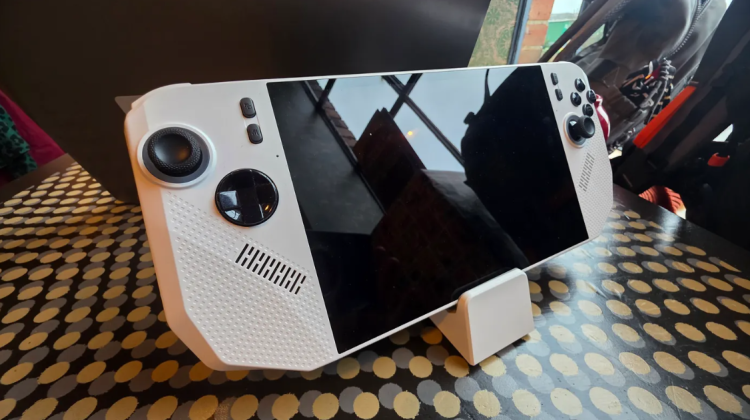
Image: MSI Claw A8 BZ2EM, Will Judd/IGN
Connectivity is generous. Two USB-C Thunderbolt 4 ports sit on the top edge, alongside a 3.5mm audio jack and Bluetooth support. Both USB-C ports handle DisplayPort Alt Mode, though their proximity can cause interference with oversized dongles. A fingerprint reader integrated into the power button simplifies Windows login. Storage expansion is unusually flexible for this category, thanks to a full-size 2280 NVMe slot. This allows users to install standard desktop SSDs, which are cheaper per gigabyte than the smaller drives used in many handhelds. A microSD slot provides a slower but inexpensive secondary option.
The eight-inch 1920×1200 IPS display defines much of the Claw’s identity. Its 16:10 aspect ratio offers slightly more vertical space than the 16:9 panels used by some rivals. The difference is modest in games but noticeable when browsing libraries or reading text. The higher pixel count carries a small performance cost compared to 1080p screens, typically reducing frame rates by around ten percent in GPU-limited scenarios. The panel supports a 120Hz refresh rate and variable refresh rate, a meaningful advantage for smoothing uneven performance without adding latency. Brightness peaks at roughly 500 nits, sufficient for indoor use and overcast outdoor conditions.
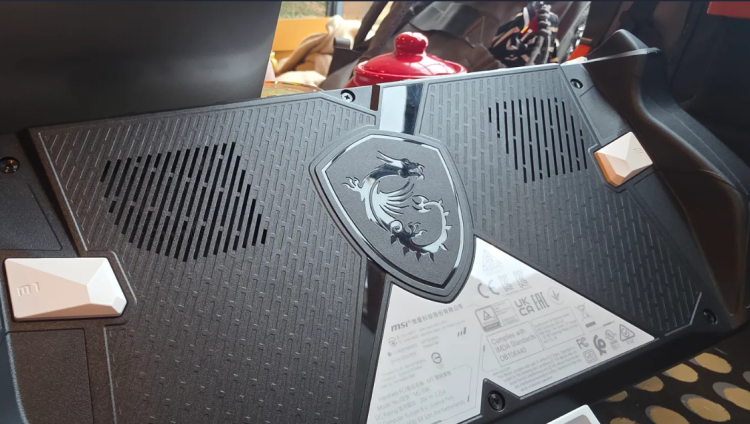
Image: MSI Claw A8 BZ2EM, Will Judd/IGN
Software support centers on Microsoft’s Xbox Full Screen Experience, enabled by the shared Z2 Extreme platform. Users can boot directly into a console-style interface that aggregates games from multiple launchers and limits background Windows processes. Switching back to the Windows desktop is fast, but reclaiming maximum performance requires a reboot. MSI’s own Center M software is less polished. It overlays the Xbox interface on startup unless disabled and introduces intrusive pop-ups tied to automatic performance tuning. Once configured, it allows power and fan adjustments but lacks the cohesion seen in Asus’ Armoury Crate.
Performance results place the Claw firmly in the middle of the Z2 Extreme pack. Synthetic benchmarks show it trading positions with the Legion Go 2 while consistently trailing the ROG Xbox Ally X. In 3DMark tests, the margins are small, but real-world games reveal clearer gaps. Call of Duty: Black Ops 6 averages 37 frames per second under extreme settings with upscaling, behind both rivals. Cyberpunk 2077 widens the difference, with the Xbox Ally X running significantly faster under comparable settings. Forza Horizon testing shows parity with Lenovo’s handheld but again leaves MSI behind Asus.
Battery life is where the Claw A8 BZ2EM stands out. In light workloads, it exceeds eleven and a half hours, outlasting both main competitors. Gaming endurance is also marginally better, lasting just under three hours in demanding Cyberpunk 2077 scenarios. Thermal behavior remains controlled, with no excessive heat during testing, suggesting an efficient cooling solution.
At its price, the MSI Claw A8 BZ2EM delivers what a premium handheld should. It offers strong battery life, a large and capable display, modern input hardware, and flexible storage options. Yet it rarely leads. The ROG Xbox Ally X remains cheaper, faster, and more refined, while Lenovo’s Legion Go 2 appeals to users prioritizing size and features over cost. The Claw occupies the space between them without redefining it. In the current market, competence alone is not enough to stand out.


 Successfully copied... Thank you for sharing our content!:



5% deposit bonus up to 100 gems

a free Gift Case





EGAMERSW - get 11% Deposit Bonus + Bonus Wheel free spin


EXTRA 10% DEPOSIT BONUS + free 2 spins

3 Free Cases + 100% up to 100 Coins on First Deposit


5 Free Cases, Daily FREE & Welcome Bonuses up to 35%

3 free cases and a 5% bonus added to all cash deposits.

+5% to deposit




Comments