




December Patch Reshapes Borderlands 4 Performance On PC
 Games
Games Patches
Borderlands 4 has received a major PC-focused update that directly addresses the performance problems that defined its launch window. The December 11, 2025 patch introduces engine-level optimizations, memory restructuring, and revised rendering behavior that materially change how the game runs on a wide range of hardware. For Borderlands 4 on PC, this is the first update that targets core execution efficiency rather than surface-level tuning.
At launch, Borderlands 4 struggled with unstable frame times, heavy CPU overhead, aggressive VRAM usage, and frequent stutters tied to shader compilation and streaming. The game’s visual density and Unreal Engine feature set pushed hardware hard, but poor optimization amplified the load. Many systems, including capable mid-range GPUs, failed to maintain consistent performance even at reduced settings. The new update reworks several of those foundations.
The most significant change is the introduction of Profile-Guided Optimization. By compiling and optimizing the executable based on real runtime behavior, the developers have reduced CPU bottlenecks that previously limited frame rates across multiple configurations. CPU-bound scenarios, especially in busy outdoor areas, now show measurable gains. This is not a minor adjustment. PGO alters how the game code is laid out and executed, and the results reflect that scope.
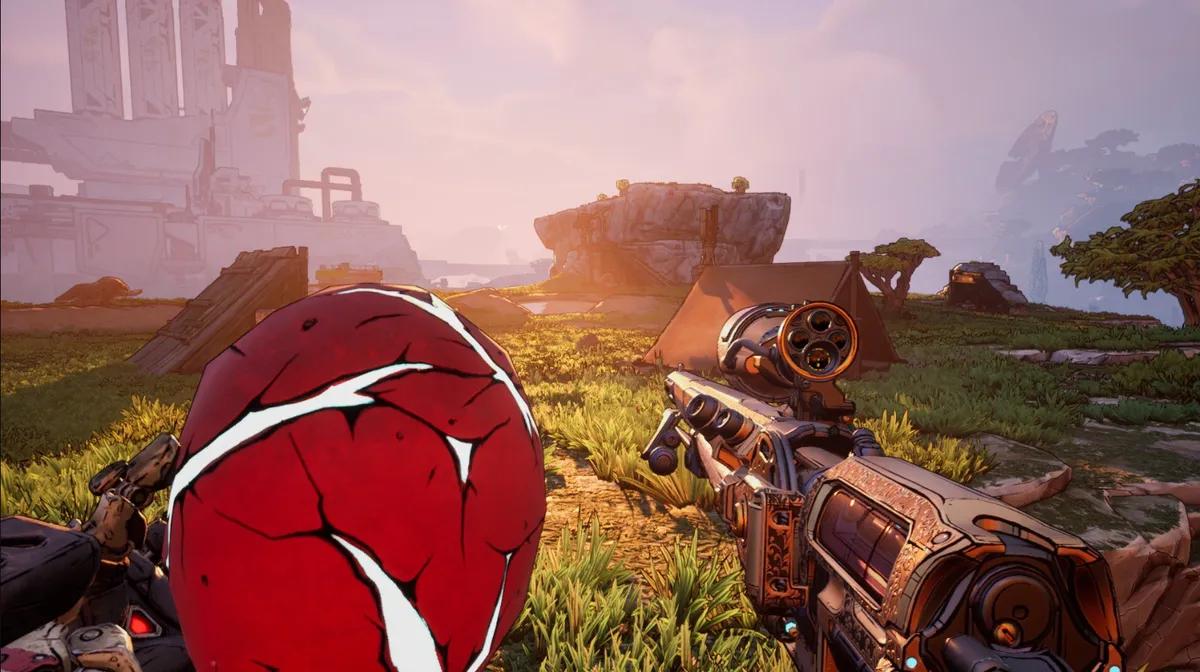
Environmental rendering has also been revised. Grass, shrubs, and other foliage assets have been rebuilt with updated meshes and materials designed to reduce draw cost. These elements previously carried a disproportionate performance penalty, particularly when combined with wind simulation and dynamic lighting. The update lowers their impact without removing density, which preserves visual continuity while easing GPU and CPU strain.

Several optimizations have been pulled in from newer versions of Unreal Engine. Lumen lighting now runs more efficiently, foliage reflections have been refined, and water rendering has been streamlined. Cutscenes, which were previously locked to 30 frames per second, now run at higher frame rates, eliminating a long-standing and jarring transition between gameplay and cinematics. These changes collectively reduce frame pacing issues that affected both exploration and combat.
Lower-end PCs receive targeted improvements. Areas dense with grass, dynamic shadows, and wind effects have been adjusted to scale more predictably. This matters for systems that previously dropped frames sharply when entering specific biomes or combat encounters. The update does not eliminate hardware limits, but it narrows the gap between expected and actual performance.
Memory handling is another major focus. The patch reorganizes texture and mesh memory pools to make better use of available VRAM. This change allows Borderlands 4 to maintain visual quality at lower graphics presets without incurring the heavy performance penalties seen at launch. GPUs with 8GB of VRAM benefit the most. Previously, these cards often hit memory ceilings that caused stutters or forced aggressive streaming. The revised system reduces those failures and stabilizes frame delivery.
Physics and Niagara systems have also been addressed. The update reduces memory leaks that contributed to out-of-memory crashes during extended sessions. Cloth initialization has been optimized to lower load times and reduce the cost of spawning characters and enemies. Shader pre-compilation has been improved as well, which cuts down on pipeline state object stutters during play. Some shader-related hitches remain, but their frequency has been reduced.
Lighting cleanup plays a quieter but meaningful role. The developers removed unnecessary lights, particularly those tied to volumetric clouds. These lights consumed resources without adding proportional visual value. Their removal improves performance consistency, especially in large outdoor spaces. Enemy and NPC spawn limits have also been corrected in certain areas where counts exceeded intended values. This change improves both performance and gameplay flow by preventing sudden spikes in CPU and AI processing.

New graphics options round out the update. Players can now disable shadows, volumetric clouds, and fog entirely. These toggles give users direct control over some of the most expensive rendering features in the game. While such options are common, their absence at launch limited the ability to tailor performance. Their addition signals a shift toward practical configurability.
Independent testing supports the impact of these changes. YouTube analyst Daniel Owen benchmarked the updated build and reported substantial gains on GPUs with 8GB of VRAM. On hardware such as the NVIDIA RTX 5060 Ti 8GB, Borderlands 4 now achieves significantly higher frame rates at High settings. Even at Max settings, performance nearly doubles in some scenarios compared to the launch version. These are not marginal improvements and cannot be attributed to testing variance.

Stuttering has not been fully eliminated. Shader compilation hitches still occur, though less often. Overall frame pacing is improved, and extended play sessions show fewer disruptive stalls. The update does not transform Borderlands 4 into a perfectly smooth experience on all systems, but it clearly resolves many of the issues that undermined its PC release.
Alongside technical fixes, Borderlands 4 continues to receive content updates. The same December update cycle introduced Bloomreaper the Invincible, a new raid boss, along with True Mode and Ultimate Vault Hunter Mode 6. These additions increase endgame complexity and enemy density, making performance stability even more important. The timing of the optimization pass ensures that new challenges are not paired with old technical frustrations.
“Releasing a game, an update, or post-launch content is more often than not a long and sometimes tedious process, albeit very rewarding in the end when releases go smoothly and people end up buying and loving our games,” he said. — Eduardo Aparicio
Gearbox and 2K have emphasized the scale and coordination required to deliver updates of this size. Eduardo Aparicio, Senior Technician on the Release Compliance Operations Team at 2K, described the release process as complex and front-loaded, with most work completed weeks before deployment.
Source: Steam


 Successfully copied... Thank you for sharing our content!:

Comments