




The Sims 4 Welcomes SpongeBob With Two Kits And A Familiar Debate
 Electronic Arts
 Games
GamesThe Sims 4 has expanded its catalog of downloadable content with two licensed kits built around SpongeBob SquarePants, marking one of the franchise’s most overt crossovers to date. Released on December 4, the SpongeBob’s House Kit and SpongeBob Kids Room Kit arrive alongside marketing for The SpongeBob Movie: Search for SquarePants, scheduled for release later this month. As with many of the game’s smaller add-ons, the response from players has split quickly between enthusiasm and frustration.
The Sims 4 SpongeBob Kits focus on décor rather than systems or gameplay mechanics. They sit within the game’s lowest tier of paid content, offering themed furniture and decorations without new interactions or career paths. Critics have framed the release as another example of Electronic Arts leaning on recognizable intellectual property instead of investing in deeper updates. Supporters argue that the kits match the light, playful tone that has long defined both The Sims and SpongeBob, particularly for younger players.
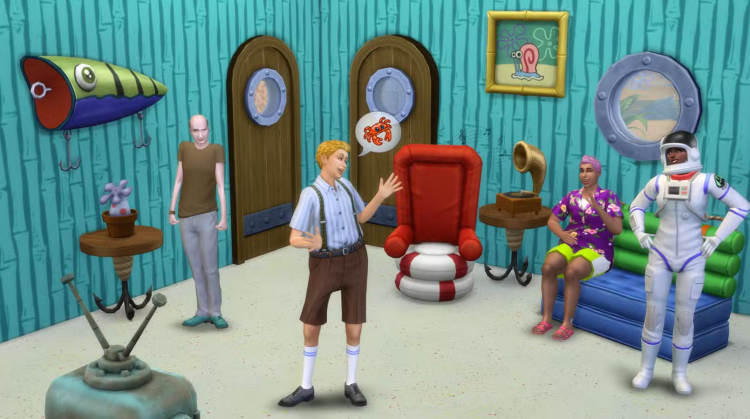
Visually, the kits lean heavily into the cartoon’s identity. Bright colors, oversized shapes, and exaggerated textures dominate the catalog. Some items attempt broader usability. A fishing-hook end table, a neutral rug, and select swatches of an oversized fishing lure can be placed into coastal or quirky builds without immediately signaling a licensed crossover. These pieces can slot into worlds like Brindleton Bay without clashing completely with the game’s established art style.
Other objects make little attempt to hide their origins. Wall art references specific SpongeBob jokes and props, including Mr. Krabs’ first dollar and variations on the “Handsome Squidward” gag. A dinghy-shaped bookcase and themed frames sit firmly in novelty territory, though their restrained color options allow for ironic or tongue-in-cheek placement in adult Sims’ homes. This balance between subtle reference and explicit branding defines much of the kits’ design.
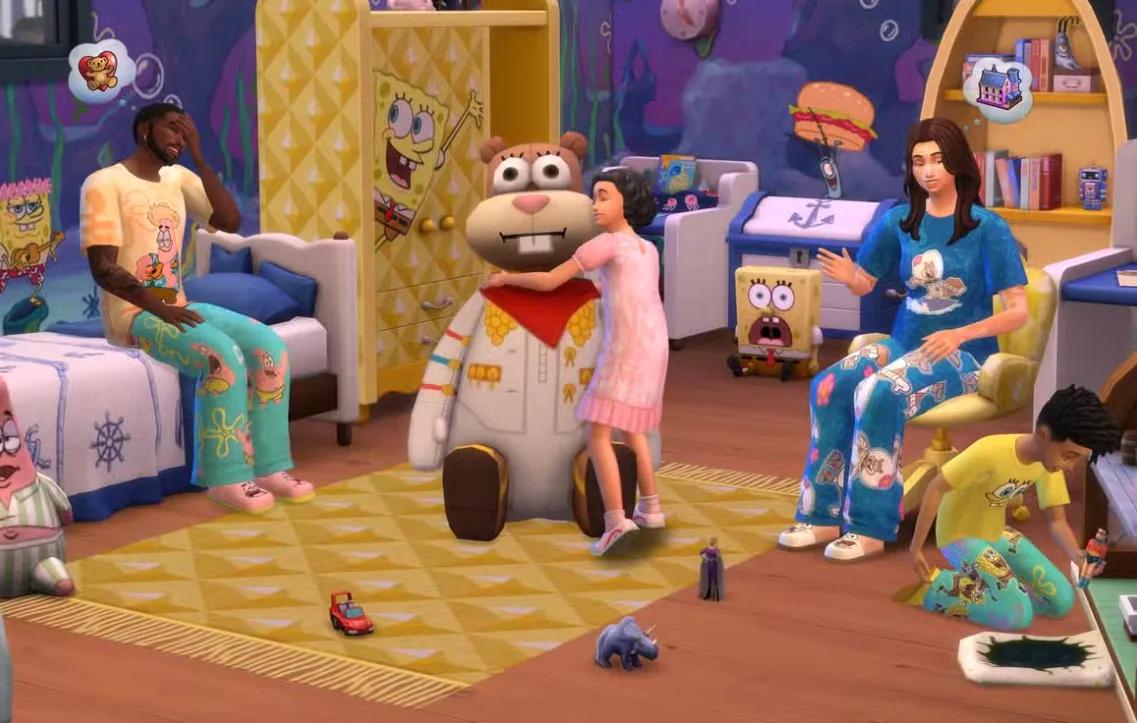
The Kids Room Kit is the more focused of the two. It provides a wide range of character-based swatches, allowing players to theme rooms around SpongeBob, Patrick, Pearl, or other figures from the show. For players invested in family gameplay, the kit expands options for children’s bedrooms without requiring a full expansion pack. The emphasis on variety suggests a deliberate appeal to younger audiences who may already be familiar with the franchise through television or film.
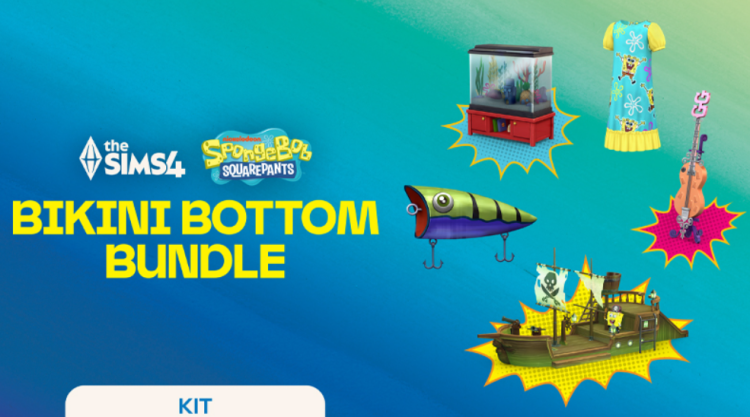
Some details exceed expectations for a kit of this scale. The Krusty Krab playset includes visible dolls of minor characters like Man Ray and Barnacle Boy during play animations, a level of specificity that goes beyond simple branding. A foghorn alarm clock stands out for its physical effect on the game world, shaking the house when it rings and leaning into the exaggerated humor associated with the cartoon.
Not every item lands as well. The magic conch shell, one of the show’s most recognizable objects, appears as a static decorative piece with no interactions. Its simplified, angular design contrasts sharply with the attention given to other assets. For players expecting even minimal functionality, the conch reads as a missed opportunity rather than a deliberate choice.

Other omissions are harder to ignore. Despite SpongeBob’s underwater setting, neither kit includes pool decorations or water-themed build elements. Simple decals or a themed kiddie pool could have extended the kits’ usefulness without expanding their scope significantly. Their absence reinforces the sense that the content was built to meet a narrow brief rather than explore the license fully.
Whether the SpongeBob Kits needed to exist depends largely on expectations. As movie tie-ins, they carry the familiar weight of promotional intent. As Sims 4 kits, they align with the format’s limitations. Kits are not designed to reshape gameplay, and judged by that standard, the SpongeBob offerings deliver what they promise: recognizable objects, visual humor, and targeted appeal.
The broader question concerns immersion. The Sims has increasingly incorporated real-world brands and properties over the years, from fashion labels to pop culture icons. For some players, this breaks the illusion of a self-contained simulation. For others, it reflects how the game is used, as a flexible sandbox shaped by personal taste rather than strict internal logic.
For players uninterested in SpongeBob SquarePants or opposed to licensed content, these kits offer little incentive. For a specific audience, especially families and younger fans, they provide new creative options within a familiar framework. The kits may not shift opinions about The Sims 4’s DLC strategy, but they illustrate how the game continues to intersect with broader entertainment marketing.
Read also, Sims Piracy Community Splinters After Anadius Disappears And Successor Adds A Paywall, as the exit of a long-standing figure leaves uncertainty across one of The Sims 4’s most active underground communities.


 Successfully copied... Thank you for sharing our content!:

Comments