




Fans Trace The Burning Figure Back Through Divinity’s Bloodstained History
 Games
Games Rumors
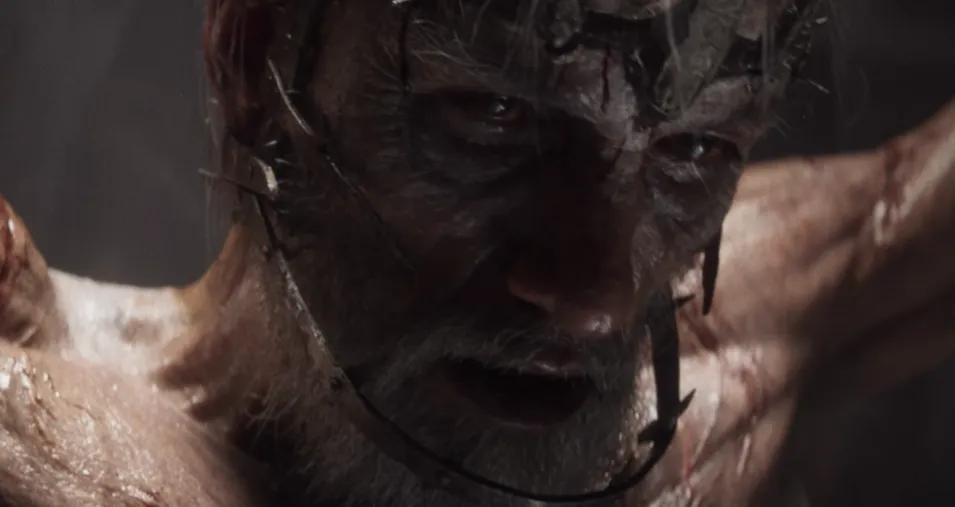
Speculation has moved faster than official information since Larian Studios revealed its next Divinity project with a graphic cinematic debut. The trailer’s central image—a crowned man burned alive inside a towering wicker effigy—has become the focus of intense fan analysis. Viewers familiar with the series’ long and often contradictory history are dissecting every frame, convinced the execution is not symbolic but personal. The question driving the discussion is simple: who is being burned, and why now?
In the days following the reveal, the Divinity trailer has triggered a surge of theory-building across forums and social media. Most speculation centers on Lucian, one of the franchise’s most significant and morally compromised figures. Introduced as the human protagonist of Divine Divinity, Lucian later became a mythic presence across multiple entries, worshipped as the Divine and chosen by Rivellon’s seven gods to oppose Chaos. His legacy, however, is inseparable from betrayal, secrecy, and mass violence carried out in the name of survival.
Lucian’s arc reached its most complex point in Divinity: Original Sin 2. By that time, he was believed dead, his Divine Order continuing his work by hunting Source users. The truth, revealed late in the game, was that Lucian had staged his death and retreated underground. Stripped of his former powers, he was attempting to erase Source from the world entirely. Depending on player choices, Lucian could emerge alive at the end of the story, reinstated as ruler but no longer divine in any meaningful sense.
This outcome has become the foundation of the most popular theory. Fans argue that the trailer depicts a Rivellon that has learned the truth: the gods are gone, and Lucian is powerless. Without divine protection, his long list of crimes—forced purges, secret wars, and sacrifices made without consent—would finally carry consequences. Public execution, staged as a ritual spectacle, would serve both punishment and closure.
Visual details in the trailer strengthen that interpretation. The man in the fire appears the right age, wears a crown, and bears a distinctive star-shaped scar on his chest. Longtime players have noted that the mark closely resembles the star symbol found on Lucian’s staff in earlier games. The resemblance is strong enough that many fans consider it intentional rather than coincidental.
Not all theories place Lucian directly inside the wicker frame. Some suggest the scene depicts a ceremonial reenactment, with another victim burned as a symbolic stand-in long after Lucian’s death. Others point to Damian, the child Lucian adopted and unknowingly raised as a vessel for the Lord of Chaos. Damian’s fate has always been tied to catastrophe, and his execution could plausibly trigger Chaos manifesting at the moment of death, aligning with the violent imagery shown.
These interpretations connect closely to the promotional line released alongside the trailer:
“The gods are silent. Rivellon bleeds. New powers stir.”— Larian Studios
The wording supports multiple readings. A world without gods implies the events of Original Sin 2 have already unfolded. Bleeding suggests instability rather than resolution. New powers stirring leaves room for Chaos, tyranny, or something entirely unfamiliar to replace what was lost.
Another thread of speculation draws attention to a Blood Rose visible in the trailer. For lore-focused fans, this detail points toward Braccus Rex, the former Source King and one of the series’ most notorious villains. Though canonically dead more than once, Braccus has returned repeatedly across games. His association with Blood Roses has led some to argue the burning figure could relate to his legacy, or that the ritual signals his influence resurfacing yet again.
All of these theories depend on a final uncertainty: when the game is set. Larian has not confirmed whether the new Divinity takes place after the established timeline, during an unexplored gap, or before any previous entry. Some fans argue the title itself suggests a foundational story, while others note that Divinity’s chronology has never been strictly consistent.
What is clear is that the trailer is designed to provoke recognition rather than explain itself. It relies on shared memory, unresolved endings, and the moral weight of past decisions. Whether the burning man is Lucian, Damian, a surrogate, or something else entirely, the scene frames Rivellon as a world reckoning with the consequences of its own myths. Larian may eventually clarify the truth, but for now, the fire is doing exactly what it was meant to do.


 Successfully copied... Thank you for sharing our content!:

Comments