




Marvel MaXimum Collection Review
 Review
 Steam
Steam PlayStation
 Marvel
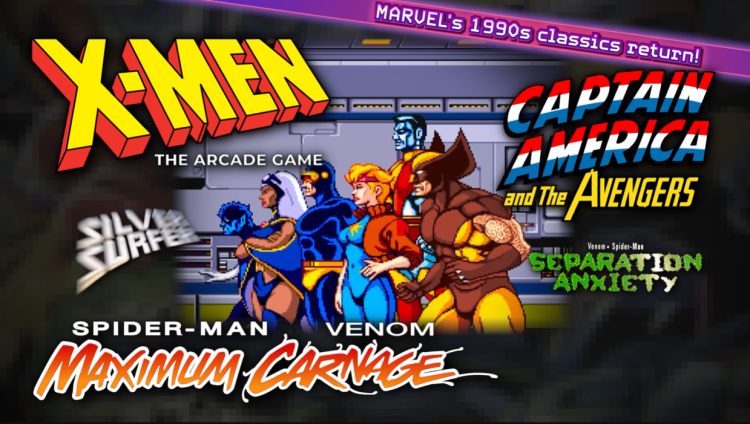
Marvel MaXimum Collection packages seven distinct Marvel games from the late 1980s and early 1990s, plus their various platform ports, into a single bundle of 13 playable titles. Limited Run Games developed and co-published the collection alongside Konami, pulling licenses from multiple original publishers including Data East and LJN. It launched March 27, 2026 on PS5, Xbox Series X/S, Switch, and PC. The lineup spans side-scrolling beat-em-ups, a shoot-em-up, and a platformer, with quality ranging from genre-best to borderline unplayable. The rating is Everyone 10+.
X-Men: The Arcade Game
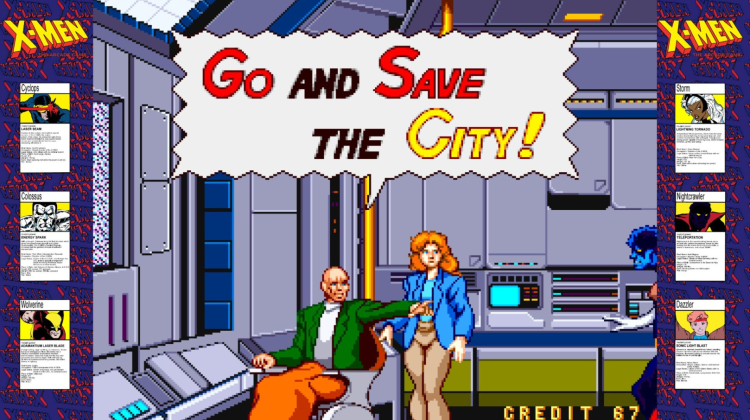
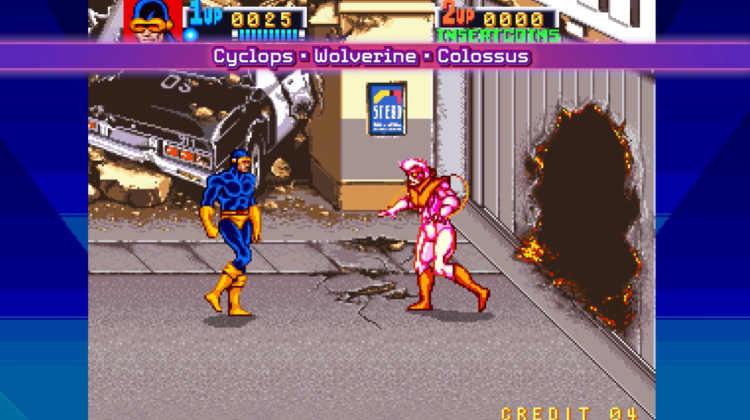
Konami's 1992 X-Men: The Arcade Game anchors the collection. The six-player beat-em-up ran on Konami's custom hardware and shipped in multiple cabinet sizes, including a massive unit whose shouted Colossus roars carried across entire arcades. The collection lets players select which cabinet version to play and supports up to six players online via rollback netcode or up to four locally, since the PS5 caps DualSense controller connections at four. A full run takes roughly 60 minutes.
The sprites are large and well-animated. Characters like Captain America and Colossus move with an aggressive, fluid feel uncommon in the genre's era. The pixel art holds up as some of the best produced for arcade hardware, and the poorly translated English dialogue is more endearing now than it was in 1992. The game devoured quarters at a rate few contemporaries matched, but the combat remained simple and satisfying enough to justify every coin. Multiple reviewers ranked it below Final Fight and Capcom's Alien vs. Predator but above nearly everything else in the beat-em-up canon. It alone justifies the collection's price.
Captain America and the Avengers
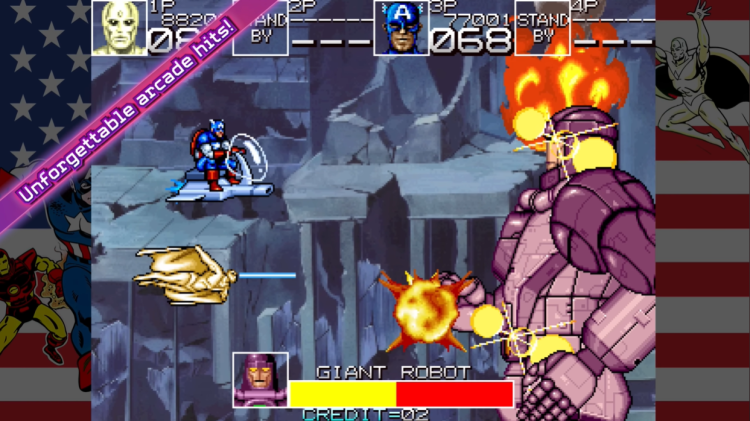
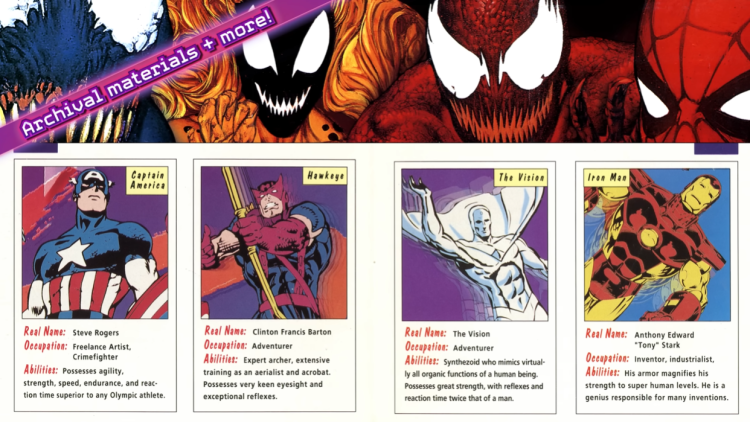
Data East's Captain America and the Avengers, released in 1991, sits a tier below X-Men. The arcade version lets players pick from Iron Man, Captain America, The Vision, and Hawkeye. Beat-em-up sequences alternate with side-scrolling shooter sections that push the action to increasingly outlandish locations: underwater, deep space, and eventually to Red Skull's stronghold. The visuals in later stages are handled with care, but the hits lack the impact and panache of Konami's game. Comic book cameos pop up regularly.
The collection includes both the arcade original and its 1992 Sega Genesis port, which shrinks sprite sizes and strips some graphical effects while keeping the same campaign structure. The NES version is essentially a different game, replacing the beat-em-up format with side-scrolling action and light RPG mechanics. Its inclusion adds real variety. The SNES edition is absent, likely because Mindscape held that license alongside the Game Boy and Game Gear ports, creating rights complications for Limited Run Games. Having the arcade original and both console versions side by side does make clear how much each port sacrificed or reinvented, and that comparison alone justifies including the weaker versions.
Maximum Carnage and Separation Anxiety
Spider-Man/Venom: Maximum Carnage, a 1994 brawler, appears in both its Sega Genesis and SNES versions. The Genesis release shipped in a distinctive blood-red cartridge. Comic book-style cutscenes punctuate the action, and the 16-bit soundtrack drew specific praise across reviews. The gameplay is more rote than X-Men or Captain America, and enemies carry oversized health bars that stretch encounters past their welcome. Bosses repeat. Trap rooms between stages feel like padding. Hit detection does not always line up.
Its 1995 successor, Venom/Spider-Man: Separation Anxiety, reuses much of Maximum Carnage's gameplay with less care. It adds a second-player option that its predecessor lacked, but neither the story nor the fights match up. Both games feature Spider-Man and Venom pursuing Carnage and a host of other villains across stages that start to blur together as enemy variety wanes. I see both games as entertaining enough for a single pass with cheats enabled, but they expose their limits quickly next to the arcade titles in the same bundle. They are not cash-ins, but they do not hold up to extended play either.
Arcade's Revenge and Silver Surfer
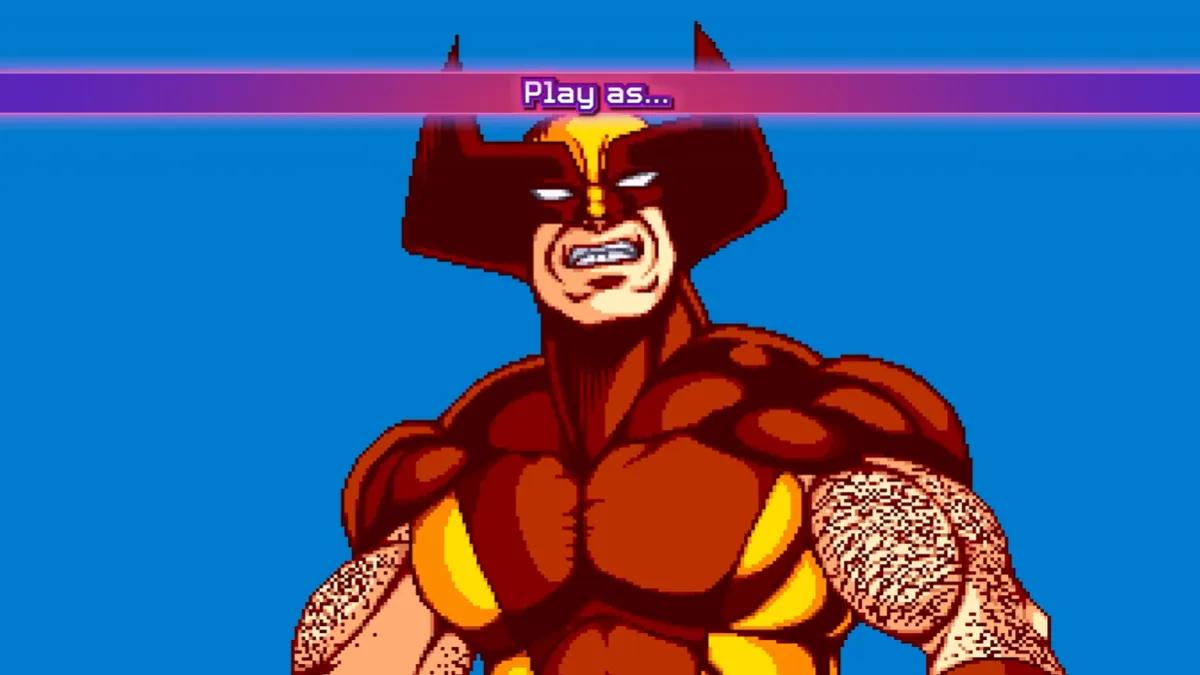
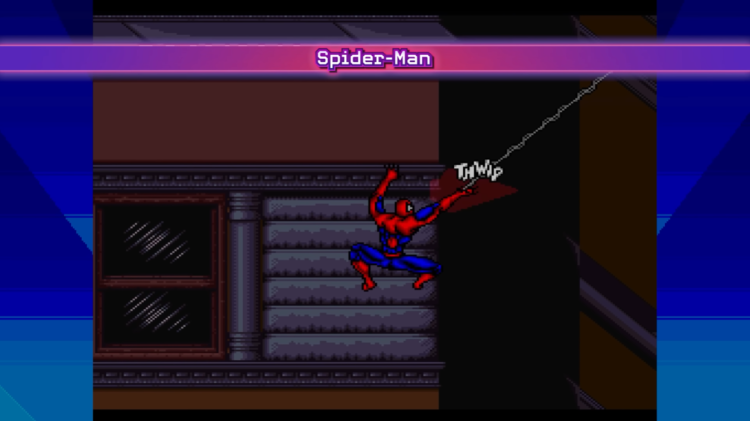
Spider-Man and the X-Men in Arcade's Revenge, published by LJN in 1992, is the weakest game in the collection. It operates as a 2D platformer where players rotate through characters including Spider-Man, Gambit, Cyclops, and Wolverine across levels designed by the villain Arcade. Wolverine's stage, themed around murderous toys, has an amusing premise. The execution fails. Controls are stiff and fiddly, objectives are opaque, enemy projectiles track aggressively, and the health pool depletes fast. One of Wolverine's levels is visually garish. Levels can feel labyrinthine, though Spider-Man's spider-sense does point toward objectives, and web-slinging adds some verticality to the basic movement. The game tries to give each protagonist a distinct playstyle, but the level design undercuts every character it introduces. The SNES version has a strong soundtrack, but the game received good reviews at its original release and has aged the worst of anything here.
Silver Surfer for the NES, released in 1990, rounds out the bundle. It plays as a scrolling shooter that alternates between horizontal R-Type-style segments and vertical 1942-style sequences. The Surfer collects equipment parts across five worlds tackled in any order. The sprite feels too large to weave through enemy patterns, and most stages scroll automatically, locking players into narrow routes. Constantly spawning enemies kill on contact and send the player back to the stage's start. The game's reputation for extreme difficulty is partly a function of poor design rather than intentional challenge. One reviewer called it flatly "not very good" rather than hard. With invincibility cheats enabled, though, the game turns into a guided tour of its excellent chiptune soundtrack and some imaginative cosmic environments. Playing it that way, stripped of the punishing deaths, reveals that the levels are more varied than the gameplay suggests.
Quality of Life and Extras
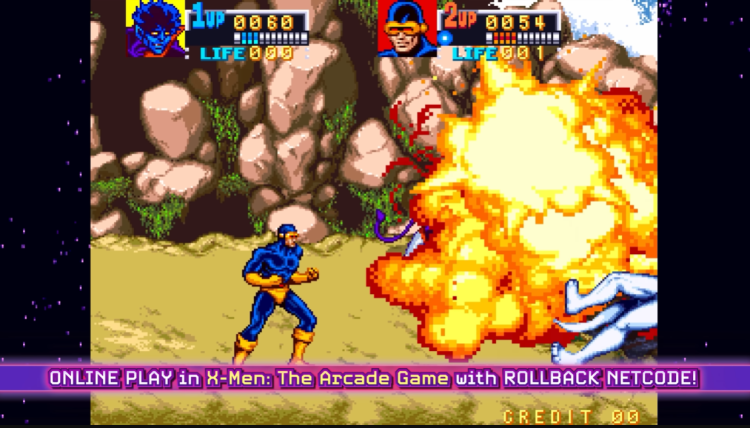
All home console ports include toggleable cheats for unlimited lives and invincibility. Arcade titles can be pumped with continues, and dip switches are adjustable. Rewind and save state functions cover every game. Display options include sharp modern presentation and configurable CRT filters with adjustable scanline strength and monitor curvature. The arcade titles support online multiplayer for up to six players, a rare feature for retro collections, though one reviewer noted performance issues at launch.
Archival content is thinner than expected. Each title comes with cleanly scanned manuals and marketing materials. One standout is a hand-written design document for Maximum Carnage that details the game's early planning and brainstorming. A music player lets players listen to every soundtrack on demand; the X-Men: The Arcade Game tracks are the ones you will keep coming back to. I think the preservation work on the manuals and the Maximum Carnage design document is the collection's most underrated feature, but the absence of concept art, developer interviews, or broader production history leaves the museum section feeling incomplete.
The Gaps
The collection omits SEGA's own Marvel output, including the System 32 Spider-Man arcade game and the home console title Spider-Man vs. The Kingpin. The SNES port of Captain America and the Avengers is missing. Some 16-bit ports differ only slightly from each other, and the Game Boy version of Arcade's Revenge adds little beyond historical completeness. One reviewer questioned why anyone would choose to play through the Game Boy edition for fun. Thirteen titles is a generous count, but several of those are minor platform variants rather than distinct experiences. The collection represents a specific slice of Marvel's gaming history rather than a comprehensive archive, and the absence of SEGA's contributions is the most conspicuous gap.
Verdict
Marvel MaXimum Collection delivers 13 retro Marvel games where one is a flat-out classic, a few are decent, and the rest are playable thanks to quality-of-life features that smooth over decades of age. Marvel MaXimum Collection is an 8/10 game.
Pros:
- X-Men: The Arcade Game remains one of the best beat-em-ups ever made and includes six-player online with rollback netcode.
- Cheats, rewind, save states, and display options make every game accessible regardless of original difficulty.
- Scanned manuals and the Maximum Carnage design document preserve real development history
Cons:
- Archival extras lack concept art, interviews, or production context beyond manuals and ads.
- Several included games, particularly Arcade's Revenge and Silver Surfer, have aged past the point of casual enjoyment.
The collection works best as a time capsule of how Marvel licensed its characters to game developers across a specific era of arcade and console hardware. X-Men: The Arcade Game alone is worth the asking price, and the quality-of-life tools ensure that even the rougher entries can be experienced without frustration. Players looking for a comprehensive Marvel gaming retrospective will notice the gaps, but the games that are here have been properly preserved and given the tools they needed to remain playable.


 Successfully copied... Thank you for sharing our content!:



5% deposit bonus up to 100 gems

a free Gift Case





EGAMERSW - get 11% Deposit Bonus + Bonus Wheel free spin


EXTRA 10% DEPOSIT BONUS + free 2 spins

3 Free Cases + 100% up to 100 Coins on First Deposit


5 Free Cases, Daily FREE & Welcome Bonuses up to 35%

3 free cases and a 5% bonus added to all cash deposits.

+5% to deposit




Comments