




Deadzone: Rogue Review
 Review
 PlayStation
 Steam
Steam Rogue
RogueProphecy Games' Deadzone: Rogue launched on PC in August 2025, followed by PlayStation 5 and Xbox Series X/S releases in September, with a Switch 2 version arriving in 2026. The game casts players as an amnesiac soldier waking aboard the ISS-X, a derelict spaceship overrun by hostile robots and twisted creatures. Death sends the soldier back to the starting room, pistol in hand, memories still missing. Three zones, thirty rooms each, and a web of interlocking upgrade systems stand between that first death and the answers buried in the ship.
Aboard the ISS-X
The narrative premise does double duty. It explains why the player character keeps reviving — a persistent problem roguelites rarely bother to address — and it gives the loop a destination beyond simple score-chasing. Scattered data logs, roughly one hundred in total, fill in the backstory of what went wrong on the ISS-X, and NPC dialogue adds texture between firefights. The protagonist speaks in a flat, deadpan register that initially grates but eventually works, particularly when he drops sarcastic comments about the horrors around him. Environmental storytelling carries weight too: rooms tell their own micro-narratives through wreckage, corpses, and console readouts, even as visual variety stays limited by the ship's industrial corridors.
Between runs, the soldier returns to a small hub room at the far end of the ship. Here, players spend Tech Points and Components found during previous attempts to unlock permanent stat upgrades via tech masteries. These range from extra health to raw damage increases. The hub also houses weapon and character skin options, a plant named Planty, and the mission select screen. The space is compact but functional, a brief reprieve from the violence that bookends every loop. One notable friction point: there is no way to skip the waking-up animation or restart a mission directly from a menu, which adds dead time between attempts.
Weapons and Gunplay
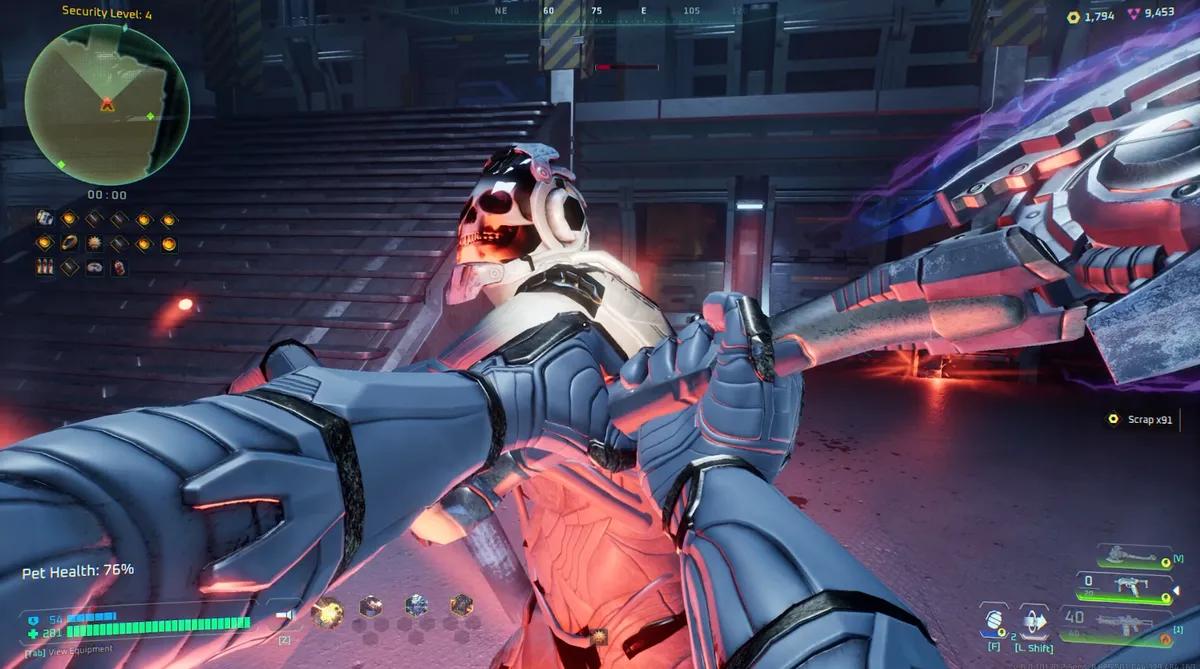
Every run starts with a common pistol, plain grenades, and a dash ability. That loadout expands fast. The weapon pool spans knives, axes, lances, multiple pistol variants, SMGs, shotguns, miniguns, assault rifles, sniper rifles, and a handful of gimmicky energy blasters. Weapons are classified into primary and secondary slots: primaries include shotguns and assault rifles, while secondaries hold pistols as a fallback option. Melee weapons occupy their own slot but tend to lack stopping power outside very specific situations.
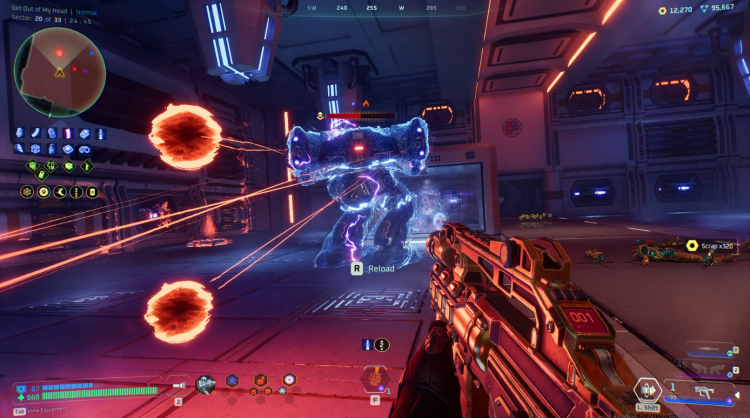
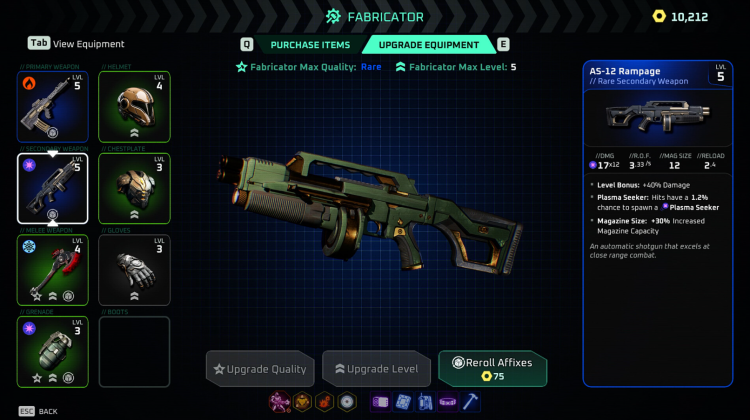
Rarity tiers run from Common to Legendary. Higher-rarity weapons add elemental damage, status effects, and passive buffs. At fabricator stations found between rooms, players can spend scrap to level up equipment, upgrade its rarity tier, or re-roll its modifiers. Every piece of gear has an upgrade ceiling, though, which forces eventual replacement rather than allowing one lucky find to carry an entire campaign. The system keeps loot decisions fast: a green arrow on a pickup means it outperforms what the player currently holds. Aim assist hits a precise sweet spot on controller, and the gunplay leans arcade — fast, loud, and responsive — drawing comparisons to Killing Floor and Gunfire Reborn rather than tactical shooters. Sprinting with a shotgun feels as tight as popping heads at range with a sniper rifle.
Building a Run
Rooms reward augments, perks, and items on completion. Augments reshape combat behavior with powerful bonuses. Perks boost survivability or raw damage output. Items layer on passive buffs, and Superior Items — found at safe rooms — carry between runs and can be upgraded permanently. Stacking the right combination of augments, perks, and items triggers a Synergy, a special ability that can warp the balance of a run entirely. Multiple active Synergies push the player into demigod territory, to the point where health management stops mattering because enemies drop enough Health Orbs to refill from one HP to full in seconds.
Companion bots stand out among the available perks. These small drones follow the player, draw enemy aggro, and absorb hits from bosses and swarms, freeing the player to maintain distance and deal damage without constant pressure. One viable strategy involves stacking multiple support drones until a small fleet trails behind, soaking fire while the player burns everything down with elemental loadouts.
Elemental damage types can be linked across equipment — boosting one element on a weapon integrates with the same element on grenades or armor. I think Prophecy Games built one of the tightest build-crafting loops in the roguelite shooter space, where every pickup feeds into the next and no slot feels wasted. Players who prefer close-range brawling can spec into shotgun-and-melee synergies, while long-range players can stack sniper perks and drone support. The creative freedom is substantial, even if the total number of elemental types could stand to be slightly larger.
Enemies Across Three Zones
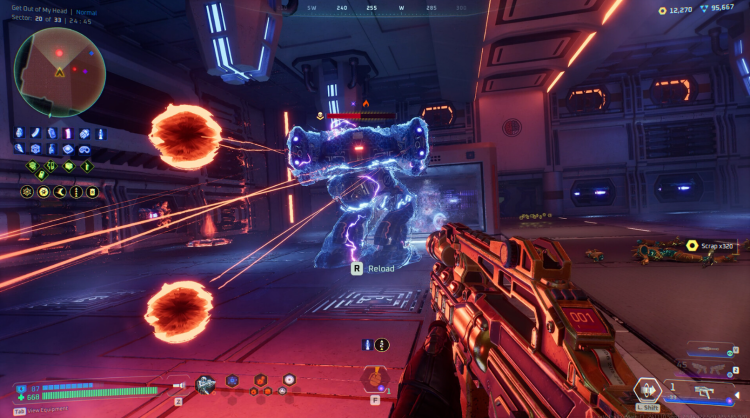
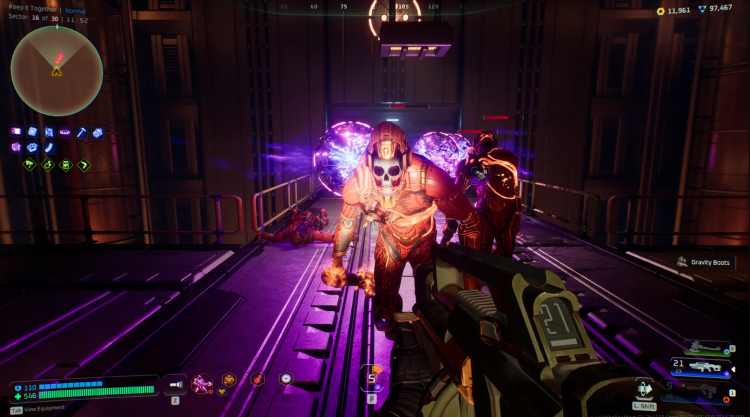
Enemies fall into three tiers. Base enemies go down in one or two hits and fill the role of fodder — ground-bound robots, flying drones, and explosive variants that punish careless positioning. Elite enemies act as room-level mini-bosses, absorbing full magazines of assault rifle fire before dropping. Bosses command dedicated rooms, bringing distinct attack patterns and grotesque designs, including a spider variant that multiple sources have flagged as outright nightmare fuel.
Each zone introduces new enemy types and escalates complexity. Early rooms feature slow-walking robots and straight-line chargers. Later zones add teleporting machines, zombie-like synthetic organisms, self-destructing orbs, and swarming spiders that fire projectiles. Elite enemies that once gated progression in a zone's opening rooms eventually appear as standard accompaniments to normal minions deeper in, a clean marker of how far a run has progressed. Boss fights test build viability but occasionally tip into bullet-sponge territory, dragging encounters past the point the pacing supports. The encounters themselves are inventive in their mechanics — distinct attack patterns demand different positioning and loadout responses — but the health pools can turn what should be a climactic room into a drawn-out war of attrition.
Stealth, Structure, and Replayability
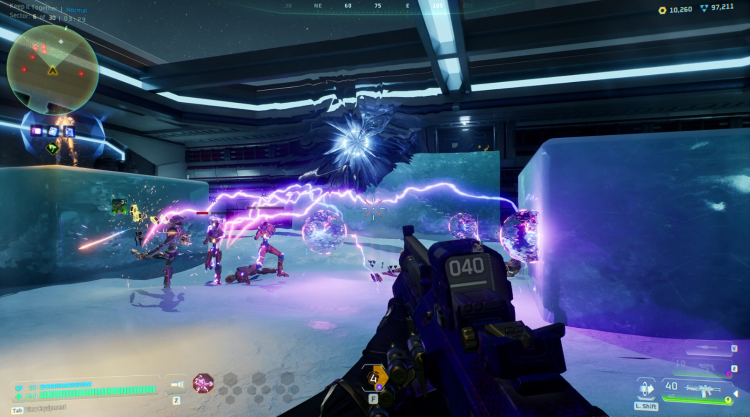
Each room begins in stealth mode. Players can study enemy positions, identify high-priority threats, and plan an opening ambush before triggering combat. Finding an elevated position or a flanking angle before the first shot goes off changes the outcome of encounters that would otherwise overwhelm through sheer numbers. This pre-engagement phase distinguishes Deadzone: Rogue from competitors like VOID/BREAKER, which drop players straight into gunfights without any reconnaissance window.
Room layouts are randomized in order and enemy composition, not in geometry. The same room designs reappear across runs, shuffled into different sequences. One run might open with a maze-like multi-path room; the next might start with a narrow zigzagging corridor. The randomization keeps individual runs feeling distinct but sacrifices intentional room-to-room flow. Repeated exposure to the same handful of layouts does wear thin over extended sessions, and a handful of rooms that require first-person platforming consistently feel worse than the combat-focused spaces around them.
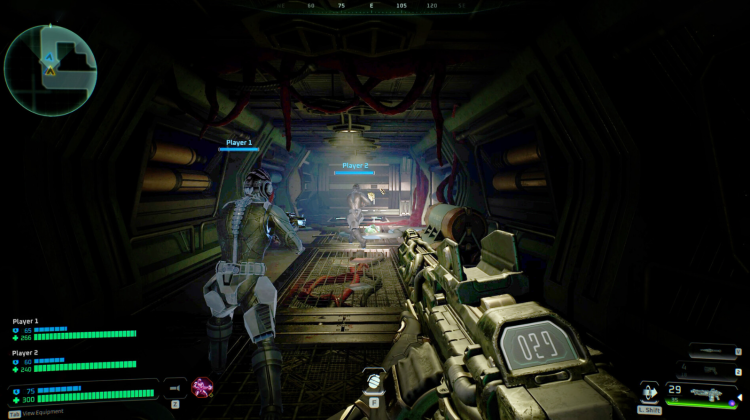
Each room lasts roughly two minutes or less for experienced players, and a successful run through a full zone clocks in at around an hour. Most players will spend many hours before that first successful run, learning room layouts, upgrading between deaths, and refining their approach to problem rooms. Post-campaign content extends the loop substantially. Specialty challenges apply gameplay modifiers, like perks that force close-quarters combat, and endless modes push players to survive as long as possible. Both unlock new weapons, perks, and skins, giving mechanical reasons to return rather than relying purely on difficulty escalation. Difficulty itself is adjustable per mission, with harder settings yielding better rewards and creating a risk-reward calculus that scales with player confidence. Three base difficulty options — Adventure, Normal, and Hard — set the floor, and the Adventure tier is forgiving enough to let players with less FPS experience work through the story content without constant roadblocks. Co-op supports up to three players with cross-play between PC and console, though detailed reports on connection quality remain limited.
Technical State and Presentation
Performance on PC holds steady. Load times are short, and frame rates stay consistent even during the heaviest late-zone combat. Console versions reportedly run cleanly on both PlayStation 5 and Xbox Series X/S.
Collision issues crop up occasionally — players can get stuck on environmental objects, sometimes resulting in deaths that feel unearned. Input responsiveness has also drawn complaints: certain button presses fail to register, particularly for crouch and weapon-swap commands, even when other inputs on the same controller work fine. Subtitle errors and potential save-file issues have been noted but do not appear widespread. The soundtrack complements the tone without overwhelming the gunfire. I find the art direction serviceable rather than striking, carried more by enemy design and zone-specific creature variety than by the industrial environments that dominate all three areas of the ship.
Verdict
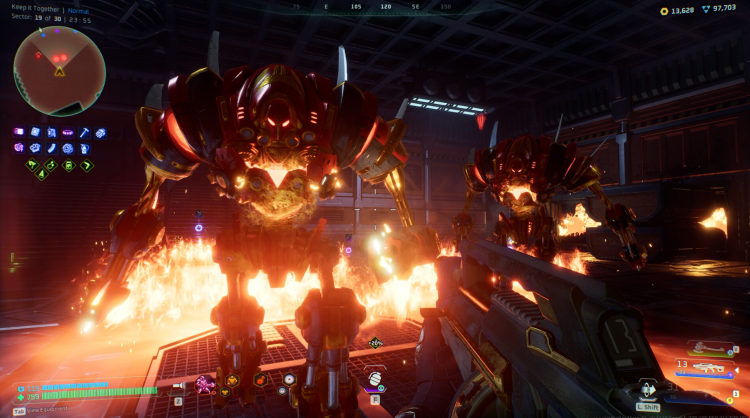
Deadzone: Rogue stacks sharp gunplay, deep build-crafting, and a well-paced roguelite loop into a package that earns repeated runs. Deadzone: Rogue is an 8/10 game.
Pros:
- Gunplay feels precise and responsive across every weapon type, from shotguns to sniper rifles.
- Build-crafting systems interconnect tightly, making every pickup meaningful and every run distinct.
- Enemy variety escalates well across three zones, with elite and boss encounters that test specific strategies.
Cons:
- Room geometry repeats often, leading to visual and structural fatigue over extended sessions.
- Occasional collision bugs and unresponsive inputs cause avoidable deaths.
Prophecy Games built a roguelite shooter that respects the player's time by making every room, every drop, and every death feed into forward progress. The campaign is short, but challenge modes, endless runs, and co-op give the loop real staying power. Among a crowded field of roguelite FPS titles, Deadzone: Rogue stands on the strength of its combat and systems rather than spectacle.


 Successfully copied... Thank you for sharing our content!:



5% deposit bonus up to 100 gems

a free Gift Case





EGAMERSW - get 11% Deposit Bonus + Bonus Wheel free spin


EXTRA 10% DEPOSIT BONUS + free 2 spins

3 Free Cases + 100% up to 100 Coins on First Deposit


5 Free Cases, Daily FREE & Welcome Bonuses up to 35%

3 free cases and a 5% bonus added to all cash deposits.

+5% to deposit




Comments