




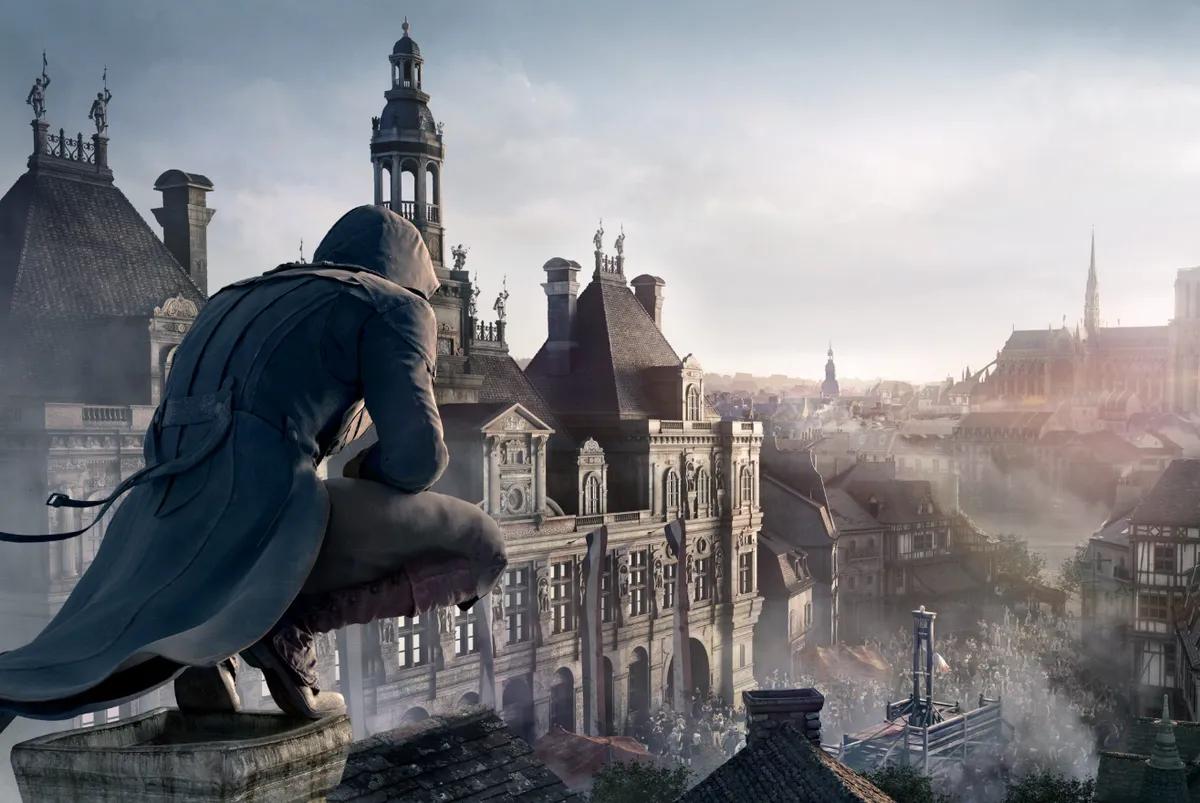
A Former Assassin's Creed Director Believes The Future Of AAA Games Is In Smaller Teams
 Ubisoft
Alexandre Amancio, a former director on the Assassin's Creed series, has shared his perspective on the struggles facing major game studios. He suggests the current method of creating large-scale, blockbuster games is not sustainable. The industry is grappling with longer development cycles, escalating budgets, and an increasing number of project cancellations and widespread layoffs, resulting in fewer major titles being released each year.
Various factors have been cited for these challenges, from aggressive profit-seeking and mismanagement to the influence of private equity and shifts in player behavior, with audiences reportedly playing fewer new games. Thanks to PC Gamer for highlighting that Amancio, who directed both Assassin's Creed: Unity and Assassin's Creed: Revelations, believes the issues are more fundamental, stemming from the very structure of today's large development studios. He argues that the sheer size of these teams hinders both sustainability and innovation.
"There's this theory that says whenever humans create something that surpasses a hundred people, it completely changes the dynamic of it. As soon as you surpass that, the ratio of management to people working on the game explodes. You start having a very management-heavy structure: You need to have people to coordinate the people coordinating. Something that a lot of AAA studios mistakenly do, or certainly did in the past, is think that you can solve a problem by throwing people at it. But adding people to a problem stagnates the people who were already being efficient on it. It just creates a lot of variable noise. So I think the future lies in smaller teams."
— Alexandre Amancio
Amancio proposes that the video game industry could learn from the film industry, where teams are assembled for specific projects rather than maintained as permanent studio structures. This model would involve core teams supplemented by outsourcing or co-development partners for specialized needs, allowing for the right crew to be brought together for the right project at the right time. This approach would, to some extent, formalize a common industry practice where layoffs often follow a project's completion as a studio downsizes during its design phase.
However, a key difference is the timeline; film production typically takes weeks or months, while game development spans years, making it more challenging for developers to adopt such a transient structure.
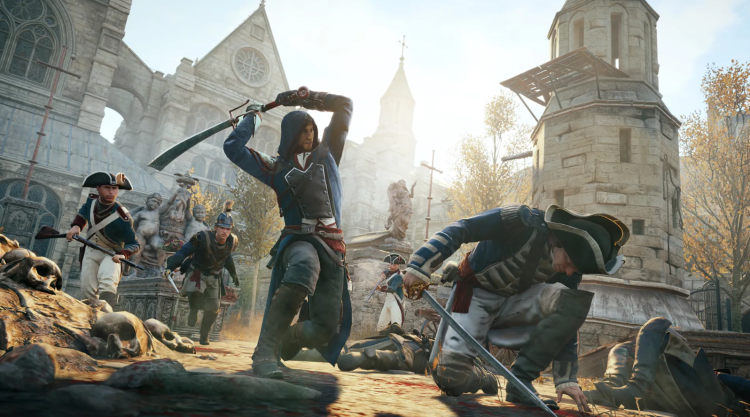
Reflecting on his time working on Assassin's Creed: Unity, Amancio mentioned he would approach the project differently today. He explained that during its development, two distinct game concepts emerged. One was a traditional Assassin's Creed experience, while the other was a cooperative game that incorporated a character creation system disguised as a search through a database of ancestors in the Animus. Ultimately, the team chose to develop the more recognizable single-player game, but Amancio still wishes they had pursued the alternative co-op concept.
Read also, Ubisoft Halifax, the Canadian studio behind Assassin's Creed Rebellion, is confirmed to be closing down. The closure, which affects 71 employees, comes just days after the staff voted to unionize. Ubisoft has stated the decision is part of a broader restructuring plan and is not related to the union vote.


 Successfully copied... Thank you for sharing our content!:

Comments