




The Last Of Us Director, Bruce Straley Draws A Firm Line On Generative AI And Art
 Games
GamesThe Last of Us director Bruce Straley has delivered one of the most direct rejections of generative AI yet from a senior figure in modern game development. Speaking ahead of the 2025 Game Awards, Straley framed the technology not as an emerging tool to refine, but as a creative dead end that misunderstands how art is made and why it matters. His criticism targets not only the output of generative systems, but the values driving their adoption across games, film, and media.
In an interview with Polygon, Straley addressed the subject while discussing Coven of the Chicken Foot, the debut project from his independent studio Wildflower Interactive. The conversation unfolded as generative AI continues to gain backing from major publishers, including Microsoft, Ubisoft, and EA. Straley positioned himself firmly outside that movement, arguing that imitation and synthesis cannot replace human intent or creative labor.
“It’s a snake eating its own tail,” Straley said. “It can’t grow and think for itself, it just consumes, and it tries to mimic what it’s consumed. That’s the best it can do right now.”— Bruce Straley
Straley’s comments emerged while explaining the technology behind Coven of the Chicken Foot, an adventure game centered on an elderly witch and a highly reactive companion character. That companion observes player behavior, adapts to actions, and responds in unexpected ways over time. Straley stressed that none of this relies on machine learning or generative systems. Instead, it is built through traditional design methods, scripting, and iteration, extending ideas he previously developed at Naughty Dog.
When the comparison was raised that this system resembles goals often cited by AI advocates, Straley rejected the framing. He argued that Wildflower’s work succeeds precisely because it embraces human limitations rather than chasing simulated intelligence. The companion is designed to misbehave, fail, and surprise in ways that feel authored rather than optimized.
“The charm is that the creature is allowed to be a buffoon,” Straley said. “If you feed it too many bad apples, it gets indigestion and poops in the woods.”— Bruce Straley
For Straley, these moments exist because designers can shape context, consequence, and humor by hand. He dismissed the pursuit of artificial human intelligence as misplaced, pointing to the scale of biological evolution behind real cognition. His concern is not that machines cannot improve, but that their progress is framed as inevitable or desirable without asking what is being lost.
The Last of Us director also described how generative AI has complicated communication around game development. Terms like “AI” have long referred to scripted behaviors and decision trees created by programmers. That language now triggers assumptions about large language models and automated generation, forcing developers like Straley to clarify what they are not using before they can explain what they are building.
“It’s difficult to even pitch the concept of this creature,” he said. “People are going to think we did machine learning, and LLMs, and all that. No, we did none of that.”— Bruce Straley
Straley framed this distinction as central to his understanding of art. He described creative work as something shaped by problem-solving, error, and imperfection. Those flaws, he argued, are not inefficiencies to be removed, but evidence of human presence. He compared the process to pottery that emerges warped or uneven from a kiln, carrying the trace of its maker.
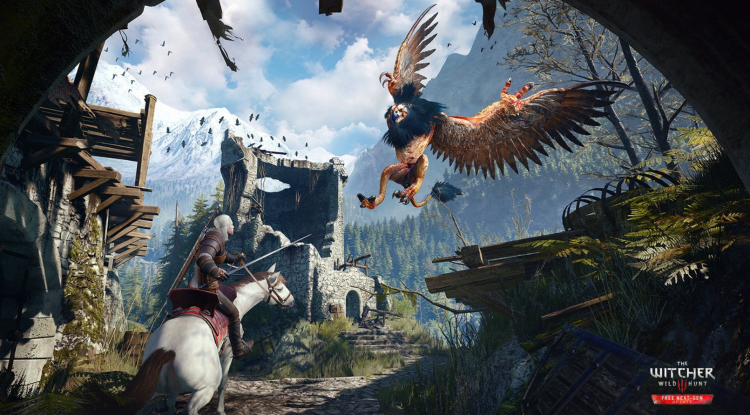
His opposition does not ignore the spread of generative AI across games. Studios such as Embark have used AI-driven systems in Arc Raiders, while NetEase has implemented chatbot-style NPCs in Where Winds Meet. These features allow players to bypass content or extract information through prompts, further blurring the line between authored design and automated response. Straley acknowledged the trend but made clear it holds no appeal for him as a creator or audience member.
“I have zero interest in looking at art that is generated by a computer,” Straley said. “I don’t think prompting is art.”— Bruce Straley
He allowed that tightly constrained datasets might produce functional results, such as generating dialogue from a limited body of lore. Even then, he expressed no personal interest in engaging with that output. Without a human hand shaping the work, he sees no reason to invest attention or care.
Straley ended the discussion with a blunt assessment that left little room for compromise. “I don’t like AI!” he said, punctuating a position grounded less in technical skepticism than in creative philosophy.
Read also, Amazon removed its AI-generated Fallout Season One recap after fans flagged major plot errors, reigniting debate over generative tools in entertainment and their limits when accuracy and authorship matter.


 Successfully copied... Thank you for sharing our content!:

Comments