


Former GTA 4 Boss Ben Feder on AAA Budgets and AI’s Toy Story Moment
 GTA VI
 Xbox
 PlayStation
Ben Feder ran Take-Two through the launches of Grand Theft Auto 4, Red Dead Redemption, BioShock and Borderlands, and he steered the company away from EA’s acquisition bid because he believed its IP and talent held substantial unrealized value. He now heads the games venture fund Tirta Ventures.
Speaking to The Game Business on the eve of GTA 6, Feder argued that $300 million budgets have stopped making sense, that generative AI sits one hit away from consumer acceptance in the West, and that AI-assisted decompilation could do to games what Napster did to music.
His objection to AAA is structural rather than financial. The publishers he talks to cannot find a way to build a game for less than $300 million, and a budget that size commits a studio to roughly five years of work before anyone outside sees it.
“Greenlighting a $300 million game that takes five years is as if you’re taking your entire development team, putting them in a time capsule, burying them in the ground, and five years later they pop out and say, ‘Voila, here it is.’”
— Ben Feder
Three to five years ago the bet was defensible, he said, because a publisher could forecast the market its team would surface into. Now tastes and technology shift while the team is underground, and the risk is that nobody cares by the time it reappears. AAA studios sit in an awkward middle: too small to operate as platforms, too large to take real creative risks. GTA 6 is his example of a game that escaped that trap by becoming a platform in its own right, and he puts the capital required for that in billions rather than millions.
Feder’s own catalogue shows what a long cycle buys when it works. A single mission from GTA 4, the bank robbery where the storylines of Niko Bellic, Johnny Klebitz and Luis Lopez meet, became the blueprint for the character-switching system in GTA 5, according to former Rockstar audio engineer Rob Carr.
Rockstar has drawn a line at going back to that catalogue, though. Insider NateTheHate said in March he had heard nothing about a GTA 4 project for current-gen consoles, which leaves the 2008 game without a modern version even as its ideas keep surfacing in newer releases.
On AI, Feder’s argument runs through animation history. Hand-drawn animators resisted computer animation until Pixar picked a subject that justified the technology and executed it well.
“My own view is that we are one Toy Story moment away from consumer acceptance of AI in video games in the West. In the East, they’ve already accepted it.”
— Ben Feder
I read that comparison as a heavier lift than it sounds, because Pixar’s film worked when the story demanded the technology, not when the technology went hunting for a story.

The analogy has a literal counterpart this year. Atari and Digital Eclipse released Toy Story: Retro Roundup in October, collecting the 1995 original, both versions of Toy Story 2, Buzz Lightyear of Star Command and Toy Story Racer, with save states and a training mode bolted on.
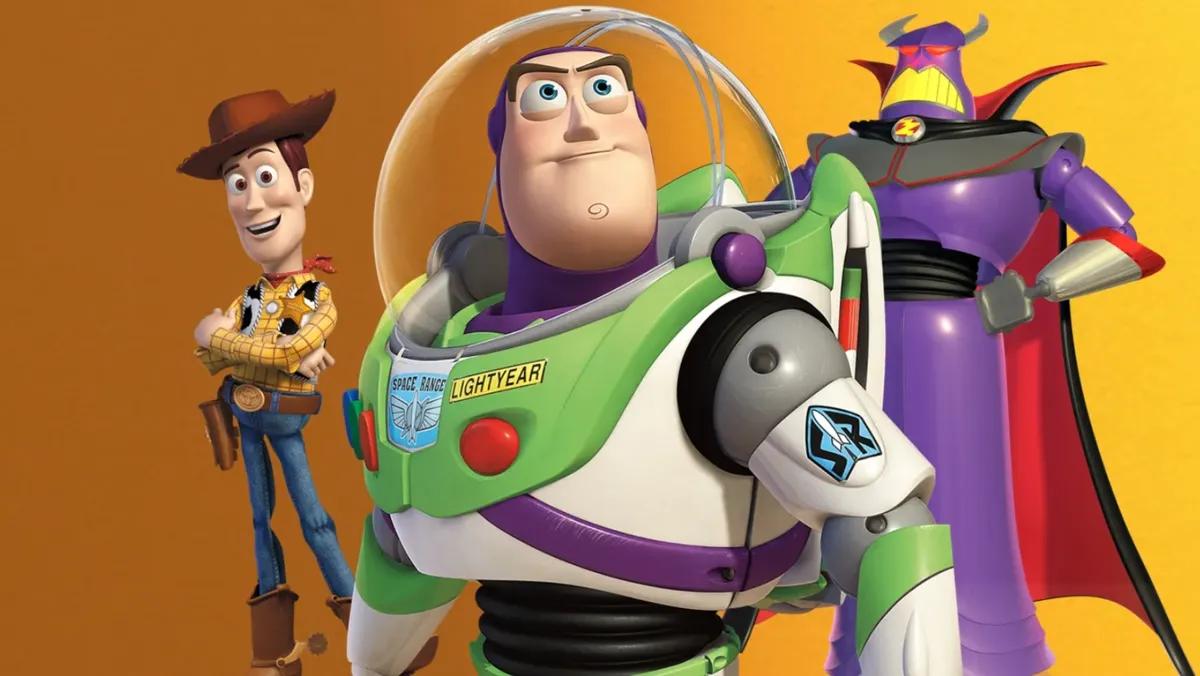
The same brand is being cut apart elsewhere. Leaks around the Fortnite x Toy Story Collab point to Woody, Buzz, Zurg and the three-eyed Alien arriving through the Item Shop at roughly 1,500 V-Bucks each, timed around the film’s June return to cinemas.
That appetite for remixing is what Feder sees in decompilation, where people use AI to pull a game apart and rebuild it in forms the publisher never shipped. He compared the stakes to the music industry’s Napster years, when every catalogue became freely copyable overnight and labels eventually migrated to live shows and then to streaming. Players, he said, are intrigued by mixing and remixing content rather than simply consuming it, and publishers need to work out a legal version of that before someone else builds the illegal one.
Feder is not predicting collapse. He calls the current period a transition rather than a crisis, with cost rationalization on one side and genuine revenue upside on the other. His advice to a large publisher is to protect the core of IP, talent, community and distribution, then run small autonomous teams on new technology instead of trying to retrofit it into a five-year pipeline already in motion.
I keep coming back to the fact that the biggest release of the decade shipped this week with no generative AI anywhere in its pipeline, built slowly and by hand over more than a decade. I would rather wait years for one world dense enough to get lost in than get five that arrived faster.
His closing note to founders was blunter: ignore conventional wisdom, stop assuming ambition requires a huge team or a long cycle, and use AI to rethink development rather than to automate workflows that are themselves about to change. As content gets cheaper to produce, he argued, taste and originality become the scarce part.


 Successfully copied... Thank you for sharing our content!:


Comments