


The Elder Scrolls 6: Sentinel Needs Better Mounts and Real Ladders, Says Skyrim’s Lead Designer
 Xbox
Bruce Nesmith, lead designer on Skyrim, wants two things from The Elder Scrolls 6: Sentinel. Mounts that do more than carry you, and ladders that actually work.
One of those is a request half the fanbase has been making since 2011. The other is a problem most players have never consciously noticed, because Bethesda has spent fifteen years quietly designing around it, and because a missing feature leaves no evidence behind.
Speaking to The Examined Game, Nesmith started with the horse.
“I’d like to see a much better implementation of mounts. That’s been a common complaint; I’m not alone in that.”
— Bruce Nesmith

He is not describing an easy fix. Mounts are “really tricky”, in his words, and the decisions behind them are hard ones. What bothers him is how little a horse does once you are on it.
“You can ride a horse, but that’s all you can do in Skyrim. That’s it, you just ride the horse. Well, I should be able to do some other things too, maybe fight on the horse, or have it fight with me, you know, stuff like that.”
— Bruce Nesmith
Skyrim did get mounted combat eventually, through a patch rather than at launch, and it stayed rudimentary: swing left, swing right, hope the horse keeps facing the thing you are hitting. Nothing about it suggests a system anybody wanted to build on.
Ladders are the stranger ask, and the more revealing one. Nesmith is blunt about the gap.
“You don’t climb up and down ladders. It seems simple, it seems stupid, but you don’t climb up and down ladders!”
— Bruce Nesmith
He is right, and most people have never thought about it. Every ladder in Skyrim is a prop you click, after which you are at the top. Everything else vertical is stairs. Nesmith says the absence “really limits the art team in terms of how they can do multi-layer things”, which is a quiet explanation for why so many Bethesda interiors read as one floor stretched sideways instead of a building with levels.
The reason it never got built is a list of questions nobody wanted to answer. What happens when two characters use the same ladder at once? How does an NPC decide a ladder is worth taking? What does a character do when it gets hit halfway up, or dies halfway up? Each one needs animation work, AI work, and a rule written down somewhere, and none of it shows up in a trailer. Nesmith remembers what the programmers told him when the list landed on their desk.
“To do ladders, you have to deal with a whole host of questions, which our programmers very legitimately put in front of us, and said ‘You gimme answers to these, I’ll tell you how much programming time it’s gonna take to make them’. And that caused problems, right there.”
— Bruce Nesmith
I care more about the first request than the second. Movement is the thing that keeps me in an open world long after the quest log stops mattering, and a horse that exists only to shorten a walk is a wasted system in a game built on walking.
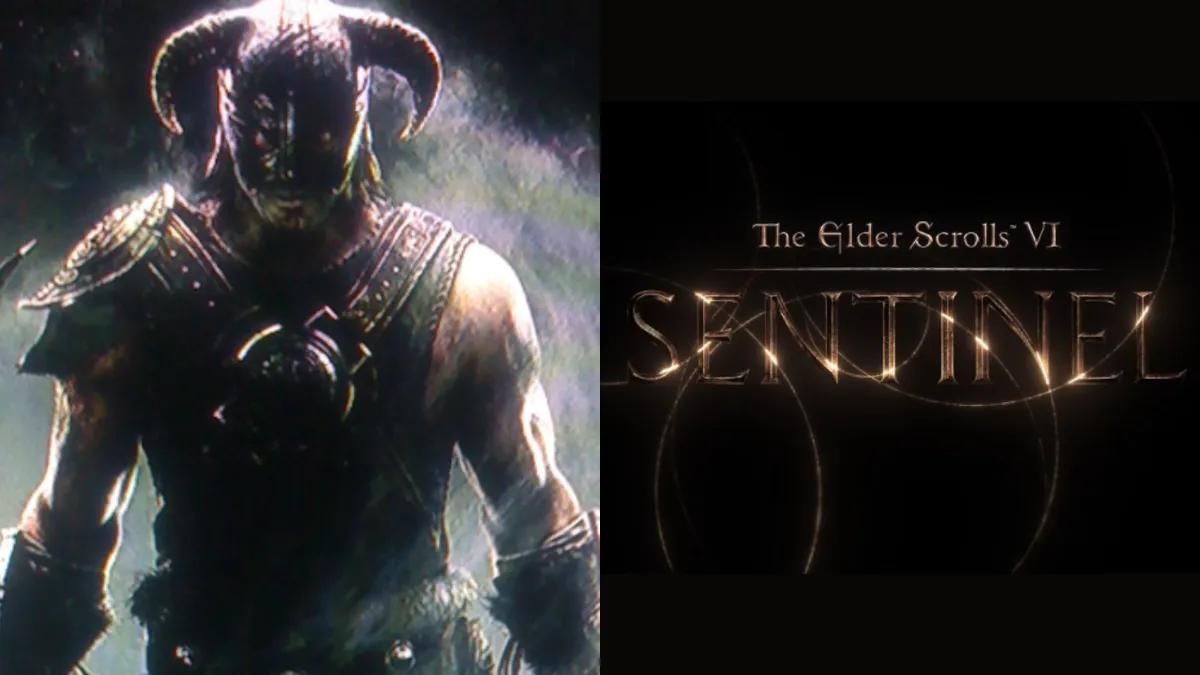
The timing of all this is not an accident. Bethesda unveiled The Elder Scrolls VI: Sentinel at the end of a video marking the studio’s 40th anniversary, confirming Hammerfell as the setting and attaching a Todd Howard synopsis about a future lost and a victory undone. That is the first real update since the 2018 announcement, and it arrived with no trailer, no gameplay and no date.
Nesmith is asking for features during the only window where asking is useful. Jason Schreier claims 2028 at the earliest, and says that figure is the target he knows about rather than a guess, which gives Bethesda at least two more years of programming time to spend on exactly the kind of list Nesmith described. Bethesda’s own post said development continues and that sharing more will take a while.
Hammerfell is the argument for both features in one place. It is desert, coastline, and walled cities, which is the terrain where a horse earns its keep and where multi-level architecture is the obvious way to build. A ladder system would let the art team stack a city upward rather than pave it flat, and give the mounts somewhere worth riding between.
Nesmith does not work at Bethesda anymore, which makes the wishlist easy for him and awkward for everyone still there. I would take the trade anyway: two more years on animation edge cases sounds better than another decade of clicking a ladder and teleporting.
Read also: Bethesda honoured the memory of the late Patrick Stewart with a short message on social media after the actor’s death on 29 October. Stewart voiced Uriel Septim VII in The Elder Scrolls IV: Oblivion, alongside roles in Castlevania: Lords of Shadow and several narrated games.


 Successfully copied... Thank you for sharing our content!:


Comments