




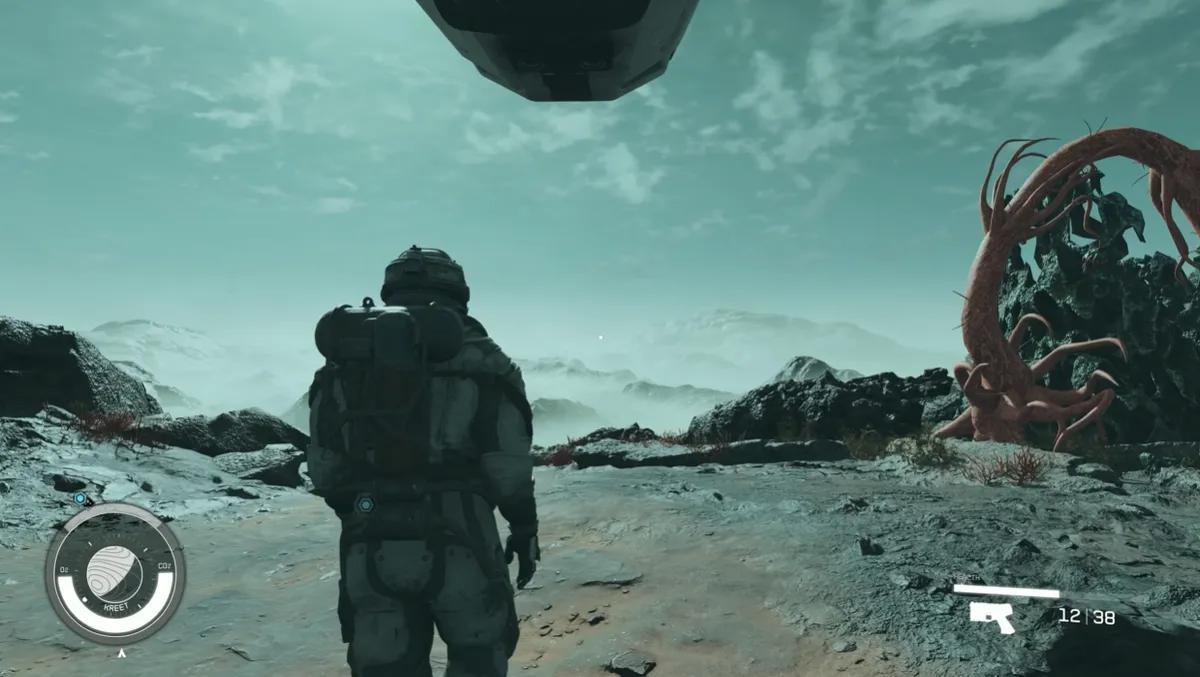
Starfield (PS5) Review
 PlayStation
 Review
Starfield arrives on PlayStation 5 more than two years after its Xbox Series X|S and PC debut, carrying every patch, update, and content addition released since September 2023. This is the most complete console version of Bethesda's space RPG: the base game, two optional expansions, the Free Lanes overhaul, full DualSense adaptive trigger and haptic feedback integration, and multiple visual modes on both base PS5 and PS5 Pro. Bethesda has had nearly three years to refine the game, and the improvements are measurable in frame rate, resolution, and content volume.
The Free Lanes update earned widespread praise from players who say the game has finally developed its own distinct identity, with some comparing it favorably to The Elder Scrolls. The new DLC, Terran Armada, has drawn the opposite reaction — it currently sits at over 56% negative reviews on Steam, with players criticizing its $10 price tag, short duration, and repetitive missions, especially compared to the first expansion, Scattered Space, which cost half as much at release.
The Definitive Console Package
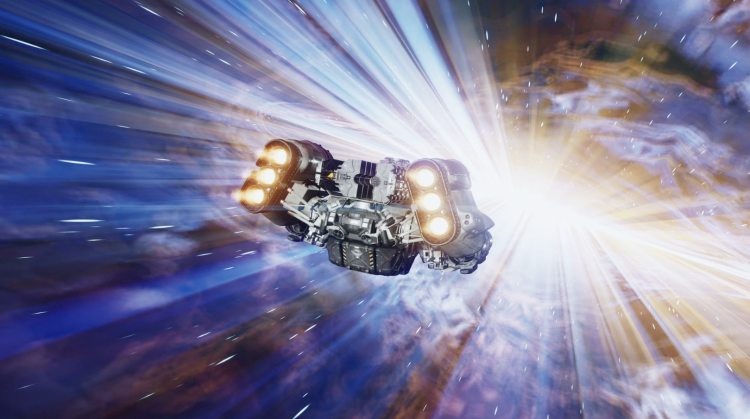
The PS5 version ships with the base game, both expansions, Free Lanes, and every quality-of-life patch from the past two and a half years. DualSense support adds adaptive trigger resistance to weapon fire and haptic feedback during environmental interactions. Load times benefit from the PS5's SSD. The visual presentation across both base PS5 and PS5 Pro configurations exceeds what was launched on Xbox Series X.
Base PS5 offers two modes. The 30fps quality mode runs at roughly 1440p internal resolution with longer draw distances, improved shadow resolution, and more detailed terrain. The 60fps performance mode renders at around 1080p with variable rate shading to maintain its target. Both modes match or surpass the Series X equivalents at launch — the Xbox version originally ran its performance mode at 900p before a patch brought it to 1080p.
PS5 Pro pushes further. An enhanced mode renders internally at 1800p with higher-quality cube maps, shadows, foliage, and draw distances, locking to 30fps. A 40fps option exists for 120Hz displays, though performance drops toward 30 in dense cities like New Atlantis and Akila City. The 60fps Pro performance mode raises graphical settings above the base PS5 but drops internal resolution to around 900p, leaning on PSSR upscaling. In this mode, the Pro sometimes holds a 10fps advantage over Series X.
Combat That Works Without VATS
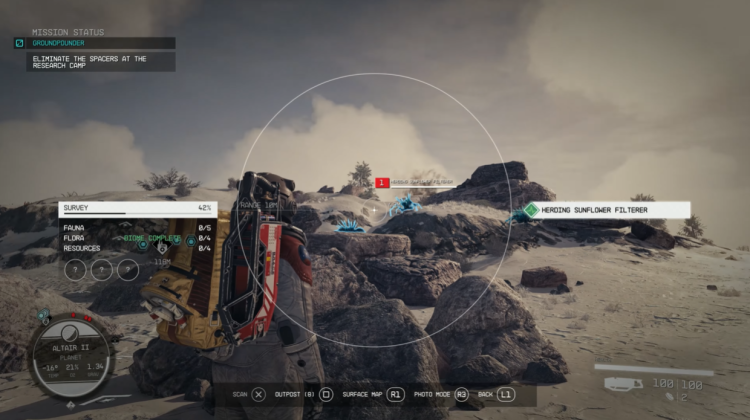
Starfield's gunplay operates in real time with no VATS-style targeting queue, and none is needed. Weapons feel distinct across categories, customization runs deep, and additional weapon mod slots introduced in the Free Lanes update expand loadout options further. A full range of guns and melee weapons can be modified to match player level and playstyle. Unlockable powers supplement standard combat, and companions provide active support during fights.
The classic Bethesda persuasion system returns as an alternative to violence, with conversation skill checks gating diplomatic solutions. Fail a check, and combat handles the rest. Enemy encounters can spike unpredictably — a single pirate carrying an incendiary weapon can stall progress through repeated deaths if the player lacks the right gear. That volatility also produces satisfying loot: defeating a tough enemy can yield a weapon that reshapes the next several hours of play.
I think combat is where Starfield most clearly separates itself from every previous Bethesda RPG, and it carries the game through stretches where other systems fall short. Skills unlock through use, not just point allocation — picking novice locks is required before advancing to higher tiers. Lockpicking itself is more forgiving than in Fallout or Skyrim, with the option to backtrack mid-attempt.
Exploration Still Falls Short
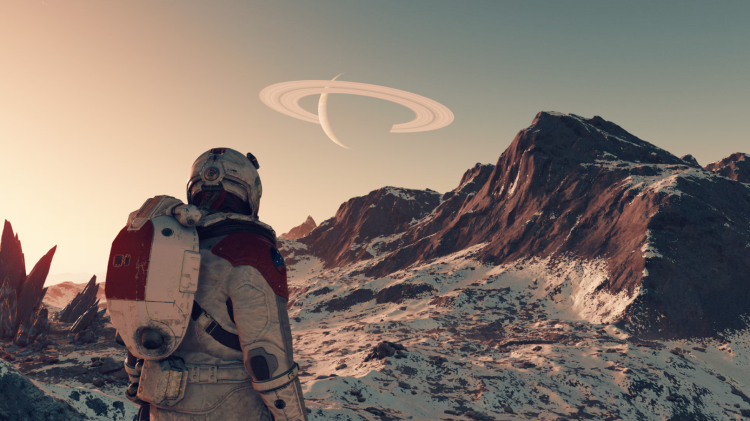
Starfield's core design problem persists. Unlike Fallout 3's Tenpenny Tower visible on the horizon or Fallout: New Vegas's Dinky the T-Rex standing as a distant landmark, Starfield's procedurally generated planets offer nothing to pull the player off the main path. Outside hand-crafted cities — New Atlantis, Akila City, Neon — planetary surfaces consist of randomized terrain with scattered resource nodes and generic points of interest.
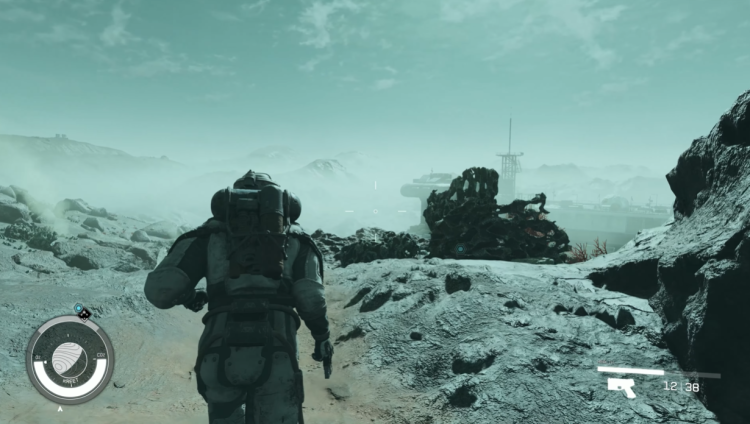
The scanner helps catalog flora and fauna for experience points, and building outposts unlocks resource gathering and linked inventories across locations. None of this produces the sense of discovery that defined past Bethesda open worlds. The overencumbered mechanic compounds the friction. Moving faster than a walk on oxygen-dependent planets triggers hypoxia damage, and overencumbered players cannot fast travel back to their ship.
The buggy vehicle, added post-launch, helps with faster traversal and a better scanner, but the core loop remains unchanged: land on a planet, clear an objective, leave. Galactic travel routes through a series of nested menus — warping between systems requires selecting a destination on one screen, confirming on another, then choosing a landing site on the planet surface. The friction stalls momentum. Starfield plays less like an open-world RPG and more like a mission select screen with loading transitions between objectives.
Faction Questlines Carry the Narrative
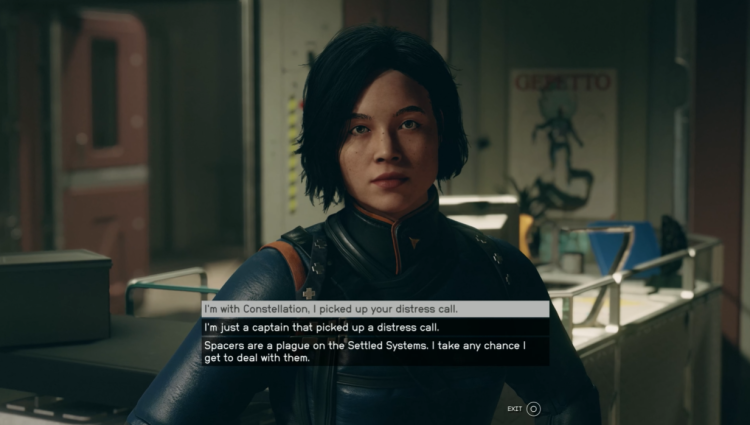
The main storyline follows Constellation, a group researching alien artifacts that trigger visions in the player character. The premise leads to revelations about the universe, but the core motivation never builds urgency. Bethesda main quests have historically been the weakest link in their RPGs, and Starfield continues the pattern with a dull central motive and artifacts that never feel like a meaningful prize.
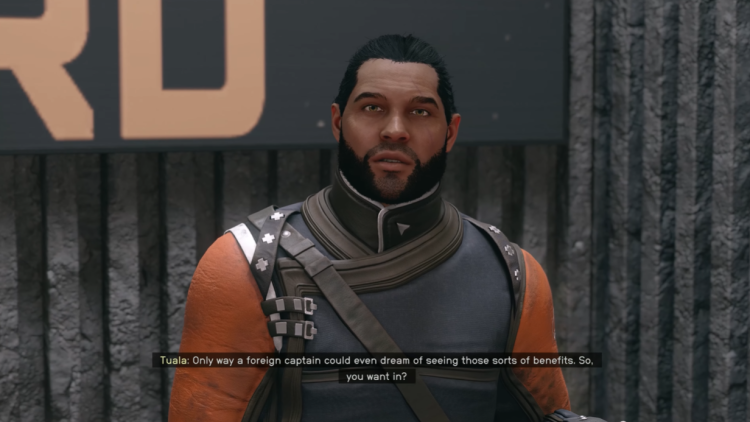
Faction questlines sharpen the writing. The UC Vanguard sends players against alien threats. Ryujin Industries involves corporate espionage and sabotage. The Crimson Fleet offers piracy with moral choices. The Freestar Rangers bring a frontier law enforcement angle. Each faction's quest chain fleshes out the world's political structure and history in ways the main story does not attempt.
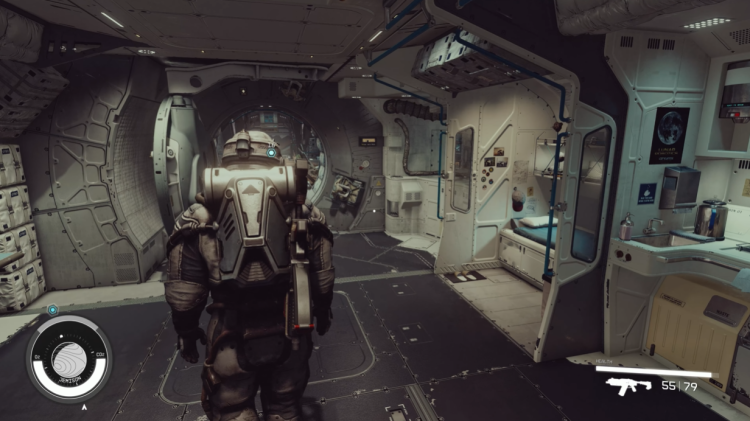
Sidequest volume borders on overwhelming. Walking through Jemison triggers new quests from overheard NPC conversations and tannoy announcements. The quest log fills fast, and the temptation to chase side content into high-level star systems before the player is ready stays constant. New Game+ provides narrative justification for subsequent playthroughs, and the Free Lanes update adds gear transfer devices that make repeat runs more practical. The game was already a leader in New Game+ design at launch; the update reinforces that advantage.
Free Lanes Reshapes Spaceflight
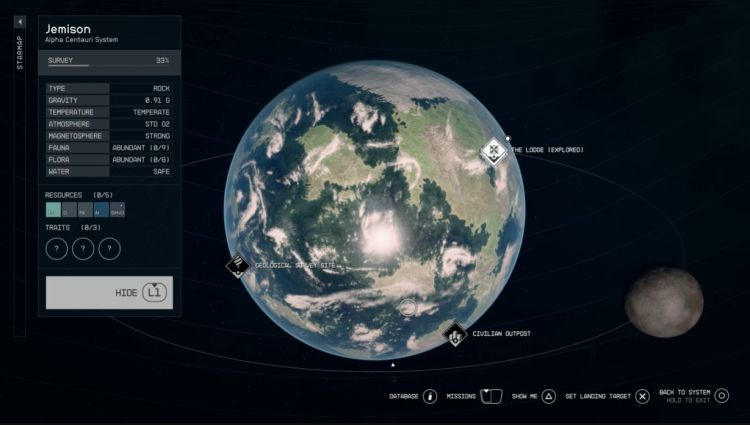
The Free Lanes update addresses Starfield's most persistent criticism. Players can now cruise between planets within a single solar system rather than menu-hopping to each destination. The ship can be set to autopilot during these flights, freeing the player to manage inventory, talk to companions, or handle other tasks while traveling. Friendly and hostile ship encounters occur during in-system cruising, adding unscripted content to what was previously dead time.
The update also introduces additional crafting options, expanded ship customization, and collectible action figures. These additions layer onto existing systems and give spaceflight more reasons to exist as gameplay rather than a menu transaction. Flying from Mars past Earth to Mercury using impulse propulsion works and can be enjoyable, even if the game's AI does not always react logically to nearby ships — enemies occasionally fail to detect a vessel jumping to hyperspace right beside them.
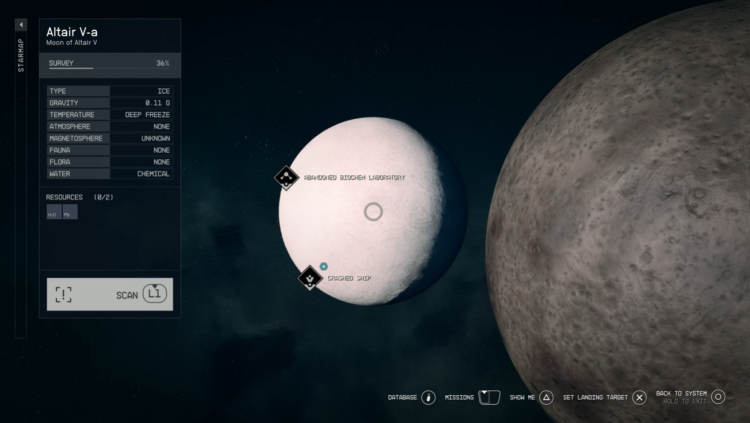
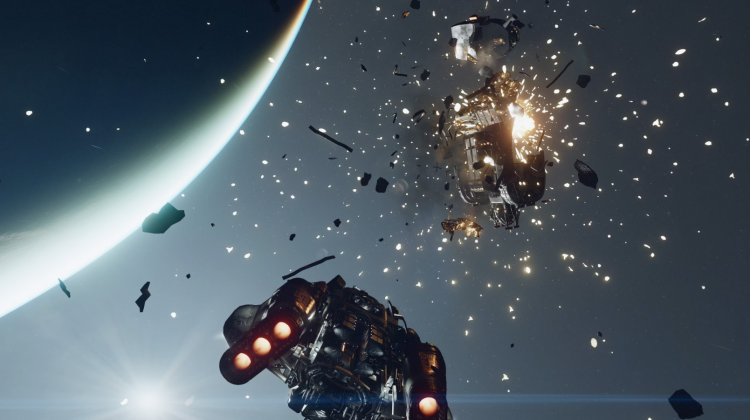
Free Lanes does not fix the exploration problem on planetary surfaces. Landing on a procedurally generated world still presents the same randomized landscape. But the space between destinations becomes more active, and the reduction in menu reliance during flight grants more role-playing freedom. Space combat operates in real time with serviceable mechanics — switching to inverted controls helps — and mid-flight repairs keep intense battles manageable, though running out of repair kits with minimal hull remaining is a real hazard.
Technical Issues Cloud the PS5 Launch
Crashes are the most serious problem. Both PS5 and PS5 Pro lock up during play, requiring forced system-level restarts. These crashes occur across multiple modes and configurations with no consistent trigger. The Xbox Series X version did not exhibit this behavior at its 2023 launch, though it has since developed new stuttering issues in demanding scenes. On PS5, hard lockups happened during buggy driving on planets, walking through Jemison, and accessing the mass transit system.
PS5 Pro's PSSR implementation introduces visual artifacts. First-generation PSSR produces flickering, breakup, and noise during motion. A system-level toggle forces second-generation PSSR, which delivers a sharper image but creates its own problems: instability in foliage and areas with ambient occlusion. Second-gen PSSR is likely the better option. I run the enhanced mode at 30fps on PS5 Pro and find it the cleanest experience available, but less technical players could easily select settings that degrade the picture without realizing it.
The number of mode permutations creates confusion rather than flexibility. Base PS5 offers seven mode and setting combinations. PS5 Pro presents twenty-four. Many are redundant or counterproductive: running a low-fidelity performance mode at 30fps serves no purpose when higher-quality modes hit the same target. The v-sync toggle does not appear to function. HDR implementation delivers SDR content in an HDR container, preventing actual high dynamic range output. Minor bugs persist from 2023 — NPCs fail to face the player during conversations, characters clip through objects, quest pathfinding occasionally breaks. None are game-breaking individually, but they accumulate across dozens of hours.
Verdict
Starfield on PS5 is the most feature-complete console version of the game, packed with the strongest visual options and a meaningfully improved flight model. Starfield (PS5) is an 8/10 game, or at least it will be after the bugs are patched.
PROS:
- Best combat system in any Bethesda RPG, with deep weapon customization and no need for VATS
- Faction questlines deliver strong, varied storytelling that fleshes out the world far beyond the main plot
- Free Lanes update transforms spaceflight from menu navigation into active, engaging gameplay
CONS:
- Frequent crashes on both PS5 and PS5 Pro lock the system with no clear workaround or pattern
- Procedurally generated planets offer almost no exploration incentive, leaving the game without a beaten path to stray from
The definitive console Starfield exists on PS5, wrapped in better graphics, fuller content, and a reworked spaceflight system. Crashes and PSSR artifacts keep it from landing cleanly, and the fundamental exploration gap that has defined the game since 2023 remains unfilled. Every faction questline and firefight argues the game is worth playing — the empty planets and frozen screens argue it is not yet finished.


 Successfully copied... Thank you for sharing our content!:



5% deposit bonus up to 100 gems

a free Gift Case





EGAMERSW - get 11% Deposit Bonus + Bonus Wheel free spin


EXTRA 10% DEPOSIT BONUS + free 2 spins

3 Free Cases + 100% up to 100 Coins on First Deposit


5 Free Cases, Daily FREE & Welcome Bonuses up to 35%

3 free cases and a 5% bonus added to all cash deposits.

+5% to deposit




Comments