




GOG Enters A New Era Under Original Co-Founder's Ownership
 Steam
Steam Epic Games
 Games
Games CD Projekt
 In an industry of multi-billion-dollar buyouts, the sale of GOG for approximately $25 million in December might appear minor. The impact, however, is substantial for the storefront that built its brand on values like game preservation, DRM-free access, and genuine ownership. The platform now returns to the leadership of its original co-founder, Michał Kiciński, who acquired the company under the explicit goal of preserving its integrity and mission statement. The move has been met with relief by players concerned about the potential dilution of these principles under a different corporate owner. Kiciński himself sees a strong future for the business he helped create.
"I think it has a very solid foundation as a company. Good results, a very good brand—known, respected—with very clear values, and customers love it and stand behind it." — Michał Kiciński
The acquisition, which PC Gamer had the opportunity to discuss with the new leadership, was driven by more than just business calculations. Kiciński expressed a sentimental connection to the company he co-invented with Marcin Iwiński in 2005, serving for a time as its first boss. This personal history fueled his decision to re-enter the picture when he learned of CD Projekt's plans to sell. He wanted to prevent GOG from being sold to what he termed a "random company" that might not appreciate its focus on DRM and game preservation, viewing them as mere obstacles to profit. The sale process itself was remarkably swift, unfolding between September and December 2025. Kiciński described the period as an intensive and competitive few months, where he contended with at least one other large, likely US-based, company for ownership. He voiced concerns based on past mergers and acquisitions he had witnessed, where smaller companies were absorbed by larger ones only to be dismantled within a year or two.
"The database of customers was taken, the database of products was taken, teams were fired, things like that. I didn't want it to happen to GOG." — Michał Kiciński
GOG has confirmed it will carry Santa Ragione’s new narrative horror game Horses after Steam banned the title from its storefront. The move gave Horses a platform on GOG as the primary PC home for its launch next week and puts renewed focus on the circumstances that kept the game off Valve’s service.
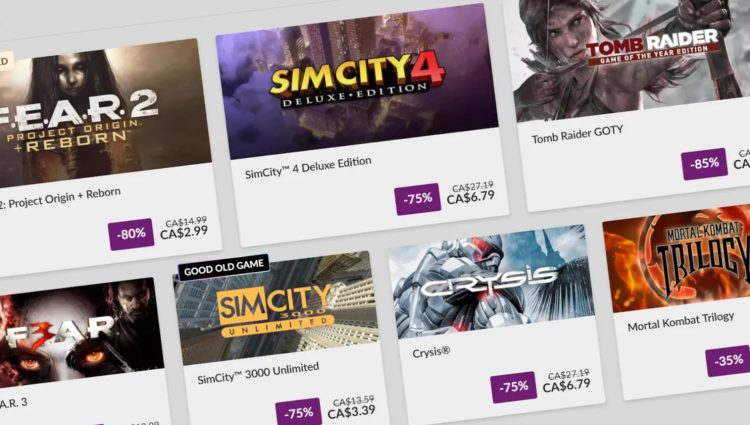
The decision for CD Projekt to sell the company it owned for 17 years stems from financial and strategic divergences. GOG's net profit of $1.2 million in 2022, while significant, is a small fraction of the more than $120 million in profit CD Projekt reported in 2024. The two entities operated in vastly different economic realities. GOG's managing director, Maciej Gołębiewski, explained the split as a natural consequence of pursuing different strategies. CDPR is focused on developing AAA, story-rich games and building franchises, whereas GOG's strategy centers on bringing curated classic and modern games to a dedicated community. Keeping the two together long-term no longer made strategic sense. Kiciński agreed, noting that within a large corporate family, the smaller entity often struggles to get sufficient attention, as focus shifts to the bigger, more profitable parts of the business naturally. Gołębiewski acknowledged that while CDPR always acted with good faith, its focus was understandably on its own ambitious projects and challenges.
The sale allows GOG to be fully focused on its own path, no longer a smaller part of a larger group where a new game release would always take precedence. The deal remains advantageous for CD Projekt, as the spirit of the agreement keeps existing arrangements in place. This includes the exceptionally generous royalty rate CDPR receives from its games sold on GOG, a rate Kiciński notes is higher than anywhere else in the world.
Freed from the corporate structure of a development giant, GOG's next steps are being carefully considered. Having just completed the marathon sprint of the acquisition, Gołębiewski stated that the new leadership will need time to discuss strategic options. Still, ideas are circulating. Independence brings with it a greater appetite for risk, something Gołębiewski noted is often smaller in large, public companies, reducing nimbleness. This agility is crucial when a primary competitor is a behemoth like Steam.
"Attacking a Goliath in wrestling is not a good idea," said Gołębiewski.
"One needs to have good agility."
One area of potential risk-taking is game publishing. Kiciński believes GOG could make an impact there, leveraging his own experience in the publishing business through his 50% ownership of Retrovibe. He is open to taking calculated risks in publishing, confident that with the right people who know the industry, the risk can be managed to an acceptable level.
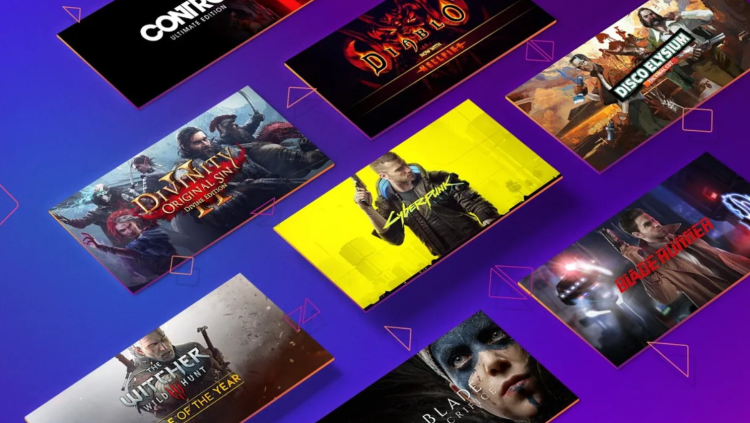
Another avenue for exploration is a deeper investment in game preservation, potentially moving beyond simple compatibility updates to more active restoration work in the vein of Nightdive Studios. Gołębiewski acknowledged that few companies do this well, seeing a potential space for another key player in that scene. While not making a definite commitment for 2026, he is a fan of Nightdive's work and believes that competition is always a positive force. This signals a potential doubling down on the Good Old Games identity, using its connections to explore publishing and more dramatic remaster-style preservation initiatives. This focus on curating superior editions is central to the platform’s appeal, which already features titles like S.T.A.L.K.E.R. 2, Metro 2033 Redux, and classic Resident Evil. The leadership's goal is not to dethrone Steam, but to persuade gamers with a better alternative. Gołębiewski suggested that if a version of a game is clearly better on GOG and comes with the promise it will run forever, people will come. Kiciński echoed this sentiment, stating the aim isn't to unhook people from Steam, but to offer a choice.
"Rather, we would like to persuade people, 'Okay, if you have an option to purchase a game—more purchase than rent—and you value having your classic, beloved game to own, then check out GOG. If it's not important, or you have different priorities, go for Steam."
The challenge, as Gołębiewski sees it, is to operate in the modern industry while staying true to the company's core mission. The reception over the past year suggests the values still hold up.
"As long as GOG exists, we are a point of reference on that scale. And if GOG doesn't exist, then, okay, we can actually say that people have given up." — Maciej Gołębiewski
Read also, GOG's new owner, Michał Kiciński, didn't hold back his criticism of Windows, calling it "such poor-quality software… I can't believe it!" This comes as GOG announces a closer look at Linux support for its platform.


 Successfully copied... Thank you for sharing our content!:



5% deposit bonus up to 100 gems

a free Gift Case





EGAMERSW - get 11% Deposit Bonus + Bonus Wheel free spin


EXTRA 10% DEPOSIT BONUS + free 2 spins

3 Free Cases + 100% up to 100 Coins on First Deposit


5 Free Cases, Daily FREE & Welcome Bonuses up to 35%

3 free cases and a 5% bonus added to all cash deposits.

+5% to deposit




Comments