




A Game About Digging A Hole Finds Horror And Calm In A Backyard Descent
 Games
Games Steam
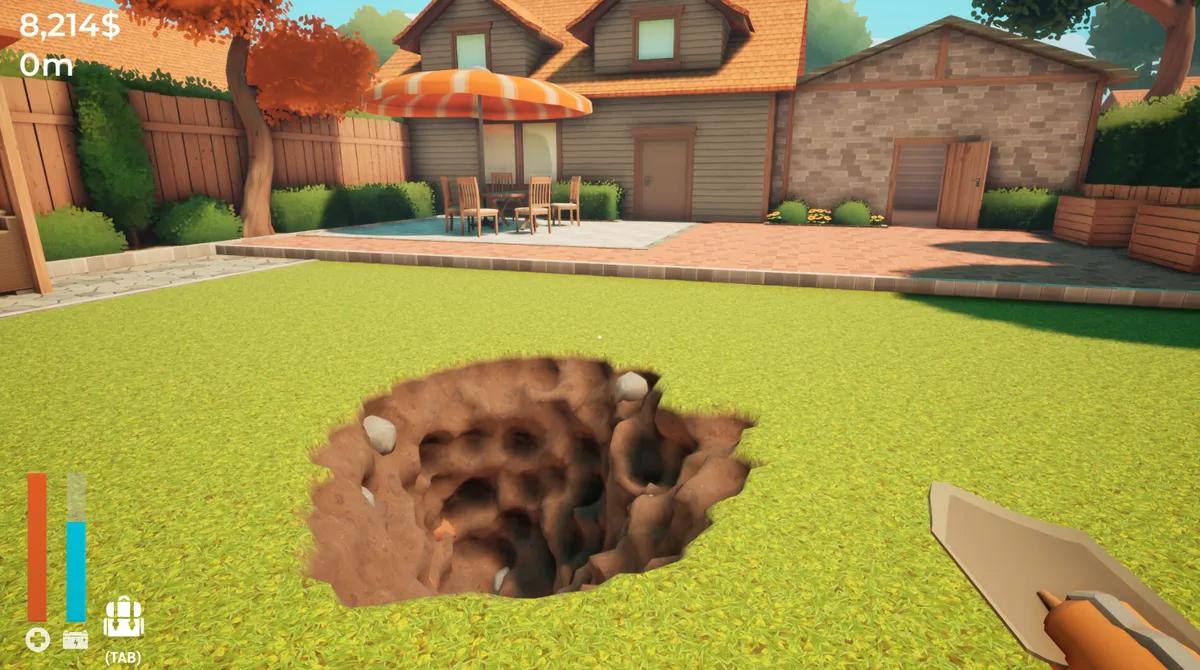
SteamI played A Game About Digging a Hole, expecting a short distraction. It turned into something closer to the feeling that first made Subnautica stick. The setup is plain. You buy a modest house for $10,000. The house barely matters. The backyard does. A rumor says treasure sits somewhere below the dirt, and the game gives you a shovel and leaves you alone to find out.
The core loop stays tight. You dig. You watch your battery. You collect ore. The shovel doubles as a metal detector and explodes if its battery runs out. Each dig drains it a little more. When it blows, your health drops hard and any ore in your inventory disappears. There is no quick reset or safety net. You climb back to the surface, sell what you managed to keep at a computer in the garage, and decide how far you are willing to push on the next run.
Ore value increases with depth. That single rule drives everything. Better materials sit farther down, but reaching them means longer climbs, tighter spaces, and more pressure to manage battery charge. The system mirrors Subnautica’s oxygen meter without copying it outright. Instead of water closing in, it’s gravity, darkness, and the constant risk of being trapped by your own design.
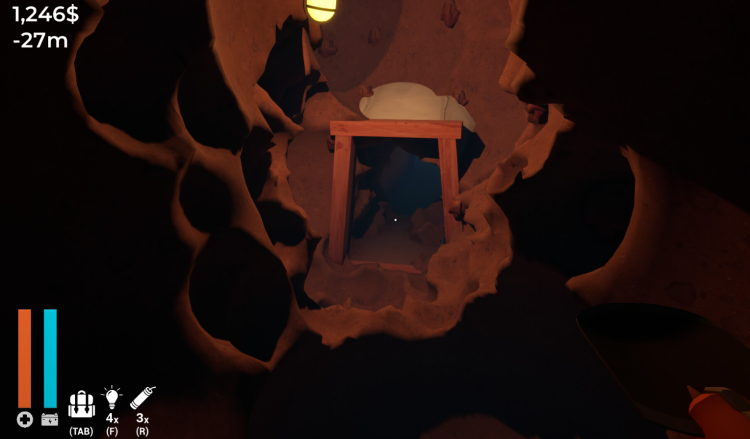
You shape the hole yourself. Wide tunnels make climbing easier but cost time and battery. Narrow shafts save energy but punish mistakes. One bad step can send you falling, stripping health and momentum. Later upgrades help but never remove the risk. A jetpack becomes available early and costs $6, which feels intentionally trivial. It solves one problem while creating another. The jetpack drains battery fast, so careless use can strand you deep underground with no safe way back.
As the hole grows deeper, the tone shifts without warning or commentary. Strange structures begin to appear embedded in the earth. They don’t explain themselves. The game never pauses to frame them as objectives. You notice them because they weren’t there before. Then the sounds start. Echoes carry through the tunnels you dug earlier. Some feel mechanical. Others don’t. Nothing jumps out. The tension comes from knowing you need to go past them to progress.
There are no NPCs talking over the experience. No radio chatter. No guidance. Like Subnautica at its best, the game trusts silence. When something goes wrong, the blame is yours. You planned the tunnel. You watched the battery tick down. The lack of commentary makes every mistake feel earned.
The structure stays compact. You can reach the end in about an hour if you focus on finishing rather than clearing every pocket of dirt. There is no sprawling lore or branching narrative. The story exists mostly through implication. Whatever waits below ground doesn’t need a name to feel threatening. The game understands when to stop explaining.
That restraint is what makes the comparison to Subnautica feel earned rather than promotional. A Game About Digging a Hole does not try to recreate an ocean, a crafting tree, or a survival epic. It isolates one sensation: the pressure to go deeper when you know it might cost you. The simplicity keeps the fear intact. Tools limit you. Fear limits you more.
It’s not a long game, and it doesn’t pretend to be. What it delivers is a concentrated version of something many Subnautica players miss. A quiet descent. Clear rules. A growing sense that the environment is watching you shape it.
Read also: The legal dispute surrounding Subnautica 2 has taken another turn as Krafton reshapes its arguments in court, leaving the project’s future and motivations increasingly unclear.


 Successfully copied... Thank you for sharing our content!:



5% deposit bonus up to 100 gems

a free Gift Case





EGAMERSW - get 11% Deposit Bonus + Bonus Wheel free spin


EXTRA 10% DEPOSIT BONUS + free 2 spins

3 Free Cases + 100% up to 100 Coins on First Deposit


5 Free Cases, Daily FREE & Welcome Bonuses up to 35%

3 free cases and a 5% bonus added to all cash deposits.

+5% to deposit




Comments