




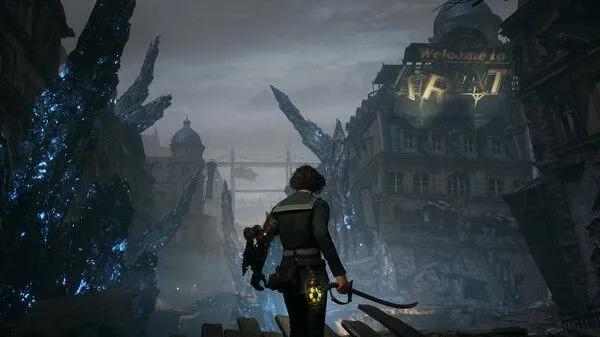
Best Soulslike Games To Play In October 2026: Tierlist
 FromSoftware
A soulslike is an action RPG built on punishing combat, scarce checkpoints, experience loss on death, and a requirement to retrieve lost resources from the exact location of dying. This list ranks 31 titles from weakest to best across five tiers — D through S — drawing from four separate critical sources published between 2018 and 2026. The ranking weighs how consistently each game was praised across those sources, the specific language used to describe its merits, and how well each entry executes the genre's defining systems. Every title mentioned across the sources appears here, from overlooked Team Ninja productions to the most commercially successful game FromSoftware has ever released.
Tier-D contains games that attempt the soulslike formula and fall short in meaningful ways — through narrow scope, underdeveloped mechanics, or design decisions that work against what makes the genre function. If this is a first encounter with soulslikes, the time is better spent in Tier-B, Tier-A, or Tier-S. Return to Tier-D after accumulating enough reference points in the stronger tiers to evaluate what these games were reaching for and where they fell short.
Tier-D
The games in this tier are functional soulslikes that carry genuine limitations — in combat variety, world construction, or the cohesion of their underlying systems. Each finds something worth attempting but never fully delivers on it.
I've played through most of these out of obligation to the genre rather than genuine pull, and the honest answer is that none of them justify the time if something from Tier-B or higher is still on the backlog.
Wo Long: Fallen Dynasty
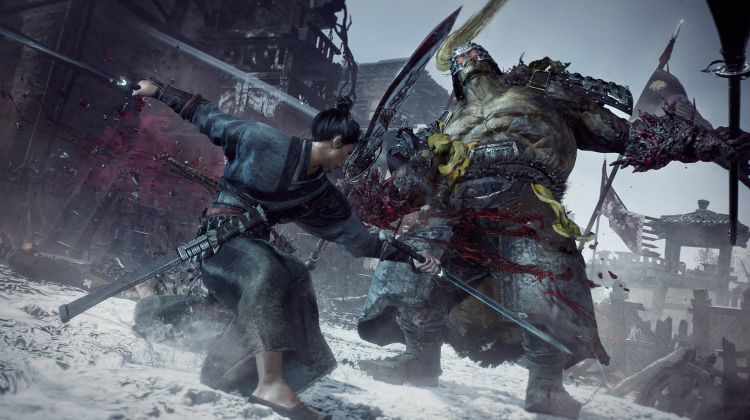
Team Ninja transplants its signature parry-heavy combat into a Three Kingdoms setting, producing a game that moves faster than the Nioh series but delivers less of what made those games essential.
- Year: 2023
- Developer: Team Ninja
- Hours to beat: ~20 hours
Wo Long: Fallen Dynasty places a nameless militia soldier inside a Han Dynasty China fractured by demonic corruption released through rogue alchemy. The Morale system raises offensive and defensive ceilings by defeating enemies and completing field objectives, creating pressure to engage every encounter. Combat centers on Deflection — a parry mechanic timed tighter than Nioh's Ki pulse — and the game leans into it harder than any previous Team Ninja release. Boss fights arrive quickly, but level design funnels players through corridors that lack the verticality and interconnection found in the Nioh games. Three Kingdoms iconography gives the environments visual identity — fortified mountain passes, demon-infested river towns, smoke-choked citadels — but those spaces function as stages, not interlocking geography.
Code Vein
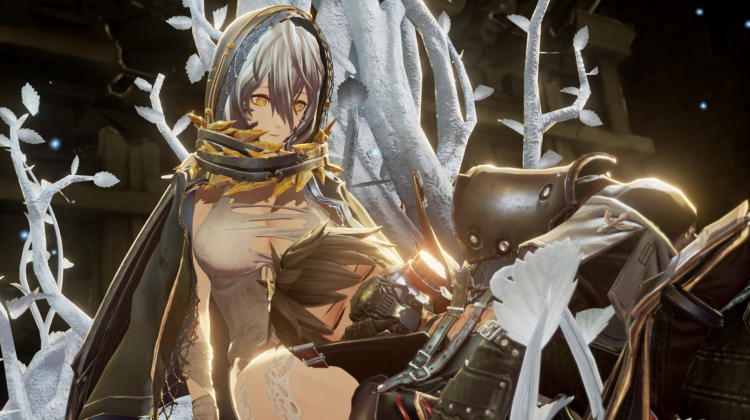
An anime-styled soulslike with a class-swap system called Blood Codes and a cooperative AI companion that can absorb enough enemy aggro to carry underprepared players through otherwise punishing encounters.
- Year: 2019
- Developer: Bandai Namco Studios
- Hours to beat: ~30 hours
Code Vein drops players into a post-catastrophe city where civilization's survivors have become Revenants — vampire-like beings fighting grotesque humanoid enemies called the Lost for access to blood that suppresses permanent memory loss. The Blood Code system lets players equip and change class archetypes freely, pulling active abilities from multiple codes simultaneously and building hybrids with more flexibility than most soulslikes permit. Character customization goes deeper than any other title in this list, with cosmetic options that approach full RPG-standard depth. Combat moves slower than FromSoftware's catalog and enemy variety thins significantly in the second half, reducing challenge to repetition rather than escalation. The companion AI is capable enough to carry players through encounters that would otherwise teach through failure, cutting directly against the genre's core learning loop.
Mortal Shell
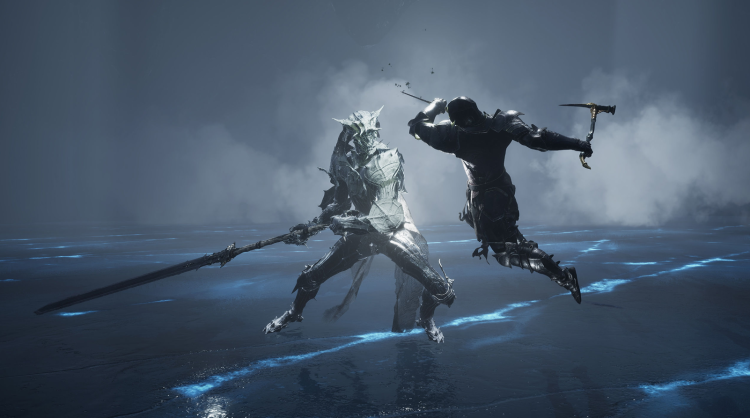
A compact soulslike built around Hardening — a full-body absorption state activated mid-animation to absorb incoming damage without interrupting an attack — with four distinct warrior shells offering meaningful playstyle divergence.
- Year: 2020
- Developer: Cold Symmetry
- Hours to beat: ~12 hours
Mortal Shell casts the player as a Foundling — a near-weightless spirit inhabiting the corpses of fallen warriors called Shells — each carrying distinct stat profiles and passive abilities suited to different combat approaches. The Hardening mechanic lets players freeze mid-combo, absorb a lethal hit, and continue attacking after the impact resolves, rewarding aggression and precise timing. Combat zones are built from decayed temples, poisoned marshlands, and fog-saturated ruins that maintain the visual language of a soulslike without matching its geographic depth. Solomon prioritizes sorcery, Harros balances stats for newcomers, Eredrim maximizes physical endurance, and Tiel excels at stamina-heavy evasion — four configurations that generate real build decisions across a brief runtime. At 12 hours, the game ends before its systems generate the complexity that would make those decisions feel fully earned.
Ashen
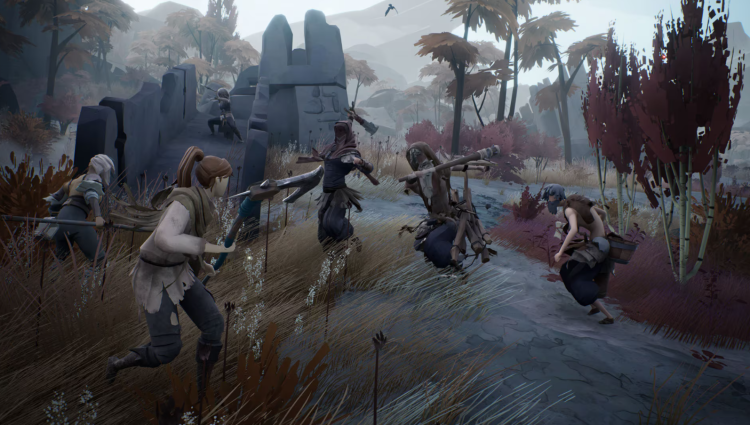
A soulslike built around seamless passive co-op — where a second player enters the host's world as a companion indistinguishable from AI — framed inside a landscape where a light-bringing god returns against an ancient darkness threatening to extinguish it.
- Year: 2018
- Developer: A44 Games
- Hours to beat: ~13 hours
Ashen reduces the soulslike formula to its functional minimum: stamina-gated combat with maces and spears, deliberate attack pacing, heavy enemy hits, and a checkpoint economy that mirrors the Dark Souls rhythm. A village hub expands as the player completes quests and recruits inhabitants, giving the world a texture most soulslikes do not attempt — a recovering civilization taking shape alongside the player's advancement. Characters are rendered as fabric-covered figures with no eyes or mouths, producing a fable-like visual language that distances the game from the gothic horror most of its peers pursue. The passive multiplayer works cleanly: sources describe encountering a human-controlled partner as feeling like a chance meeting rather than a mechanic activating. Ashen replicates FromSoftware's approach closely enough that its 13-hour runtime does not give its most original ideas enough room to develop into something distinct.
Dark Souls II
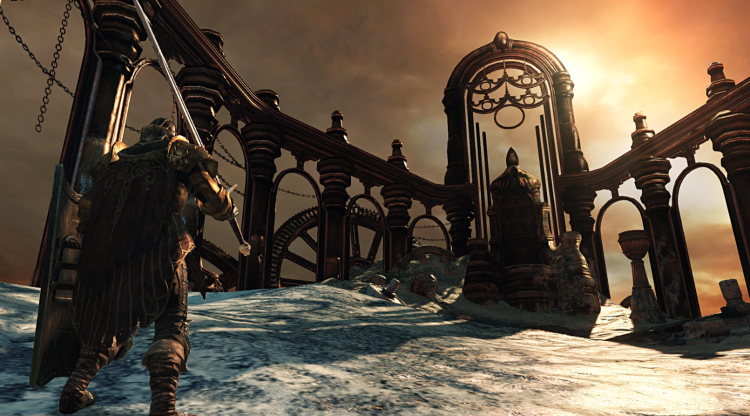
The second entry in the original Dark Souls trilogy and its most mechanically experimental — introducing Adaptability as a stat governing dodge invincibility frames while also producing some of the most technically accomplished DLC content in the entire FromSoftware catalog.
- Year: 2014 (Scholar of the First Sin Edition: 2015)
- Developer: FromSoftware
- Hours to beat: ~45 hours
Dark Souls II sends the Bearer of the Curse through Drangleic, accessible from the hub city of Majula across four primary paths, each zone distinct in atmosphere and enemy population. The Adaptability stat — governing invincibility frames on dodge rolls — required players to invest points into a mechanic the original Dark Souls gave freely, creating a lasting divide between players who adapted and those who found it unjustified. Three DLC packs — Crown of the Sunken King, Crown of the Old Iron King, and Crown of the Ivory King — contain some of the most technically sophisticated level construction in the series. The Scholar of the First Sin remaster improved enemy placement meaningfully, but the main campaign's world lacks Lordran's geographic coherence: zone transitions feel arbitrary, and the sense of a single interconnected space never fully materializes.
Tier-C
These games execute the soulslike formula with genuine craft but carry specific limitations — in scope, mechanical depth, or cohesion between system and setting — that keep them a clear step below the tiers above. I think this is where the genre gets genuinely interesting to study.
The entries here span a fully remade PlayStation 5 launch title that preserves genre history in extraordinary visual detail, a 2D Sekiro variant inside Tao-punk science fiction architecture, a roguelite applying soulslike combat rhythm to procedurally generated layouts, and two entries that approach the formula through lighter mechanical frameworks tied to familiar IPs.
Demon's Souls Remake
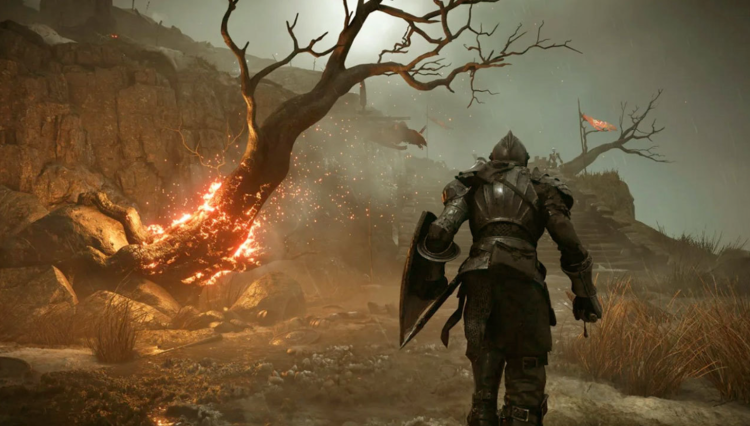
Bluepoint Games' complete visual and technical reconstruction of the 2009 original that launched the soulslike genre — preserving every mechanic, zone, and design decision from the source material at a level of fidelity the original hardware never allowed.
- Year: 2020
- Developer: Bluepoint Games/ Japan Studio
- Hours to beat: ~22 hours
Demon's Souls established the mechanics every game in this list inherits: Archstones as checkpoints, souls as dual-purpose currency for leveling and purchasing, and the World Tendency system that shifts enemy behavior based on player action across each zone. Boletaria's five Archstones deliver distinct zone identities — a fog-choked castle exterior, a plague-ridden underground city, a prison tower filled with invisible enemies — each requiring navigation and enemy-placement learning from scratch. The remake reproduces the original's systems exactly, which preserves both its structural strengths and its unevenness: the boss roster is, compared to everything that followed, the most approachable FromSoftware has designed. Sources universally describe the game as essential genre history — the structural ancestor of every title ranked above it. The remake's contribution is fidelity rather than reimagination, and the original design's pacing remains intact beneath the updated surfaces.
Nine Sols
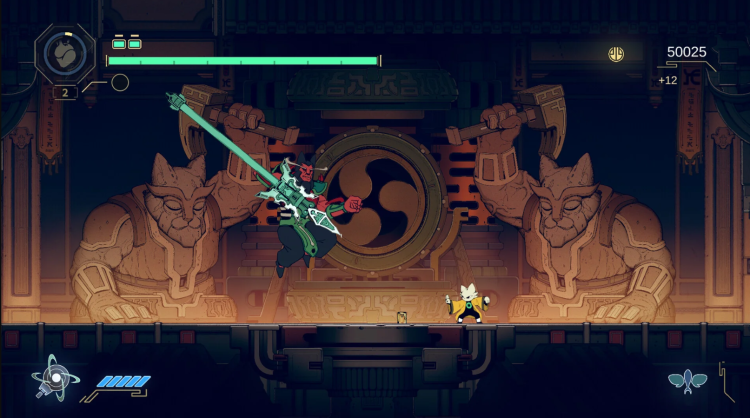
A 2D action platformer that transposes Sekiro's parry-and-detonate combat loop into a Tao-punk world of cybernetic pagoda rooftops and relentless boss encounters built around the principle that almost everything, with correct timing, can be countered.
- Year: 2024
- Developer: RedCandleGames
- Hours to beat: ~17 hours
Nine Sols casts Yi, a white cat warrior carrying a blade and explosive talismans, across a world fusing Chinese mythological architecture with science fiction infrastructure — pagoda rooftops interrupt steel factory corridors, corrupted terminals scatter lore across crumbling ceremonial spaces. The parry system pulls directly from Sekiro's posture mechanic: successful parries build chi, which players spend by applying talismans to enemies before detonating them in a sequence that rewards consistent rhythm over brute force. An aerial parry doubles as a traversal node, letting Yi launch between combat positions mid-air in sequences that keep the platforming tightly integrated with combat logic. Boss encounters are large-scale and relentless, teaching through repetition — attack patterns must be internalized before timing becomes accurate enough to prevail. Storytelling runs deeper than most 2D entries in the genre, with environmental detail and NPC dialogue assembling a full narrative without stating it in direct terms.
Dead Cells
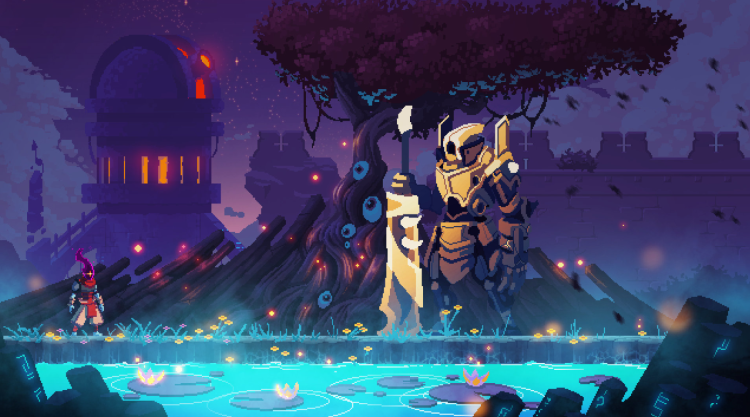
A 2D roguelite slasher that replaces the soulslike's fixed interconnected world with procedurally generated run structures resetting entirely on death — retaining permanent unlocks — while applying soulslike combat rhythm to constant weapon and ability variation.
- Year: 2018
- Developer: Motion Twin
- Hours to beat: ~18 hours
Dead Cells places the player in a reanimating corpse on a prison island, moving through randomized corridors filled with kamikaze bats, parapeted archers, and parasitic slugs whose death triggers explosive eggs dropped across the floor. Each run distributes a random weapon selection — flamethrower turrets, bolt-action crossbows, whips that stack bleed damage — alongside scrolls that raise specific stats, pushing players to build workable configurations from whatever the layout provides. The absence of a persistent world removes the geographic learning that characterizes most soulslikes and replaces it with pattern recognition across shifting enemy configurations. Dodge timing, stamina-adjacent discipline, and enemy pattern reading all operate within the genre's standard framework, and escalating Cells difficulty produces the same failure-to-progress arc that defines soulslike advancement. Sources consistently note that Dead Cells crosses genre lines, but its quality earns inclusion here.
Star Wars Jedi: Fallen Order
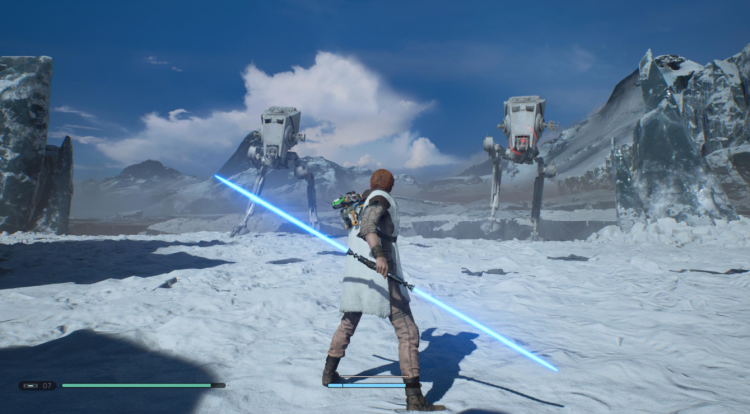
A Star Wars action game that borrows the soulslike checkpoint system, precision parrying, and an enemy block gauge — then wraps them in cinematic third-person adventure with direct narrative exposition and a difficulty ceiling several levels below the genre's standard.
- Year: 2019
- Developer: Respawn Entertainment
- Hours to beat: ~17 hours
Star Wars Jedi: Fallen Order follows Cal Kestis, a Padawan survivor of Order 66, navigating Imperial-occupied planets while reconstructing Force abilities suppressed to avoid detection. Meditation Points function as direct bonfire equivalents: resting restores health and Force charges while respawning all non-boss enemies in the zone, replicating the checkpoint tension of the Souls formula inside a recognizable IP context. The combat includes a parry mechanic, Force push and pull for crowd control, and an enemy block gauge that opens a deathblow window when depleted — equivalent to a posture break. Difficulty settings are directly adjustable, and the game rarely demands the multi-attempt engagement that defines harder entries in the genre. Sources describe it as a soulslite — a hybrid that introduces genre vocabulary to players who might not engage with the formula in its unmediated form.
Wuchang: Fallen Feathers
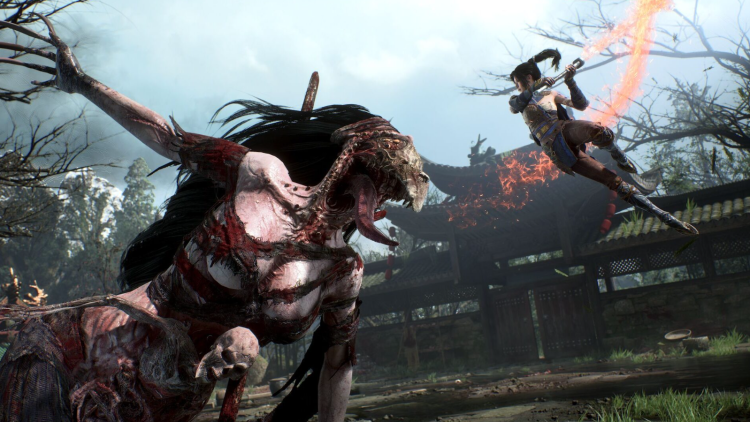
A soulslike set in late Ming Dynasty China during a supernatural plague, distinguished by a Feather System that lets the player absorb enemy abilities and deploy them in subsequent encounters — layering a strategic resource-capture mechanic onto precision-based combat.
- Year: 2025
- Developer: Leenzee Games
- Hours to beat: ~27 hours
Wuchang: Fallen Feathers opens on a plague-stricken port city in the final years of the Ming Dynasty, where a feathered corruption transforms both the living and the dead into hostile entities whose abilities derive from the supernatural force spreading through the landscape. The Feather System allows players to absorb those abilities from defeated enemies and slot them into an active combat loadout, transforming each encounter into a tactical decision about which enemy powers will be most useful in upcoming zones. A Madness meter accumulates as absorbed abilities are used, requiring players to manage the risk of overconsumption against the combat advantage those abilities provide. World design is structured around interconnected geography — war-torn villages feeding into temple complexes and subterranean ruins — in a configuration that sources compare to the original Dark Souls in the density of its shortcut network. The game launched with performance inconsistencies in 2025, which sources note directly, but the mechanical ambition and world construction place it above most newcomers to the genre.
Blasphemous
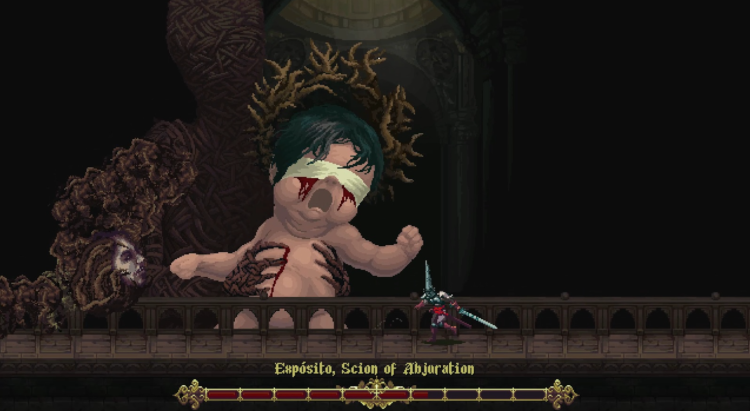
A 2D pixel art metroidvania set in a world of corrupted Catholic religious observance where every mechanical system — death currency, passive bonuses, boss defeat labels — carries a name borrowed from religious practice and twisted into grotesque form.
- Year: 2019
- Developer: The Game Kitchen
- Hours to beat: ~13 hours
Blasphemous places the Penitent One into Cvstodia, a land cursed by a miraculous event that transformed acts of piety into physical abominations. The death currency is Tears of Atonement; defeating a boss earns a Humiliation of Penance; passive bonuses distribute through Rosary beads equipped at prayer kneelers across the world. Combat uses a generous parry window, a ranged attack unlocked through Tears investment, and a charged slash for breaking armored guards — a focused toolkit that stays readable across the full campaign. The pixel art renders Andalusian Gothic cathedrals, levitating inquisitors, and self-flagellating monks with a visual commitment that makes the game's aesthetic inseparable from its mechanics. Its sequel surpasses it in nearly every technical dimension, but Blasphemous earns placement for building a world with this level of thematic coherence.
Tier-B
I keep coming back to the B-Tier as the most underrated shelf in the genre — games like Death's Door and Hollow Knight punch harder than their budgets or scope suggest, and most players who sleep on them regret it.
This range covers a 2D bug-world platformer with 40 hours of tightly interlocking map construction, a co-op shooter built on procedurally generated alien biomes, a dark fantasy reboot with a dual-realm traversal mechanic, a precise isometric crow game, and two Jedi titles that brought soulslike mechanics to the most commercially durable IP in film history.
Hollow Knight
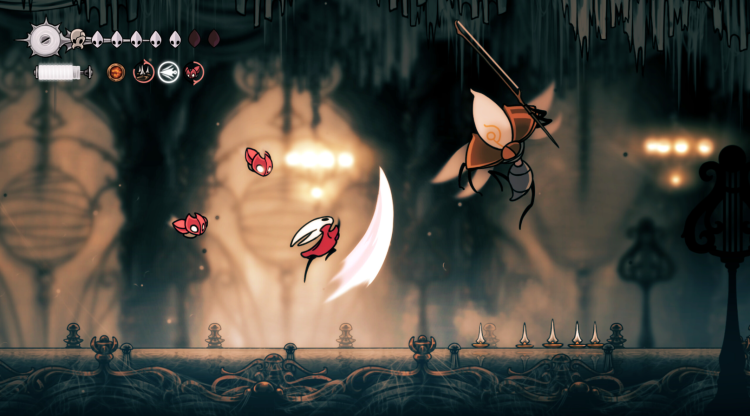
A 2D platformer set inside a collapsed subterranean insect civilization, built around nail-based combat, a death-recovery mechanic tied to a hostile ghost at the point of dying, and a world that demands roughly 40 hours of active exploration before its full geography reveals itself.
- Year: 2017
- Developer: Team Cherry
- Hours to beat: ~40 hours
Hollow Knight drops a small, wordless bug into Hallownest — an underground kingdom whose population has been consumed by a spreading void corruption — without a map, markers, or any objective beyond a vague instruction to go deeper. On death, all accumulated Geo drops and a shade occupies the kill location; players must find and defeat the shade to reclaim the currency, reproducing the death-recovery tension of the Souls formula in two dimensions. New abilities unlock new zones in a Castlevania-style loop: a ground slam breaks through weak floors, a wall-cling opens vertical shafts, a luminescent companion illuminates caverns that were otherwise impenetrable. Boss encounters begin with a mace-wielding False Knight as an early gauge of combat logic and escalate through dozens of optional and main-path adversaries requiring pattern repetition and precise jump timing. Sources debate its strict classification as a soulslike, but the debate touches only classification — the quality is not contested across any consulted source.
Blasphemous 2
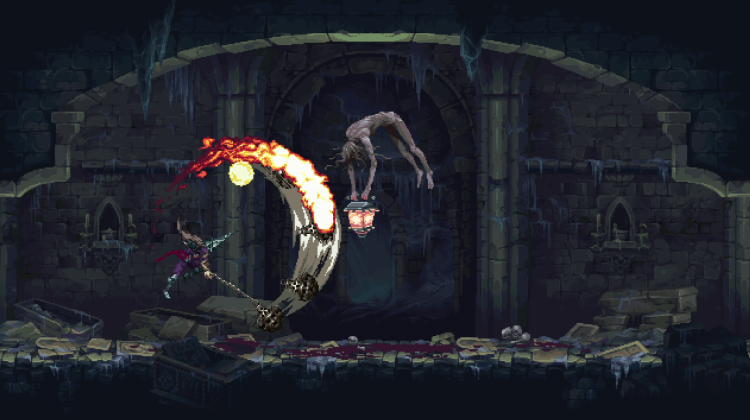
The direct sequel to Blasphemous, expanding the original's 2D combat into a three-weapon system where each weapon also unlocks specific traversal moves — making loadout choice a geographic decision as much as a combat one.
- Year: 2023
- Developer: The Game Kitchen
- Hours to beat: ~14 hours
Blasphemous 2 returns the Penitent One to a Cvstodia on the edge of a new miracle, restructured around three weapons — a sword for standard combat, prayer beads for rapid multi-hit exchanges, and a censer for heavy swinging and aerial reach — each unlocking traversal moves that open paths unavailable to the other two. Boss encounters escalate sharply in complexity over the original: multi-phase fights take place against Gothic architecture whose collapse is part of the encounter's spatial logic. Parry timing is tighter than the first game, and the counter window — which stuns enemies and opens a high-damage follow-up — demands mechanical proficiency from the opening hours. The pixel art grows more compositionally dense, filling screens with crumbling basilicas, bishops suspended mid-air, and thorned giants whose scale requires repositioning across multiple screen lengths. Sources consistently describe it as the superior game across mechanics, world design, and visual fidelity.
Remnant 2
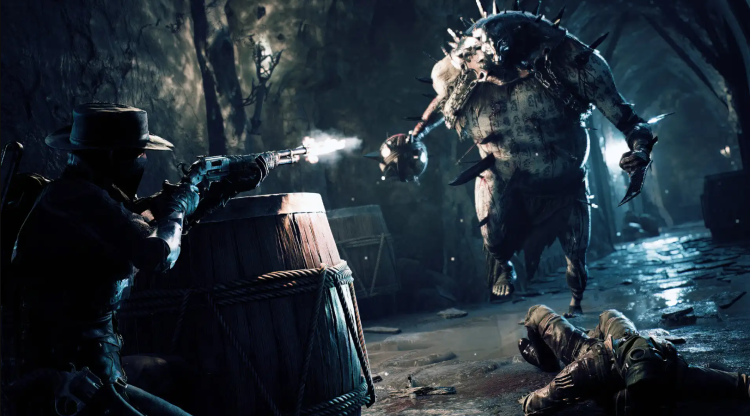
A third-person co-op shooter built on soulslike mechanical foundations — stamina management, precision dodge timing, multi-phase bosses — distributed across procedurally generated alien biomes that change layout, objectives, and available encounters with each new playthrough.
- Year: 2023
- Developer: Gunfire Games
- Hours to beat: ~22 hours
Remnant 2 sends the player through dimensional rifts into worlds populated by corrupted mechanical constructs, malevolent forest entities, and demonic fauna drawn from distinct mythological traditions, fighting with a rotating arsenal of firearms and melee weapons backed by class-specific passives. Procedural generation affects not just level geometry but quest availability, mini-dungeon placement, and which boss appears — two complete playthroughs of the same world produce different objectives, optional areas, and loot configurations. The class roster includes a summoner who deploys a combat dog companion, an assault-oriented configuration rewarding aggressive positioning, and a medic-focused class for cooperative runs. Boss encounters demand the same dodge timing and pattern recognition as any FromSoftware title, applied to ranged engagement rather than melee. Three DLC expansions — The Forgotten Kingdom, The Awakened King, and The Dark Horizon — extend the game across additional biomes and bosses that sources treat as meaningful additions rather than cosmetic increments.
Lords of the Fallen (2023)
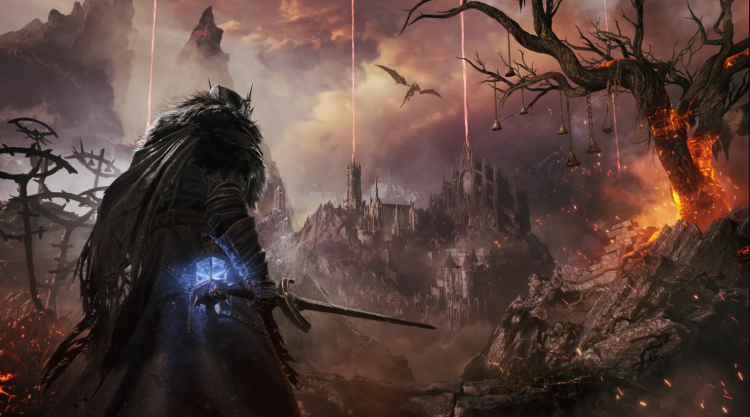
A complete reboot of the 2014 original built around a dual-realm mechanic — players shift at any point between the living world and the Umbral, a decaying parallel realm where enemies are stronger, environments deteriorate, and alternate paths become accessible.
- Year: 2023
- Developer: Hexworks
- Hours to beat: ~28 hours
Lords of the Fallen sets players in Mournstead, a gothic landscape built around the sealed prison of a demonic god, with every zone existing simultaneously in two states: the living world and the Umbral realm, accessed through a lantern carried from the opening hour. Holding the lantern up reveals Umbral geometry overlaid on the environment — phantom architecture, hidden enemies, and bridges existing only in one state but affecting movement in the other. Stepping fully into the Umbral raises enemy aggression significantly but exposes shortcuts, item caches, and zone transitions unavailable in the living world. Combat follows the deliberate pacing of classic Dark Souls: heavy weapons, stamina-gated swings, and a parry system that rewards timing precision over aggressive blocking. The launch version shipped with documented performance problems on PlayStation 5, but a sustained post-launch patch cycle resolved the technical issues in subsequent months.
Death's Door
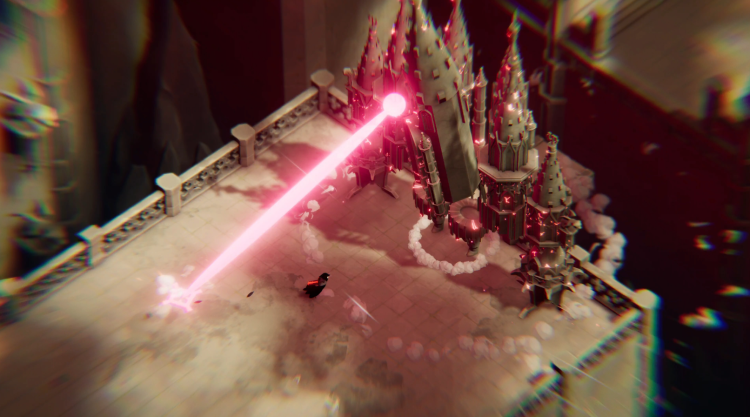
An isometric action game where a crow assigned to reap souls navigates a world where death has stopped — large creatures absorbing stolen life-force — through methodical boss-centric combat and a compact, densely interconnected map built for secret-hunting.
- Year: 2021
- Developer: Acid Nerve
- Hours to beat: ~9 hours
Death's Door gives the player crow a sword, a bow, and three elemental magic charges to fight through oversized gardeners, urn witches, and massive lords across decaying estates, overgrown ruins, and abandoned palaces whose shortcuts connect zones in ways the early-game map does not suggest. Combat runs without a stamina system — aggression goes ungated — but individual enemy attacks require precise dodge timing, and sustained careless play against bosses produces rapid death regardless of health. Boss encounters form the game's mechanical backbone: each one introduces a distinct attack vocabulary that escalates across phases, demanding pattern recognition without additional systemic tools to compensate for poor reads. The world is compact but layers shortcuts and secrets at a density that rewards returning with newly acquired traversal abilities unlocked later in the campaign. Sources unanimously cite the absence of DLC or sequel announcement as the game's most significant limitation — a world built with this level of craft deserves more content than a single playthrough provides.
Star Wars Jedi: Survivor
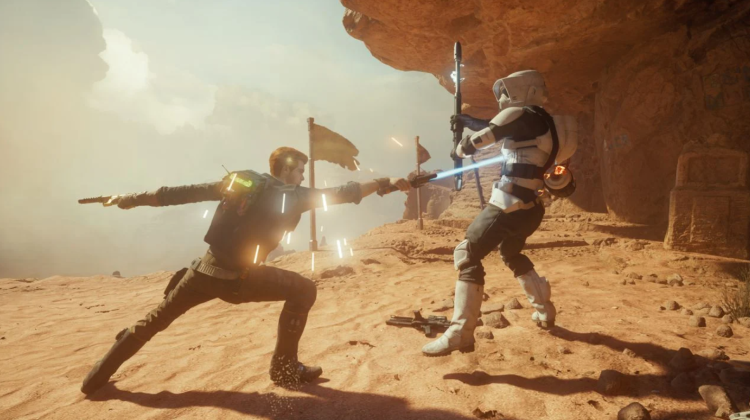
The direct sequel to Fallen Order that expands combat to five lightsaber stances, builds larger and more open planets, closes the performance problems that defined the original release, and produces a more mechanically demanding and structurally ambitious soulslike than its predecessor.
- Year: 2023
- Developer: Respawn Entertainment
- Hours to beat: ~23 hours
Star Wars Jedi: Survivor follows Cal Kestis five years after Fallen Order, operating in a period of early Rebel network formation as Imperial power consolidates. Five lightsaber stances replace the original's two: single blade, double-bladed, dual wield, blaster-combined, and a heavy crossguard configuration — each with distinct timing, range, and parry behavior demanding separate mechanical adaptation. The meditation point system returns with full enemy respawn tension, and encounters hit harder and require more precise reads than the previous game demanded. Koboh functions as an open-world hub seeded with hidden dungeons, optional boss encounters, and environmental puzzles across a zone scale that dwarfs anything in Fallen Order. The launch version shipped with severe performance problems across all platforms; subsequent patches resolved the issues, and the corrected version is consistently described as one of the strongest narrative soulslikes available.
Another Crab's Treasure
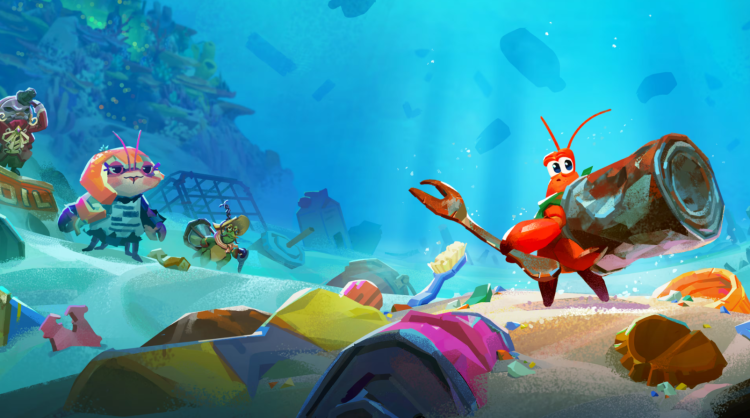
A soulslike set on a polluted ocean floor where a hermit crab constructs improvised armor from discarded trash and fights through microplastic-degraded ecosystems — built with a fully adjustable Assist Mode that lets players independently tune individual difficulty parameters without locking them out of any content.
- Year: 2024
- Developer: Aggro Crab
- Hours to beat: ~12 hours
Another Crab's Treasure follows Kril, an evicted hermit crab pursuing his repossessed shell through a sea floor littered with fast food containers and toxic waste deposits that have transformed local marine fauna into hostile creatures with soulslike-standard attack patterns. Combat mirrors the genre directly: dodge timing, stamina awareness, and boss pattern recognition are the primary skills required, and the game does not simplify those demands to match the humor of its setting. The Assist Mode allows independent adjustment of received damage, stamina regeneration, and dodge invincibility frames — including a one-hit-kill firearm option for encounters where progress has stopped. Sources position it as the most genuinely accessible entry point in the genre, teaching the core loop through reduced punishment rather than reduced complexity. At roughly 12 hours, it functions as a gateway rather than a destination.
Tier-A
Every game in this tier executes the soulslike formula at high quality, with at least one system or setting that advances what the genre can do. The gap between A and S is narrow in mechanics and wide in legacy.
I see Tier-A as the place where the genre's real arguments happen: Lies of P against Bloodborne, Nioh 2 against Dark Souls III, and the honest question of whether FromSoftware's dominance is earned or just inherited by reputation.
Black Myth: Wukong
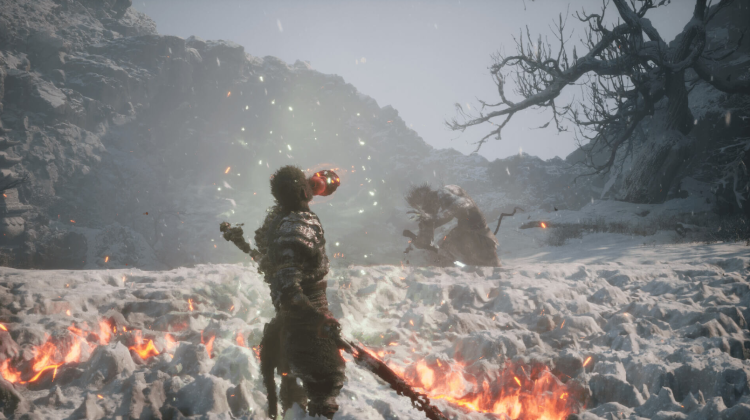
A third-person action RPG built around the Monkey King of Journey to the West, combining soulslike boss design philosophy with a transformation mechanic that lets the player absorb the abilities and combat forms of defeated Yaoguai chiefs.
- Year: 2024
- Developer: Game Science
- Hours to beat: ~23 hours
Black Myth: Wukong places the Destined One — a successor to Sun Wukong — through six chapters spanning bamboo forests, Buddhist temple networks, volcanic calderas, and demon interiors large enough to be traversed as complete environments. The Spirit system replaces traditional build variety: players defeat named Yaoguai to acquire their forms, which activate as temporary transformation states with distinct movesets and damage profiles suited to specific situations. No experience is lost on death, removing one of the genre's most punishing mechanics and positioning the game as more forgiving than most S-Tier entries require. Boss encounters are staged as narrative events — each carries a documented history and post-fight dialogue contextualizing the victory within Journey to the West lore. Sources note the ongoing debate over its soulslike classification but consistently describe its boss quality as matching or exceeding anything the genre has produced; the game sold over 25 million copies within months of its August 2024 release.
Nioh
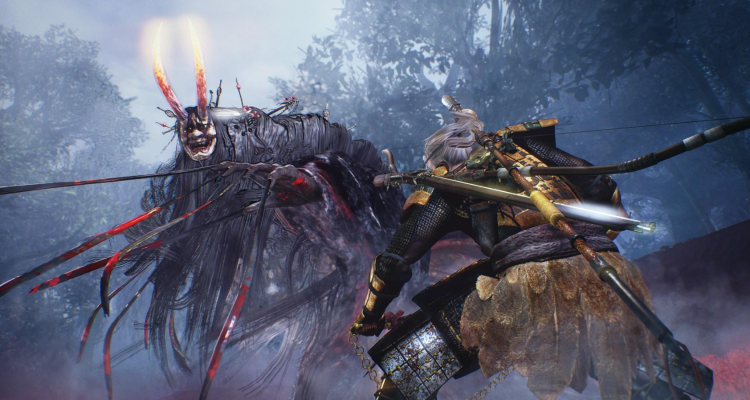
Team Ninja's historical-fantasy soulslike in supernatural Sengoku-era Japan, built around a three-stance combat system where switching between high, mid, and low configurations mid-combo generates the game's deepest mechanical expression and optimizes Ki recovery between attacks.
- Year: 2017
- Developer: Team Ninja
- Hours to beat: ~40 hours
Nioh follows William Adams, a Western sailor stranded in Tokugawa Japan, hunting a rogue alchemist weaponizing dark energy called Amrita while navigating political conflict between historical figures including Tokugawa Ieyasu. The stance system distributes attack speed, damage output, and Ki pulse efficiency differently across three configurations: high maximizes damage at the cost of Ki, low minimizes commitment while recovering Ki fastest, and mid balances both across sustained engagements. A Ki pulse — a timed input matched to the weapon recovery animation — restores the stamina gauge mid-combo, allowing sustained offensive sequences against enemies whose own Ki depletion opens additional damage windows. Loot drops constantly from defeated enemies, with gear quality, set bonuses, and stat affinity creating a Diablo-adjacent progression layer beneath the action. The sequel surpasses it in mechanical scope, but Nioh stands as a complete and replayable work in its own right.
Lies of P: Overture
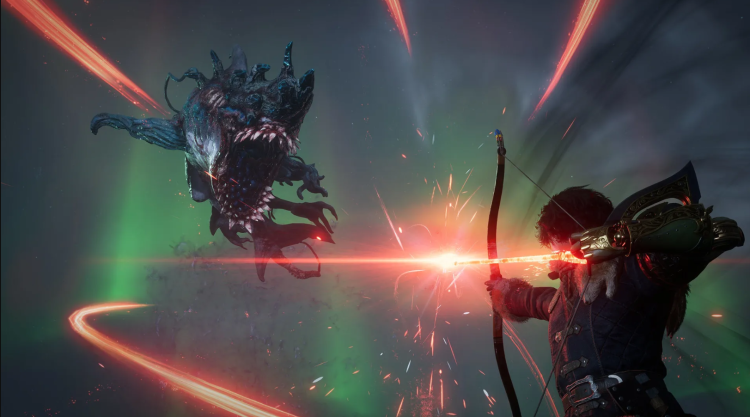
A standalone prequel expansion to Lies of P covering the final hours of Krat before the Puppet Frenzy — the mechanized uprising that opens the original game — following a new character through the collapse that the base game's narrative treated as established background.
- Year: 2025
- Developer: Neowiz/ Round8 Studio
- Hours to beat: ~7 hours
Lies of P: Overture shows Krat's organized city life in the hours before the puppet population turned, giving mechanical and environmental context to locations the original game presents entirely in ruin. The weapon assembly system returns unchanged: blade and handle components from different weapons combine into custom tools, allowing configurations the game never explicitly provides as preset options. New enemy types expand the automaton design vocabulary, introducing mechanical guards and corrupted civilians whose attack patterns differ from the original roster. Combat maintains the mechanical arm's parry applications and the ability to deploy corrosive or explosive attachments across multiple engagements within a single fight. Sources describe the expansion as preserving the base game's execution quality across a shorter arc — it concedes scope against the full game but loses nothing in polish or mechanical precision.
Dark Souls Remastered
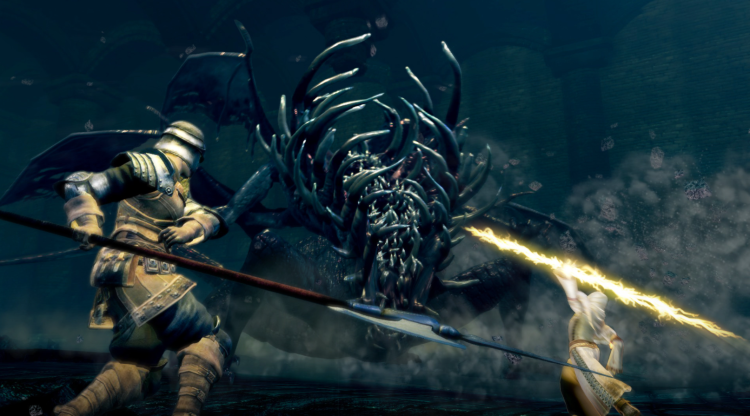
The original Dark Souls updated with new textures, 60fps support, and improved online infrastructure — still the most carefully constructed interconnected world FromSoftware has produced, and the structural baseline against which every other entry in this list is measured.
- Year: 2018 (Original: 2011)
- Developer: FromSoftware/ QLOC
- Hours to beat: ~30 hours
Dark Souls sets the player inside Lordran — a kingdom in slow, sustained collapse — and constructs its world as a single interlocked mass: Firelink Shrine feeds into the Undead Burg, the Burg descends into the Parish, the Parish opens toward the Depths and Darkroot Garden, and shortcuts discovered hours in collapse distances that felt vast on first traverse. The bonfire system defines the genre's checkpoint rhythm: rest to restore Estus charges and respawn enemies, at the permanent cost of resetting every non-boss threat in the surrounding area. Bosses in Dark Souls are rarely the hardest part of their own zones — approach corridors demand as much care as the bosses themselves, and careless traversal ends runs that confident play through earlier encounters made possible. The Remaster resolves the original's frame rate problems and refreshes multiplayer infrastructure, making invasion and summoning functional on modern hardware. Sources call it soulslike basic training and describe it as the game that establishes the conceptual vocabulary against which every entry in the genre is evaluated.
Nioh 2
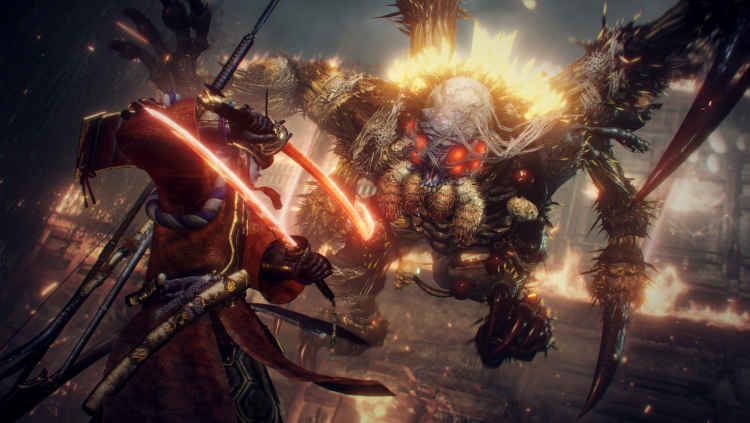
The prequel to Nioh, expanding the first game's stance combat with Yokai abilities, a Burst Counter mechanic, additional weapon types, and a fully customizable protagonist whose half-human, half-Yokai nature drives both the narrative and the combat's most distinctive additions.
- Year: 2020
- Developer: Team Ninja
- Hours to beat: ~55 hours
Nioh 2 sets a player-created shiftling — a being of mixed human and Yokai origin — in late Sengoku Japan, navigating a conflict involving Toyotomi Hideyoshi and a corrupted general whose pursuit of Amrita threatens the period's political stability. The Burst Counter is the game's defining addition: when a glowing red aura signals an enemy Yokai's special move, triggering a species-matched counter absorbs the attack and deals heavy Ki damage, demanding that players learn each enemy type's Yokai art to maintain pressure. New weapon categories include clawed fists and dual hatchets, each carrying dozens of unlockable combo extensions across three stance variants. Loot drops constantly with set bonuses, soul matching upgrades, and divine item tiers creating a progression system that sources compare to Diablo in depth as much as to Dark Souls in rhythm. The Complete Edition includes three full DLC campaigns extending the total to over 80 hours, and sources across all four consulted place Nioh 2 among the most replayable games the genre has produced.
Lies of P
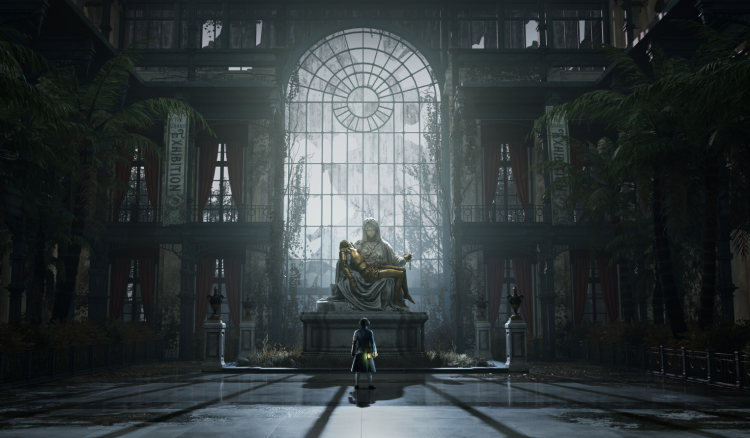
A soulslike set in a steam-powered city called Krat where the puppet population has turned on its creators without explanation — built tightly enough around its weapon assembly system, narrow parry timing, and world design to compete directly with FromSoftware's catalog.
- Year: 2023
- Developer: Neowiz/ Round8 Studio
- Hours to beat: ~30 hours
Lies of P casts P — Geppetto's mechanical son — navigating Krat's streets now controlled by the puppet military, searching for Geppetto through an investigation that expands as the game's central lie becomes legible. The weapon assembly system splits every weapon into blade and handle, each carrying a distinct moveset, and players combine components across categories to create tools the game never explicitly provides: a fire dagger blade on a spear handle, a saw blade on a rapier's footwork configuration. The mechanical arm fires independently — deploying acid, mines, electric bursts, or a grindstone that buffs weapon damage — adding a second offensive layer to every exchange. Parrying is the dominant mechanical skill: timing windows are narrower than most soulslikes, but successfully parrying enough consecutive metal strikes degrades and breaks enemy weapons, rewarding patience over aggression. Sources in all four consulted name it the gold standard for non-FromSoftware soulslike development and the closest available substitute for Bloodborne on PC.
Tier-S
I finished Sekiro three times before I fully understood what it was doing, and I think that delayed recognition is the best argument for why these five games sit where they do — none of them give up their best ideas on the first pass.
These games are ranked by the weight of evidence across four independent sources, by how significantly each altered the genre's trajectory after release, and by the specific language those sources use to describe them against everything else in this list.
Dark Souls III
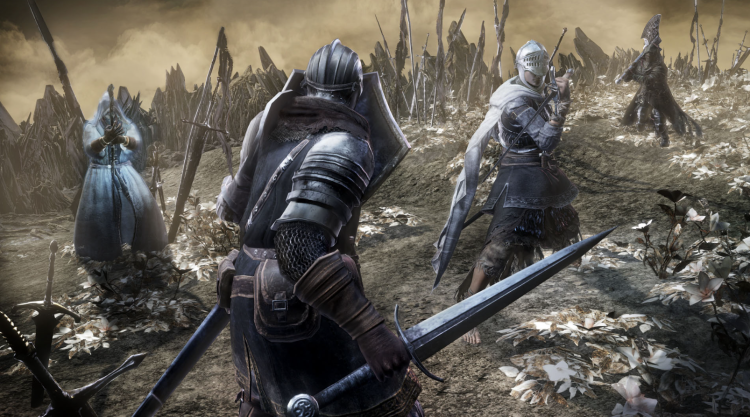
The closing entry in the original Dark Souls trilogy and the game that synthesized every lesson across the series — absorbing Bloodborne's combat speed, refining the original's world construction, and producing the most technically polished FromSoftware title up to its release.
- Year: 2016
- Developer: FromSoftware
- Hours to beat: ~40 hours
Dark Souls III sets its campaign in Lothric, a kingdom in the final iteration of a recurring cycle — Unkindled warriors called back from death to link a fading flame — and builds its world through architecture that layers the visual history of the entire trilogy into a single collapsing geography. Combat accelerates sharply over its predecessors: weapons respond faster, FP governs special Weapon Arts, and enemy aggression demands engagement that earlier entries made fully optional. The build system spans strength, dexterity, intelligence, faith, and hybrid combinations across weapon infusion and upgrade paths producing hundreds of distinct configurations. Both DLC packs — Ashes of Ariandel and The Ringed City — contain some of the most technically demanding boss encounters FromSoftware has designed, with The Ringed City's final boss generating sustained discussion as one of the hardest in the series. Sources across all four consulted place Dark Souls III among the essential works of the genre and describe it as the most refined version of the formula prior to Elden Ring.
Sekiro: Shadows Die Twice
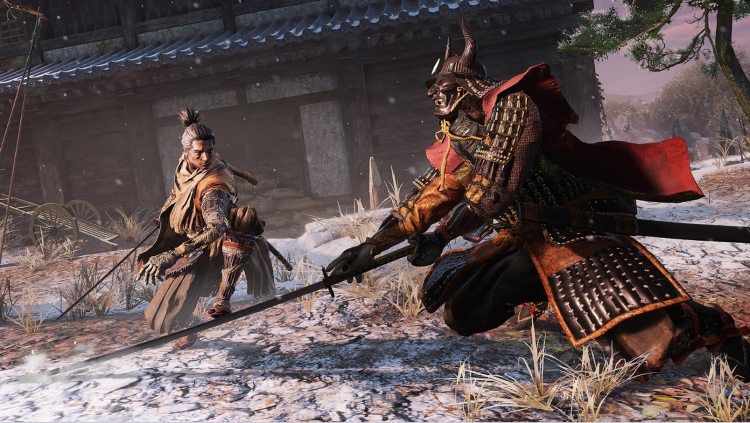
A soulslike that removes all RPG leveling, all build variety, and all multiplayer options — replacing them with a single sword, a prosthetic shinobi arm, and a posture-breaking combat system built entirely around parrying as the primary win condition.
- Year: 2019
- Developer: FromSoftware
- Hours to beat: ~30 hours
I think Sekiro represents the clearest mechanical argument the soulslike genre has produced — one sword, one prosthetic arm, no build options, no alternative strategies to fall back on when the timing fails, and no apology for any of it. Sekiro casts the player as Wolf, a shinobi protecting a young lord in a supernatural Sengoku Japan, delivering its narrative through named duels against warriors whose techniques must be decoded through repeated death before any timing becomes accurate enough to prevail. The posture system replaces HP attrition with a guard-breaking mechanic: landing deflections and sustained pressure fills an enemy's posture meter, and a full meter opens a deathblow regardless of remaining HP. The prosthetic arm carries interchangeable tools — firecrackers that stagger beasts, a loaded umbrella that deflects ranged attacks, a Loaded Axe that destroys wooden shields — each providing a specific mechanical answer to a specific combat obstacle. Unblockable attacks require a Mikiri counter for thrusts, a vertical jump for sweeps, or death — the game does not extend a third option.
Bloodborne
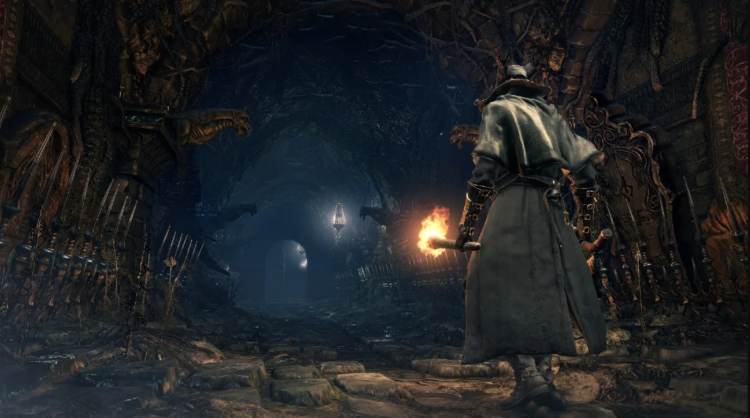
A soulslike built entirely around forward aggression — shields removed, healing tied to attacking immediately after receiving damage, and the setting transforming Gothic city horror into Lovecraftian cosmic dread across a single blood-moon night in Yharnam.
- Year: 2015
- Developer: FromSoftware
- Hours to beat: ~35 hours
Bloodborne opens on a hunter arriving in Yharnam during a hunt, navigating rain-soaked cobblestone streets through decaying cathedrals and winding alleyways where the population has begun transforming into grotesque beast-forms that operate on proximity and overwhelming aggression. The Regain system ties healing to forward pressure: taking damage depletes the health bar, but attacking within a narrow window recovers a portion of the loss — the mechanic structurally eliminates passive play and forces every encounter forward regardless of health status. Trick Weapons transform between configurations — a cane extends into a multi-tailed whip, a cleaver folds into dual blades, a saw separates into one-handed and two-handed toggles — each transformation changing range, speed, and damage scaling across entire fights. The Chalice Dungeons generate procedural underground labyrinths beneath Yharnam containing optional bosses and lore fragments that expand the game's Lovecraftian cosmology beyond what the main narrative states. I see no justification for Bloodborne running at 30fps on PlayStation 5 in 2026 — a game of this quality on hardware released years after it deserves more than Sony has provided, and sources across all four consulted describe the 30fps limitation as its only unresolved failing.
Elden Ring
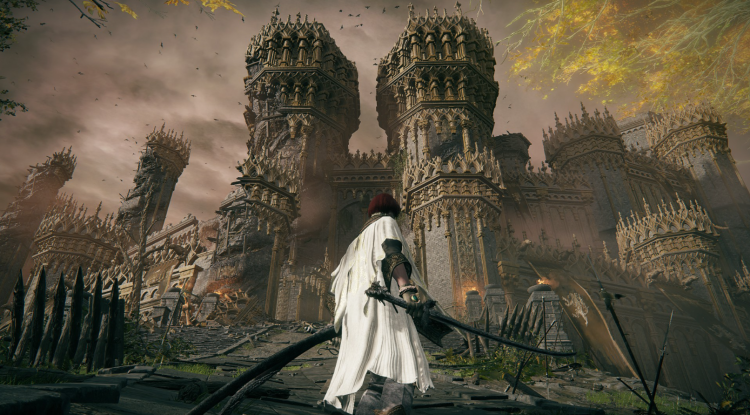
An open-world soulslike developed in collaboration with novelist George R. R. Martin — taking the precision combat and world-building density of the Dark Souls series and expanding it across a six-region open continent, producing the most commercially successful and critically acclaimed FromSoftware title ever released.
- Year: 2022
- Developer: FromSoftware
- Hours to beat: ~70 hours
Elden Ring places the Tarnished across six major regions: Limgrave, Liurnia of the Lakes, Caelid, the Altus Plateau, the Mountaintops of the Giants, and Farum Azula, each containing a Legacy Dungeon functioning as a traditional FromSoftware level surrounded by open terrain seeded with optional bosses, cave networks, catacombs, and lore-dense ruins. The build system is the deepest in the series: 91 Ashes of War assignable across weapons, eight damage type categories, incantation and sorcery schools with hundreds of individual spells, and a Physick flask that mixes passive combat effects from dozens of crystal tear components. The open-world structure allows players to navigate around difficulty spikes by exploring alternate zones — a decision sources consistently cite as making Elden Ring the most approachable FromSoftware title without reducing its ceiling. Sold over 28 million copies worldwide, making it the most commercially successful soulslike ever released. Sources across all four consulted describe it as the pinnacle of the genre, consistently and without qualification.
Shadow of the Erdtree
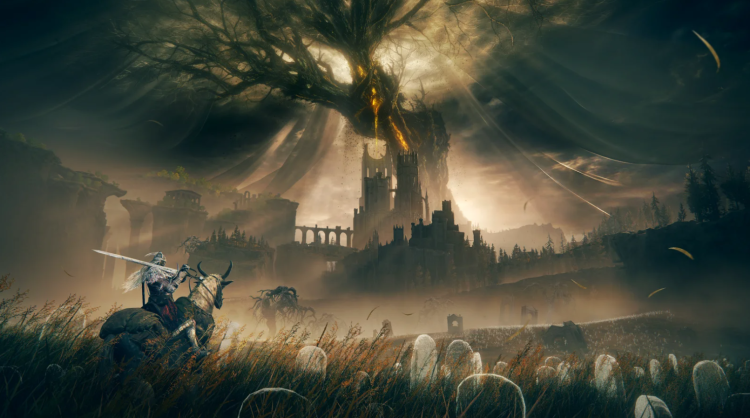
The single expansion to Elden Ring and the largest DLC FromSoftware has produced — adding a complete secondary map, new legacy dungeons, over 100 new weapons, and a Scadutree Blessing system providing DLC-specific scaling through collectible fragments, preventing players from trivializing the new content with a maxed base-game build.
- Year: 2024
- Developer: FromSoftware
- Hours to beat: ~25 hours
Shadow of the Erdtree sends the player into the Land of Shadow — a hidden realm containing the origin of Marika's early reign and the history of a war the base game treats as foundational but never directly examines. The Scadutree Blessing system functions as DLC-specific leveling: fragments scattered across the new map provide percentage-based bonuses calibrated to the expansion's enemy aggression, ensuring even fully leveled characters must engage with the new progression system to survive later zones. New bosses include Messmer the Impaler and the final encounter — Radahn reborn as Consort Radahn — which sources describe as among the hardest encounters FromSoftware has designed across any title in the catalog. Weapon additions include new stance categories, new Ash of War types, and light greatswords absent from the base game's full arsenal. Sources describe it as DLC operating at the scale of a full game release — not an appendix to Elden Ring, but a second act of equivalent density.
What Is a Soulslike Game?
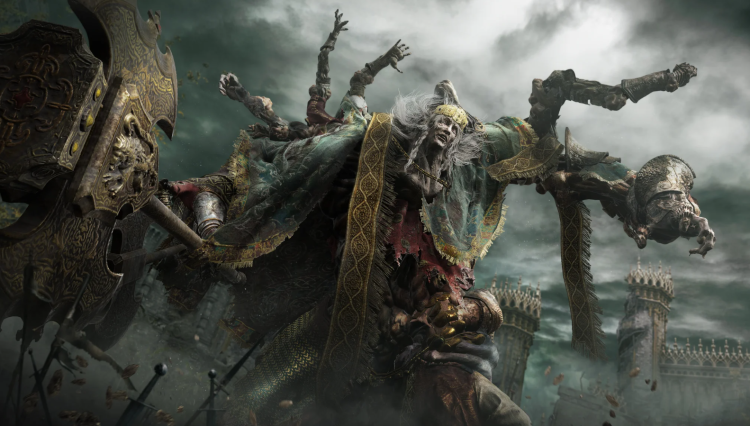
A soulslike is an action RPG where the player accumulates an experience currency through combat — called souls, runes, or a setting-specific equivalent — that drops entirely on death and must be recovered from the location of dying before dying again, or be lost permanently. Combat operates on stamina and precision: every action drains a resource gauge, and emptying it mid-fight removes the ability to dodge or block, which is typically fatal. Checkpoints are placed deliberately to maximize the distance between safety and risk, and resting at one restores health and consumable charges while resetting all non-boss enemies in the surrounding area. Narrative is embedded in item descriptions, environmental architecture, and fragmented NPC dialogue rather than delivered through direct exposition — the story exists in the world and requires active reconstruction rather than passive reception.
What Soulslike Game To Play First?
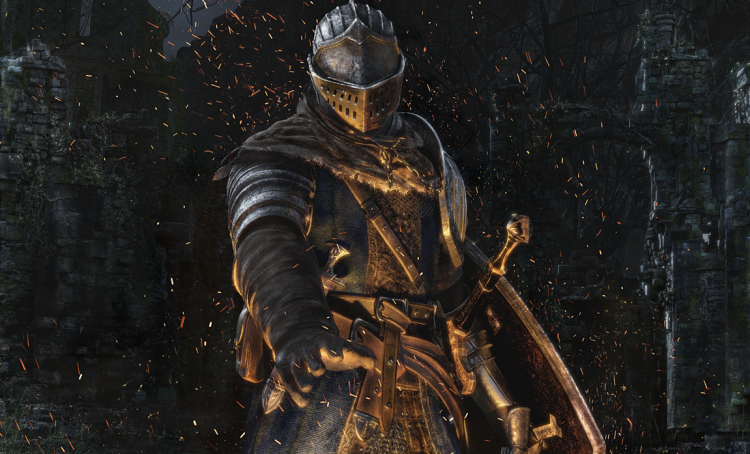
Dark Souls Remastered is the correct first choice for players who want to understand the genre from its structural foundation: the world is fully interconnected, the bosses are learnable without excessive multi-attempt repetition, and the pacing teaches the checkpoint rhythm at a speed that allows comprehension to outpace frustration. Dark Souls III works as an alternative for players who find the original's pace too deliberate — combat is faster, enemy variety is wider, and the world is more visually immediate without sacrificing the series' design principles.
Bloodborne suits players drawn specifically to horror aesthetics and aggressive combat, though PlayStation exclusivity limits access for a large portion of potential players. After completing any one of those three, Elden Ring is the correct second game: it takes every mechanic established across the trilogy and expands it across an open world that allows navigation around difficulty spikes rather than forcing direct confrontation with a single obstacle. The open structure raises the floor without reducing the ceiling, making Elden Ring the most forgiving S-Tier entry and the most complete expression of everything the genre has developed since Demon's Souls launched in 2009.


 Successfully copied... Thank you for sharing our content!:



5% deposit bonus up to 100 gems

a free Gift Case





EGAMERSW - get 11% Deposit Bonus + Bonus Wheel free spin


EXTRA 10% DEPOSIT BONUS + free 2 spins

3 Free Cases + 100% up to 100 Coins on First Deposit


5 Free Cases, Daily FREE & Welcome Bonuses up to 35%

3 free cases and a 5% bonus added to all cash deposits.

+5% to deposit




Comments