




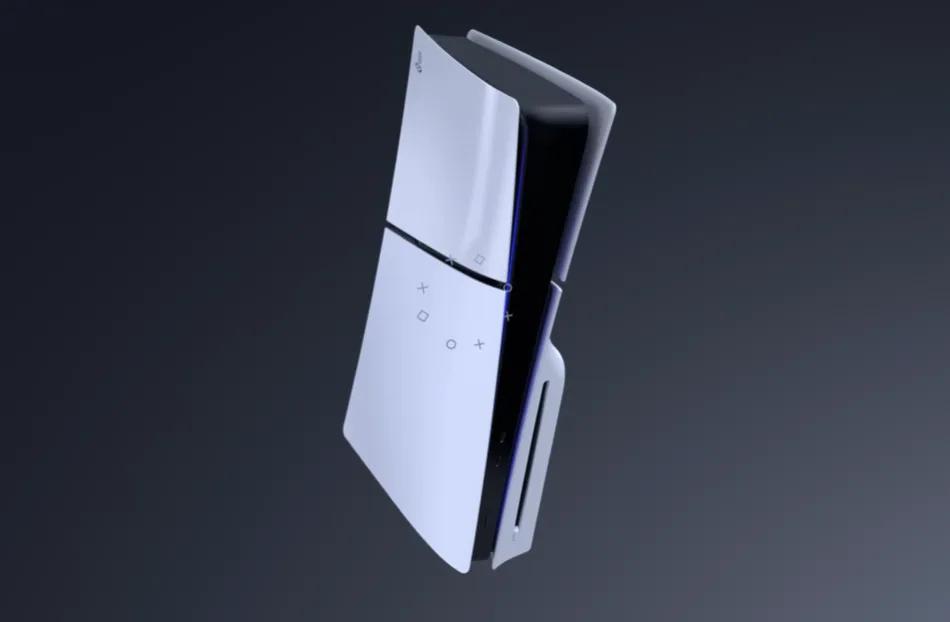
Sony Patented AI-Generated Video Game Tutorials And The Ghost Assistance System
 Sony
Sony PlayStation
Sony patented AI-generated video game tutorials this year, revealing a system designed to insert artificial intelligence directly into live gameplay to guide players through difficult sections. The filing describes a method that replaces or supplements traditional tutorials with an AI-driven “ghost” character that demonstrates actions inside the game itself.
The idea surfaced publicly after being flagged by Boing Boing, though it received wider attention following coverage by Kotaku.
The document, filed in April and published later in 2025, outlines what Sony calls “ghost assistance.” In this system, a game session connects to an AI engine that generates a ghost character capable of progressing through the same interactive paths as the player. Instead of static prompts or pre-recorded videos, the ghost appears in the active game world and performs the actions needed to advance.
The patent states that the ghost’s actions are tied to the specific moment the player is struggling with, rather than a generalized tutorial segment. The system is designed to activate only when a dedicated mode is enabled, suggesting players could opt out entirely. Sony also describes adjustable levels of assistance, ranging from visual overlays that indicate objectives to full demonstrations of button inputs. At the highest level, the ghost can complete the task on the player’s behalf.
“The interactive actions by the ghost character are configured to progress the ghost character along an interactive path of the game.”— Sony patent filing
Beyond movement and combat demonstrations, the AI ghost is described as conversational. The filing says the system can use natural language to communicate with the player, answering questions or explaining mechanics verbally. This interaction resembles current conversational AI tools, though Sony does not name any specific models. The company repeatedly uses the term “AI” while avoiding direct references to generative systems commonly associated with large language models.

Training data is addressed in detail. Sony says the AI would be trained on “a plurality of training footage sources,” allowing it to analyze live gameplay and offer contextual responses. These sources may include recordings from previous player sessions, both inside and outside Sony’s network, as well as online material such as website descriptions or social media posts. The patent also notes that processing could be distributed across multiple server units within a data center, rather than relying solely on local hardware.
Another section emphasizes adaptability. The AI model is described as capable of continuously learning from new gameplay scenarios as the player progresses. This would allow the ghost to refine its responses over time, adjusting to different play styles or approaches to the same challenge. Sony positions this as a way to reduce frustration without forcing players into rigid tutorial structures.
The appearance of the ghost character is intentionally flexible. According to the filing, it can take the form of characters from other games, movie figures, or user-generated designs. This customization is presented as optional, but it raises licensing and consistency questions that the patent does not resolve.
“The ghost character can be represented as a character from a movie, a character figure from another game, or a user-generated character.”— Sony patent filing
Sony provides a detailed example to illustrate how the system might function in practice. In that scenario, the ghost appears as Yoda from Star Wars, offering both physical demonstrations and spoken guidance during gameplay. The example describes Yoda performing moves, speaking to the player character, and appearing on screen as part of the game scene while instructions are delivered.
“By way of example, the ghost character can be an animated representation of all-knowing Yoda from Star Wars.”— Sony patent filing
The filing also explores hardware integration beyond the console itself. Sony suggests the system could track a player’s gaze or use a camera to capture images of the room the player is in. These features are presented as optional enhancements that could help the AI determine when a player is confused or disengaged. The document does not specify how data would be stored or protected, leaving privacy implications unresolved.
Despite the detail, the patent remains speculative. Sony has a long history of filing patents that never reach consumers. This document is also described as an evolution of a similar patent filed in 2023, suggesting a slow and iterative approach rather than an imminent release. If implemented, the system would likely require more powerful hardware and server infrastructure than the current PlayStation 5 offers.
The premise of this patent centers on replacing passive instruction with active, AI-driven demonstration. It assumes that watching a task performed in real time, within the player’s own session, is more effective than reading prompts or replaying static videos. Whether players would welcome an AI presence that can talk, act, and even take control remains uncertain.
Sony does not indicate when, or if, this system will appear in a commercial product. Any rollout would likely align with a future console generation, given the technical demands described. For now, Sony patented AI-generated video game tutorials exist only on paper, outlining a vision that blends live gameplay, machine learning, and interactive instruction.
Read also, Sony has confirmed the PlayStation Plus January 2026 monthly lineup, with Need for Speed Unbound, Disney Epic Mickey: Rebrushed, and Core Keeper available on PlayStation 4 and PlayStation 5 from January 6 through February 2.


 Successfully copied... Thank you for sharing our content!:



5% deposit bonus up to 100 gems

a free Gift Case





EGAMERSW - get 11% Deposit Bonus + Bonus Wheel free spin


EXTRA 10% DEPOSIT BONUS + free 2 spins

3 Free Cases + 100% up to 100 Coins on First Deposit


5 Free Cases, Daily FREE & Welcome Bonuses up to 35%

3 free cases and a 5% bonus added to all cash deposits.

+5% to deposit




Comments