




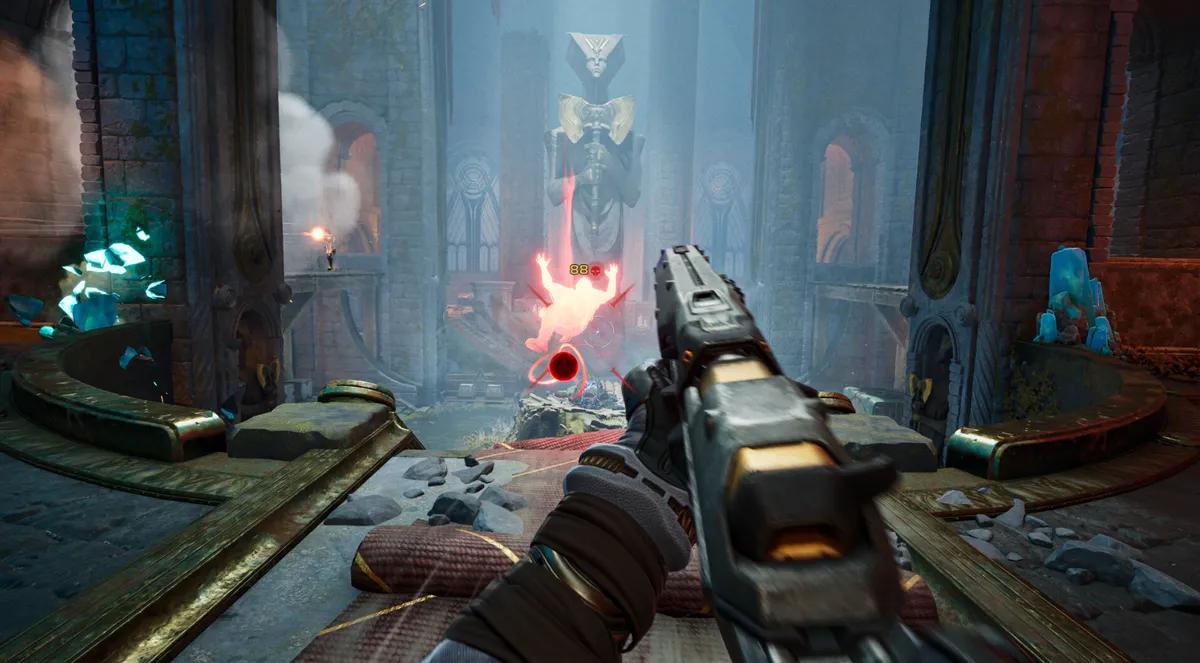
Highguard Faces Early Backlash After The Game Awards Reveal
 Steam
Steam Rumors
 Games
Games Game Awards
Highguard became an unexpected focal point of The Game Awards 2025, not because of its gameplay ambitions, but because of where it appeared in the show. Revealed as the final world premiere of the night, the PvP multiplayer shooter followed a presentation that many viewers already found disappointing. The absence of long-anticipated projects such as The Elder Scrolls 6 or Half-Life 3 left expectations misaligned, and Highguard absorbed much of the resulting frustration.
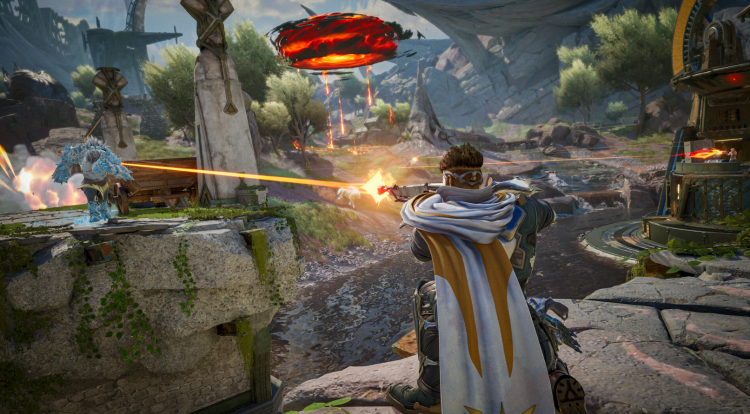
The reveal was framed in a way that heightened those expectations. Geoff Keighley appeared in front of a mountain landscape reminiscent of Bethesda’s earlier Elder Scrolls tease and referenced Titanfall 2 before pivoting to Highguard. When the announcement resolved into a competitive shooter, the contrast proved jarring. The game itself showed standard class-based combat and fortified environments, competent but familiar. For many viewers, that was not enough to justify its position as the closing reveal.
Within hours, Highguard began drawing comparisons to Concord, a multiplayer title associated with rapid decline after heavy investment. The comparison has spread across social platforms, comment sections, and the game’s Steam Community Hub. Although Highguard is still more than a month away from launch, discussion around it has already shifted toward predictions of failure rather than evaluation of its mechanics.
Sentiment around the trailer reflects that tone. While public dislike counts are no longer visible, browser extensions suggest a strong imbalance toward negative reactions. Players describe the game as unremarkable and forecast a short lifespan similar to Concord, Foamstars, or XDefiant. These conclusions are being drawn without hands-on experience, based largely on fatigue with the current multiplayer landscape.
The timing amplifies the reaction. Live-service shooters have struggled in recent years, with several high-profile closures reinforcing skepticism toward new entries. Concord’s collapse in particular has become shorthand for perceived design risk. Applying that label to Highguard so early simplifies a more complex situation, but it has proven effective in shaping online discourse.
From what was shown, Highguard does not appear fundamentally broken or unfinished. Its systems and visual presentation align with established genre norms. That familiarity may be its greatest liability at a moment when audiences expect sharper differentiation. Still, equating it outright with canceled projects ignores differences in scope, backing, and execution that cannot be judged from a single trailer.
The intensity of the backlash also raises questions about presentation rather than product. Had Highguard appeared earlier in the program, the reaction might have been muted. Positioned mid-show, it would likely have registered as another entry in a crowded genre. As the finale, it inherited the weight of unmet hopes built across the evening.
For now, Highguard occupies an awkward space. It is visible, widely discussed, and already framed by failure narratives before release. Whether it can move beyond that framing will depend on how its developers communicate value and how the game performs once players can assess it directly. At present, the criticism says as much about audience exhaustion as it does about the game itself.
Read also: Sony recently addressed concerns around Marathon, distancing the project from comparisons to Concord. Company leadership acknowledged Concord’s failure to stand out and emphasized that Marathon is undergoing extensive internal testing shaped by player feedback rather than marketing-led hype.


 Successfully copied... Thank you for sharing our content!:

Comments