




Ubisoft Teammates AI Experiment Marks New Step In Adaptive Game Design
 Ubisoft
Ubisoft Teammates is the company’s latest attempt to test how artificial intelligence reshapes player interaction inside a controlled format. The project, described by Ubisoft as a playable research experiment, uses a short first-person mission to study how players respond to AI-driven companions that interpret voice commands, environmental cues, and moment-to-moment behavior.
Ubisoft Teammates occupies a small corner of a broader internal push, which CEO Yves Guillemot framed this week as transformative for the studio’s long-term development methods. His remarks placed generative systems on the same level as the shift from 2D to 3D, a comparison that underscores how seriously the publisher treats the technology even as it introduces it through a modest prototype.
“First and foremost, Teammates is an experimental research project, albeit a playable one.”
— Ubisoft said.
The scenario sends the player into a hostile installation as part of a resistance cell, searching for five missing members of their team. The mission unfolds across a compact map where the player retrieves the final memories of the lost squad while fighting through enemy patrols. The setup is not unusual for a shooter, but the interactions around it are designed to step away from fixed lines and scripted triggers. The game introduces Jaspar, an AI assistant that reads vocal input and reacts with concrete actions: highlighting enemies, explaining elements of the world, changing settings, or pausing the session. Ubisoft describes him as a character inside the story rather than a tool layered on top of it, driven by systems that process the environment and the player’s actions in real time.
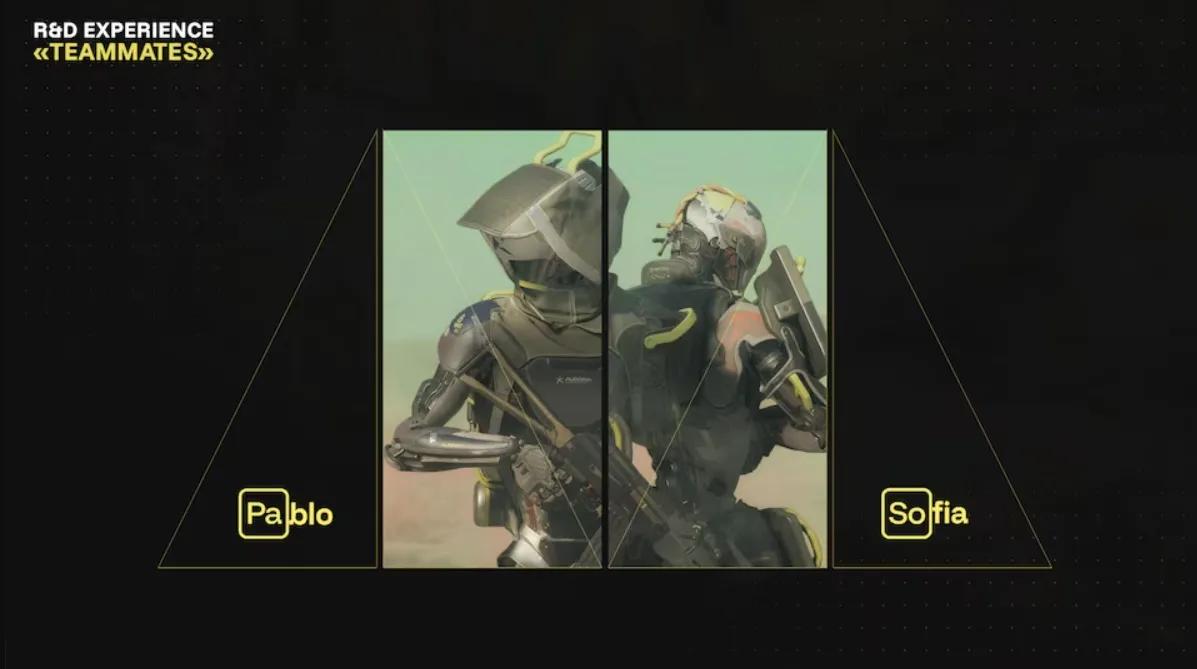
The player is also paired with two AI companions, Pablo and Sofia, who respond to direct instruction or simple conversation. Their behavior shifts within the limits defined by the writing team. They can follow commands, push toward objectives, and react to changing conditions, but they remain anchored to the personalities and motivations set during development. The studio says this structure helps them explore improvisation without letting characters drift into incoherence.
Director of gameplay GenAI Xavier Manzanares said the team noticed strong early reactions to the system:
“Jaspar was helping players when they got lost or weren’t sure what to do, he could access menus and settings, tell players more about the world and the story. We really started to like Jaspar and saw how a system like this could be interesting for many different kinds of games.” — Xavier Manzanares
Data and AI director Rémi Labory outlined the technical goal behind the project:
“This technology opens doors to new, personalised experiences. Player input shapes character reactions in real time, something traditional development can’t achieve. We’re also delivering a full pipeline, with the experience taking players from onboarding to debrief, which is a first.” — Rémi Labory
This approach raises questions that extend beyond the prototype. Ubisoft acknowledges the ongoing criticism around AI adoption in the industry, especially from creative teams worried about erosion of authorship. The company stresses that Teammates is not a step toward cutting writers or designers out of the process. Instead, it is pitched as a toolset that broadens where authored content can go and how NPCs might behave without relying solely on prewritten exchanges.
Narrative director Virginie Mosser addressed this concern directly:
“At first, I had the same concerns as many others. But I discovered that it’s the exact opposite of removing the human from the process. I still write the story and character personalities, but instead of fixed lines, we create these kinds of fences that let NPCs improvise within the world but stay within the boundaries of the lore and motivations we have given them. They can improvise, but we still set the rules and direct the story and characters.” — Virginie Mosser
For now, Teammates remains a limited test. Ubisoft shared the build with several hundred players in a closed session and will continue refining the underlying systems based on their feedback. The company says the project will evolve as it gathers responses from both players and internal teams, using those insights to adjust the tools that drive its AI-driven companions. The long-term result is unclear, but the experiment outlines how Ubisoft wants to merge authored intent with reactive technology while keeping control of narrative shape and character identity.
Read also, Assassin’s Creed Boss Marc-Alexis Côté leaves Ubisoft after nearly two decades, shortly after leadership of the franchise shifted to Vantage Studios under a new partnership structure with Tencent.


 Successfully copied... Thank you for sharing our content!:

Comments