


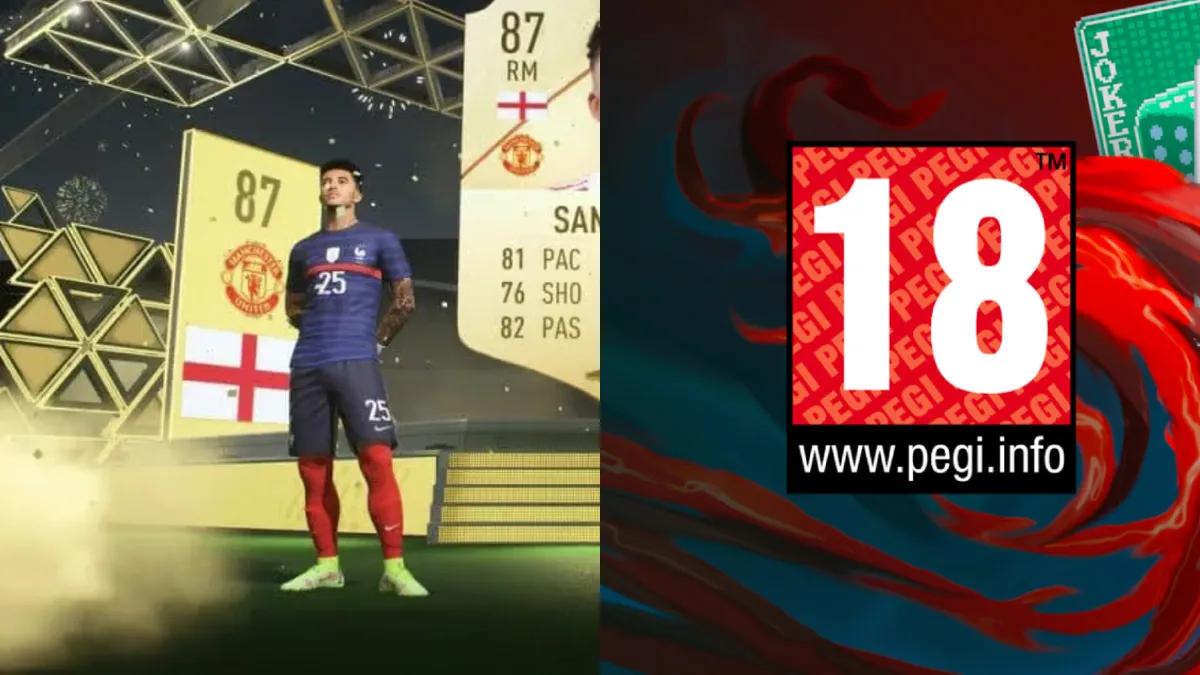
PEGI 16 Loot Box Rule Now Applies to EA Sports FC and Zenless Zone Zero
 EA Sports
 Electronic Arts
PEGI has started moving digital-only games with loot boxes up to a 16 rating, and EA Sports FC and Zenless Zone Zero are already carrying the new badge.
The change reaches games already on sale. Anything sitting at PEGI 3, 7 or 12 that sells paid random items moves to 16 with a Paid random items descriptor attached. The rerating started this week and runs through October, and it covers titles rated through the long-form PEGI Classic process as well as the IARC questionnaire that most digital storefronts use.
Connor Hinde, policy manager at the Games Rating Authority, posted the update on LinkedIn. The GRA administers PEGI in the UK, and it has begun applying to published games the criteria that have governed new submissions since June.
“A further update to the PEGI rating system is now underway!”
— Connor Hinde
Hinde flagged that a high volume of rating changes will land in a short window and pointed publishers with questions at the PEGI helpdesk. Publishers do not have to patch anything or announce anything. The badge on the store page simply changes.
The EA Sports FC series, the biggest name on the list, has carried a PEGI 3 for years, with Ultimate Team’s blind card packs handled by a separate in-app purchases warning rather than by the age rating itself. Under the new PEGI rules, those packs are paid random items, and paid random items mean 16. Zenless Zone Zero, HoYoverse’s gacha action game, has moved from 12 to 16 on the same grounds.

Monopoly Go still shows a 9+ on Apple’s games store, though its randomised sticker packs and boxes sit in the same category. Scopely’s game has topped the Google Play grossing chart, and Gamesindustry.biz reported in 2024 that it ran UK ads without mentioning its randomised purchases.
That reporting came off a BBC investigation into the 45 highest-grossing games on Google Play. Loot boxes appeared in 26 of their store listings, 22 of those games were advertising at the time, and two of the ads disclosed it. The Advertising Standards Authority requires the disclosure and has banned ads from EA, Miniclip, Jagex and five smaller mobile publishers for missing it. The ASA said it was still monitoring how widely the rule was being followed.
Plenty of games will keep their number. PEGI used Fortnite as its example in March: a title already rated 12 keeps that number under the in-app purchase criterion and picks up descriptors that spell out what it sells. The exact wording of those descriptors was still being settled when the rules were signed off. PEGI also only speaks for Europe outside Germany, where USK runs its own system and brought in comparable rules a couple of years earlier.
EA Sports FC 27 has sold almost 8 million copies in under three weeks, pulling an estimated $714.1 million, with 77.1% of that from PlayStation and roughly $506.7 million from PS5 alone. Xbox accounts for 15.9% and Steam for 7.0%. The user score on Metacritic’s PS5 page sits at 2.3. A 16 badge on a digital listing is unlikely to dent either number.
I have opened plenty of card packs without feeling robbed, and the mechanic does not need to disappear. PEGI stopped short of a ban in March and is still short of one now. A game that sells randomness carries a rating that says so.

Courts have moved faster. A Brazilian court ordered Riot Games to pay $2.9 million in collective moral damages over League of Legends loot boxes, in a public civil suit brought by the country’s National Association of Child and Adolescent Protection Centers. The money goes to a federal fund for children’s and adolescents’ rights rather than to individual players, and Riot has not commented publicly on the ruling. In the United States, Valve is defending a lawsuit over Counter-Strike 2 cases and argues that its systems fall outside gambling law because nothing inside its own platform turns a skin into cash. Valve has also banned skin gambling and case-opening advertising across its competitive environments while that case runs.
What gets me is the distance between what a card pack is and what the store page told a parent before this month. A PEGI 3 on a game selling randomised player packs was a labelling failure, and it took a rules rewrite to fix it.
That rewrite landed in March. Dirk Bosmans, PEGI’s director general, called it “probably the most significant update we’ve had in our history” and said the board took its cues from USK, which had run similar rules for a couple of years. Four criteria went live for new submissions in June:
- Time-limited or quantity-limited paid content, such as a paid battle pass: PEGI 12, falling to 7 if the game ships spending controls switched off by default.
- Purchases tied to NFTs that are required to play: PEGI 18.
- Paid random items, covering card packs, gacha pulls and keys that unlock random drops: PEGI 16, rising to 18 for social casino games.
- Play by appointment, covering streaks, daily quests and battle passes built around returning: PEGI 7 with a descriptor, PEGI 12 when content or status is lost for not coming back.
- Text, voice or video chat with no way to restrict it: PEGI 18.
Play by appointment caused the most argument inside PEGI. Some of the people involved pointed out that daily quests and streaks are what make a game engaging, closer to a cliffhanger in a Netflix series than to a trap, so Animal Crossing stays at 7 with a descriptor rather than climbing. The chat criterion also overlaps with UK law. Bosmans said a game with no way to restrict text, voice or video chat would be illegal to sell in the UK under the Online Safety Act and would struggle to get onto some platforms at all, which is why he treated it as a line in the sand rather than a rating he expects to hand out.
He also left the loot box number room to move. If publishers build controls that put paid random items off by default, a 12 becomes possible, though no game offered that when the rules were written.
A box already printed with a PEGI 3 stays printed, so the October wave only touches digital listings. A parent reading a shelf and a parent reading a store page are now looking at different numbers for the same game, which puts the work back on the parent.
I would rather see a label than a ban, and this is a label. The next test is whether publishers build the spending controls that pull a rating back down, or simply absorb the 16 and carry on selling packs to the same people who were buying them at PEGI 3.
Read also: EA Sports FC Mobile has two working codes this month -- both redeemed on the game’s official site with the EA account linked to your in-game profile.


 Successfully copied... Thank you for sharing our content!:


Comments