




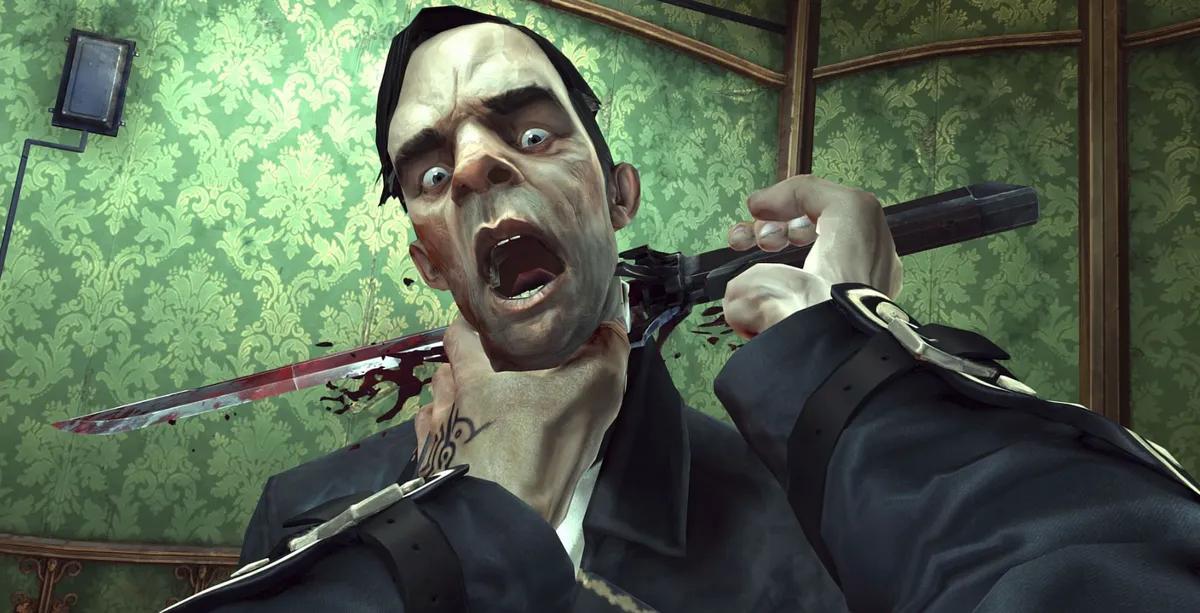
Arkane Was Four Months From Closing Before Dishonored
 Half-Life
 Steam
SteamHarvey Smith says Arkane Studios had about four months of money left before Dishonored, according to PC Gamer, which covered his new interview with The Game Business.
Smith, who ran Arkane Austin and now leads a new studio called Black Pony Immersive, describes the 2012 stealth game as a last bet placed by a company that expected to lose. Before it, Arkane was running nine projects at once for other publishers. The interview also covers what the new studio plans to avoid, and the answer is trend chasing.
The contract years came with advice from outside. People told the team to take whatever work it could get to keep the business alive, and Arkane tried that for a while even though it felt wrong to the people doing it. The record from that stretch reads like three studios worth of unrelated jobs: Boom Blox with EA, pitches to Ubisoft, a pair of developers on a zombie shooter, staff loaned out wherever there was a paying seat.
"I think we had four months of money left."
— Harvey Smith
Not every contract was a dead end on paper. Arkane spent part of that period on a Half-Life spin-off set in Ravenholm, built before Dishonored and cancelled before anyone outside Valve and Arkane could play it. Noclip covered the project in a documentary and then published a full hour of raw footage in 2022. The demo opens in Father Grigori's kitchen, moves through melee fights with zombies that lean on Source physics, passes an unused windmill asset left over from Half-Life 2, and shows the electricity puzzles that were meant to carry the game. Ravenholm was never Episode 3, and it starred a different character. Warren Spector's Junction Point had its own Half-Life episode killed around the same time. Valve later explained the canceled Half-Life 2 episode in a two-hour documentary: an ice-wall weapon, a slime enemy that split apart and reassembled, and an engine the team no longer believed could surprise anyone.
Arkane's way out was to stop taking the work. Smith frames the decision as accepting the risk of closure over the certainty of irrelevance: the studio existed to make one specific kind of game, so it would make that, and close if that was the price. He calls the result one of the big turnarounds of his career. Bethesda arrived with money and two of the most tempting licenses on the board. Raphael Colantonio has said the offer was Thief 4 or a Blade Runner Game, both of which the publisher then failed to secure, at which point Arkane was told to carry on with its own project and call it Dishonored.
The numbers justified the gamble. Smith puts Dishonored's budget at a figure many triple-A developers today would envy, reasonable rather than tiny, and the return at four or five times the total spend. His argument for the genre rests on staying power and profit at the same time: players still discuss these games ten and twenty years later, and BioShock, Deus Ex and Dishonored made real money.
Talk of the genre dying follows it everywhere anyway. A Thief designer has argued that the immersive sim audience is too small for AAA and that the format works better at III or AA scale. That reading sits alongside Smith's numbers rather than against them. A reasonable budget returning four or five times its cost is a good business, just not one that supports a 400-person team and a marketing campaign to match.
I run a Telegram channel about open worlds, so a mission-based game that locks the door behind you was never going to be my home turf. Dishonored still holds me through its chaos system, where the body count changes the city you walk through two missions later.
Black Pony Immersive carries the word in its name and the tradition behind it, Deus Ex and System Shock. Ben Horne, an Arkane veteran and Smith's partner in the studio, gave the clearest statement of intent when asked whether the immersive sim is dying.
"We're probably not going to be very good at trend chasing."
— Ben Horne
His reasoning is practical. The player base has grown, and its appetites vary; nobody at the studio claims to know which turn the industry takes next, and a creative vision the developers want to play offers better odds than a guess at the market.
Redfall is the reason that sentence carries weight. Arkane Austin built a live service vampire shooter far outside the immersive sim work its developers were known for, shipped it in 2023 to poor reviews, and Microsoft closed the studio in May 2024.
Smith has been collecting industry forecasts for years, most of them from smart, well-paid people he counts as friends. First-person games don't sell. RPGs are a niche market. Anyone not working on free-to-play will be out of a job within five years. MMOs are the future. Games will soon carry live-action video sections with Hollywood actors in them. Baldur's Gate 3 answered the RPG line on its own. Live service has cost publishers with deep wallets a lot of money. Hollywood actors did arrive, through performance capture rather than FMV.
The studio Smith left has spent this year in an uncomfortable position. Art director Viktor Antonov, who built the look of both Half-Life 2 and Dishonored, died in February 2025. In June a BFM journalist wrote that the French studio had a risk of being shut down and that the threat was closer than most people assumed, while Bloomberg reported that Compulsion Games, Ninja Theory and Double Fine had opened talks with Xbox about becoming independent. Registration filings then showed Jerk Gustafsson appointed president of Arkane Studios on 30 June 2026, replacing Leonard Bendel, who resigned. Gustafsson runs MachineGames and directed Indiana Jones and the Great Circle. Jason Schreier added that Gustafsson had held the Arkane studio director job since July 2025, and that he had no information on the fate of Marvel's Blade.
The genre itself is not short of activity. New Blood continues work on Gloomwood and Fallen Aces. Colantonio's team at WolfEye has an unnamed first-person RPG in production that sits between Prey and Fallout: New Vegas in structure, set in an alternate United States of the early 1900s where some piece of future technology arrived about thirty years before the story starts. He wants density over size, with stats, dialogue choices and XP-based levelling, and the studio plans a limited private alpha before release.
That one I watch closely, because an open world with real consequences is the version of this genre I finish rather than admire.
Black Pony Immersive has not named a game, a publisher, or a release window.


 Successfully copied... Thank you for sharing our content!:

Comments