




Windrose Hit a Million Sales In a Week, Then Kraken Express Dropped Anchor
 Steam
Steam Records
 Kraken
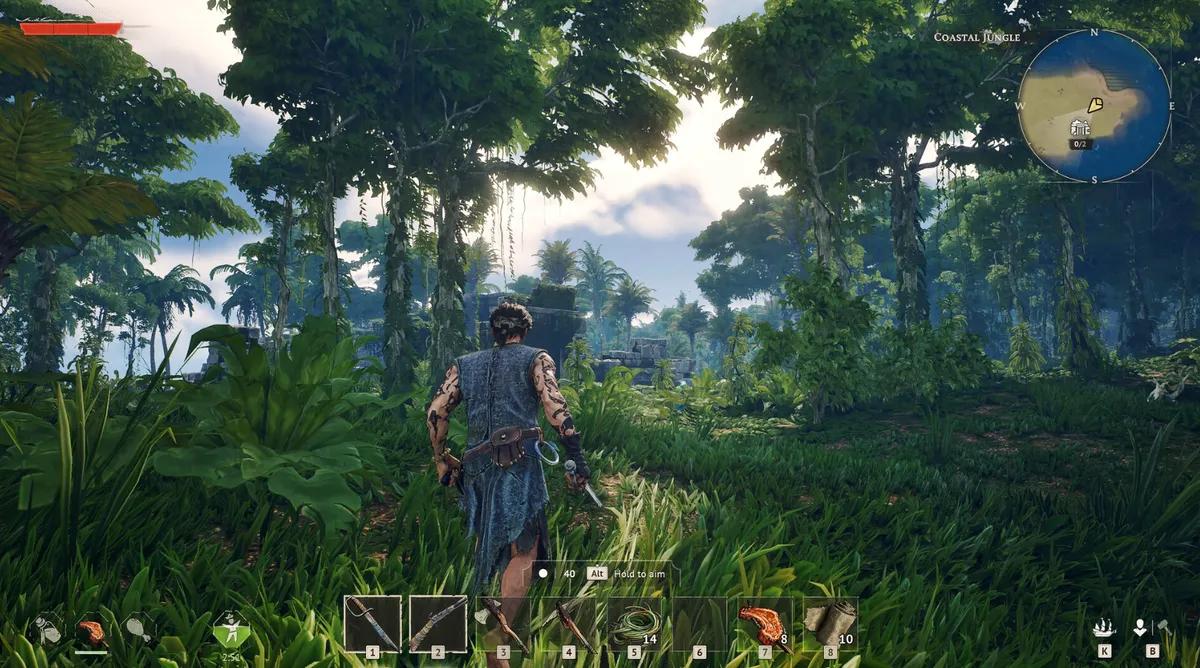
Windrose, a co-op pirate survival game from new developer Kraken Express, launched into Steam Early Access on April 14, 2026, at $30. The game blends Valheim-style survival crafting and base-building with ship-to-ship cannon battles and parry-based melee combat, set in a mythical reimagining of the Golden Age of Piracy. In its first ten days, it sold over a million copies, peaked at 222,134 concurrent players, and generated $30 million in revenue for the studio.
Windrose is Kraken Express's first commercial release, and the project began life as a free-to-play MMO called Crosswind before pivoting to its current form. The studio's post-launch roadmap landed unexpectedly: instead of the usual drip of new biomes and items, players were told there would be no major content update in half a year while the team works on connectivity, performance, and stability fixes. Critical reception has been generally warm with caveats, splitting most often on combat and on how finished the opening hours feel.
The opening hour is the version of Windrose that nobody should judge

Windrose's first sequence is the part everyone agrees needs work. You wake up on your ship, push through a few perfunctory enemies, climb to the top deck, and watch a 2D comic-style cutscene play out without voice acting before Blackbeard runs you through and leaves you unconscious on a tropical island. GamingBolt flagged that stretch as one of the worst first impressions a recent game had left on them, comparing the comic-panel presentation to dated mid-2000s digital-only filler. The framing is fair. The whole thing reads as a placeholder dropped into an otherwise expensive-looking world.
Once the cutscene ends and the survival loop kicks in, the game picks up fast. I winced through the comic panels and forgot they existed inside an hour. That's part of the issue. The rough patch passes; the screenshots from those minutes don't. Kraken Express's update roadmap puts performance and connectivity ahead of any narrative or presentation work, which means that the opening sequence is going to keep doing damage on social media well into the back half of 2026, even as the actual game underneath gets stronger.
There's also a thread connecting the rough first hour to the production background. Windrose started life as Crosswind, a free-to-play MMO that never shipped, and the bones of MMO onboarding are still visible. Text panels carry weight that should be carried by scenes. The character creator is basic in the way MMO creators are basic. The whole intro has been rebuilt enough times that no version of it feels like a director's cut. None of this is fatal, and most of it is fixable, but it's the kind of fixable that shows up on a roadmap labeled "year two."
The parry split

The other thing the critical reception keeps splitting on is melee combat. Windrose uses a parry-and-stagger system: time the block right, knock a shield icon off your opponent's health bar, repeat until they're stunned, then go to work with a saber, rapier, two-hander, or one of the slow-reload pistols whose fuse delay turns aiming into a sustained act. IGN picked up the developers' own "Soulslite" framing with some hesitation, but still called the parry system responsive and kinetic, and singled out the end-chapter bosses as brutally tough in the way Soulsborne fights are. Others were less convinced. The shape of the complaint had two flavors: that the parry-and-counter loop runs out of moves once you've internalized it, and that the consumable-stat-buff dependency turns boss retries into grinding errands when you die a few times and have to restock food.
I think both take are reading the same combat correctly through different lenses. As a soulslike action, the parry system is shallower than what people who play that genre seriously are looking for. As a survival-game combat, it is well above the genre baseline, with real skill expression and weapon variety that genuinely matter. The critics aren't disagreeing about what's there. They're disagreeing about which yardstick to hold up to it.
The harder edge of the complaint is the one about consumables and grind. Windrose ties so much of your damage and survivability to food buffs that a tough boss fight becomes a logistical exercise as much as a mechanical one. That's a survival-genre design choice, and it's working as designed. Whether you like it depends on whether you came to Windrose for the boss fights or for the rhythm of the loop the boss fights interrupt.
What ship combat is and isn't trying to be

Critics split a different way on the naval encounters. PC Gamer named ship-to-ship combat as their favorite feature in their early-access write-up, framing it as Assassin's Creed Black Flag's hands-off cousin: steer, fire broadsides, ignore wind direction, hit a key for repair kits, board when the other ship's health drops. That accessibility is the appeal. It is also the source of the dissatisfaction from outlets that wanted more sim weight to the encounters, who clocked the absence of wind, the unlimited cannonball supply, and the lack of crew management as missing systems rather than design choices.
I lean toward the accessibility read. The version of naval combat that simulates wind, ammo logistics, and crew morale is a different game, and it's the game Skull and Bones tried to be. Windrose chose the route of fast, learnable, fun in a co-op session that ends at midnight, and that route is what's letting people sink fifteen hours into a single weekend without feeling like they're punching a clock.
Boarding actions are where naval combat earns its keep. Once a target ship's health drops, you cross over, your invincible crew comes with you, and the close-quarters mob fights that turned ground combat sour in a couple of campaign missions become a strength because there are bodies on your side. There's an argument that teleporting onto the enemy ship rather than swinging across feels cheap. There's also an argument that any solution involving a long swing animation would have ended the loop fifteen hours sooner. Both arguments are real. Only one of them changes anything about the game you actually want to keep playing.
Sound design carries more of the experience than the press has properly credited. The full-chorus sea shanties, the way water hits the hull, the seabirds circling overhead when you've been standing still long enough to be fishing. All of it sells a place the visuals occasionally undersell. Windrose's open ocean is gloomier than the source material suggests it should be. The shanties make up most of the difference.
Survival game with pirates, not a pirate game with survival

The bigger pattern under the individual complaints is that the press is, in places, judging a game Kraken Express explicitly didn't make. Several outlets flagged the absence of a proper pirate-sim economy, the basic sailing mechanics with their handful of forward speeds, the way crewmates feel functional rather than colorful, and the abrupt narrative beats. All those notes are accurate. They are also features of a survival crafter that happens to have pirates in it, not bugs in a pirate sim that happens to have crafting in it.
The crispest version of the framing came from a critic who put it cleanly: the survival mechanics come first, the pirate escapades second, and players who walk in expecting the inverse are going to be off-put. The studio's positioning, going back to when this thing was an unreleased free-to-play MMO, was survival-genre-first. The pivot to single-purchase early access didn't change the design's center of gravity. What it changed was the audience.
I keep thinking Windrose's launch numbers are partly a function of how many people wanted Valheim with cannons attached, plus a co-op loop that doesn't ask too much. The framing the studio actually offered fits that appetite, even if individual sections of the press would rather it had built something more like Black Flag with hardcore systems on top. The 1.5 million wishlists going into launch were measuring the appetite. The 222,134 concurrent peak was confirming it.
The building system is doing more emotional work in the reception than the marketing suggested it would. Players don't praise it for being mechanically inventive; the closest comparison most reach for is Palworld. They praise it because it's the system that turns the survival loop into something that feels like progress instead of chores. Decoration buffs that extend rested-state durations turn aesthetic choices into mechanical ones, which means the time you spend making your beach hut nicer is time the game is rewarding you for.
The six-month wait and what it gets you

The studio's post-launch roadmap is the other thing players are still talking about. Kraken Express announced via a Steam blog post that there would be no significant content update for at least six months. The team is focusing instead on connectivity issues, CPU usage on idle clients and servers, disk usage during gameplay, broader performance and stability work, and a batch of around forty new building pieces plus more than fifty quality-of-life fixes. The studio also rolled out a community support and feedback site, with a public idea-voting system, that's intended to replace some of the work Discord has been carrying.
I keep coming back to how that announcement reads to two different audiences. Players who were waiting for the next biome (the cursed swamps lead into a planned Ashlands area) hear a delay. Players watching Kraken Express ship its first commercial title hear a small studio refusing to drown in feature requests after one of the strongest survival launches in years, and prioritizing the parts of the experience that actually break for new buyers. Both reactions are reasonable. Only one of them is going to age well.
The studio's framing is that the next big content update is meant to enrich existing systems rather than just add square mileage to the map. Whether that holds up is the question of the next half-year. The short version is that Windrose has earned more than enough goodwill on its launch alone to make the wait survivable, and the early-access window the studio has signaled, between one and three years, is plenty of room for the second-year version of the game to look meaningfully different from this one. The long version is that Ashlands and whatever combat refinements arrive with it will define whether the second year looks like Valheim's or something flatter. The launch numbers gave Kraken Express options. The next two patches will tell you what they're choosing to do with them.


 Successfully copied... Thank you for sharing our content!:



5% deposit bonus up to 100 gems

a free Gift Case





EGAMERSW - get 11% Deposit Bonus + Bonus Wheel free spin


EXTRA 10% DEPOSIT BONUS + free 2 spins

3 Free Cases + 100% up to 100 Coins on First Deposit


5 Free Cases, Daily FREE & Welcome Bonuses up to 35%

3 free cases and a 5% bonus added to all cash deposits.

+5% to deposit




Comments