



Olden Era picks up where Heroes 3 left off
 Steam
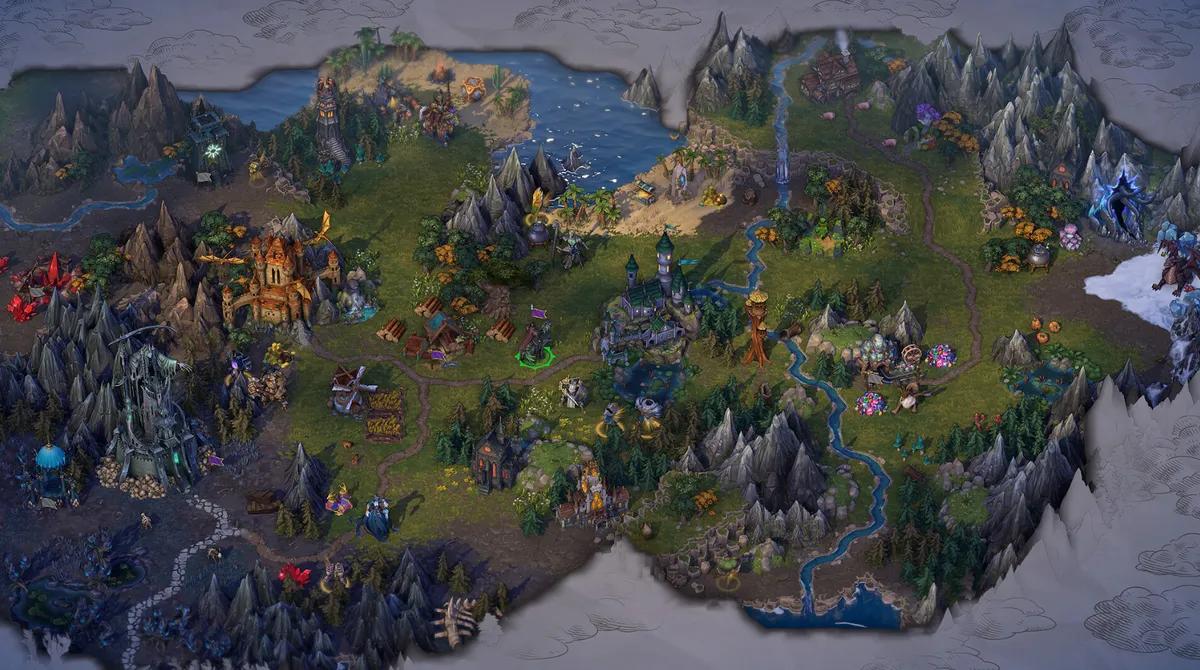
SteamHeroes of Might and Magic: Olden Era enters early access on April 30, 2026, on PC. Developed by Unfrozen and published by Hooded Horse, it is the official prequel to the Heroes universe and a turn-based strategy RPG built on hex-grid combat and overworld army management. Six factions, four play modes, a hotseat option, a beta map editor, and the first act of an ongoing campaign all ship at launch.
Olden Era is positioned as a return to the form of 1999's Heroes of Might and Magic 3, with returning factions sitting next to new ones, including the icy Schism and the insectoid Hive that takes the place of the old Inferno. The game went into early access with more than 1.5 million wishlists. Critical coverage so far has come in warm, framing it as the strongest entry the series has produced since the Heroes 3 era while flagging the campaign's incomplete state and the corners the build still has to settle.
The series has been quiet for a long time

Twenty-six years separate Heroes 3 from Olden Era. In that stretch the franchise put out a handful of numbered entries, side games, and one widely panned reboot, and somewhere along the way a particular kind of unhurried, top-down conquest game largely fell out of fashion outside a small circle of fans willing to keep the older entries running on modern hardware. That history is the backdrop for the launch coverage. IGN, GamesRadar+, and Strategy and Wargaming all framed the Olden Era through the same lens: solid in a way the series has not been in years, the strongest entry since Heroes 3, the unhurried strategy game the genre had stopped making. The shape of the conversation has converged, even where the harder critiques diverge. I have been waiting for this conversation to come back.
The Schism brought something colder back

Olden Era ships with six playable factions. Three carry the silhouettes of older entries forward. Temple is the human knights with their angels and griffins. Necropolis runs skeletons, ghouls, and vampires. Dungeon brings minotaurs, dark elves, and dragons. Two are remixes. The Hive replaces the demonic Inferno with insectoid swarms that turn the question of what could be worse than hell into a roster of molten bugs that attack in close-range waves. The Grove is the forest faction, druids and treants, with a unique mushroom teleporter that lets owned cities link up across the map. Then there is the Schism. The lore, by the going account, is that they are an icy cult of elves who went too deep into the water and brought home extraplanar horrors that now make up their armies. They get stronger by winning battles. They are not strongest at the start.
The Schism has been the most-discussed addition in the press, and that makes sense. It is the only faction in the lineup with no obvious analogue from earlier games. I keep coming back to that idea of an army that scales by appetite. Critics have noted it can take a while to warm up, and that there is a real risk of getting outpaced before the snowball begins. The design instinct sounds right anyway. A cult that grows by feeding on the things it kills is exactly the kind of texture the older games kept hinting at without quite delivering.
Initiative is the whole battle

Combat plays out on a hex grid between two armies of stacked units. Each stack moves in initiative order. Attackers and defenders trade blows, ranged units attack from anywhere and melee retaliates as a baseline, heroes throw in spells from a learned spellbook and active abilities fueled by a focus meter that fills as units take and deal damage. None of this is new in series terms. The interesting part is what initiative does to it. Critics have circled this point consistently. Units can be made to wait, holding their action until later in the order. Spells like Web and Ice Bolt can knock the order around. Entire fights pivot on who is willing to delay first.
I think the critics are right here. The simple-on-the-surface, deep-underneath structure has always been the point of Heroes combat, and from what comes through in the early write-ups, the focus meter and the wait mechanic together are doing more interesting work than the equivalents in Heroes 2 or 3 ever did. In those games you cast Bless and Stoneskin and got out of the way. The accounts of Olden Era describe a battlefield where the spells that move bodies around are pulling more weight than the buff stack ever did. Initiative shifts. Repositioning. Percentage damage rather than flat damage. Whether that holds up at higher difficulty is its own question. The basic shape sounds correct.
Heroes that don't quite become characters

Olden Era runs eighteen heroes per faction. Each comes with a starting skill, a subclass that evolves through level-ups, and a portrait. The skills they pick up after that are pulled from a randomized pool, capped at eight unique entries per hero. The subclass evolution requires landing five specific skills out of those eight. The math is unfriendly. It is possible to never see the right combination across an entire game.
The harshest take in the early coverage is that this makes heroes feel less like characters and more like commander chassis with random spell rolls strapped on. The portrait art looks sharp. The personalities do not come through in play. Spells are learned semi-randomly from a wider pool, regardless of a hero's stated specialty, which means a hero billed as a frost-mage might never see a frost spell cast. I do not entirely share that critique. The heroes I remember from the older games were also commander chassis with stat lines and a name. The hero in Heroes was always a vehicle for the army. What reads to one set of takes as a regression reads to me as the series staying honest about what it has always been. The randomized skill pool is a different question, and that one will likely get tuned over the months ahead.
Single Hero is where I will start

The launch build runs four modes plus hotseat and a beta map editor. Classic is the traditional setup with multiple heroes and full city management. Single Hero strips it down to one wandering commander per side. Arena ditches the overworld entirely and runs a draft followed by a single battle. Campaign ships its first act, a story-led sequence following Gunnar, a minotaur scout in service of the Triumvirate, through a conspiracy on the continent of Jadame.
The press has mostly framed Classic as the right way to play, with Single Hero as a friendlier on-ramp and Arena as a curiosity. I lean the other way. The argument against Single Hero from the harshest takes is that it loses the chains-of-heroes element that defines Classic, and that is true. It is also the part of Classic that turns into bookkeeping by the third hour, and the Heroes formula has always been load-bearing for me at the point where the choices are sharpest. Stripping to one hero per side forces every turn to matter.
Campaign is the mode I will be most cautious with on day one. The shared note across the early coverage is that it works as an extended tutorial but switches off some of the systems the rest of the game leans on, and that the bugs and unskippable cutscenes make a worse first impression than the open-format modes. That can wait until later in the early-access window.
Tomorrow on Jadame

The release date is tomorrow. The early-access build will run on PC, with no console version announced and no public road map for one. The campaign will keep filling in over the months ahead. The map builder will leave beta. Balance passes will arrive in waves. The Schism will get nerfed and unnerfed and nerfed again. None of that is what I am thinking about for the next twenty-four hours. The first hour is. A fresh random Classic map with the Schism flag picked because the description sold me, a hex-grid skirmish where the army I have built pushes past its second week defenses to grab a crystal node it should have left alone, and a wait command doing something I had forgotten it could do. The series has been quiet for a long time. Tomorrow it stops being quiet.


 Successfully copied... Thank you for sharing our content!:



5% deposit bonus up to 100 gems

a free Gift Case




EGAMERSW - get 11% Deposit Bonus + Bonus Wheel free spin


EXTRA 10% DEPOSIT BONUS + free 2 spins

3 Free Cases + 100% up to 100 Coins on First Deposit


5 Free Cases, Daily FREE & Welcome Bonuses up to 35%

3 free cases and a 5% bonus added to all cash deposits.

+5% to deposit




Comments