




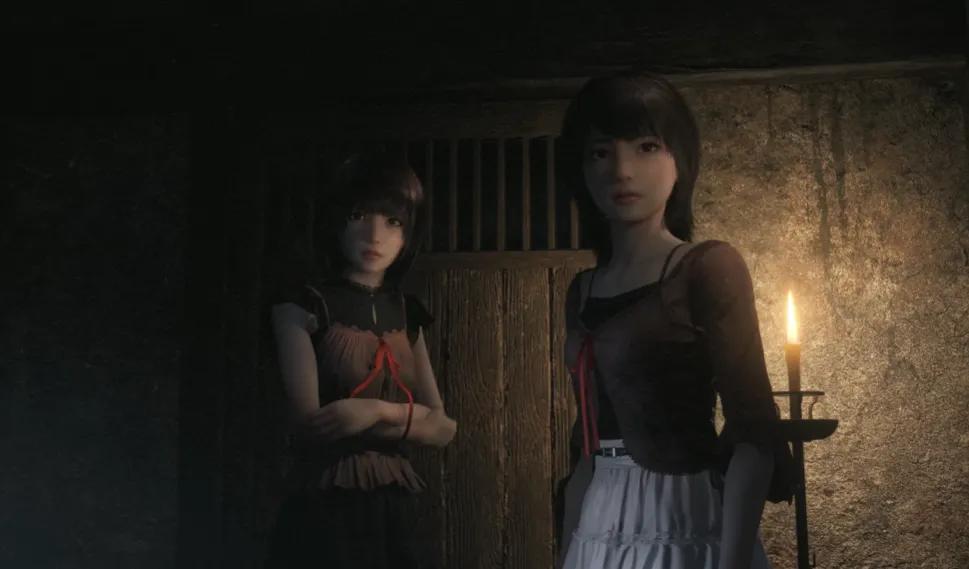
Fatal Frame II: Crimson Butterfly Remake Arrives With Striking Visuals and Persistent Combat Problems
 Steam
SteamFatal Frame II: Crimson Butterfly Remake launched on March 12, 2026, for PlayStation 5, Xbox Series X/S, Nintendo Switch 2, and PC, developed by Team Ninja and published by Koei Tecmo. The game is a ground-up recreation of an entry that has carried one of the more persistent cult reputations in survival horror for over two decades. One clarification matters upfront: this is not a direct rebuild of the 2003 PlayStation 2 original. It is a recreation of the 2012 Wii version that never reached North America, itself an expanded version of that original. That baseline matters because fans of the series' more recent releases — the remasters of Maiden of the Blackwater and Mask of the Lunar Eclipse — will find the over-the-shoulder camera and underlying combat sensibility immediately familiar, and not always favorably so.
As we said when covering the initial announcement, KOEI Tecmo confirmed FATAL FRAME II: Crimson Butterfly REMAKE for PC in early 2026, releasing a debut trailer that promised a complete overhaul featuring enhanced graphics, improved audio, updated gameplay systems, and controls redesigned for modern hardware. The Camera Obscura would return as the central mechanic, reworked to heighten both exploration tension and ghost battles. The original 2003 game follows twin sisters Mio and Mayu Amakura, who return to a childhood stream only to be drawn into a cursed village where spirits and rituals dominate the night. When Mayu is lured into the forest by a crimson butterfly, Mio pursues her, and the two find themselves stranded above Minakami Village — a settlement said to have vanished during a festival, now populated entirely by hostile ghosts. Their only means of defense is the Camera Obscura, a strange device capable of exorcising spirits through photography.
Story, Setting, and What the Village Conceals
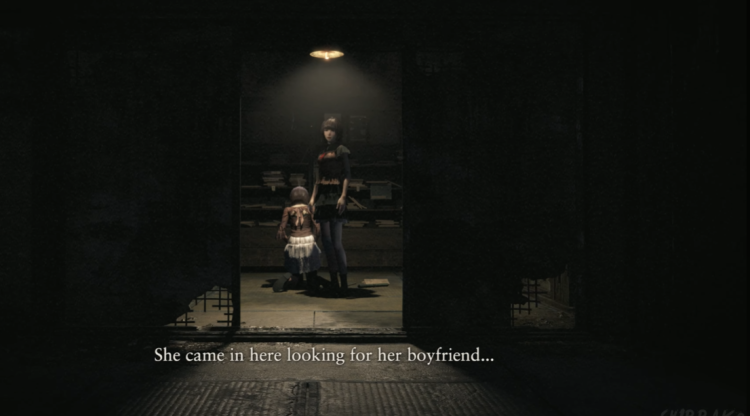
That setup carries intact into the remake. The story opens at the stream where Mio and Mayu played as children, a place they return to because nearby dam construction will soon flood it entirely. The childhood nostalgia is brief. When Mayu follows a butterfly deeper into the forest, and Mio pursues her, both sisters find themselves on a hill overlooking a village that should not exist. The path they took is gone. With no other exit available, they descend into Minakami Village, and what they find is a community whose history centers on ritual violence, twin girls, and a forbidden ceremony that left its participants as hostile spirits condemned to repeat what happened to them.
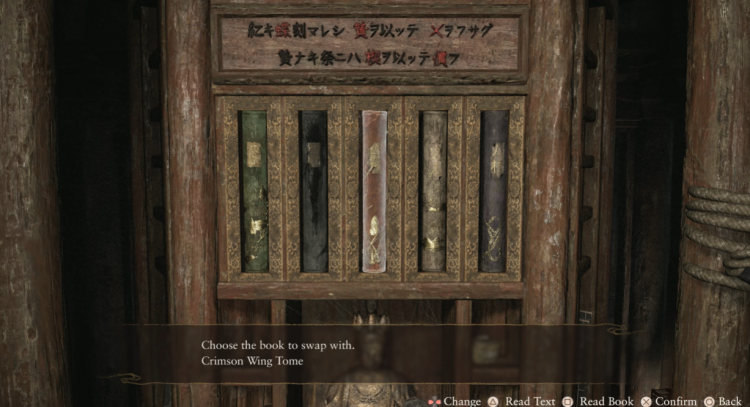
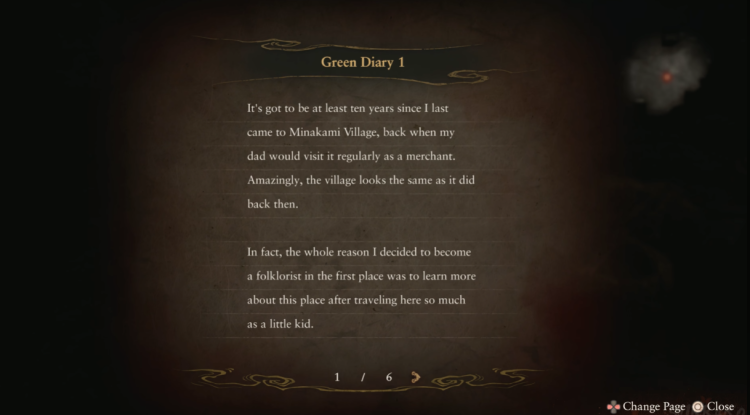
The storytelling is deliberately restrained. Mio does not narrate her findings or comment on objects she collects, and cutscenes appear infrequently. The bulk of the narrative arrives through written diary entries, voices preserved in stones left behind by spirits, and ghosts visibly retracing the movements they made in life, which the player photographs to register their presence and advance certain story threads. Team Ninja expanded the original with new locations and additional side stories tracing the fates of supporting characters, and those additions slot cleanly into the existing structure. One reviewer who knew the original well could not distinguish new material from old by feel alone. The additions trace peripheral characters forward, connecting their decisions and outcomes to the central ritual in ways that give the main story's larger events more specificity and weight. The dark nature of the festival, and the particular role that twins played in its most extreme rites sits at the center of everything Minakami Village conceals.
The village itself is built with enough density and variation that revisiting it across the game's roughly twenty-hour runtime does not produce monotony. The same streets, the same houses, the same interiors return across multiple visits, but the circumstances change each time — different lighting, different ghost placements, different objects disturbed or revealed. Kurosawa House maintained dread across every pass regardless of prior familiarity; reviewers described tensing up when entering it whether they were doing so for the first or the fifth time. Osaka House operated differently, shifting from threatening on first entry to something more familiar by the later chapters, though without removing the possibility of encountering something dangerous there. Holding Mayu's hand — a mechanic new to this version — allows the player to guide her through the village at the cost of reduced movement speed, slowly restoring both sisters' health and Mio's Willpower in the process. It reinforces the relationship between the two characters through action rather than a cutscene.
Navigation inside buildings operates without objective markers. Between story beats, the game uses waypoints and occasional butterflies to indicate direction. Once inside a structure, those cues disappear. Locating a room with an altar, following a specter through its repeated movements, and completing a side story based on a diary entry all require reading the available information and finding the correct path independently. Reviewers who engaged with this positively treated it as a consistent source of tension. The broader map design handles direction clearly enough that players rarely become genuinely lost. Backtracking for optional side missions was flagged as an inconvenience, particularly when tracking specific ghost locations across earlier areas, but it did not generate strong criticism across all three reviews.
How the Camera Obscura Works — and Where It Breaks Down
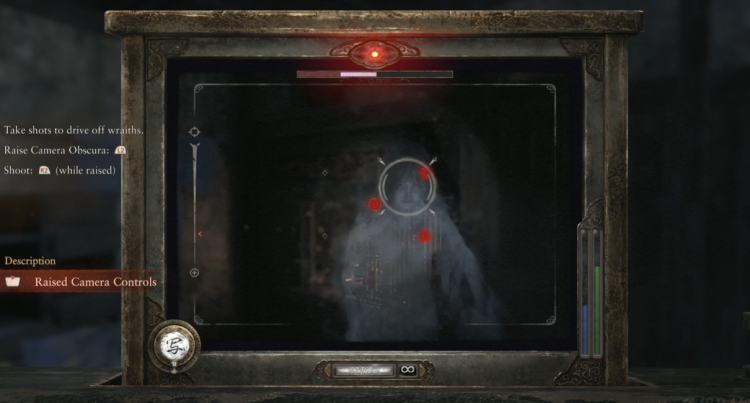
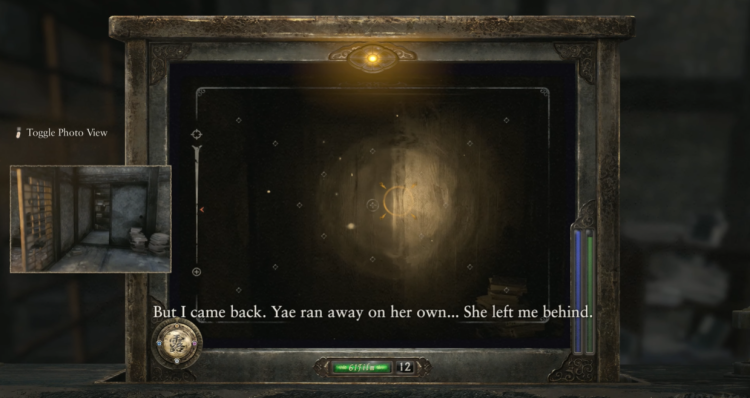
The Camera Obscura governs every combat encounter. To exorcise a ghost, the player frames it in the viewfinder and photographs it repeatedly, with damage scaled to image quality. A well-framed, focused photograph capturing a spirit's face deals substantially more damage than a blurred or poorly composed shot. Fatal Frame shots require waiting until a ghost commits to an attack and the camera's red indicator activates, then firing at that precise moment. A successful Fatal Frame staggers the spirit, deals elevated damage, and in this remake restores a portion of the Willpower bar. Missing the timing costs nothing beyond time, but firing too early or too late means absorbing a direct hit. The margin is narrow enough that maintaining distance, keeping the ghost in frame, tracking its attack animation, and timing the shot simultaneously demands full attention throughout every encounter.
Willpower is a resource added for the remake. It depletes when Mio runs or when a ghost connects a hit, and it powers Special Shots — filter-specific abilities that stun, blind, or burst depending on which filter is active. Losing all Willpower knocks Mio to the ground, where she cannot act normally. If a ghost attacks her while she is down, she must use the camera to push it away; missing that recovery shot costs significant health. Reviewers used Willpower primarily as a sprint reserve for repositioning rather than depleting it on Special Shots, suggesting the resource functions less as a tactical option and more as an additional hazard to manage.
Shutter Chances appear when a ghost's health crosses a threshold, briefly creating an opportunity for a single high-damage photograph. Timing a Fatal Frame during a Shutter Chance triggers Fatal Time, allowing multiple rapid shots. Both mechanics reward precision and create a combat loop that, functioning correctly, produces genuine tactical pressure: deplete health with standard shots, recognize the Shutter Chance window, time the Fatal Frame to enter Fatal Time, and concentrate damage before the ghost recovers. The problem is that this sequence depends on the camera recharge time, aligning with the window. When the camera is still recovering from a previous shot and the Shutter Chance opens and closes, the opportunity is lost without any decision by the player that caused it. Specific film types and camera upgrades reduce this, but players who have not invested in the relevant improvements will miss Shutter Chances regularly due to the base recharge duration alone, extending fights and increasing the probability of an aggravation event.
The film system provides five types. Type-07 is unlimited but weak, loading slowly. Type-14 is finite and modestly stronger but equally slow. Type-61 is more powerful with a limited stock and a similar reload pace. Type-90 hits hard, reloads fast, and carries in larger quantities. Type-00 deals maximum damage but loads very slowly and stacks almost no ammo. Managing stock across encounters creates resource tension — using premium film against routine ghosts to end fights before something goes wrong depletes reserves that may be needed later, while holding that film and using Type-07 extends encounters and creates more opportunities for something to go wrong regardless.
Aggravation is the mechanic that generates the most consistent negative response across all three reviews. When a photograph aggravates a ghost — a random event that occurs during normal combat — the spirit turns red, recovers a portion of its health, absorbs substantially less damage, moves faster, and attacks more frequently. A fight approaching resolution can reset to an extended slog without any player decision prompting it. Two separate encounters against the same enemy type can resolve in completely different timeframes based entirely on whether aggravation is triggered. One reviewer re-read tutorials and looked up footage of the original game, convinced they had misunderstood the mechanic. They had not. Another found it so routine that they started spending high-quality film against weaker ghosts specifically to end encounters before aggravation could occur — a strategy that worked until it didn't, and that steadily drained reserve film in the process. A third called the game's own in-game term for the state — aggravated — an accurate description of their own reaction each time it triggered.
The Filter System and the Problem of Too Much Power
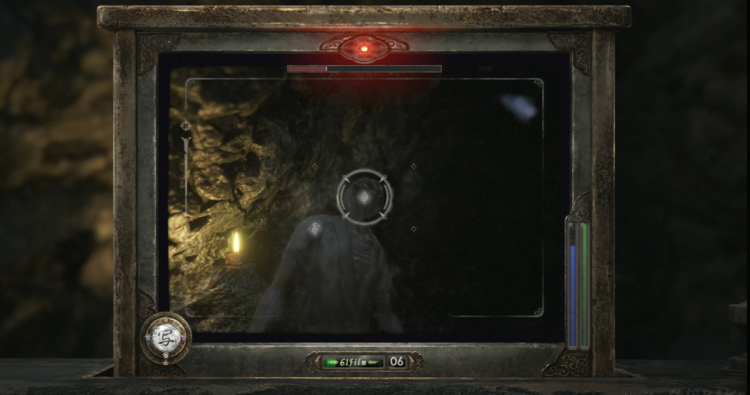
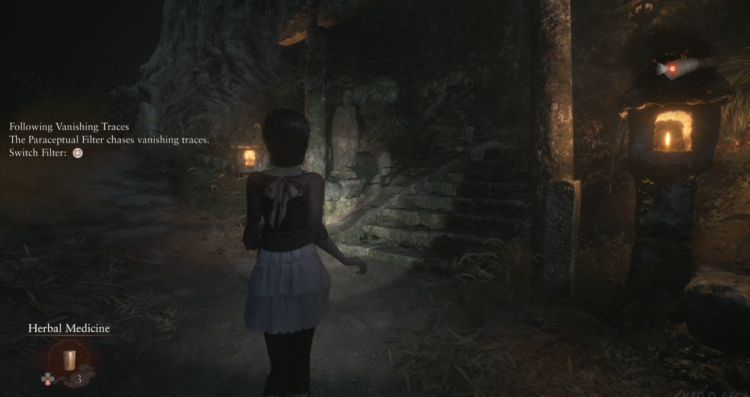
The filter system, introduced as a modernizing addition, resolves the aggravation problem but introduces a different one. Four filters are available: the Standard filter provides balanced performance and a stun-capable Special Shot; the Paraceptual filter extends detection range, tracks spirit traces through walls, and blinds with its Special Shot; the Exposure filter deals consistent damage to aggravated ghosts and reveals hidden areas and invisible enemies; and the Radiant filter delivers short-range but very high damage and opens doors sealed by bloody handprints. Each has distinct combat applications and specific exploration uses, and the design intent is a flexible toolkit that gives the player options for different situations. In practice, each situation has one correct filter, and rotating between them becomes procedural rather than tactical. Distant ghosts get the Paraceptual filter. Aggravated ghosts get the Exposure filter — which arrives after several hours of encountering aggravated ghosts without access to it, and requires spending high-quality film to trigger a Shutter Chance that returns the ghost to normal. And the Radiant filter, once its associated charm is fully upgraded, breaks the combat balance outright. Reviewers who maxed the Radiant charm and combined it with Type-90 film or better found that enemies that had previously generated fear became trivial obstacles. Rooms that had caused dread became opportunities to seek out ghosts rather than avoid them.
I think the filter system represents the sharpest design failure in the remake. Fatal Frame II's tension rests on Mio's persistent vulnerability, on the fact that using the Camera Obscura requires accepting exposure to harm and continuing to face threats she cannot physically overpower. Providing an upgrade path that reverses that dynamic — where the ghosts are now the party at risk — does not add player expression. It removes the fear that motivates Mio's bravery, and bravery requires something to be afraid of.
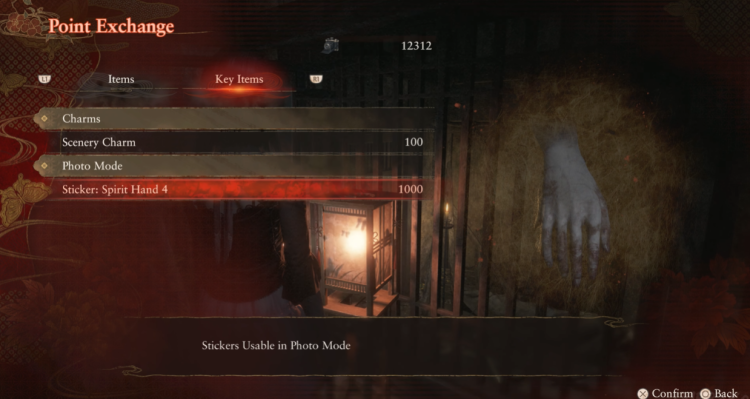
The prayer bead upgrade system layers further onto this. Finding prayer beads across the village expands camera functionality: manual focus, manual zoom, and faster focus speed. These additions are generally unobtrusive and extend combat capability without dramatically shifting the power balance. The charm system — passive upgrades that reduce incoming damage, boost output, and modify Willpower recovery — is where power accumulation compounds most visibly. Players who engaged with side content, photography objectives, and optional areas accumulated enough upgrades to perceive a meaningful difficulty drop in the game's later sections. Those who progressed more directly found the combat stubbornly and consistently frustrating. The game does not communicate clearly how large that difference is, and the result is an experience that varies enough across playthroughs to suggest it has not been balanced for both approaches simultaneously.
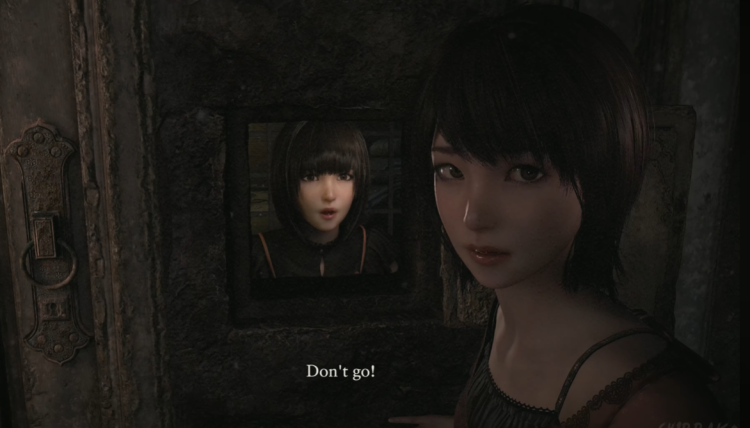
I see the jump scare implementation as a separate but compounding problem. The game applies them to item pickups, door interactions, and camera use against enemies. When looking through the Camera Obscura, ghosts can appear directly in front of the lens without warning, dealing unavoidable damage that cannot be predicted or countered. All three reviews identified the frequency as excessive. Individual jump scares continued to produce physical startling reactions in reviewers, but the response they generated was frustration rather than dread — a distinction that matters because dread sustains engagement and excess jump scares erode it. One reviewer noted that every interaction the game permits — reaching for film, opening a door, lifting an object off a shelf — has a probability of triggering a sudden attack, and that recognizing the trick does not remove the reflex but does remove the emotional investment in what caused it.
Multi-ghost encounters in sealed rooms extend the combat problems further. When two or more spirits attack simultaneously in a confined space, the loop of framing, focusing, and timing Fatal Frames breaks down because maintaining a clean shot on one ghost while tracking the other requires movement that prevents photographing either effectively. The result is a back-and-forth rotation that extends fights without producing interesting decisions and increases the probability of triggering aggravation twice over. Avoiding encounters entirely in open areas — crouching, running, using the Roar ability to stun spirits in the overworld — is viable and frequently correct. Inside locked rooms, it is unavailable, and those rooms occupy a significant portion of the game's total combat time.
Presentation, Optional Content, and the Final Assessment
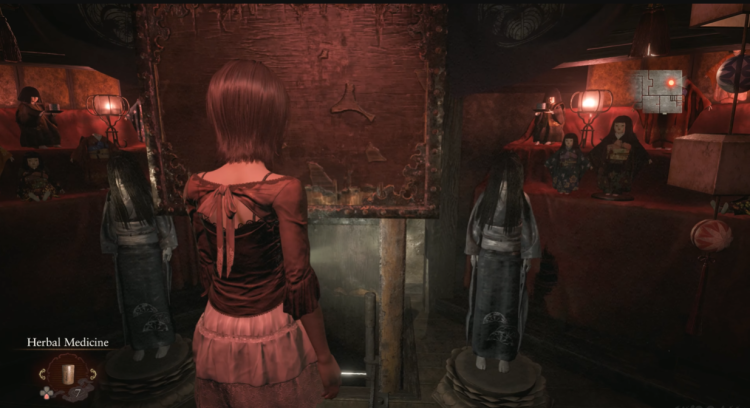
Where the reviews converge is on presentation. Team Ninja overhauled the visual style entirely, retaining the original's color palette while adding more realistic rendering to character models and environments. The village looks inhabited — objects placed with purpose, environmental details that reinforce lore points without drawing direct attention to them. Lighting and shadow construction manages sightlines in individual rooms and corridors, creating directional tension through what is and isn't visible from any given position. Ghost designs are specific to each entity, reflecting their individual histories in the village through movement patterns, attack behavior, and the way they occupy physical space. The drowned woman encountered on a bridge — who moves as though still underwater and appears to extend that condition to the surrounding space as the fight progresses — was singled out as a high point of encounter design. Combat animations are fluid, and the visual variety across special attack sequences received consistent praise. The Switch 2 version showed texture pop-in following fast travel and during in-world cutscenes, but that issue was absent during combat and did not significantly affect the experience. Load times on PlayStation 5 were described as long but infrequent.
Sound design received equally consistent praise. Environmental audio — structural groaning, distant impacts, sounds that indicate a spirit's presence before it becomes visible — maintains tension during exploration by keeping silence from feeling safe. The soundtrack integrates without imposing during quiet movement and escalates during combat in ways that reinforce urgency without telegraphing encounters mechanically. Voice performances were described as delicate and appropriate to the material. One reviewer noted disappointment at the absence of the Wii version's English-language cast, whose regional accents added an unsettling quality — particularly for possessed children — that the current version does not replicate.
The over-the-shoulder camera replacing the original's fixed angles is an improvement in responsiveness and directional control, and the game plays more fluidly as a result. The trade is real, though: fixed camera angles created compositional unease specific to that format, placing spirits in corners of the frame or just outside visible range in ways an adjustable camera eliminates. The remake plays better. It is not quite as frightening in the moments where the original's angles worked as intended.
Side missions tied to specific ghosts require reading diary entries to locate objectives without map assistance, reward completion with additional encounters and equipment, and expand on story threads that the main narrative references but does not fully develop. Photography of twin dolls distributed across the village unlocks items at save points. Together, these systems keep players in the space longer and provide context that makes the village's history more coherent. The same systems also produce the power scaling problem described above, and the game does not clearly distinguish between content that enriches understanding and content that modifies difficulty.
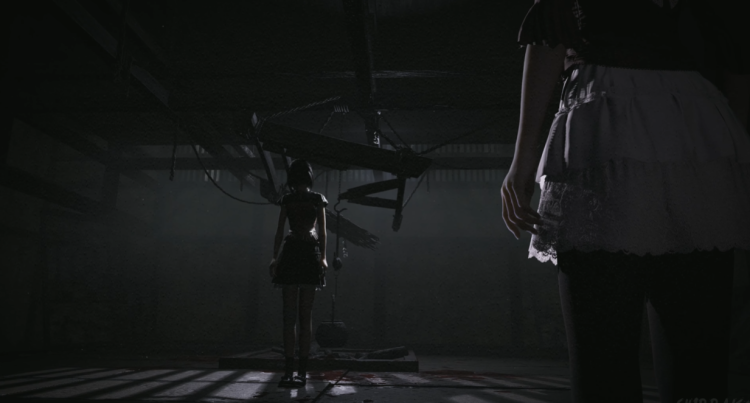
Fatal Frame II: Crimson Butterfly Remake partially succeeds at what it sets out to do. The village, the story, and the twin sisters at its center survive the transition to modern hardware in a form that justifies the visual and audio work Team Ninja brought to the project. The expanded side content adds value without disrupting the original structure. What the remake does not address — and in some cases extends — are the frustrations that accompanied the source material: encounters that run too long, aggravation that breaks momentum through randomness rather than through legitimate difficulty, and an upgrade system capable of removing the vulnerability that makes Mio's situation frightening in the first place. Those problems surface across all three platform reviews and occupy enough of the game's runtime that treating them as peripheral would misrepresent how often they intervene.
Fatal Frame II: Crimson Butterfly Remake is available now on PlayStation 5, Xbox Series X/S, Nintendo Switch 2, and PC, developed by Team Ninja and published by Koei Tecmo. The release date was March 12, 2026.


 Successfully copied... Thank you for sharing our content!:



5% deposit bonus up to 100 gems

a free Gift Case





EGAMERSW - get 11% Deposit Bonus + Bonus Wheel free spin


EXTRA 10% DEPOSIT BONUS + free 2 spins

3 Free Cases + 100% up to 100 Coins on First Deposit


5 Free Cases, Daily FREE & Welcome Bonuses up to 35%

3 free cases and a 5% bonus added to all cash deposits.

+5% to deposit




Comments