




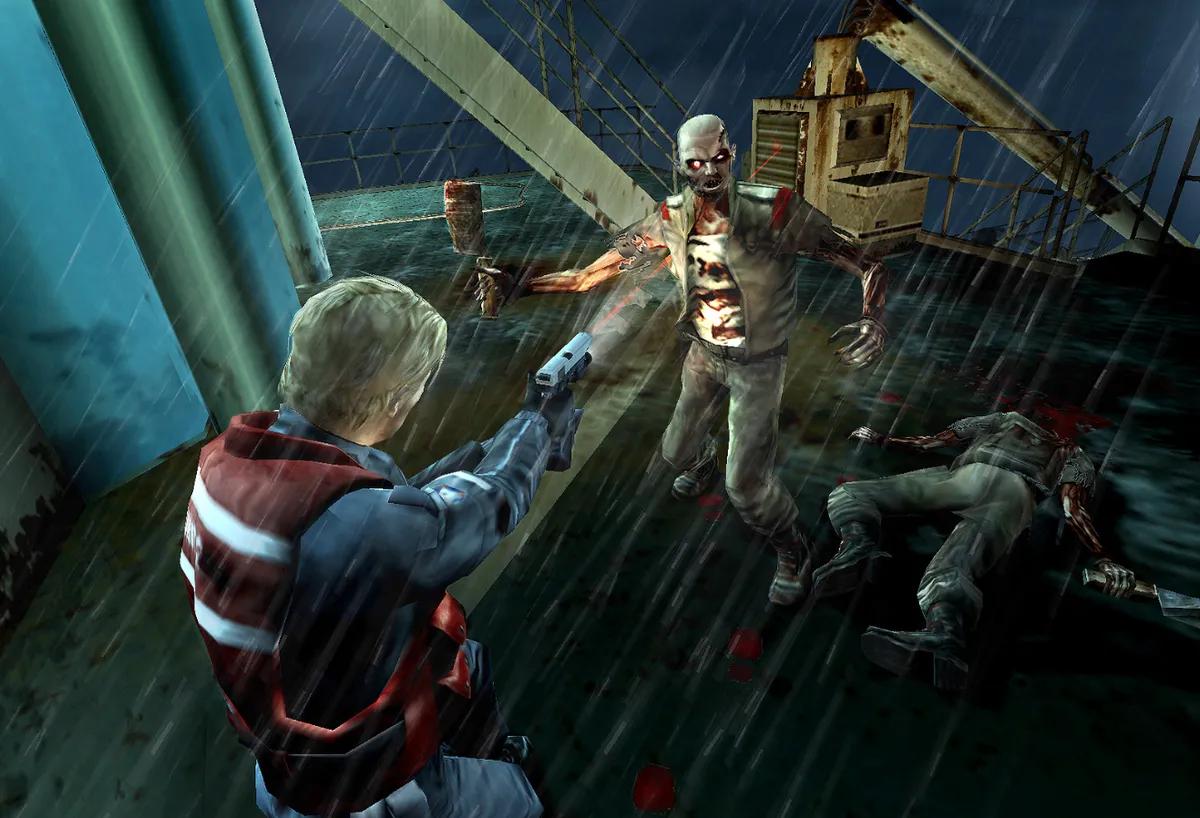
The Frigid Survival Horror Of Cold Fear Deserves Another Look
 Steam
Steam Ubisoft
 Games
GamesCrafting a memorable survival horror game has always been a difficult formula to perfect. For every classic, there are a dozen misfires. I remember when Ubisoft’s Cold Fear first appeared in 2005; it was a seafaring adventure that was immediately tagged as a clone of other, more popular titles. It was developed by Darkworks, the now-closed studio that also created Alone in the Dark: The New Nightmare. The game cast me as U.S. Coast Guardsman Tom Hansen, sent to investigate a desolate Russian whaling ship lost in a brutal storm in the Bering Sea. What I found was a vessel overrun with infected mutants and a conspiracy to unravel. While the game was full of interesting ideas, its execution felt uneven, a sentiment shared by critics at the time.
The game's commercial performance was, to put it mildly, disappointing. It reportedly sold a meager 70,000 copies in its first year, failing to make a significant impact on the market. Despite this frosty reception, the game has since found a dedicated following. Players have warmed to its charms, leading to a positive reception on Steam, though it is no longer available for purchase there. Thankfully, for those curious, you can still acquire it on GOG.com, where a community of fans continues to appreciate its flawed genius. The initial release may have been a whiff, but time has been kind to Cold Fear, allowing its unique qualities to be appreciated by a new generation of players who have discovered it long after its launch.
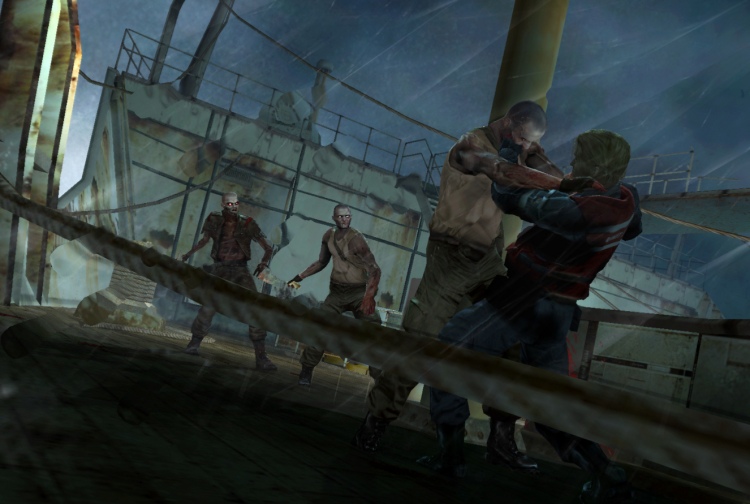
A core element that set the game apart was its environment. The development team at Darkworks invested heavily in creating a truly dynamic and threatening setting. Ahead of the game's release, they spoke about a custom-built technology called the "Darkwave editor," designed specifically to simulate the violent, unpredictable movement of a ship caught in a storm. This was more than just a visual effect; it was a core gameplay mechanic. I recall fighting for footing on the violently pitching and rolling deck, where the environment itself was as much a threat as the infected crew. The developers’ goal in 2004 was to create a cinematic experience driven by realistic physics, and in many ways, they succeeded.
"When out at sea, a ship moves both on a vertical axis (roll) and a horizontal one (pitch). Our Darkwave editor allows us to separately generate the pitch and roll following two different curves, and it is the combination of both that creates a realistic movement."
— Claude Levastre
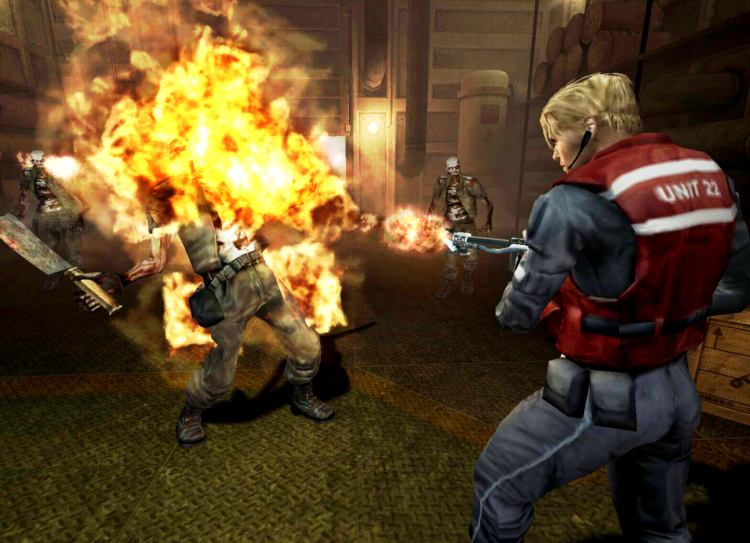
The game borrowed heavily from its contemporaries, featuring both the fixed camera angles of classic survival horror and the over-the-shoulder perspective popularized by others. I armed myself with an assortment of firearms and took on hordes of mutants, punctuated by the satisfying explosion of conveniently placed barrels. Yet, what truly defined my experience was the ship itself. There was no in-game map to guide me, a design choice that forced me to rely on my own memory and environmental clues to navigate the claustrophobic and confusing layout. This made exploration feel genuinely tense and rewarding, as I gradually pieced together a mental blueprint of the labyrinthine vessel.
The initial critical response was lukewarm. Edge magazine noted that "there is a fair helping of survival horror entertainment to be had, it's just that you have to dig through several layers of frustration to get at it." GameSpot's review called it "a tidy action game, with some interesting gameplay elements, suffers from being generic." However, fans who have discovered the game since have often disagreed, praising its ambitious design and atmosphere. One player on Steam aptly compared it to an obscure, unhinged Nicolas Cage movie—panned by critics but loved by fans for its chaotic energy.
The most exciting development for fans is the recent acquisition of the Cold Fear intellectual property by Atari. The company purchased the rights from Ubisoft, along with another Darkworks title, I Am Alive, signaling a potential revival for these dormant franchises. This move has sparked speculation that a full remake or a comprehensive remaster could be in the works, possibly handled by a specialist studio like Nightdive Studios, known for reviving classic games. The prospect of a modernized version, with improved controls and visuals, has given long-time fans a reason to be hopeful.
"We’re excited to reintroduce these titles while also exploring ways to expand and evolve these franchises."
— Wade Rosen
The GOG.com release has already implemented numerous fixes and modernizations, but the core experience could still benefit from a more substantial overhaul. With the property now in the hands of a publisher interested in its legacy, there is a tangible possibility that Cold Fear will be brought out of cold storage. For those of us who remember its chilling atmosphere and unique setting, the chance to see this game finally realize its full potential is a welcome one. It seems the long, cold wait for a proper return might finally be coming to an end.
Read also, Director Christophe Gans is once again exploring the foggy streets of the Silent Hill franchise. Twenty years after his first adaptation, he has returned to direct "Return to Silent Hill," a film based on the acclaimed 2001 video game "Silent Hill 2."


 Successfully copied... Thank you for sharing our content!:



5% deposit bonus up to 100 gems

a free Gift Case





EGAMERSW - get 11% Deposit Bonus + Bonus Wheel free spin


EXTRA 10% DEPOSIT BONUS + free 2 spins

3 Free Cases + 100% up to 100 Coins on First Deposit


5 Free Cases, Daily FREE & Welcome Bonuses up to 35%

3 free cases and a 5% bonus added to all cash deposits.

+5% to deposit




Comments