




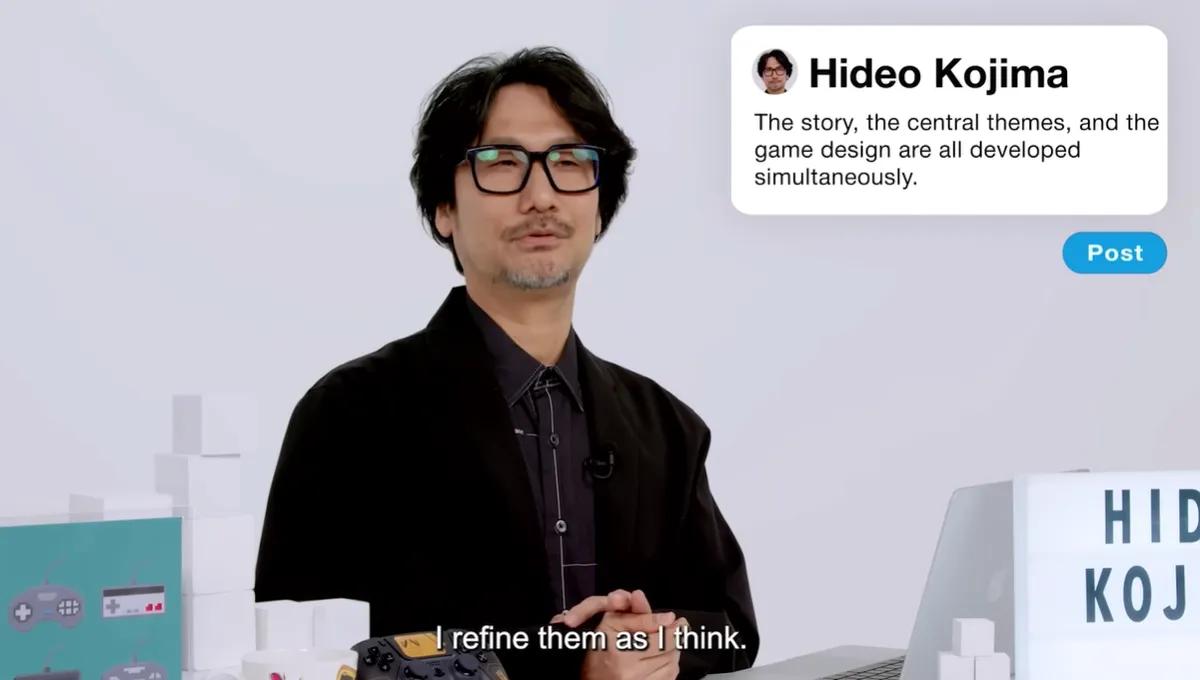
Kojima Turns The Camera On Himself And Revisits His Creative Rules
The Hideo Kojima Wired Interview offers a rare look at the director examining his own work habits, influences, and standards without an external interviewer shaping the discussion. Appearing on Wired’s Tech Support series, Kojima answers questions about himself, his design philosophy, and how he evaluates his games before release. The episode focuses entirely on his personal process rather than a specific project, placing attention on how he thinks, studies, and tests his ideas.
The format has featured game developers before, but this appearance stands apart because Kojima acts as both subject and authority. He speaks at length about what he expects players to feel when engaging with his work, stressing the importance of sensing intent behind design decisions. He connects this to encouraging experimentation, arguing that games should invite curiosity rather than dictate behavior.
Kojima also discusses how he prepares himself intellectually. He says he does not rely on dedicated experts for scientific or historical detail. Instead, he studies constantly through books, documentaries, news programs, online research, and library visits. The routine, he explains, allows him to build worlds that feel cohesive without outsourcing understanding. At one point, he jokes about the workload and recruitment.
"If you're watching and thinking, 'I'll be Kojima's right-hand man!' please contact me," he said.
A significant portion of the Hideo Kojima Wired Interview centers on his hands-on testing methods. He describes personally playing through his games while adjusting difficulty, pacing, and audio balance. He tests sound through headphones and speakers to ensure consistency across setups and revisits story beats to correct rhythm problems.
"It's a very crucial stage," he said. "Not many do this, I think." — Hideo Kojima
The episode also touches on Kojima’s long-standing interest in cinema and how film language continues to shape his design decisions. He frames games as spaces meant to hold attention over time, emphasizing atmosphere and continuity rather than constant escalation. His stated goal is to create worlds that invite players to remain inside them, not rush through objectives.
Outside Wired, Kojima recently appeared on Netflix Japan interviewing the Duffer Brothers at what appears to be Kojima Productions’ studio. The conversation shifts focus from game development to cross-media influence. The creators of Stranger Things describe how Japanese games shaped their visual and tonal approach, particularly when designing the show’s parallel dimension.
"Those were all discussed in the room," they said. "It was filtered through the lens of how we remembered seeing them and playing them for the first time when we were young and filtered through our experience, but they were just as much a part of Stranger Things." — Matt and Ross Duffer
They specifically cite Resident Evil and Silent Hill as influences on the Upside Down’s look and mood. Metal Gear Solid is also mentioned during the interview, a reference that naturally carries added weight given Kojima’s presence. The exchange highlights how Kojima’s work continues to ripple beyond games, shaping visual storytelling in other media.
Read also, Kojima Looks Beyond Genres While Defending Death Stranding’s Identity, where he explains his refusal to refine existing genres and his focus on creating forms that do not yet exist.


 Successfully copied... Thank you for sharing our content!:



5% deposit bonus up to 100 gems

a free Gift Case





EGAMERSW - get 11% Deposit Bonus + Bonus Wheel free spin


EXTRA 10% DEPOSIT BONUS + free 2 spins

3 Free Cases + 100% up to 100 Coins on First Deposit


5 Free Cases, Daily FREE & Welcome Bonuses up to 35%

3 free cases and a 5% bonus added to all cash deposits.

+5% to deposit




Comments