




Kojima Looks Beyond Genres While Defending Death Stranding’s Identity
 Hideo Kojima
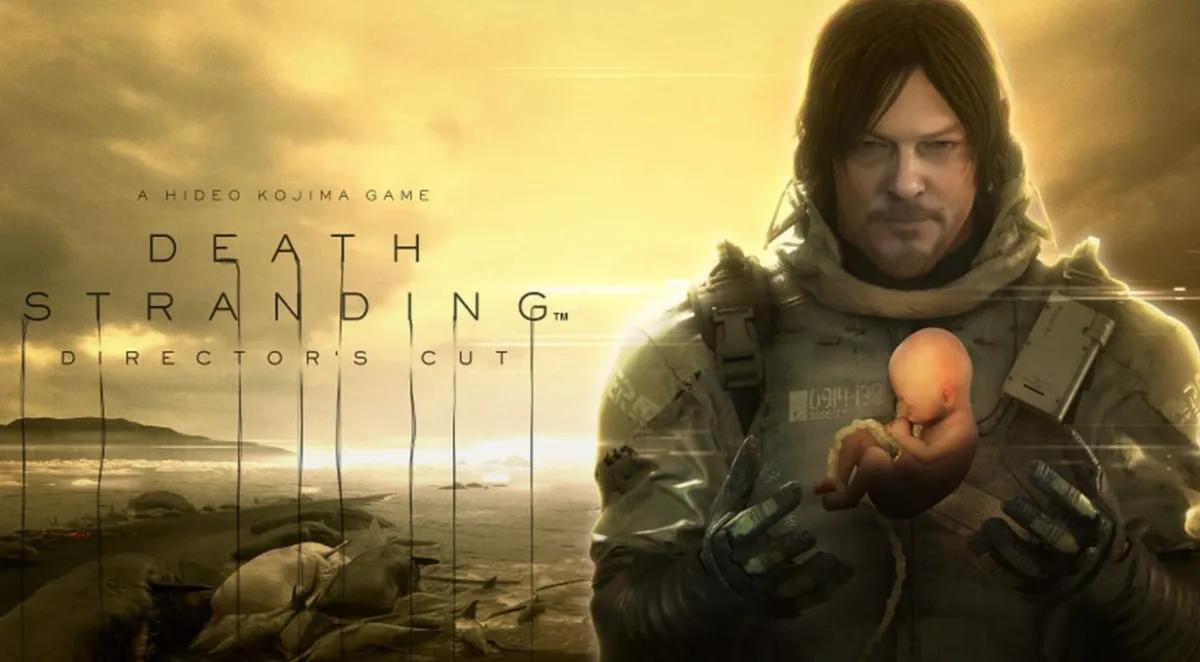
Death Stranding has long stood apart from mainstream blockbuster design, and its director says that separation is deliberate. Hideo Kojima, speaking recently to Wired Japan, said he is not interested in choosing a genre and refining it. His focus, instead, is on creating something that does not yet exist.
“I want to pioneer a new genre, so I don’t focus much on existing ones,” he said. — Hideo Kojima
The comment reinforces a position Kojima has maintained for years, particularly around Death Stranding, a game he publicly framed as the foundation of a new genre rather than an offshoot of action or stealth traditions. Before the original game launched in 2019, Kojima repeatedly pushed back against attempts to classify it using familiar labels.
“Death Stranding is not a stealth game. It is brand new action game with the concept of connection (strand). I call it Social Strand System, or simply Strand Game.” — Hideo Kojima
At the time, the claim drew skepticism, even from players who admired the game’s structure and tone. Death Stranding combined traversal-heavy gameplay, asynchronous online interaction, and a subdued rhythm uncommon in big-budget releases. Critics often described it as an unconventional action-adventure rather than a clean break from genre history. Kojima’s insistence on a new category, however, framed the game as an experiment meant to reshape expectations rather than merely stretch them.
That framing has not remained isolated. Years later, the idea of the “strand game” resurfaced when indie developer Strange Scaffold revealed Witch Strandings, a project openly positioned as an interpretation of Kojima’s concept. Coverage by Kotaku noted how unusual it was to see another studio attempt to define and extend a genre whose boundaries were never clearly drawn. The existence of such projects suggests that, regardless of how strictly one defines Death Stranding, its design language has proven transferable.
Kojima’s recent comments also touched on settings he has not yet explored. He mentioned interest in making a Western or a space game, while acknowledging that these spaces already carry well-established conventions. Even then, his emphasis remained on structure rather than theme. A familiar setting, in his view, does not require adherence to familiar mechanics.
This approach aligns with Kojima’s broader career arc. From Metal Gear Solid onward, his projects have often appeared to fit established categories before undercutting them through pacing, narrative delivery, or mechanical emphasis. Death Stranding pushed that tendency further by removing many of the pressure points associated with action-driven design, replacing them with systems built around cooperation and persistence rather than combat mastery.
Whether the “strand game” ultimately solidifies as a recognized genre remains unresolved. What is clear is that Kojima continues to treat genre as a constraint to be resisted, not a framework to be perfected. His comments suggest future projects will follow the same logic, even if they borrow the surface language of Westerns, science fiction, or historical drama.
Read also, reports suggest Death Stranding 2: On the Beach may be heading to PC after its console release, continuing the franchise’s gradual expansion beyond PlayStation while it remains a major awards contender.


 Successfully copied... Thank you for sharing our content!:



5% deposit bonus up to 100 gems

a free Gift Case





EGAMERSW - get 11% Deposit Bonus + Bonus Wheel free spin


EXTRA 10% DEPOSIT BONUS + free 2 spins

3 Free Cases + 100% up to 100 Coins on First Deposit


5 Free Cases, Daily FREE & Welcome Bonuses up to 35%

3 free cases and a 5% bonus added to all cash deposits.

+5% to deposit




Comments