




A Browser Archive Opens Decades Of Doom Levels To The Public
 Games
Games Records
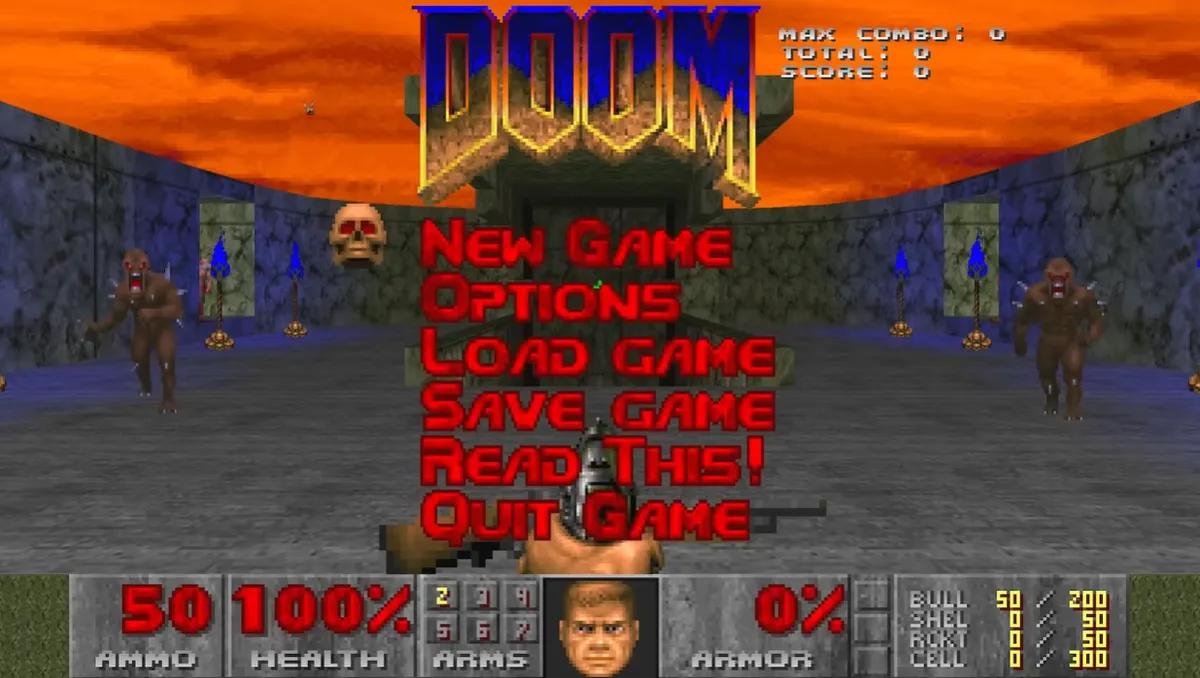
Doom's 32nd birthday passed last week with little ceremony and a great deal of noise. The original shooter, long known for running on devices never meant to host games, marked the anniversary with a new entry point for its fan culture.
A website called DoomScroll now allows players to load and play fan-made Doom levels directly in a web browser, bypassing downloads, setup, or emulation workarounds.
The site arrived quietly during a crowded news cycle but carries weight for a game whose afterlife has been shaped as much by its community as its creators. Doom’s modding scene began in the early 1990s and never stopped. Thousands of user-made WAD files have circulated for decades, scattered across archives, forums, and personal sites. DoomScroll collects a portion of that history and places it behind a single click.
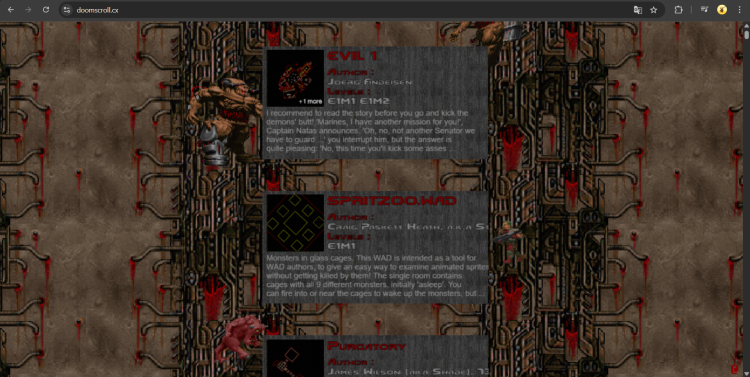
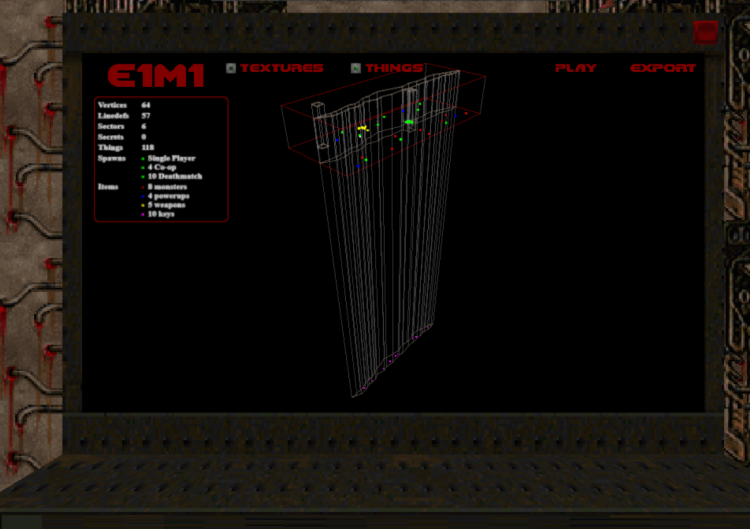
The project was spotted by Pewpew Caboom Gamer and traced to software engineer James Baicoianu and internet archivist Jason Scott. Opening the site presents a scrolling catalog of Doom levels created across several generations of players. Selecting a map loads a short description displayed through a faux laptop interface styled to match Doom’s visual language. Clicking a rotating map outline launches the level inside the browser, complete with movement, weapons, and enemy behavior intact.
Among the featured works is “Where? The Warehouse!”, a level designed more than 30 years ago by Giant Bomb co-founder Jeff Gerstmann. Its inclusion underscores the age span of the material on display. Other examples range from joke maps and holiday-themed levels to more experimental designs such as Missouri Rat Light. The catalog leans heavily into Doom’s long-running fascination with hell imagery, a constant across eras and skill levels.
Baicoianu framed the project as an access effort rather than a replacement for traditional mod sites. In a post on BlueSky, he explained the intent behind the archive and its scope.
"Our goal was to make decades of work from one of the most creative communities in gaming history more accessible and visible to everyone," Baicoianu wrote. "There's so much stuff here - everything from simplistic maps made by kids just learning how game development works, all the way up through full total conversions with all-new music, textures, and sprites, made by volunteer teams that went on to become full-fledged game studios."— James Baicoianu
The emphasis on accessibility comes with trade-offs. At least one WAD on the site, Army of Darkness, fails to load and presents only a black screen. Doom modder and YouTuber Major Arlene flagged the issue in a reply to Jason Scott’s BlueSky announcement. She also raised concerns about whether every included mod complies with its original redistribution terms or credits creators properly.
Many of the entries rely on original readme text files for attribution and permissions. Those files often include written URLs pointing to old hosting sites, some of which no longer resolve or load correctly. The addresses are displayed as plain text and not linked. Testing the address listed for Gerstmann’s level led to a page that failed to open. The system depends on documentation written decades ago, at a time when long-term preservation was rarely considered.
Baicoianu acknowledged the concern and said a reporting option is planned to flag content that should not be hosted. The site remains in an early state, and its creators appear aware that visibility brings scrutiny as well as appreciation. Doom’s modding scene has always been decentralized, with norms enforced socially rather than through platforms. DoomScroll introduces a central surface that will need to navigate those expectations.
Despite the unresolved issues, the site reflects a familiar pattern in Doom’s history. Each technical shift, from source ports to emulation to web delivery, has extended the game’s lifespan by reframing access. Doom’s code was opened. Its levels multiplied. Its audience renewed itself. DoomScroll continues that pattern by lowering friction for discovery rather than creation.
Doom's 32nd birthday did not arrive with a remaster or a press tour. It arrived with another way to touch a body of work that never stopped growing. The demons are the same. The tools have changed again.
Read also, John Romero confirmed that his previously cancelled shooter has been saved and fully reworked after losing publisher support earlier this year. The project, cut during Microsoft’s summer cancellations, has resumed development with a smaller team and a revised structure following renewed backing.


 Successfully copied... Thank you for sharing our content!:

Comments