




How Supergiant Refined Hades 2 Through Early Access And Player Response
 Steam
Steam Games
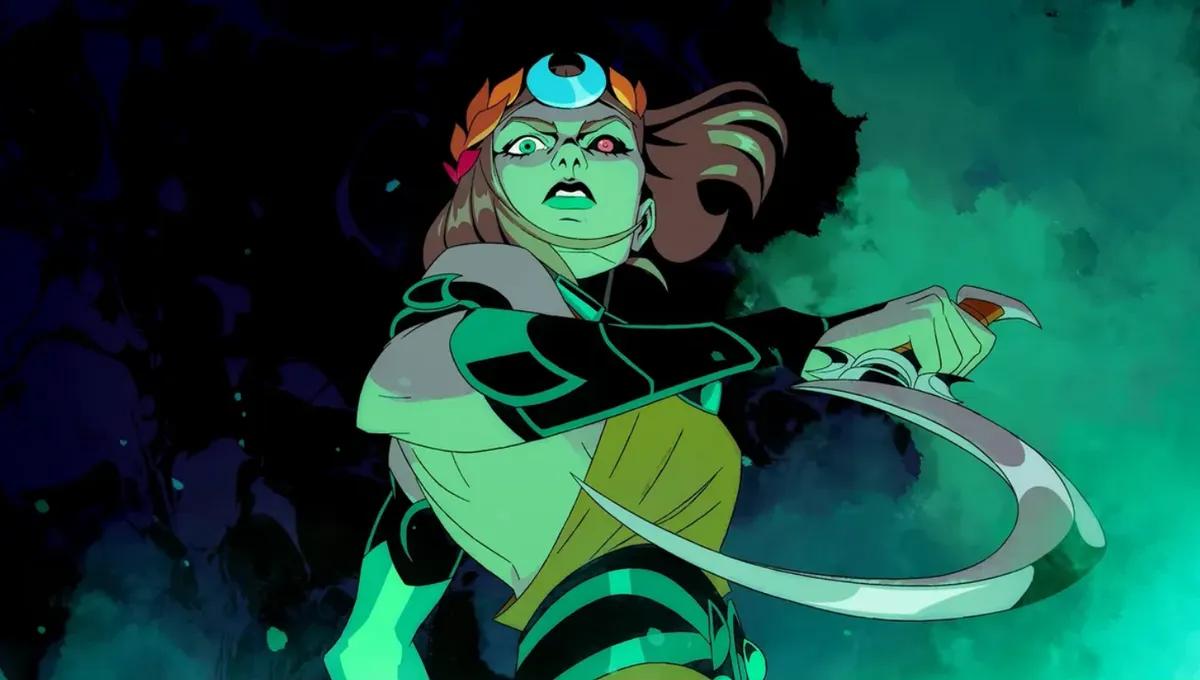
GamesThe Hades 2 dev interview offers a clear view into how Supergiant Games approached its sequel as a continuation rather than a reset. From the outset, the studio treated Hades 2 as an expansion of ideas seeded during the first game’s development. The result is a roguelike that carries a familiar structure while absorbing new systems, characters, and narrative weight. Melinoë’s story did not emerge suddenly after Hades shipped. According to the studio, it existed in outline years earlier, embedded as a possibility rather than a promise.
In coverage published as part of a year-end feature, GamesRadar+ framed Hades 2 as both a product of long-term planning and a case study in disciplined iteration. Supergiant’s process hinged on restraint. The team avoided parallel projects and committed fully to a single production line, allowing ideas to mature slowly and remain responsive to change.
“ At Supergiant, we focus on one project at a time,” says creative director Greg Kasavin. “With each project, as part of building out the world of the game, we consider other stories that could be told in that world.”— Greg Kasavin
That approach shaped how Hades 2 was built. While major narrative beats involving Melinoë, Hecate, and Chronos were established early, the connective tissue between characters remained open. Early Access became the mechanism for resolving that uncertainty. The studio entered Early Access later than it had with the original Hades, carrying more content into the public build and shortening the overall testing window to about 18 months. Even so, the goal remained the same: create space to listen, adjust, and revise.
“Deciding when to launch a game into Early Access is an important decision for a developer,” Kasavin says. “You want your game to be far enough along that it can be played and enjoyed without a lot of caveats, but you don't want your game to be so far along that you don't have time to respond to all the feedback you get.”
That balance defined much of Hades 2’s development. Core mechanics shifted repeatedly. Melinoë’s Sprint was slowed after early builds proved too permissive. Resource systems were expanded, reflecting her role as a witch with access to more currencies and ritual mechanics than Zagreus. Visual elements, including character art, were added and refined over time rather than locked early.
The most significant change came after Early Access ended. Supergiant rewrote the game’s ending following sustained community reaction. The decision carried risk, arriving with version 1.0 rather than during testing. Player response validated the move. The revised conclusion reframed the story’s relationship with time, memory, and consequence, aligning structure with theme.
“This is a game that explores the effects of time – ideas around different outcomes and possibilities that might have occurred,” Kasavin says. “We were thoughtful about such themes when enhancing details of the story in response to player feedback.”
The result is unusual even by roguelike standards. Players who experienced both endings now hold two canonical memories of the narrative, mirroring the characters’ own fractured timelines. That layering reinforces the idea that Hades 2 is not meant to resolve cleanly. Like its predecessor, it can be played indefinitely.
“Hades 2, like the original, is a game that can technically be played forever,” Kasavin says. “It has a script of more than 400,000 words, and more than 30,000 voice lines – around 50% more than the original. That includes every major detail we wanted to include for our cast of characters.”
That cast expanded significantly. Olympian gods returned alongside new additions including Hera, Hestia, Apollo, and Hephaestus. Chthonic figures such as Eris, Moros, and Nemesis gained prominence, while Circe and Medea appeared as surface-area boon givers. The expansion responded directly to feedback from the first game, where players wanted broader mythological coverage without sacrificing depth.
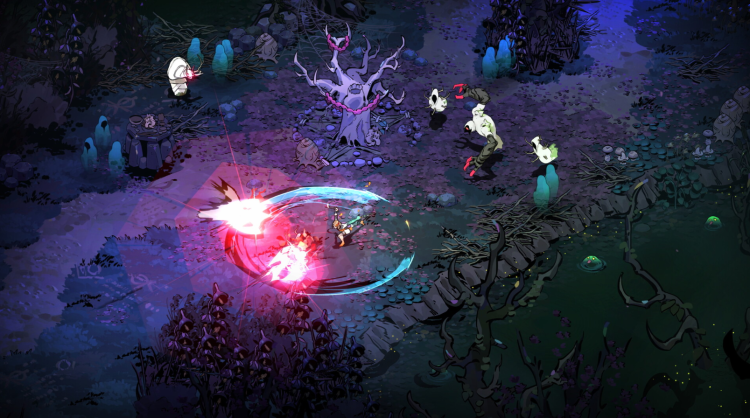
Early Access enabled that growth without destabilizing the foundation. Supergiant avoided redesigning systems wholesale. Instead, it layered new content onto proven structures, adjusting balance where necessary. The approach extended to audio design. Composer Darren Korb produced the studio’s largest soundtrack to date, spanning Olympus, the Underworld, and new regions with distinct tonal identities.
“Music has been vital to each of our games,” Kasavin says. “Since the game goes to a variety of different places, from the heights of Olympus to the depths of the Underworld, the musical variety really helps define how these places are different from each other and distinctive in their own right.”
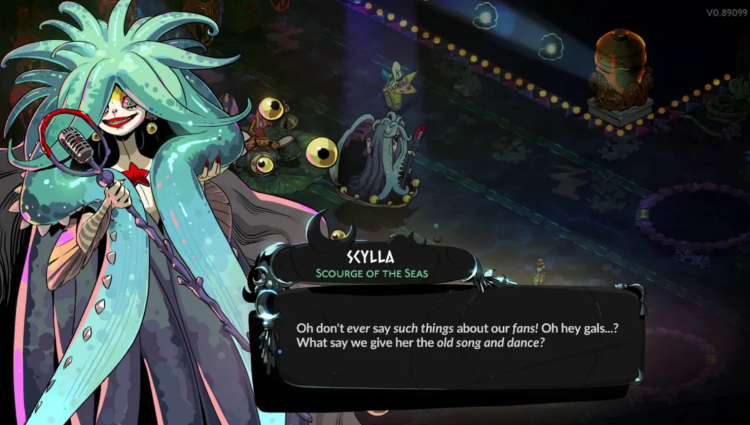
One standout example is Scylla and the Sirens, reimagined as a glam rock band. The boss fight integrates music directly into mechanics, with sections of the song tied to combat phases.
“We loved the idea of having to take on this mythical band, picking their music apart section by section,” Kasavin says. “Scylla and the Sirens says a lot about the overall tone of the experience.”
Mechanical tuning remained a constant point of friction. Some players resisted the removal or reworking of powerful boons. Hephaestus’ original Smithy Sprint became a flashpoint. Supergiant’s response emphasized cohesion over sentiment.
“We iterated on all sorts of different content all through Early Access,” Kasavin says. “It’s important not to be too precious about these things when they exist in service of a cohesive whole.”
Rather than discarding ideas, the team relocated them. Smithy Sprint’s core behavior migrated to the Black Coat weapon’s Aspect of Nyx, preserving the mechanic while tightening balance.
“Sometimes ideas for Boons and abilities find new homes in this way,” Kasavin says.
The cumulative effect of these decisions defines Hades 2’s identity. It is a sequel built through accumulation, correction, and measured risk. Early Access was not treated as a marketing phase or a stress test. It functioned as a design instrument, allowing Supergiant to test assumptions in public and revise without losing direction.
“If we knew all the issues and opportunities the game had, then we wouldn't have needed to spend a year and a half developing in Early Access in the first place,”
“At Supergiant I think we've learned to love and trust the process of getting to our end result.”— Greg Kasavin
That trust underpins Hades 2’s success. The game does not present itself as finished in the traditional sense. Instead, it reflects a studio willing to treat development as an ongoing conversation, even after release. The Hades 2 dev interview makes that philosophy explicit, grounding its achievements not in surprise or reinvention, but in patience, attention, and the willingness to revise.


 Successfully copied... Thank you for sharing our content!:

Comments