




Rhytm Doctor Shows How A One-Button Game Can Carry A Full Narrative Load
 Review
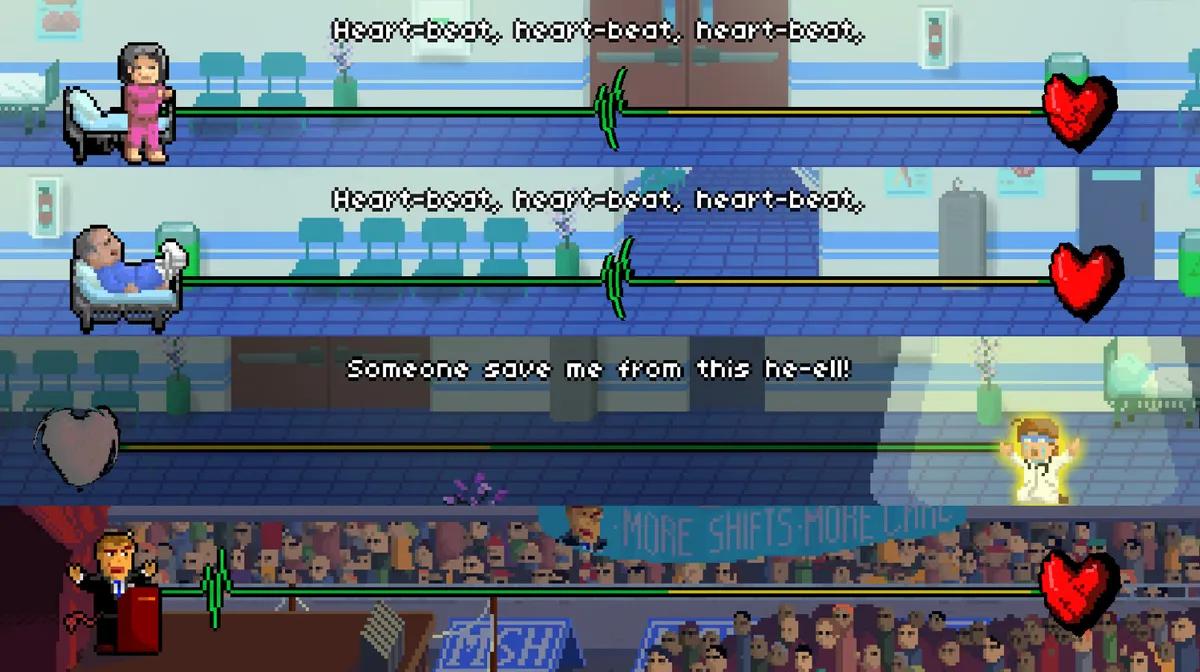
Rhythm Doctor continues to draw sustained interest as players revisit its release and examine how a one-button rhythm system supports an unusually grounded story about medical work and personal resolve. The game builds its entire structure around timed defibrillation pulses delivered on every seventh beat, a design that turns a simple input into a demanding test of perception.
In this post, Will Borger’s review on IGN serves as the anchor for understanding how its mechanics and narrative reinforce each other.
Borger closes in on the experience from the role of the intern at Middlesea Hospital, who observes patients through cameras and participates through a single onscreen arm. The perspective shapes the story’s tone. The player acts within the world but never shares space with the characters, which gives the interactions a sense of distance that fits the hospital setting. Rhythm Doctor uses that separation to underline how each case unfolds independently of the intern’s presence, even as the intern becomes central to their care.
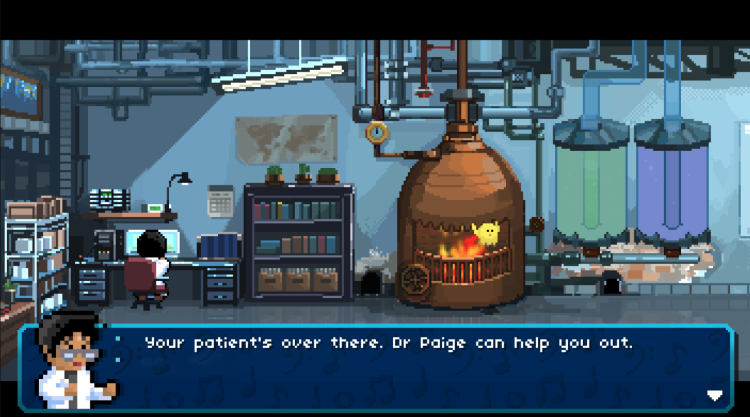
The routine begins with straightforward timing. Early levels teach players to count to seven and hit the beat with clean precision. The game escalates quickly, though, with polyrhythms, odd time signatures, silent beats, and shifting tempos. Visual cues appear sparingly, and the interface never funnels the player into fixed lanes. Instead, it requires a steady internal rhythm, often supported only by audio and the player’s own counting. The approach produces sharp difficulty spikes that stand out even among rhythm games known for technical challenges.
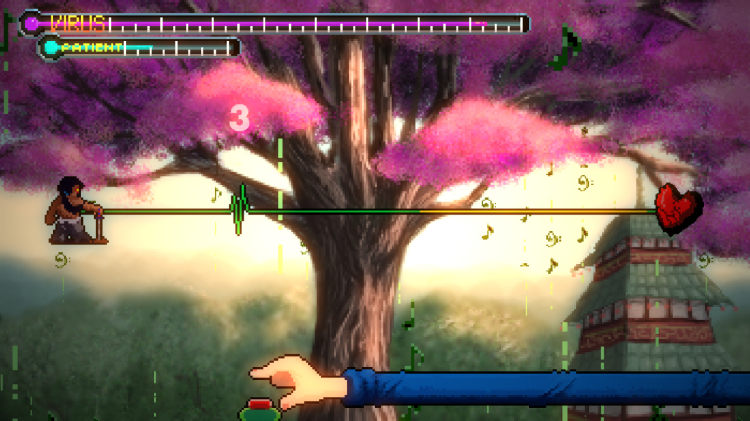
That difficulty is not used as spectacle. It connects directly to the game’s broader theme that precision can fail under pressure, distraction, or fatigue. When the story introduces a digital virus that interferes with hospital systems, the game distorts timing, introduces static, and scrambles windows. The disruptions function as narrative elements, not gimmicks, because they reflect the intern’s compromised view of the patient and the strain placed on the medical team. This blending of mechanics and story appears throughout the campaign and gives otherwise simple inputs narrative weight.
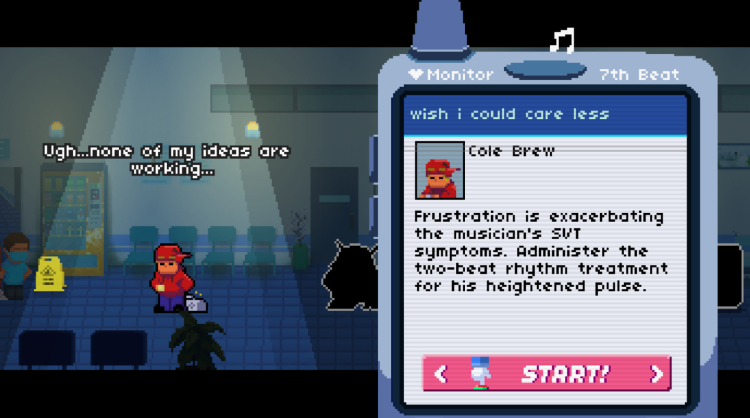
Characters carry that approach further. Levels tied to individual patients shift structure to reflect personality, conflict, or emotional change. Cole’s frantic rush across the hospital reshapes the window as he moves, pulling the frame off-screen before snapping it back into view. Logan’s uncertainty around Hailey shows up in missed beats and unstable rhythms that tighten into coordinated patterns as the two grow closer. The songs push the narrative rather than serve as background. They reveal tensions, relay internal states, and mark turning points in relationships.
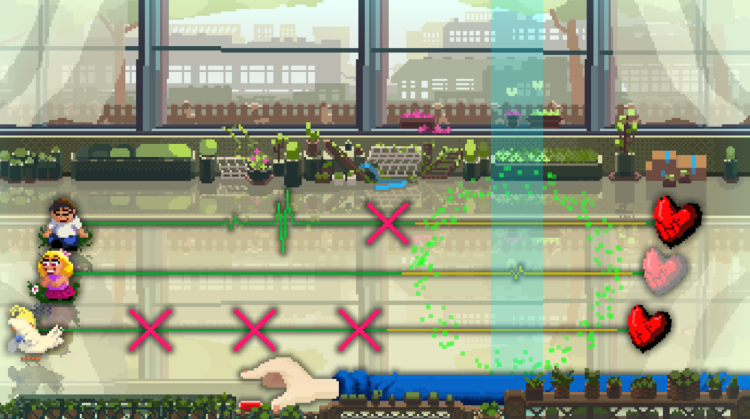
The game also folds outside pressures into its structure. As the hospital leans on the success of the experimental program, administrative decisions reshape staff roles and workloads. The tone stays grounded. The script does not rely on broad critique but instead shows how layoffs and expanded responsibilities alter daily operations. These shifts register in dialogue and in the story’s pacing, presenting an institution stretched by expectation and budget constraints.
Rhythm Doctor enforces consistent performance standards. Levels require a B grade or higher to progress, which can stall players who struggle with unconventional patterns. Lowering difficulty is an option, but even then, the game expects close attention. Some levels add “Night Shift” variants that raise complexity while supplying small narrative additions. Bonus stages widen the tone, offering comedic setups or quiet interludes with patients and staff. These breaks do not weaken the main narrative; they round out the hospital environment and acknowledge time spent between major events.
Borger notes how the story occasionally unfolds without the intern present. A key moment later in the game takes place off-screen while the intern is assigned to another patient. The absence reinforces the idea that no single perspective captures everything occurring in a system as busy as a hospital. This choice lines up with the game’s repeated focus on shared effort and the limits of remote participation. It also deepens the sense that the intern occupies a narrow window into a larger, active world.
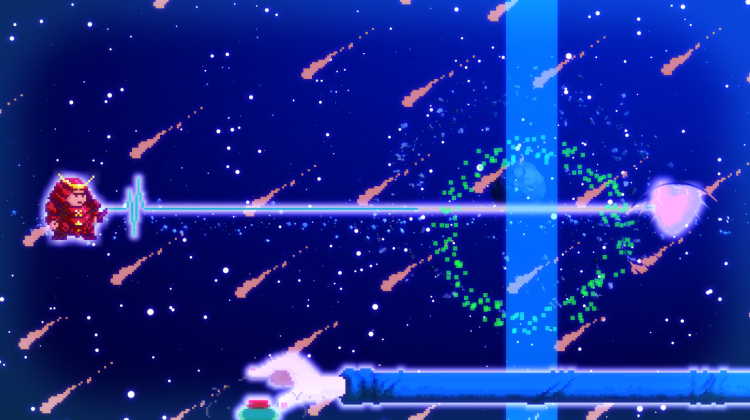
The soundtrack maintains a wide range. It moves from showtune-inspired arrangements to electronic tracks and percussive pieces built around shifting meter. Each piece ties to a character or situation, and recurring motifs pass between patients as relationships form. The design treats music as connective tissue rather than decoration. Tracks carry story information and frame emotional beats without turning scenes sentimental.
Borger’s review emphasizes how the game uses its own structure to speak directly through play.
“Sometimes I’m angry I’m not doing better than I thought I’d do at this point,” — Will Borger.
The line gives the game’s broader message a personal edge: improvement arrives through persistence, not mastery on the first attempt.
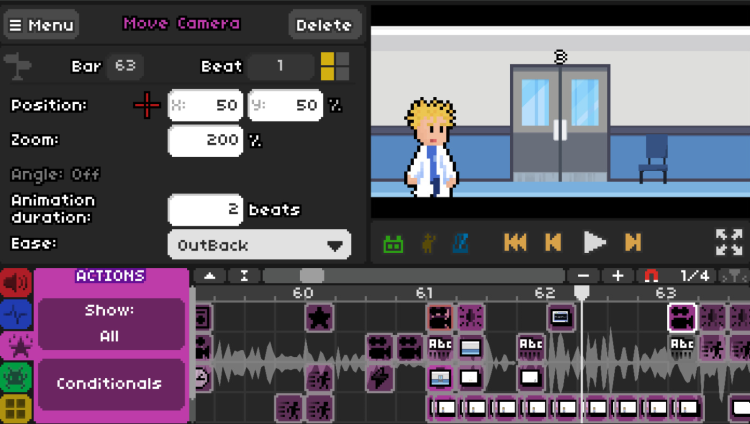
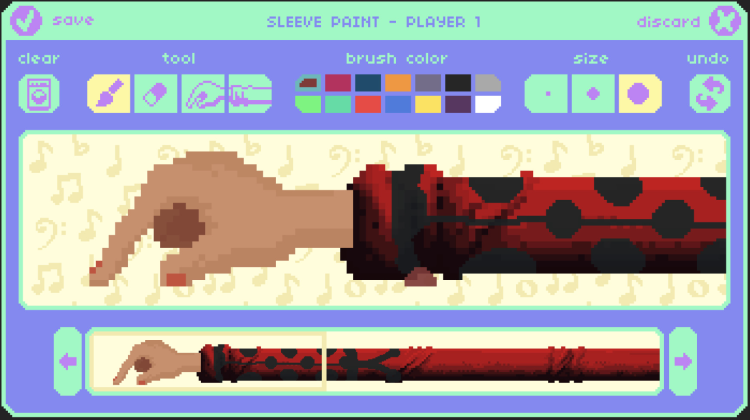
Beyond the main story, Rhythm Doctor includes a full level editor and access to community-made tracks. The editor has produced a steady library of custom songs that extend the game’s life and highlight how effectively the core mechanics adapt to new compositions. The tools work cleanly without leaning on monetization or locked features, giving the community full control over shared creations.
The game’s ending aligns with its themes. It neither softens institutional issues nor resolves every tension, but it settles the characters’ stories in a way that respects their arcs. The conclusion underscores that each recovery involves trade-offs and that systems built on efficiency can obscure the people carrying the load. The final moments stay consistent with the game’s premise: small acts, repeated with care, build connection even when distance remains.
Rhythm Doctor is available to play on PC (Steam).


 Successfully copied... Thank you for sharing our content!:

Comments