


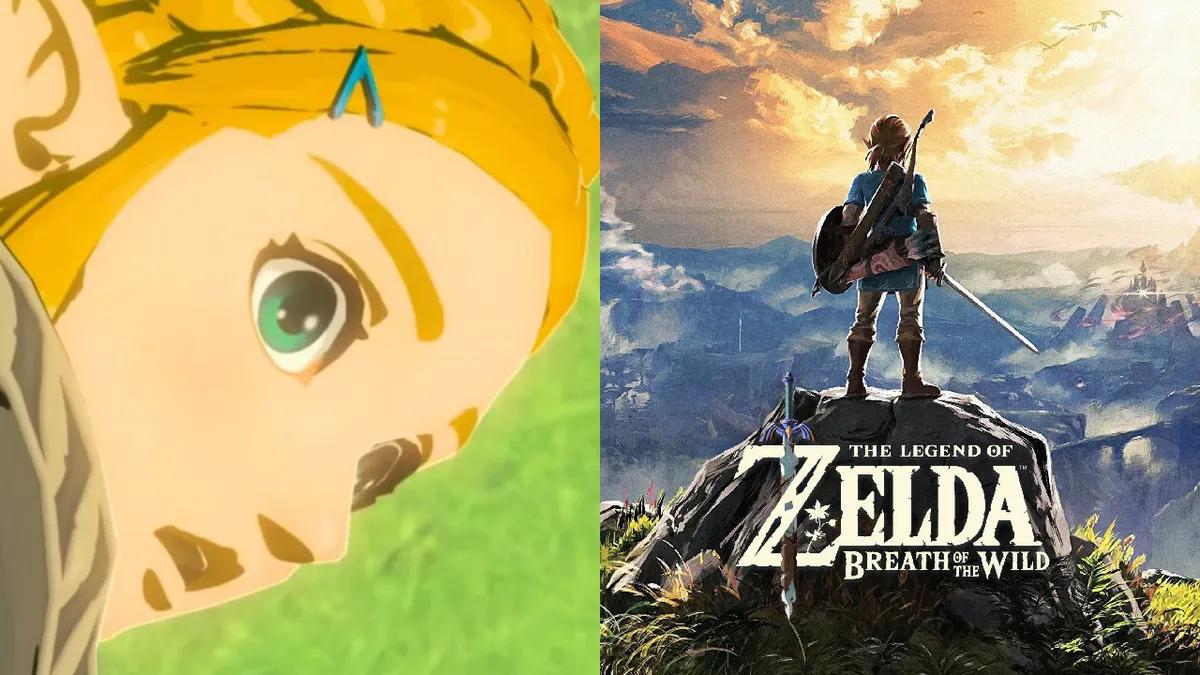
Breath of the Wild Saved a Shrinking Zelda, Say Ex-Nintendo Marketing Leads
 Nintendo
 Sony
Two former Nintendo of America marketing leads, Kit Ellis and Krysta Yang, say The Legend of Zelda was in dire straits in the years before Breath of the Wild.
Ellis ran social media marketing there and Yang worked as public relations manager, which put both of them close enough to the research to watch the audience thin out. Their account arrives in the middle of a live argument about where the series should go after its latest hit. Neither of them works at Nintendo now, which is part of why the account exists at all, since serving staff rarely describe a flagship series as selling nothing.
The Ocarina of Time remake is the fastest-selling Switch 2 game so far, and the attention it pulled in restarted an old question about where the series goes next. One camp wants a return to the carefully directed history that Ocarina represents, dungeons and all, while the other wants Nintendo to keep building on the open, spontaneous sandbox that Breath of the Wild opened up.
The two former marketing leads raised it on their podcast, in an episode built around how the Ocarina of Time remake should shape the next Zelda on Switch 2. Ellis pushed back at fans who believe the Zelda team stripped out classic dungeons and linear worlds while the series was at its peak, and he called that version of events inaccurate:
“There has been some revisionist history out there lately”
— Kit Ellis
What he remembers instead is a focus group room, and a set of findings nobody at Nintendo wanted:
“I remember, I was going to the focus groups where it was a really dark moment. The feedback was like, ‘The fan base is dwindling. This is not bringing in new players.’”
— Kit Ellis
Interest was getting smaller with each entry, by his account, and Nintendo needed a dramatic move rather than another iteration of the same formula. Yang put the commercial side more plainly:
“This series was in dire straits. They were selling, like, nothing”
— Krysta Yang
Both hosts treat the open world as a rescue plan. The staples the 2017 game set aside, the numbered dungeons and the guided route through the map, are the same ones fans now want back, and the podcast puts their removal down to survival rather than a change of taste.
The sales curve tracks that. Twilight Princess sold roughly 8 million copies at the start of the Wii generation, Skyward Sword roughly 3 million at the end of it, and Breath of the Wild 34 million one console later. Zelda had slid from a launch-window flagship to a late-cycle release on hardware most players had already moved past, which is a worse position than the raw review scores of the time suggested. The series was never irrelevant, but the gap between those three numbers explains why rebuilding the formula in 2017 was worth the risk.
The gamble outlived its own console. Breath of the Wild produced Tears of the Kingdom, a sequel ambitious enough to build a second game on the first one’s systems, and its approach reached the 2D line through Echoes of Wisdom. It also returned to the charts this year as Metacritic’s top game of 2025, tied with Clair Obscur: Expedition 33 at 93 after the paid Switch 2 Edition counted as a new release.
Studios outside Nintendo took the structural lesson rather than the art style. The open-ended approach to the final boss turns up in The Blood of Dawnwalker, where Rebel Wolves lets Coen march on the vampire lord Brencis almost immediately or spend the game’s deadline weakening his allies first.
Sucker Punch went the other way. The studio prototyped a climb-anything system for Ghost of Yotei inspired by Breath of the Wild, then cut it after co-directors Nate Fox and Jason Connell decided the map held too many walls players were not meant to scale, which would have trained them to stop climbing at all.
I keep noticing that the studios borrowing from Breath of the Wild copy the permission to walk away from the main quest, not the size of the map. The clock in Dawnwalker is the part I am unsure about, since a countdown turns wandering into a decision with a price attached. I would rather play that experiment than another map covered in towers, even if it costs me the wandering.
The argument over the next mainline Zelda is still open, and the Ocarina of Time remake handed the curated, dungeon-led version of the series fresh evidence of its own. Nintendo spent the Wii era with one declining template and now has two working ones, plus the sales figures to defend either. Whichever it picks, the decision that made both possible came out of a focus group where the news was bad.


 Successfully copied... Thank you for sharing our content!:


Comments