




The Bus Review
 Steam
Steam Xbox
Xbox PlayStation
 Review
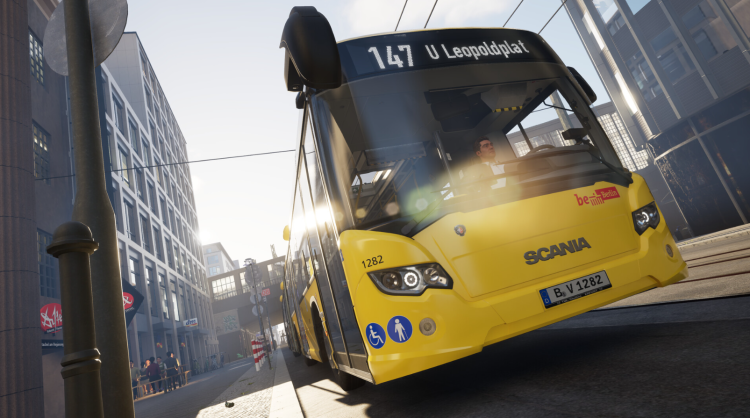
After five years in Early Access, The Bus launches its full 1.0 release on PC, PlayStation 5, and Xbox Series consoles. Developed by TML-Studios and published by Aerosoft, the game recreates Berlin at a 1:1 scale with more than 200 bus stops spread across the city's real road network. Players operate officially licensed buses from Mercedes-Benz, MAN, Scania, VDL, and Galaxis on routes including the TXL, 100, 200, and 300 lines. The game retails at £34.99/ $39.99 and ships with three modes: Freeplay, Economy, and PC-exclusive Multiplayer.
Berlin at Full Scale
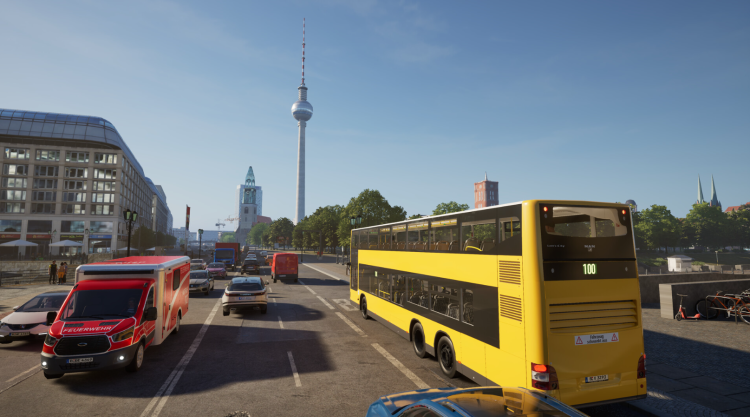
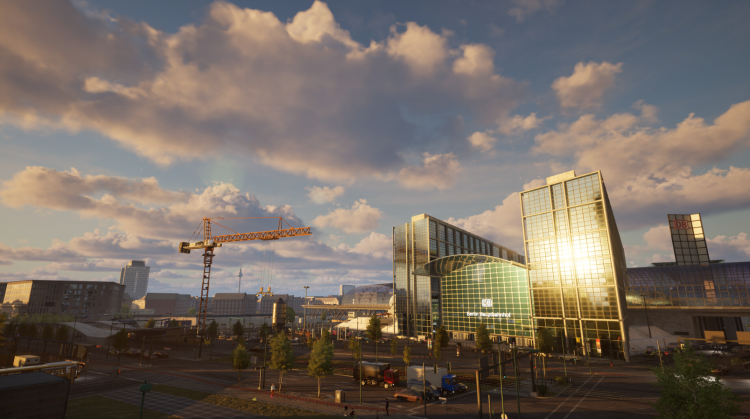
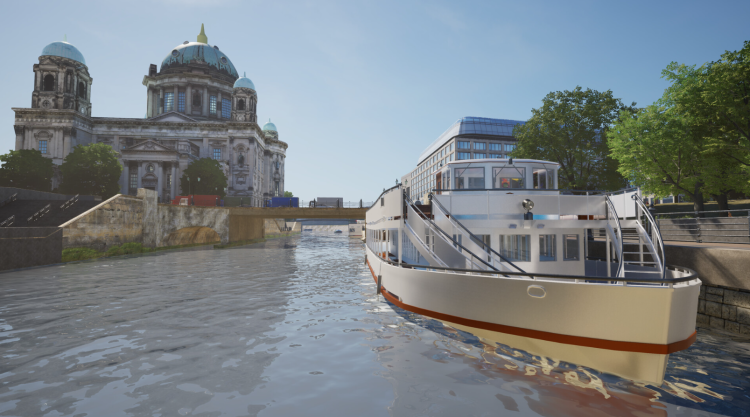
The defining feature of The Bus is its map. Berlin is rendered at real-world proportions. Not condensed, not stylised, but built to match the actual city block by block. Driving from Alexanderplatz toward the Brandenburg Gate covers the correct distance on the correct roads. The Victory Column appears where it should. Street spacing, intersection layout, and landmark placement all correspond to their real positions. Most transport simulators compress their environments to keep travel times manageable. The Bus rejects that approach entirely, and the result is a city that takes roughly as long to cross as its real counterpart.
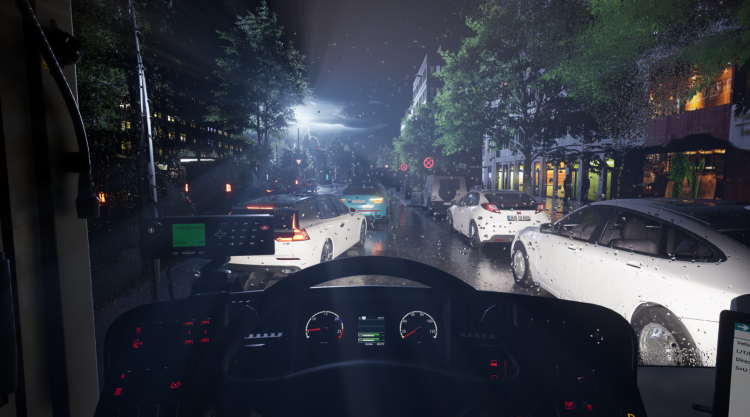
This scale changes how the game feels. Morning routes carry a different traffic density than late-night runs. Weather shifts through rain, snow, and seasonal changes, altering visibility and road conditions. The game can synchronise its weather with real Berlin conditions and runs a full day-night cycle. Pedestrians dress for the season. In summer, they wear lighter clothing. In winter, they bundle up. When it rains, umbrellas come out. They carry phones, bags, and takeaway coffee cups. None of these details affect gameplay systems directly, but they accumulate into a city that feels inhabited rather than simply rendered.
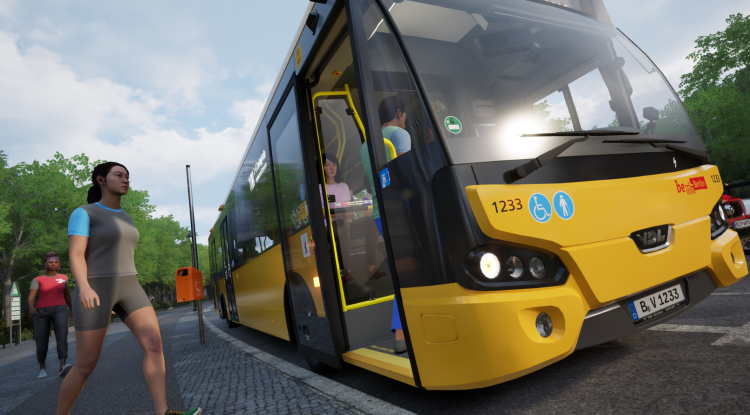
Built on Unreal Engine 5, the visual improvement from the Early Access version is clear. Lighting and reflections benefit from the engine upgrade, and environmental textures across streets, buildings, and landmarks have been carefully modelled to reflect the real city. The buses carry detailed interiors with functional dashboards, working onboard computers, and realistic passenger areas. On PlayStation 5, the DualSense adaptive triggers simulate the resistance of heavy bus pedals during acceleration and braking, adding a tactile layer that the other platforms lack.
Behind the Wheel
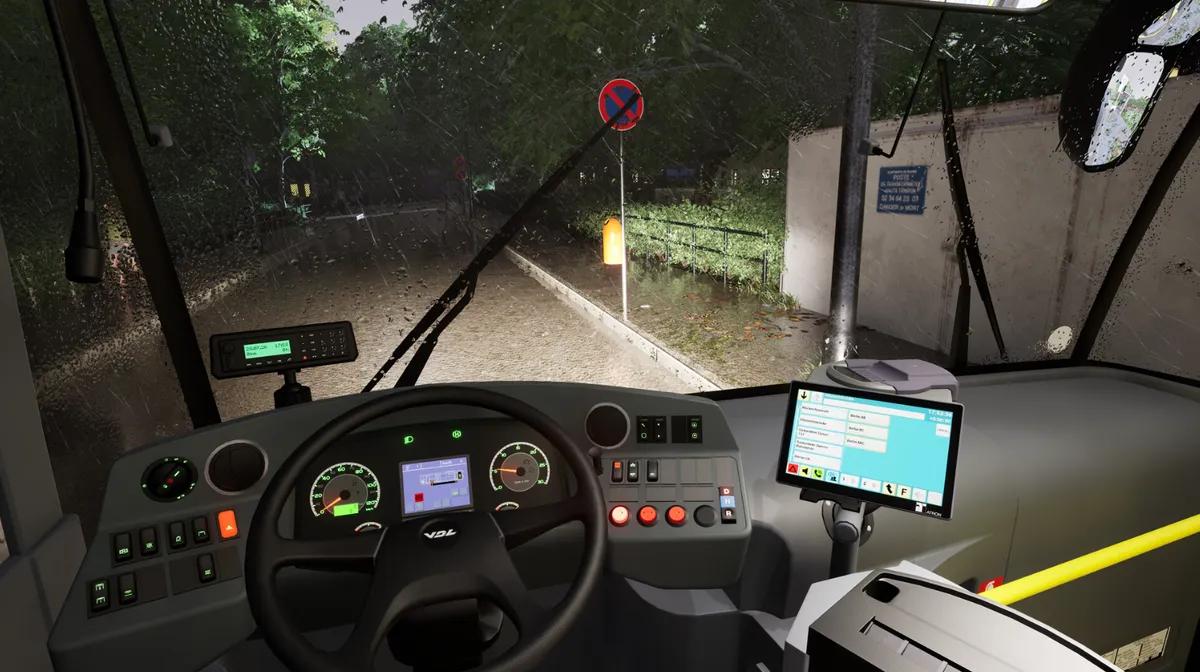
Operating a bus goes beyond steering and speed control. Each vehicle includes a fully functional onboard computer. Articulated models use the ATRON system. Before departure, drivers log in by entering a route number and PIN. Mirrors require manual activation. Doors open and close under direct control. Tickets are sold through the onboard machine, with passengers paying cash and receiving change through the system.
Three control profiles are available. Realistic mode demands full engagement with every procedure and system. Arcade mode strips complexity for a more relaxed drive. A custom mode lets players blend elements from both, adjusting difficulty to personal preference. This flexibility matters for console players encountering the genre for the first time, and it keeps the barrier to entry low without removing depth for veterans.
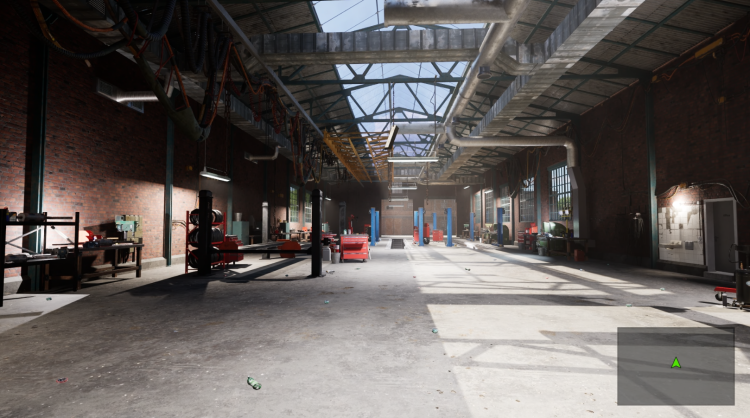
Around 20 bus variants ship with the game, including articulated models spanning all five licensed manufacturers. Buses sustain damage during gameplay and eventually require repair. Players can send vehicles to an external workshop or invest in building their own repair facility, complete with workstations and hired mechanics. A German Euro-techno radio station plays throughout drives, a small detail that adds character to long routes across the city.
Freeplay as Entry Point
Freeplay serves as the game's quickest path to driving. Players select a map, a bus, a control mode, a specific route and tour, a date and time, and weather conditions. No financial pressure exists. No company targets or employee schedules interfere. The mode isolates the core driving experience.
This isolation makes Freeplay effective for learning systems. The onboard computer login, the ticket machine interface, and Berlin's street layout all take time to absorb. The game does not guide players through these steps with consistent clarity. Figuring out how to log into the bus computer can consume significant time without clear instruction. Tutorials exist but leave gaps between explanation and the actual complexity of the simulation. Players comfortable with trial and error will adapt. Others may find the opening hours frustrating.
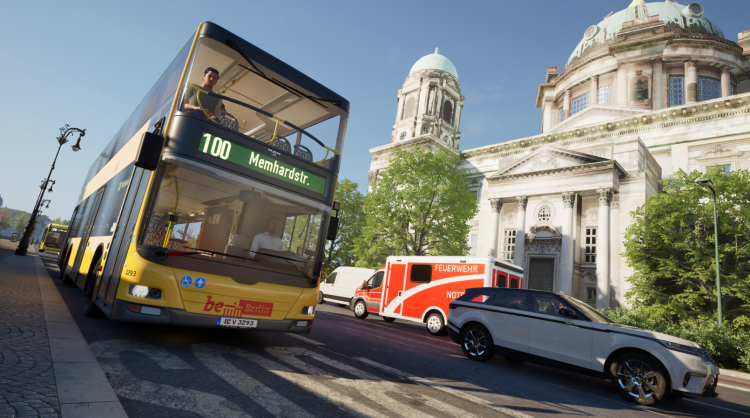
Freeplay also doubles as a sightseeing tool. Famous routes such as the 100, 200, N100, 123, 142, 147, 245, and 300 pass through Berlin's most recognisable districts. The 1:1 scale means drives between landmarks take roughly as long as they would in reality. Players interested in virtual tourism rather than business management can stay in this mode indefinitely.
Economy Mode and Company Building
Economy mode is where The Bus separates itself from the rest of the genre. Players begin with nothing. The first steps involve renting an office, arranging parking space, purchasing company insurance, and applying for a loan. That money goes toward a first bus, either new or second-hand. The public transport operator sends available orders via email, divided into single trips and permanent recurring routes.
Revenue from each completed trip depends on route length, the number of stops, and trip quality. Trip ratings break into four categories: Economy tracks passengers transported; Service measures schedule adherence at arrivals and departures; Traffic Rules monitors property damage, accidents, pedestrian incidents, and speed violations; Driving Behaviour scores braking, steering, curb avoidance, and safe following distance. Each category feeds into an overall company reputation score that gates access to further routes and contracts.
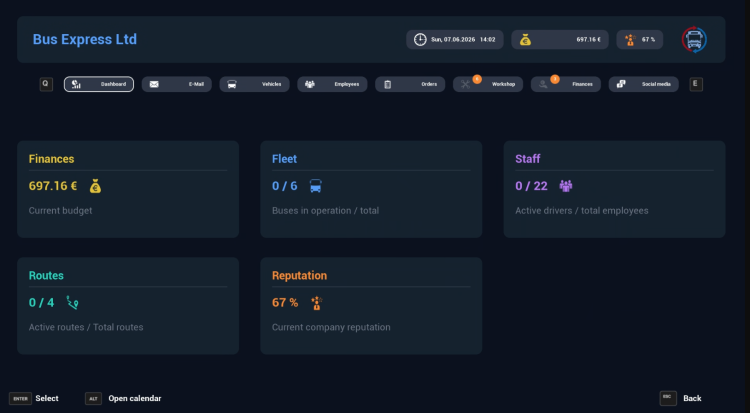
Employee management adds a distinct layer. Each hire carries individual attributes: name, salary, experience, age, and satisfaction. Experienced drivers perform better but command higher wages. Younger hires cost less and level up faster through completed work. Satisfaction fluctuates based on vehicle condition, workload balance, and whether pay raise requests are approved or rejected. Dissatisfied employees and older staff call in sick more frequently, forcing schedule adjustments.
As the company scales, the Lines service unlocks. This allows players to apply for licenses to take over established routes from the city's transport operator. Each license carries specific requirements: a minimum reputation level, a required number of vehicles and active drivers, and a revenue threshold from that particular line. The progression loop runs from driving to earning to expanding to hiring to applying for new routes, and it sustains engagement across dozens of hours.
Where the Simulation Breaks Down
Several areas undercut the experience. Driving physics present the most noticeable gap. The buses lack a convincing sense of weight and momentum. Cornering produces jitter rather than the heavy, gradual steering feedback expected from a vehicle of that size. For a game positioned squarely as a simulator, the handling tilts closer to arcade territory than the setting suggests.
Sound design follows a similar pattern. Not all mechanical systems carry full audio. Passenger window sounds when opening or closing register as thin. The air conditioning system produces no audible difference between low and high fan settings. These gaps are individually minor but collectively weaken the sense of operating a complex machine.
Passenger interaction is the largest missing piece. Riders board, request a ticket, receive change if necessary, and sit down. They never react to late arrivals, harsh braking, speeding, or missed stops. The onboard computer prevents incorrect ticket selection or wrong change entirely, which removes any possibility of mistakes or passenger complaints from the gameplay. Weather and temperature carry no effect on passenger behaviour or comfort. Heating and air conditioning controls exist on the dashboard but produce no observable consequence. Buses never accumulate dirt over time. Winter conditions generate no fogged windows, no visible cold interiors, and no tangible effect from warming up the engine. Random events do appear — passengers occasionally drop litter that drivers must pick up — but these remain isolated rather than part of a connected passenger system.
The ticketing workflow also lacks shortcuts. Every passenger transaction requires manually selecting the tendered money, choosing the correct ticket from the computer, and handing back change by hand. No quick keys exist to accelerate the process across dozens of stops per route, and the repetition grows tedious on longer lines.
Performance and Platform Differences
Frame rate stability varies. Open stretches and quieter districts hold consistent performance, but dense intersections with heavy AI traffic and standing passengers cause visible drops. Occasional freezes lasting several seconds have been reported on console, after which the game resumes normally. The simulation demands strong hardware on PC and shows similar strain on both PlayStation 5 and Xbox Series consoles.
The console versions launch without multiplayer and modding support, both available on PC. Multiplayer allows friends to drive routes together across Berlin. Modding extends content through community-built additions. Their absence on consoles narrows the long-term value of those versions compared to the PC release.
The user interface compounds early friction. Menus are dense, and controller navigation is not immediately intuitive. The layout becomes manageable with repeated use, but early sessions require patience. Combined with the sparse tutorialisation of the onboard systems, the first several hours present a steeper curve than many simulation games demand.
Verdict
I think The Bus is a 7/10 game, but in the vacuum of simulators only, it might be an 8 or even a 9 in perspective. I find the Berlin recreation and Economy mode strong enough to carry the experience past its weaker systems and missing features.
Pros:
- The 1:1 Berlin map is a technical achievement with authentic landmarks, real-world spacing, and accurate route geography
- Economy mode delivers layered company management through employee attributes, reputation scoring, and route licensing progression
- Around 20 licensed bus variants from five manufacturers ship with detailed interiors and functional onboard computer systems
Cons:
- Driving physics lack weight and momentum, with jittery cornering that undermines the simulation's realism
- Passenger systems are entirely passive, with no reactions to driver behaviour, weather conditions, or ticketing errors
The Bus delivers one of the most detailed city environments in transport simulation, backed by an Economy mode that most competitors in the genre do not attempt. Its licensed vehicle roster and authentic Berlin routes give the game a strong content base from day one. Targeted updates to driving feel, passenger responsiveness, and frame rate stability would close the distance between the game's ambition and its current execution.


 Successfully copied... Thank you for sharing our content!:



5% deposit bonus up to 100 gems

a free Gift Case





EGAMERSW - get 11% Deposit Bonus + Bonus Wheel free spin


EXTRA 10% DEPOSIT BONUS + free 2 spins

3 Free Cases + 100% up to 100 Coins on First Deposit


5 Free Cases, Daily FREE & Welcome Bonuses up to 35%

3 free cases and a 5% bonus added to all cash deposits.

+5% to deposit




Comments