




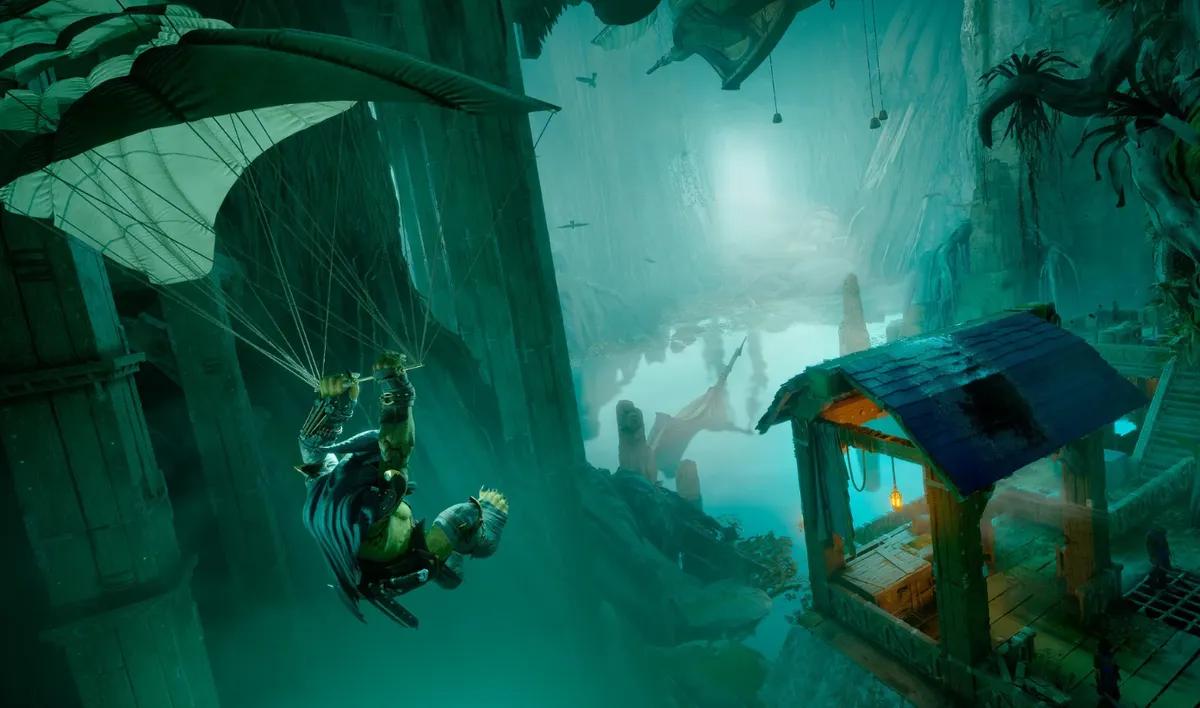
My Journey Through The Shadows Of Styx: Blades of Greed
For anyone looking for a Styx: Blades of Greed Review, it is important to understand the context of the series. I find it to be one of the very few remaining series dedicated to a pure stealth experience. This new entry does not try to reinvent the formula with the ambitious flair of a Hitman or the polished replayability of Dishonored. Instead, it commits to its identity, providing a reliable and familiar experience for fans of the genre.
Styx: Blades of Greed is, for the most part, a direct continuation of what came before. The core loop of sneaking, stealing, and assassinating remains as enjoyable as ever. I do appreciate the significant changes made, such as the removal of multiplayer mechanics to create a more focused solo stealth game. The shift from smaller, mission-based levels to vast, open regions is another major development. However, this sequel also inherits the long-standing issues that have plagued the Styx games.
By the way, I beat the original Styx games on EGS for free, because they were on Epic's time-limited 100% discount. Yes, I added Styx: Master of Shadows and Styx: Shards of Darkness into my library. Don't believe me that Epic is so nice (even if it's lagging as hell)? Check the Epic Games Free Games list to reveal giveaway history for yourself.
A Return to Pure Stealth
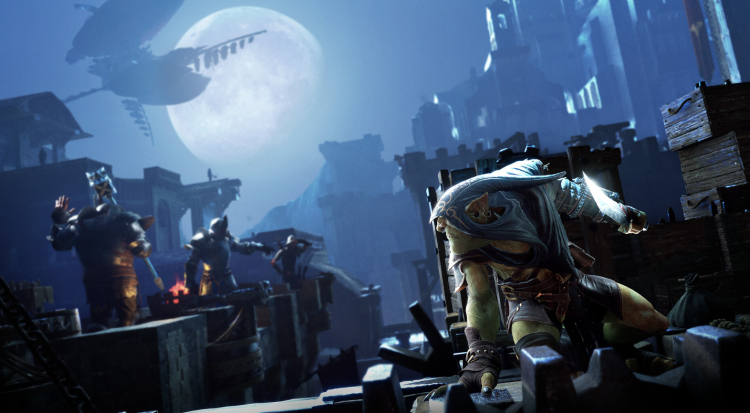
The movement can be finicky and unresponsive at critical moments. I encountered persistent performance problems that disrupted the flow of gameplay. The story itself is unremarkable and fails to leave a lasting impression. These are the expected disappointments, the familiar baggage that comes with the territory of this series. The experience is a trade-off, a balance of engaging stealth and predictable frustrations.
The Core Gameplay
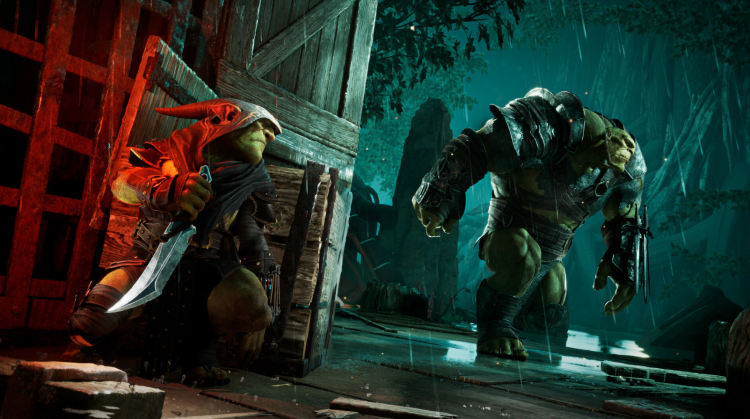
Playing as the elderly, grumpy goblin Styx feels just as it did in the 2017 predecessor. I spent my time slipping through tight spaces, a knife ready for the soft spots of humans, elves, and various monsters. Success in this world depends on a deep understanding of the gadget arsenal and special abilities, as being spotted by an enemy means a swift death, often in just two hits. The Styx: Blades of Greed gameplay introduces some modest additions to the toolset. I experimented with a new ability that allows for the mind control of NPCs from a distance, which opened up new tactical possibilities. A grappling hook was also added, helping me close large gaps quickly and quietly. Despite these new toys, the moment-to-moment experience is largely unchanged.
The classic ability to turn invisible for a short time remains my most reliable tool, a true lifesaver in tight situations. I do find myself falling back on old habits, hiding inside closets and barrels, waiting for the perfect moment to emerge and slit the throat of an unsuspecting guard. Stealth is the absolute focus. The quality of the sneaking mechanics meets the high standards set by the previous games. The tension of moving through a heavily guarded area, the satisfaction of a perfectly executed takedown, and the clever use of the environment are the elements that make the gameplay compelling. It is a formula that works, and the developers have wisely chosen not to tamper with it too much.
A Forgettable Narrative
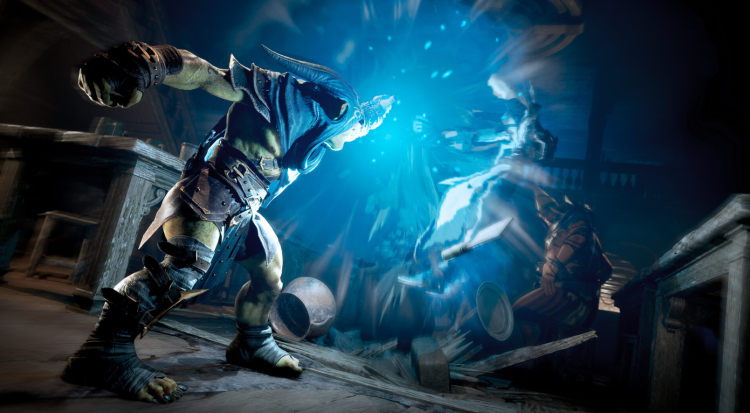
The narrative in the Styx series has never been its strong suit, and Blades of Greed continues this tradition. The story is completely forgettable, a genuine shame given that the protagonist himself is inherently interesting and unique. The plot is set in motion by Styx’s craving for the magical abilities granted by quartz crystals scattered throughout the world. This desire sends him on a repetitive journey to find more of these glowing rocks. The bulk of the campaign, roughly ninety percent of it, consists of going from one location to another to steal these crystals to become more powerful.
There is very little plot development between these scavenger hunts. Along the way, I met a few characters, including a gadget-obsessed dwarf and an orc who serves as a spiritual guide. These characters, however, lack the screen time needed to make any real impression. Their dialogue mostly consists of exposition, telling me what I need to do next rather than developing their own personalities or contributing to the Styx lore in a meaningful way. I came to this series for the stealth, not the story, but I was still hoping for a pleasant surprise on the narrative front. I wouldn’t count on that here. The plot serves as a thin excuse to move from one stealth challenge to the next, and nothing more. The world itself has a unique and strange, magically-infused quality, but the story that takes place within it is hollow.
Exploring the Massive World
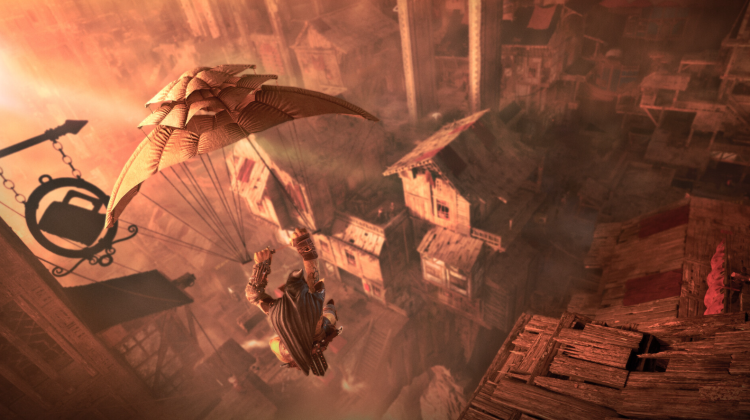
One of the most significant changes in Blades of Greed is the level design. Instead of navigating mission-specific levels, sometimes treading the same ground multiple times, the game sets you loose in three extremely large maps. These regions are filled with both mandatory objectives and optional areas to explore, pilfer, and inevitably fall to your death in. It’s an interesting concept that provides a great deal of freedom. It is easy to get distracted, to start assassinating my way through an entire district before realizing I had no specific objective there. I was driven purely by the challenge of seeing an unaware guard and feeling the compulsion to take him down. These huge levels demand creativity in navigation and problem-solving, especially when every path is patrolled by enemies who can kill you almost instantly.
Looking at an objective marker a mountain’s distance above me, I had to experiment to find a way forward. Sometimes a Styx: Blades of Greed walkthrough might feel necessary. I might find a spot on the side of a tower to make a series of daring leaps, avoiding the notice of guards. Other times, I might discover a quieter path through a sewer system, which leads to the same destination but is infested with giant, swarming bugs. This freedom, however, comes with its own set of drawbacks. It can be exhausting to cross such a massive area while sneaking the entire time. Trying to sprint past enemies to reach an objective is a surefire way to trigger a long series of reloads. The travel time feels less focused and curated than in more linear level designs.
Often, I found myself half-heartedly sneaking across rooftops and through ruins with no real obstacles, just empty space between me and the objective marker. The experience felt like a lot of fat before I got to the meat of the main missions. A large portion of my twenty-plus hours with the game was spent just figuring out where to go and how to get there, rather than executing the heist itself. The maps themselves are visually impressive. The Wall is a cool, vertical labyrinth of concrete castles and rickety slums. Turquoise Dawn is a jungle of massive trees, swamps, and deadly roaches. The Akenash Ruins are a floating kingdom where enemies feel like they were pulled from a game like Elden Ring. Each visit unlocks new areas, though it also involves a fair bit of backtracking.
The Familiar Jank
Before you buy Styx: Blades of Greed, it is important to know its flaws. If you are familiar with the shortcomings of the previous games, you will not be surprised to hear that this sequel does not address most of them. Combat is a last resort, but when it is required, it feels sloppy and overly simplistic. Movement, particularly jumping onto ledges, can be finicky. I fell to my death or was caught out in the open dozens of times due to an unresponsive jump or a failure to grab a ledge correctly.
Worse than these are the persistent technical issues. I encountered NPCs who turned invisible during conversations and frame rates that dropped to horrifyingly low levels during extended play sessions. The framerate issues are noticeably worse than in previous games, likely due to the significantly larger maps. When a lot is happening on screen, the game can become a slideshow for long stretches. Most of these problems are, by now, baked into the series’ identity. They are expected. It is still worth pointing out that these issues have gone largely unaddressed. They detract from the experience and add a layer of frustration to what is otherwise an engaging stealth game. This is the price of admission for this particular brand of stealth.
Conclusion
In the end, Styx: Blades of Greed delivers strong stealth mechanics and some truly awesome maps to explore, but the experience is decorated by the usual jankiness we have come to expect from the series. When I was sneaking through the vast regions, slitting throats and pulling off heists, the game felt as rad as ever. The additional magical tricks in Styx's bag offer some new and clever ways to outsmart pursuers. But those good times are consistently offset by a host of drawbacks
The story is weak and serves only as a vehicle to get from one mission to the next. The large, open areas create a lot of extra fat, with objectives spaced miles apart, leading to long, uneventful stretches of travel. The performance issues can be intensely annoying, pulling you out of the immersion. So, is it worth to play Styx: Blades of Greed? Yes, I believe it still makes for a good time. It offers a pure stealth experience that is increasingly hard to find these days. You will just have to be prepared to sneak around its many rough parts to enjoy the core of what it has to offer.


 Successfully copied... Thank you for sharing our content!:



5% deposit bonus up to 100 gems

a free Gift Case





EGAMERSW - get 11% Deposit Bonus + Bonus Wheel free spin


EXTRA 10% DEPOSIT BONUS + free 2 spins

3 Free Cases + 100% up to 100 Coins on First Deposit


5 Free Cases, Daily FREE & Welcome Bonuses up to 35%

3 free cases and a 5% bonus added to all cash deposits.

+5% to deposit




Comments