




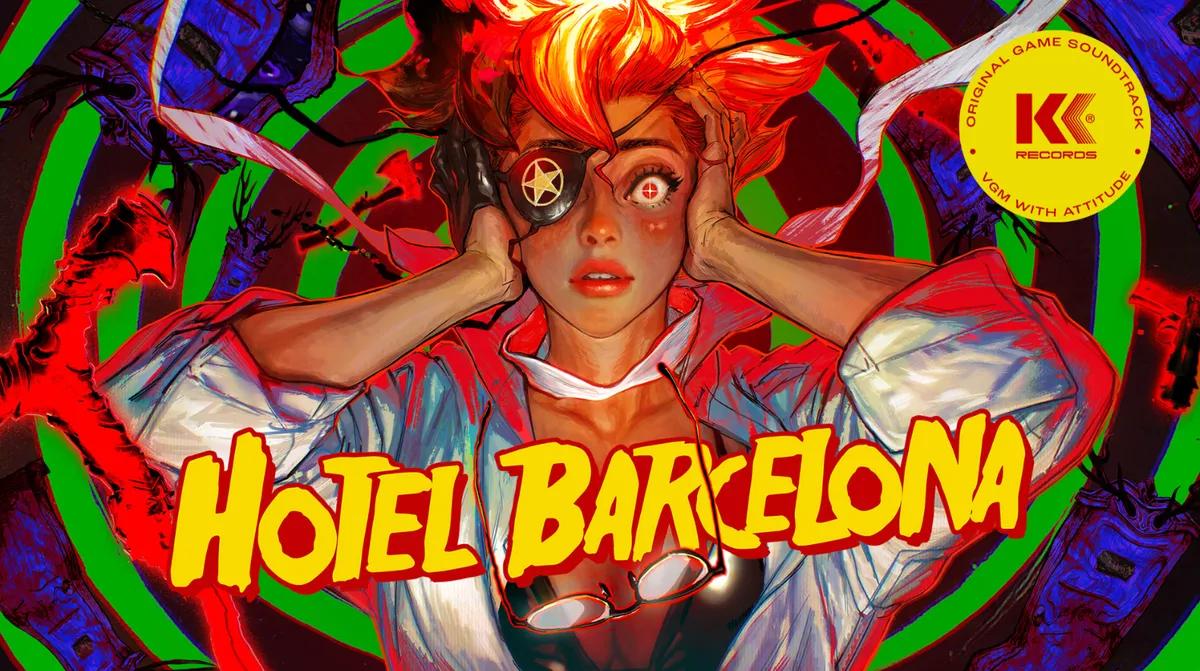
Hotel Barcelona Review Finds Style Without Satisfying Play
 Games
Games Xbox
Xbox Steam
Steam Review
Hotel Barcelona arrived with a pedigree that invited high expectations. The project unites Swery, known for Deadly Premonition, and Suda51 of No More Heroes, two creators associated with strong authorial voices and eccentric design. The result is a 2.5D roguelite set inside a haunted hotel populated by serial killers, where a U.S. Federal Marshal named Justine shares her body with a sinister entity called Dr. Carnival. The setup promises tension, personality, and narrative weight. The finished game delivers fragments of those ideas but struggles to support them through consistent systems and engaging play.
The game was first announced during Xbox TGS 2023, positioning it as a distinctive action roguelite with a strong stylistic identity. Two years later, its release date was formally revealed at Xbox TGS 2025, closing a long gap marked by curiosity and anticipation from fans of both creators.
At its core, Hotel Barcelona follows Justine as she seeks revenge for her father’s death, a path that leads her into the titular hotel. Each death returns her to this space, which functions as both narrative hub and progression center. Dr. Carnival, a serial killer sharing her body, acts as an uneasy partner in her mission to eliminate other killers residing in the building. The relationship between the two characters anchors the story, offering hints of psychological conflict and hidden motives that stand apart from the gameplay loop.
Thanks to Greysun Morales’s review on GameRant, it becomes easier to identify where the project falters and why the experience fails to sustain its premise over time. The review outlines how the central idea remains compelling while the surrounding mechanics undermine it, creating a disconnect between concept and execution.
The structure of the game is compact. There are only a few main stages, each designed as a 2D side-scrolling dungeon with multiple rooms leading to a boss encounter. According to the review, reaching the credits takes roughly six to seven hours. Difficulty spikes early, even on the normal setting, with enemies and bosses dealing heavy damage and limited opportunities to heal. This design places pressure on players from the outset, often before they have access to meaningful upgrades or defensive options.
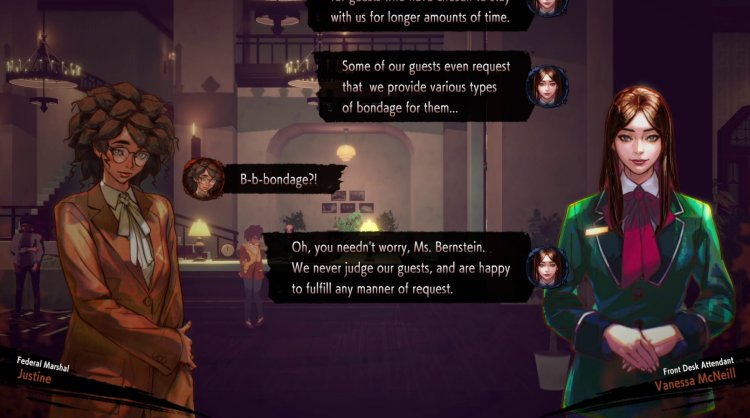
Visual variety proves limited. Morales notes that stages blur together after repeated runs, with similar layouts, indistinct backdrops, and enemies that behave and appear alike. While character portraits during dialogue stand out with sharp 2D artwork, the in-game environments and enemy models rely on blurry textures that fail to leave a strong impression. Animated boss introductions initially add flair, but frequent deaths turn these moments into obstacles that players soon skip.
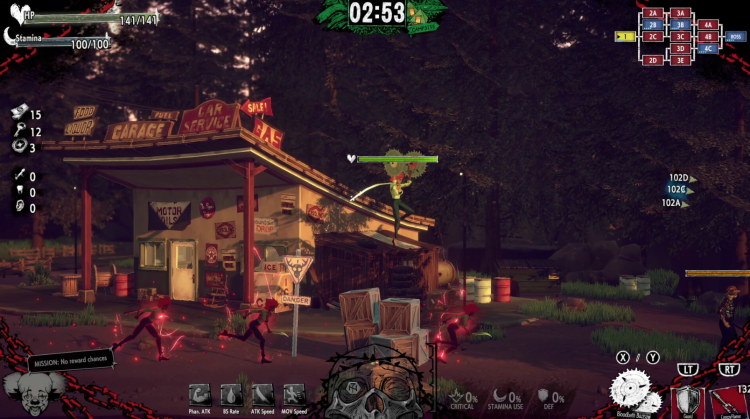
Between runs, the hotel hub offers several systems meant to deepen the roguelite loop. Players can spend collected resources on weapons, skill tree upgrades, difficulty modifiers, and side activities such as pinball. A bartender allows item exchanges, and optional modifiers increase challenge in return for better rewards. One mechanic earns praise for originality: Phantoms. These spectral allies appear during runs if the player has previously died on that stage, replaying recorded actions from earlier attempts. Up to three can join at once, effectively creating cooperative pressure against bosses and difficult encounters.
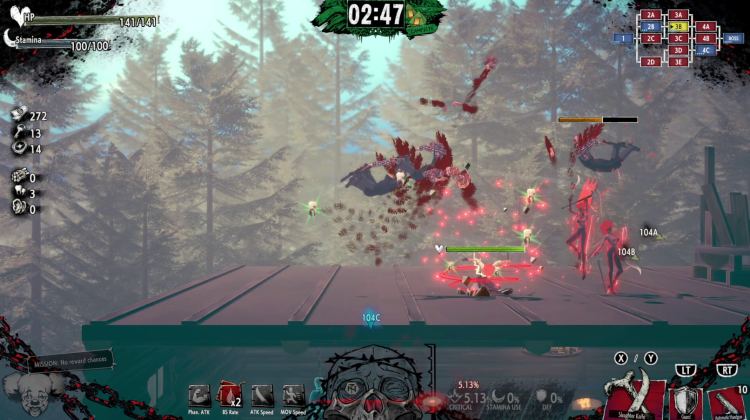
Combat, however, remains the weakest link. Despite a wide selection of weapons, including melee tools and firearms, the feel of attacks lacks weight. Hits fail to convey impact, and movement can feel stiff. While unlocking skills such as parries, dodges, and expanded combos improves responsiveness, Morales argues that the system never becomes satisfying. Early frustration gives way to reluctant tolerance rather than mastery or enjoyment.
“I wanted to enjoy the loop of running through the levels, but after a few deaths, I found that most of the levels were quite similar and indistinguishable from one another.”— Greysun Morales
Narratively, the game hints at more than it delivers. Cutscenes are sparse, and lore reveals occur less frequently than expected after repeated deaths. When story moments do surface, they show promise, especially in the evolving dynamic between Justine and Dr. Carnival. Morales avoids spoilers but emphasizes that their relationship stands out as the most memorable aspect of the experience, overshadowing combat and level design.
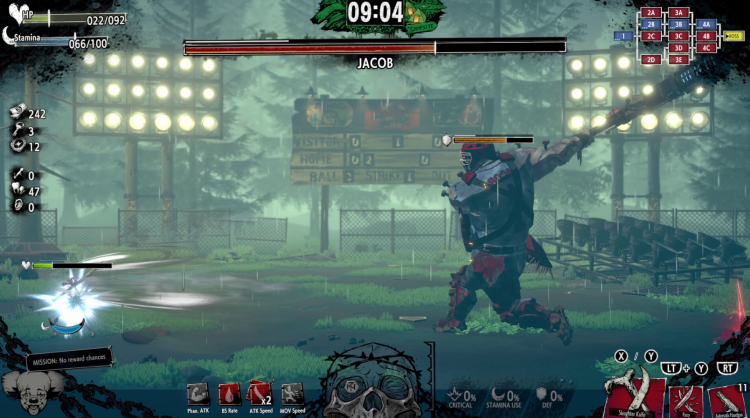
Post-credits content includes secrets that offer brief satisfaction, yet even these discoveries fail to reposition the game among stronger entries in the genre. The roguelite space is crowded with titles that refine repetition into momentum and difficulty into learning. Hotel Barcelona struggles to reach that balance. Its challenge often feels punishing rather than instructive, and its repetition lacks the variation needed to sustain repeated runs.
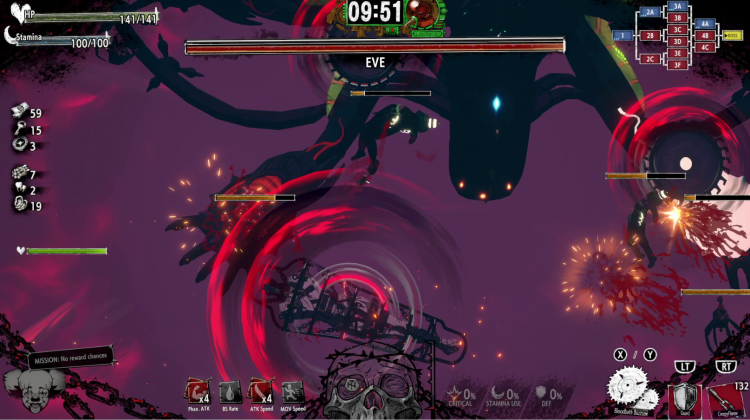
The Hotel Barcelona review paints a picture of a game defined by contrast. Its premise is inventive, its creators bring recognizable sensibilities, and certain mechanics show flashes of creativity. Yet the overall experience falls short of those ambitions. Combat never achieves the fluidity expected from its influences, environments lack distinction, and narrative elements appear too infrequently to anchor the player through frustration.
HOTEL BARCELONA is available to play on PC through Steam.
In the end, Hotel Barcelona stands as an example of how a strong concept can falter without cohesive execution. The story and characters leave an impression, but the gameplay loop does not support them with equal care. For players drawn by the names attached to the project, the game offers curiosity and moments of intrigue, but not the sustained satisfaction that defines the best roguelites.


 Successfully copied... Thank you for sharing our content!:

Comments