





Keita Takahashi Faces Hard Limits Of Experimental Game Development
 Games
GamesKatamari Damacy remains one of the most recognizable examples of playful, surreal game design, but its creator Keita Takahashi says that approach is becoming harder to sustain. Speaking openly about the commercial failure of his latest game, To a T, Takahashi acknowledged that the project did not find an audience large enough to support his independent studio. The outcome forced him to return to Japan after more than a decade working abroad and raised fresh questions about how much room the industry still has for unusual, personal work.
In a recent GamesRadar interview, Takahashi discussed the performance of To a T and the broader conditions facing independent developers who pursue ideas outside mainstream expectations. He explained that the game “didn’t sell well” and that its reception was not simply a matter of being too niche, but of failing to connect widely enough to survive. The interview forms part of a wider reflection on his career after Katamari Damacy and the risks attached to continuing along a deliberately unconventional path.
“I don’t think anyone tries to make a niche game,” Takahashi said. “The title ‘niche game’ is just a result. I know my games are far from mainstream.”
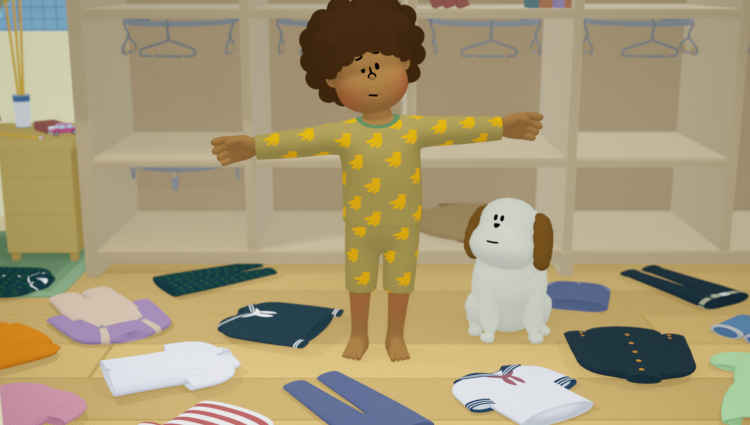
To a T was published by Annapurna Interactive and developed by Takahashi’s studio, Uvula. The game follows a child permanently locked in a T-pose, structured as a series of episodic scenes presented like a television show. Beneath its humor and stylized presentation, the game addresses themes of disability, difference, and social acceptance. Takahashi has said the project was shaped by the mood of late-2019 America, where he felt surrounded by negativity and wanted to make something deliberately light and optimistic.
“I thought that telling a story would be a better approach to bring smiles and positive vibes to people’s faces,” he said, explaining why To a T moved away from the sandbox structure associated with Katamari Damacy."
Despite positive critical attention, including praise for its tone and inventiveness, the game struggled commercially. Takahashi confirmed that its poor sales were a direct factor in his decision to leave San Francisco and move back to Japan. He described the outcome as a known risk of working independently, rather than a surprise failure.
“This is a risk of being independent, and I’m willing to take it,”
He said, adding that success ultimately depends on whether players respond, not on labels like experimental or traditional.
Takahashi left Namco in 2010 and does not own the Katamari Damacy intellectual property, which remains the property of Bandai Namco. The company has continued the series without his direct involvement, while Takahashi pursued smaller projects driven by personal interest rather than franchise continuity. That separation has shaped public perception of his work, with each new release inevitably compared to Katamari’s lasting popularity.
“I wish I had the Katamari Damacy IP,” Takahashi said.
“I have some interesting ideas for Katamari Damacy that only I could come up with.” — Keita Takahashi
To a T’s structure reflects Takahashi’s continued interest in experimenting with form. Each episode opens and closes with music and animation, emphasizing rhythm and routine rather than mechanical challenge. Scenes focus on everyday interactions, often punctuated by surreal elements such as talking animals or sudden shifts into science fiction. Takahashi has said the decision to introduce outer space late in the story was planned from the beginning, serving as a narrative explanation for the protagonist’s condition, even if it leaned into deliberate absurdity.
Critical responses highlighted this balance of sincerity and strangeness. Writing for Eurogamer, Christian Donlan described the game as capturing the confusion and intensity of childhood, marked by “how luridly weird life is when you’re young.” The praise, however, did not translate into financial stability for the studio behind it.
Takahashi has expressed concern that conditions for releasing unconventional games are worsening.
"When asked whether the industry still makes space for projects like To a T, I’m not sure, but it’s definitely getting harder for me." — Keita Takahashi
He openly invited potential investors to support future work, framing the appeal as a way to keep making “fun and weird games” rather than chasing safer commercial trends.
For now, his priorities are practical. Takahashi said his immediate focus is on supporting his children and finding them a school in Japan. Whether he continues making games at all remains uncertain, depending on whether he feels there is still a place for his approach. His comments underline a broader tension in the industry, where celebrated creativity does not always align with economic reality.
Katamari Damacy’s legacy continues to loom large, both as proof of Takahashi’s influence and as a reminder of how rare such breakthroughs have become. To a T stands as another attempt to push against convention, even as its reception suggests that the space for such experiments may be narrowing rather than expanding.


 Successfully copied... Thank you for sharing our content!:

Comments