


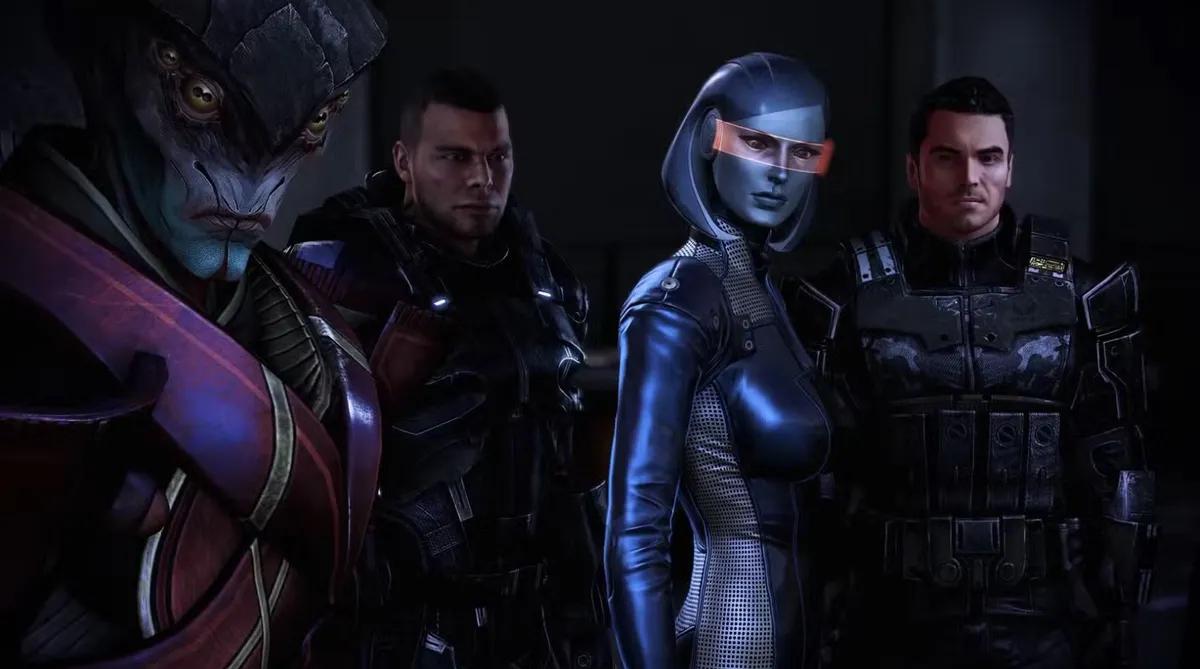
Mass Effect Legendary Edition Is Being Scalped After BioWare’s Closure
 Electronic Arts
Sealed PS4 copies of Mass Effect Legendary Edition are regularly clearing $100 two days after Electronic Arts closed BioWare, against the roughly $45 sealed and $19.99 used that the same game went for earlier this year. One seller moved three used copies at $100 in a single day, according to TheGamer, which tracked the listings.
The game was never scarce. It had a wide physical release on PS4 and Xbox One in May 2021 and sold through a full retail cycle. The Xbox version has not moved at all, because it sits on Xbox Game Pass Ultimate, and most of BioWare’s back catalogue is holding its usual price. What has changed is one disc on one platform, and the only thing that changed around it is the news.
Electronic Arts announced on Wednesday that it would shut down BioWare as part of a restructuring, ending a studio that had run for more than 30 years and putting roughly 400 people out of work. The next Mass Effect, which had been in early development for years, was cancelled with it. EA itself changed hands this summer, to a group made up of Saudi Arabia’s Public Investment Fund, Silver Lake and Affinity Partners.
“Now, after more than three decades of shared adventures, BioWare is closing and early development on the next Mass Effect project is ending.”
— BioWare
The following day the game nobody will get to play turned up anyway. A leaked internal trailer for the cancelled project, subtitled Universe, surfaced on Reddit built out of pre-production assets, and one of the developers confirmed it was genuine before Bloomberg’s Jason Schreier backed that up. The reaction to it was the loudest part of the week, which is also when the price curve on a five-year-old disc started bending.
Mass Effect is the kind of series I actually boot a game up for, because choice and consequence carried across three games is a thing almost nobody else has managed to build. Losing the next one hurts more than losing the studio’s recent output would suggest, and that gap between what the trilogy was and what Andromeda and The Veilguard were is doing most of the emotional work in this week’s reaction.

The franchise is not being buried, though. Amazon’s Mass Effect TV show remains in development at Amazon MGM Studios, where it has been since 2024, with sources telling IGN the closure has not stopped it. Doug Jung, previously on Mindhunter and Star Trek: Beyond, is showrunner, and Daniel Casey wrote the script. EA representatives initially could not say what would happen to it.
What happens to the games is less settled. Mark Darrah, an executive producer at BioWare from 1997 to 2021, has raised the chance that EA could sell rights to Mass Effect and Dragon Age, while noting that the publisher owns those names outright either way and that the closure changes nothing about who holds them.
“Now, there’s nobody working on a game, or games, within the EA organization, and chances are there never will be, which might make them more likely to sell off those IPs. But it might also make them more likely to just try to forget that they ever existed and bury them in the vault.”
— Mark Darrah
Darrah also said EA looks to be in cost control mode right now, and that a shift toward generating revenue would make selling dormant IP more attractive. I would take the sale over the vault, even though the vault is the easier of the two outcomes for a publisher that just cut the team. Social media has filled in the rest with wishlists, mostly CD Projekt Red for Mass Effect and Larian for Dragon Age, none of which anyone has proposed in public.
Buying the disc at $100 does not protect you from any of that. The Legendary Edition is still on sale digitally, the Xbox build is on a subscription, and nothing about a studio closing removes a game from storefronts. The $100 is for the object, not for access to the game, and I would not spend it on a plastic case for a trilogy that is still a download away.
Alongside the pricing, the blame round started. Former Obsidian writer Chris Avellone used the moment to expand on a 2024 claim, alleging that a BioWare producer would check applicants’ LinkedIn activity and argue against hiring people whose liked posts did not match his politics. He framed it as a hiring judgment he found inappropriate rather than a studio-wide policy, and the account has not been corroborated.
“When applicants would apply to the studio, the producer would go through their LinkedIn to see what posts they liked, and if he disagreed with their political/social Like, he’d advocate not to hire them based on their Like.”
— Chris Avellone
Streamer Asmongold reacted from a different direction, pointing at reviewers rather than at hiring, and naming Bloomberg’s own games reporter among them.
“I place a unique accountability on every single gaming journalist that rated Dragon Age: The Veilguard highly.”
— Asmongold
He also compared the closure to removing an infected limb, arguing the studio had stopped resembling what players expected of it. Plenty of people disagree, pointing at a publisher that cancelled the project and cut the jobs rather than at review scores, and Dragon Age: The Veilguard’s gap between critic and user reviews is the exhibit both sides keep reaching for.
EA has not stopped spending, which is the part that stings for anyone counting the 400 jobs. The publisher confirmed this week that DICE and Respawn are building Star Wars Battlefront 3, insiders say the next numbered Battlefield is in early development, and Fight Night is coming back. The money moved rather than disappeared.
None of which is new as a market behaviour. The same pattern has run through Pokemon cards, Kingdom Hearts pins, Wolverine claws, limited cereal and vinyl pressings over the past year, where a closure, a cancellation or a sell-out gets converted into a listing within hours. A studio shutting down is just the newest input.
Read also, a former BioWare lead writer described the studio’s two flagship teams as barely on speaking terms. David Gaider said Dragon Age and Mass Effect “Didn’t Get Along” and may as well have been two separate studios, and that his reassignment to Anthem went badly enough that he left after 17 years.


 Successfully copied... Thank you for sharing our content!:


Comments