


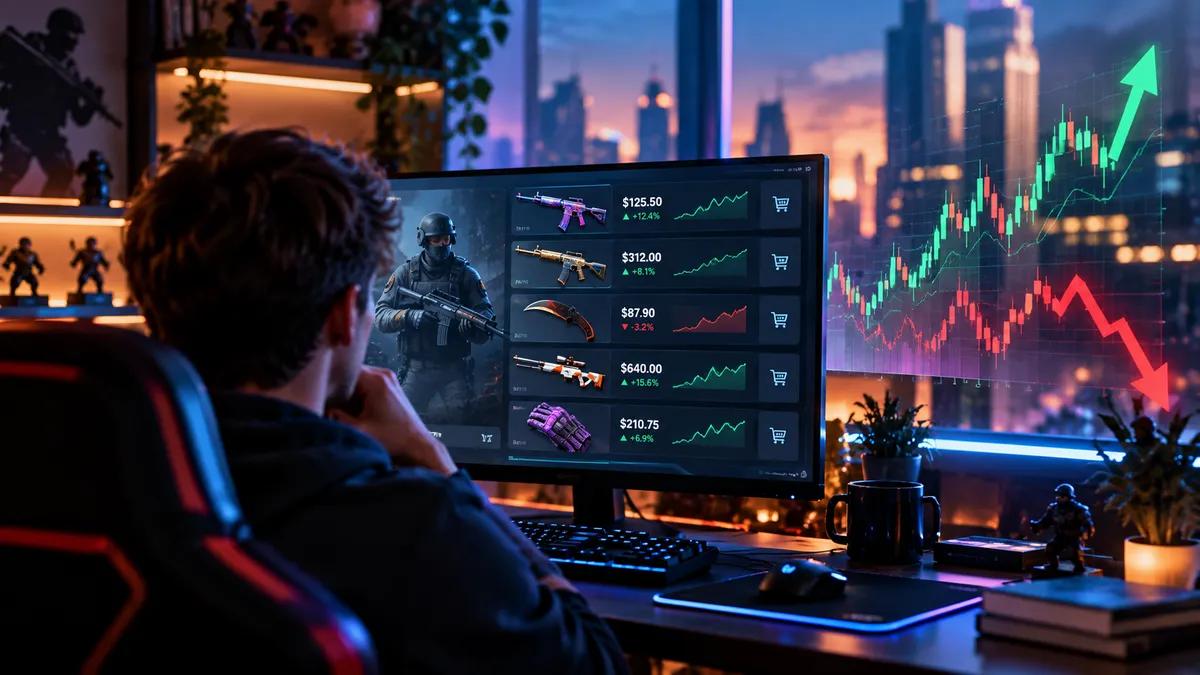
When a Game's Currency Becomes an Investment: The Risks of Token-Based Game Economies
 Investments
Token-based economies can give players a way to earn, trade, and own digital assets. However, they also turn gameplay into financial speculation. This model attracts players and investors alike, but it also changes the stakes of the game by introducing real assets.
Players also face a risk that goes beyond losing a game; it can jeopardize their investments. The central question remains whether a game can remain enjoyable to play while being economically sustainable.
How Token-Based Game Economies Work
Token-based games combine traditional gaming mechanics with blockchain technology. In-game tokens are used to reward players, buy upgrades, and provide governing rights. They can also represent characters, equipment, and virtual land.
Play-to-earn systems go one step beyond, since the assets could be bought and sold within the game, but also outside of it. The tokens can be traded on crypto exchanges based on their real-life value. According to CryptoManiaks and others who have covered the growth of the token-based economy, the fact that a token is useful within a game doesn’t mean there’s market demand for it.
The value of these assets therefore depends on the activities within a game and on outside market forces. It exposes players to financial forces that have no effect on traditional games.
Axie Infinity's Economic Collapse
Axie Infinity became one of the best-known examples of play-to-earn gaming. Players collected and bred digital creatures, which were represented by NFTs, while earning tokens called Smooth Love Potion (SLP) during gameplay.
The game attracted players looking to earn while playing, especially during the COVID era. The economy needed sustained demand for assets as well as enough players to keep spending within the game. After a while, the intake of players decreased, and the value of the cryptocurrency suddenly dropped. In return, the game itself became less attractive.
In March 2002, the crisis compounded, and a hacker attack stole approximately $620 million from the Ronin network that supported the game. It expedited the game’s demise, but the financial problems started much earlier.
The Main Risks for Players and Investors
Token Inflation and Unsustainable Rewards
If a game distributes tokens faster than the players want to spend or use them, the currency will lose value. The reward system will only work during rapid growth, and it can’t be supported for a long time. Slowing growth can expose weaknesses and even end the game’s inner ecosystem.
Volatility, Liquidity, and Financial Losses
Token prices can fall quickly. It reduces the value of the assets the players have collected up to that point, and in most cases, the users then rush to sell what they got, further increasing the momentum. Players may also struggle to sell NFTs when buyers disappear, or marketplace activity declines. Withdrawal expenses, transaction fees, and entry costs all affect the players negatively.
Security, Control, and Unequal Exposure
Token-based games also introduce new risks of theft and hacking. Digital assets can be hacked in other games, but those assets don’t have value outside of the game itself. Those who borrow money or rely on token earnings for living expenses face especially serious consequences when an economy deteriorates.
What Makes a Game Economy More Sustainable?
The only way for a token-based game to remain competitive and to prolong its financial ecosystem is for it to be well-made and interesting as a game in its own right. If the players keep coming back to the game because they find it to be engaging and fun to play, they will also continue to use the token system, within the game and in the real world.
Players should also be able to learn and understand how the token system works and how they can use it outside of the game. This will encourage them to do so. Developers should prepare for periods of lesser interest and slower growth. Games often experience such phases, and new players keep finding the game in relatively steady intervals.
Digital Ownership Is Not a Financial Guarantee
Token-based gaming allows for new methods of digital ownership and different use cases for it. Having assets created within games provides players with new opportunities as well as new risks. However, just owning digital assets isn’t enough to make the game interesting or profitable. As soon as the players lose interest in the game, their digital assets will also lose value.
The best way to keep the game profitable within its gameplay and in the real world is to make a game that has genuine fans and players.


 Successfully copied... Thank you for sharing our content!:




5% deposit bonus up to 100 gems

a free Gift Case




EGAMERSW - get 11% Deposit Bonus + Bonus Wheel free spin


EXTRA 10% DEPOSIT BONUS + free 2 spins

3 Free Cases + 100% up to 100 Coins on First Deposit


5 Free Cases, Daily FREE & Welcome Bonuses up to 35%

3 free cases and a 5% bonus added to all cash deposits.

+5% to deposit



Comments