




OPUS: Prism Peak Review
 Review
 Steam
Steam Nintendo
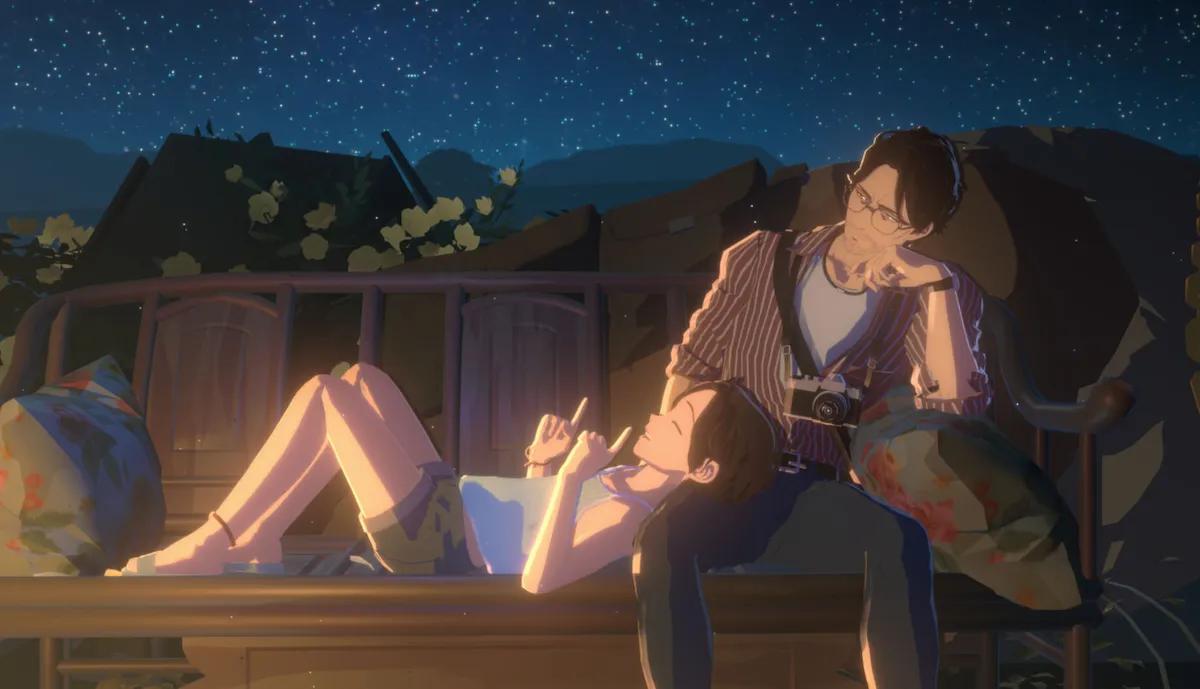
SIGONO has spent ten years making narrative games in Taiwan, and Prism Peak is the studio's first fully 3D title — a technical leap from the 2.5D visual novel format of its predecessor, Echo of Starsong. Co-published by Shueisha Games and out April 16 on PC (via Steam), Switch, and Switch 2, the game places a forty-year-old photographer named Eugene inside a spirit world called the Dusklands, with his grandfather's analogue camera as his only tool.
The team spent four years solving problems it had never faced before: animated cinematic cutscenes instead of illustrated panels, motion capture decisions, Unity pipeline rebuilds. The result draws direct comparisons to Makoto Shinkai and Studio Ghibli — comparisons that SIGONO deliberately invited.
What SIGONO Built and Why It Was Hard

Brian Lee, SIGONO's co-founder and producer, describes every OPUS game through the same frame: "characters facing their own smallness in an overwhelming world, about lost people finding themselves again by choosing to reach out." Prism Peak keeps that frame and discards almost everything structural about how the studio worked before. Echo of Starsong used illustrated panels and a largely flat visual plane. Prism Peak needed fully animated 3D cutscenes, which meant building a cinematic production pipeline from scratch inside Unity. Lee called the animation workload "probably the hardest thing we did in these four years." The team rebuilt its animation pipeline multiple times, debated motion capture versus hand-keyed animation at length, and developed internal tools for quick shot previewing, cutscene management, and blending captured data.
Makoto Shinkai's influence on the production was direct. Lee put it plainly: "What we love about Shinkai is how he captures light that feels impossible and yet deeply familiar, like a memory of something that never existed." That goal — light as faded memory — connects to the game's photography theme more than aesthetically. The camera captures what's disappearing. The studio also internally called the game "Spirited Away for grown-ups," a phrase Lee confirmed captures "that feeling of being lost in a world of spirits and trying to find a way out." That reference shaped decisions about world design, the protagonist's age, and the tone of the relationship at the story's center. Neither comparison is casual marketing. Both are visible in the finished product.
Eugene, Ren, and the Dusklands

Eugene arrives by accident. He's forty, divorced, out of work, and driving to his grandfather's funeral when a car accident traps him in a mountainside spirit world. He sold his camera before the trip. In the Dusklands he receives another — his grandfather's — and meets Ren, a girl with no memory except the drive to reach a distant peak before she fades. The story follows their journey toward that mountain while Eugene reconstructs why the spirits he meets feel like people he already knows, and what the supernatural force called the Shade wants with them.

Lee described the relationship between the two characters carefully: "We weren't trying to write a straightforward father-daughter relationship, but about two people who've lost something, and how innocence and resilience can help someone back on their feet." Ren cannot be captured by Eugene's camera and has no anchor keeping her from fading — that detail threads through the story's later turns in ways the setup deliberately withholds. The animal spirits populating the Dusklands each represent someone from Eugene's past. Identifying who each spirit stands for requires attention to flashback sequences and dialogue. The Shade, when it appears, inverts the game's visual register — warm, bright environments shift to dark red — and pulls the game into chase sequences unlike its ordinary tempo. The effect is strong. The Shade also doesn't appear with enough frequency to fully function as the structural antagonist the story frames it as.
Photography as Design, Not Feature

Lee stated the design intent directly: "Instead of designing for convenience, the way most games approach cameras, we asked how we could make the camera feel like something you're actually using." The camera in Prism Peak is not a screenshot tool or a collectible system wearing a lens. Eugene uses an analogue camera — his grandfather's — and the game treats that specificity as functional. Players switch to a first-person view to compose shots, with ISO adjustment, shutter speed control, and a rotating set of filters available. One filter reveals faded murals and decoder stones otherwise invisible. Cleaning kits maintain the camera over time.
Photographs are not just taken — they are used. A print dropped into a Sacred Firebowl shrine unlocks story progression when the image matches a clue. Photographs reveal spirit names. They fill sections of Eugene's notebook, which functions as a running record of the journey. During Shade sequences, precise timing of a camera shot drives it back temporarily. The notebook element — prints taped to pages — received deliberate design attention for tactile feel. Lee framed the game's core logic: "Photography is fundamentally about capturing moments before they disappear, and when players explore the Dusklands through the camera, what they're actually uncovering are echoes of the protagonist's memories and emotions from the real world." Seeds collected by interacting with the environment serve as currency for camera upgrades and accessories. The upgrade loop doesn't feel transactional because the photography itself remains the point.
Story Choices and the Journal System

Prism Peak runs ten to eleven hours. Flashback sequences play in black-and-white visual novel format, illustrated and flat against the 3D Dusklands environments. Dialogue presents Eugene's internal responses as binary choices — a cynical reading versus a more generous one. Every choice, conversation, and recalled memory logs into a journal players can revisit at any time, with their selected words highlighted. The game periodically prompts players to complete journal entries based on what feels true rather than what is factually established. No timer runs during these moments.
I find this system more affecting than it initially suggests. Most games with narrative choices push toward the factually correct answer or impose a countdown. Prism Peak goes quiet. The choice sits on screen. That contrast with how most games handle interiority is the journal mechanic's actual achievement — it turns Eugene's emotional positions into a traceable record, and those positions accumulate across the full run. Later dialogue and choices unlock different resolutions depending on what players have recorded and how they read the story's people. Twists involving Ren's identity and her connection to Eugene's past are not prepared for by early scenes. They land because the game held them back. The narrative structure knows what it wants to withhold and when — the ending pulls more threads together than the haze of the middle stretch suggests is possible.
Pacing and the Weight of Accumulated Puzzles

I think the puzzle density in Prism Peak's later sections is a genuine structural problem, not a fluctuation in difficulty. The Sacred Firebowl shrines supply the main puzzle framework: receive a brief or cryptic clue, find the matching subject in the environment, photograph it, return the print to the shrine. The loop works individually. As each new zone adds more shrines alongside memory sequences and ash collections, the accumulation pulls the main narrative into the background. The story becomes secondary to a management task. That shift doesn't arrive suddenly — it wears on the experience as the zones compound.
The metaphor accumulation follows a similar pattern. Animal spirits standing for unnamed figures from Eugene's past, carved glyphs substituting for important names, symbolic imagery that sometimes points toward conclusions it doesn't reach before the credits — it layers up without always clearing space for what it intends. The ending earns more of its symbolism than the middle stretch suggests it will. But in the approach to that ending, competing motifs create noise where clarity would do more work. The Shade as antagonist suffers most from this. Its appearances are effective — the color shift communicates something the dialogue doesn't need to say — but the game deploys it sparingly enough that it never fully operates as the structural threat the story establishes. These are problems of editing ambition, not of lacking it.
Visuals, Audio, and Platform Performance

SIGONO built Prism Peak on Unity with custom tooling for shot previewing, cinematic management, and blending motion capture data. The environments use color and light with precision — warm tones dominate ordinary Dusklands exploration, dark red replaces them when the Shade appears. Visual novel flashback sequences run in black-and-white illustration. Character designs and fantastical settings draw comparisons to Studio Ghibli's more fantasy-oriented work. Those comparisons hold in specific scenes and environments.
The soundtrack is ambient without calling attention to itself. Sound design around the camera and photography is detailed — the analogue camera sounds distinct from anything a digital or phone camera would produce. Three voice dub options are available: English, Japanese, and Chinese. The English performances are solid, with Eugene and Ren's voice actors carrying the weight the script places on them across a text-heavy game. Prism Peak releases on PC, Nintendo Switch, and Switch 2. Handheld play on Switch 2 fits the game's tempo — it is built for slow, attentive sessions, and portability accommodates that. The autosave system replaces manual saves, which occasionally means playing past a natural stopping point to trigger a checkpoint.
Verdict

Prism Peak is the most technically ambitious game SIGONO has built and one of the more distinctive adventure games released this year. OPUS: Prism Peak is a 9/10 game.
Pros:
- Photography mechanic designed around emotional purpose — the camera is a tool for memory, not convenience
- Journal and dialogue choice system creates a traceable record of how you read Eugene's story across eleven hours
- Visual and audio presentation are consistent across every environment and sequence type
Cons:
- Puzzle density and metaphor accumulation in later chapters reduce emotional impact at the moments that most need it
The pacing issues are real, and the metaphor overload in the final third creates noise where the story needs space. Both sit inside a game that takes emotional honesty seriously and builds its photography mechanic around a coherent idea rather than a system looking for a reason to exist. Players who engage with the journal, stay with the spirit world at its own pace, and push through the puzzle density will find an ending that earns what it spent ten hours asking for.


 Successfully copied... Thank you for sharing our content!:



5% deposit bonus up to 100 gems

a free Gift Case





EGAMERSW - get 11% Deposit Bonus + Bonus Wheel free spin


EXTRA 10% DEPOSIT BONUS + free 2 spins

3 Free Cases + 100% up to 100 Coins on First Deposit


5 Free Cases, Daily FREE & Welcome Bonuses up to 35%

3 free cases and a 5% bonus added to all cash deposits.

+5% to deposit




Comments