




Dragonkin: The Banished Review
 Review
 PlayStation
 Xbox
XboxDragonkin: The Banished is an isometric action RPG developed by Eko Software and published by Nacon. The narrative centers on a fantasy world corrupted by the blood of dragons where players hunt down powerful Dragon Lords. The experience supports solo play or co-op functionality as players progress through six large environmental locations. This title follows the studio's previous work on Warhammer: Chaosbane and introduces a new intellectual property to the hack-and-slash genre.
Narrative Premises and the Council of Heroes

The story of Dragonkin: The Banished begins in a world where the blood of dragons has infected the land and its inhabitants. Dragons were previously imprisoned, but their influence now reaches across various biomes through corruption and mind control. The game opens with a prologue where players control a group of maxed-out heroes to relive the original banishing of the draconic threat. This sequence introduces the four playable classes at their full power level before the main campaign starts. Following this introduction, the player takes the role of a new recruit appearing before a high council composed of the previous heroes. These council members include figures like Jorn, a barbarian warrior whose motivations for fighting focus on personal vanity. The narrative involves infighting among the council as members clash over traditions and the use of magical artifacts. Characters utilize a mystical scale to block the intrusive voices used by dragons to manipulate human subjects. The plot unfolds over a campaign lasting roughly 20 to 25 hours. Narrative progression relies on dialogue with NPCs and finding documents that detail the lore of the various cults worshipping the Mother Buddha and other entities. Voice acting remains present for both allies and enemies, though some performances vary in quality. The writing focuses on ancient rites and rituals that define the conflict between the council and the dragon lords.
Character Class Selection and Combat Fundamentals

Players select from four primary classes: the Barbarian, the Knight, the Archer, also known as the Tracker, and the Mage or Oracle. Each class features a preset appearance and gender with no sliders for visual customization. The Barbarian focuses on close-quarters combat with swirling axes, while the Archer utilizes ranged attacks such as ricocheting arrows and poison bombs. Combat mechanics emphasize a power fantasy where players frequently mow down hordes of twelve or more enemies simultaneously. Attacks feel fluid and responsive, sending enemies flying upon death. Some enemies exhibit a specific animation where they throw themselves in a random direction when they expire, regardless of the damage type. One effective tactic for the Archer class involves a volley of arrows that depletes health bars across large groups in seconds. The gameplay loop focuses on destroying these hordes to collect experience and loot drops. Defensive actions include a shove mechanic to move enemies away when the player is swarmed. Rarity levels for equipment follow traditional color-coded systems seen in titles like Diablo. The power of the characters allows players to tackle high difficulty levels where enemies are more numerous and aggressive. Boss encounters serve as the primary spectacles, often featuring two phases and unique gameplay segments. These bosses include a snake-like ice dragon with extreme body length and other draconic creatures with distinct visual designs.
The Ancestral Grid Skill System

The character progression in Dragonkin: The Banished deviates from traditional skill trees through the implementation of the ancestral grid. This honeycomb-style grid allows players to slot in abilities and modifiers represented by hex-shaped fragments. These fragments come in various shapes and sizes, requiring players to fit them together on the limited grid space. Skills do not unlock automatically upon leveling up but instead drop as loot or serve as quest rewards. I think the ancestral grid acts as a refreshingly original replacement for traditional skill trees by treating abilities as collectible loot. Each skill can be enhanced up to level four depending on the number of adjacent modifiers the player connects. Modifiers add properties such as increased damage, faster attack speed, or extra projectiles for ranged attacks. Some fragments also trigger wyrmling skills, which are special abilities cast by the player's pet dragon. The grid expands as the player increases their character level, providing more room for complex combinations. Players can only equip five active skills at once, forcing a choice between utility and raw power. This system allows for high levels of creativity in character builds without overwhelming the player with a static menu. Attribute points are still awarded per level, but they contribute to linear paths that provide smaller stat bonuses compared to the grid. The flexibility of the grid allows players to experiment with different playstyles by swapping hexes without penalty.
Environmental Biomes and World Exploration

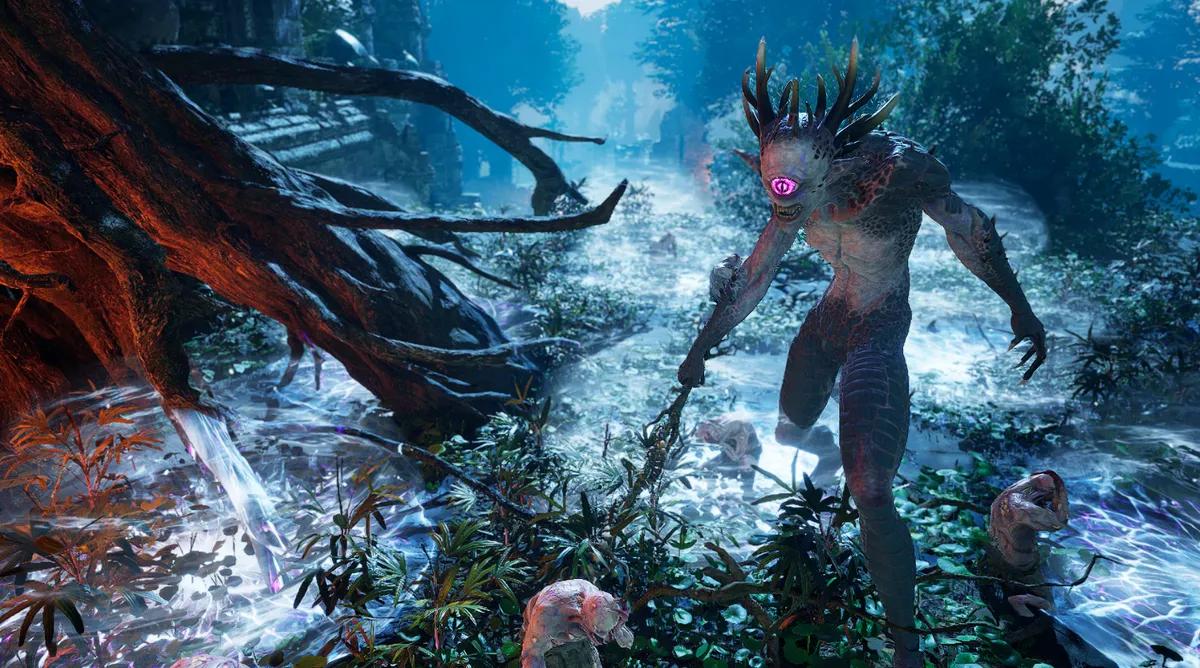
The game world is divided into several biomes, including forests, jungles, swamps, and frost-covered mountains. Each location consists of massive, labyrinthine maps that offer multiple paths for the player to follow. Exploration rewards the player with hidden relics and panoramic views that trigger a camera fly-through of the region. These biomes are visually distinct and feature corruption effects tied to the draconic influence in the area. Labyrinthine paths often lead to optional battles or resource gathering points used for crafting. Some regions include environmental puzzles, such as connection beams used to melt ice obstacles or lanterns that must be moved to cleanse areas. Players also solve puzzles by interacting with series of obelisks in specific patterns. Fast travel portals are located throughout the maps but must be freed from infection before they become active. I see the massive environments frequently suffer from a lack of enemy variety that creates a repetitive traversal experience across long distances. The scale of the maps occasionally encourages players to run past standard enemies to reach the next objective. While the environments are gorgeous and detailed, the repetition of certain mission types can lead to fatigue during extended play sessions. The game uses an isometric perspective which showcases the vastness of the biomes from an elevated viewpoint.
Hub Management and Wyrmling Companion Systems

The city of Montescail serves as the central hub where players manage their gear and city progression. Players do not build structures manually, but they earn city experience to level up various facilities. Finding relics and viewing panoramas contributes to the city’s level, which unlocks new buildings and enhances existing ones. The training yard is an essential facility that increases the amount of experience the player earns during missions. Alchemy allows for the crafting of potions that are infinite in use but operate on a cooldown timer. Upgrading alchemy increases the potency and speed of these healing items. Ring crafting and gear enchanting are also managed within the city hub. A specific fast-travel mechanic within the city allows the player to zoom out the camera to a full map view and zoom back into a selected building. Early in the game, players receive a wyrmling pet that follows them and provides stat bonuses. There are four different types of wyrmlings to choose from, each with its own upgrade tree and specific skills on the ancestral grid. Players can also craft armor for their wyrmlings to further boost their stats. Another system involves ancestors who grant boons to the player in exchange for tribute items like dragon hearts and organs. These ancestors provide passive power increases that become more relevant during the endgame. The talent system offers additional passive skills that are leveled up through points obtained from rare equipment and the wyrmling.
Technical Performance and Endgame Activities

Technical performance in Dragonkin: The Banished is generally stable during active gameplay across consoles. Frame rates remain consistent even when the screen is filled with enemies and particle effects from abilities. However, cutscenes occasionally exhibit frame stutters and noticeable texture pop-in, particularly in the early game areas. The game runs on Xbox Series X, PlayStation 5, and PC, with a Nintendo Switch 2 version featuring enhanced visual modes. Once the main campaign is finished, players unlock several endgame activities focused on maximizing character builds. Hunting Maps provide access to specific draconic creature hunts with variable durations and rewards. Chaos Hunts offer random encounters in specific world locations that provide high-tier loot. Players can influence these missions using Draconic Fate Cards, which apply negative modifiers to the mission in exchange for better rewards. One specific endgame activity is the Test of Will, which is a timed, wave-based battle occurring in the dreams of characters. A known glitch in this mode can cause the waves to reset, forcing players to complete 90 waves instead of the intended 30. Despite this technical issue, the endgame focuses on the grind for legendary items and maximizing the ancestral grid. The visual detail remains high in these endgame zones, maintaining the aesthetic of the isometric world.
Verdict

Dragonkin: The Banished successfully implements a creative skill system through its ancestral grid while providing a satisfying power fantasy. It serves as an accessible entry point for the action RPG genre despite some repetitive world design and technical quirks.
Dragonkin: The Banished is a 7.5/10 game.
Pros:
- The ancestral grid provides a unique and creative approach to skill customization.
- Combat feels punchy and satisfying when dealing with large hordes of enemies.
- The city progression and wyrmling systems add meaningful layers of character development.
Cons:
- Loot and gear stats can feel generic and boring after the initial hours of play.
- The massive map sizes occasionally result in repetitive traversal and a lack of enemy variety.
The game excels at delivering a fluid hack-and-slash experience with a distinct cultural flavor rooted in dragon folklore. While it does not reinvent the genre, the innovative skill mechanics provide enough depth to engage veteran players. It remains a solid choice for those seeking a lengthy cooperative campaign with strong presentation and responsive controls.


 Successfully copied... Thank you for sharing our content!:



5% deposit bonus up to 100 gems

a free Gift Case





EGAMERSW - get 11% Deposit Bonus + Bonus Wheel free spin


EXTRA 10% DEPOSIT BONUS + free 2 spins

3 Free Cases + 100% up to 100 Coins on First Deposit


5 Free Cases, Daily FREE & Welcome Bonuses up to 35%

3 free cases and a 5% bonus added to all cash deposits.

+5% to deposit




Comments