





People of Note Review
 Review
 Steam
Steam PlayStation
 Xbox
XboxPeople of Note is a musical RPG from Iridium Studios, published by Annapurna Interactive, in which a wannabe pop star named Cadence travels across genre-themed city-states to build a song worth winning a talent competition. The game runs on turn-based combat where timing button presses to the beat amplifies attacks, party members represent different musical genres, and the turn order functions as stanzas in an evolving composition. It released in April 2026 on PC and PS5 at roughly $20. The experience lasts somewhere north of 20 hours, split across three acts that move from road-trip comedy to high-fantasy stakes once an eldritch threat enters the picture.
A World Tuned to Genre
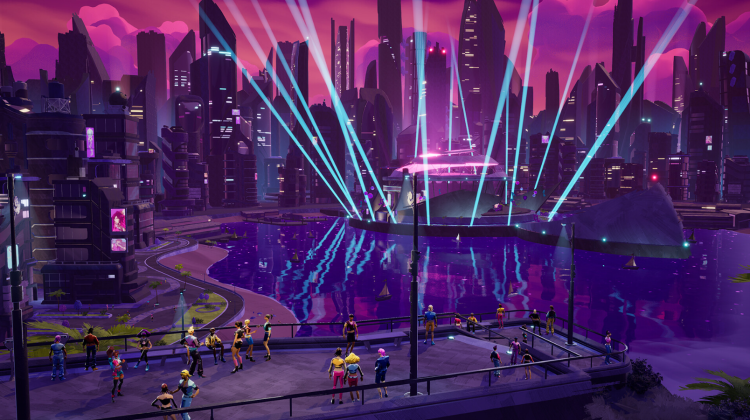
The fictional realm of Note divides itself into city-states named and themed after musical genres. Durandis runs on rock, subdivided into neighborhoods for metal, grunge, country, and punk. Lumina is a futuristic metropolis blanketed in perpetual night, populated by EDM-obsessed disc jockeys. A block-shaped party city revolves around rap and hip hop. A folk music region uses a painterly visual style, and a rap kingdom adopts regal architecture. Each location carries its own musical score that shifts dynamically — the rock-heavy Durandis transitions from a Blink-182-inspired sound to Nirvana-era grunge as the player moves between districts, and battle music in those areas takes on a country vibe when fighting members of a country-obsessed faction called the Homestead.
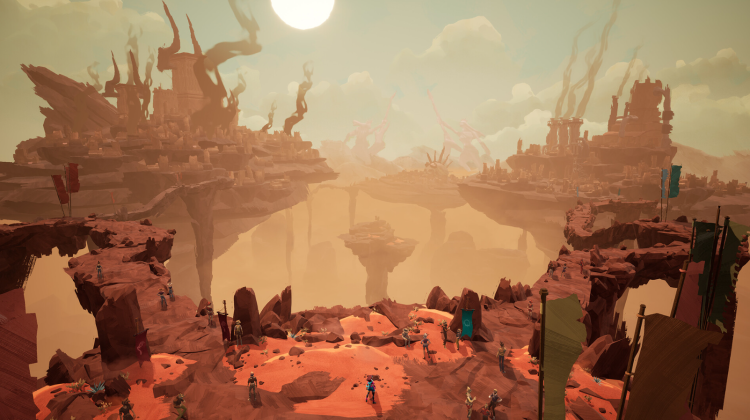
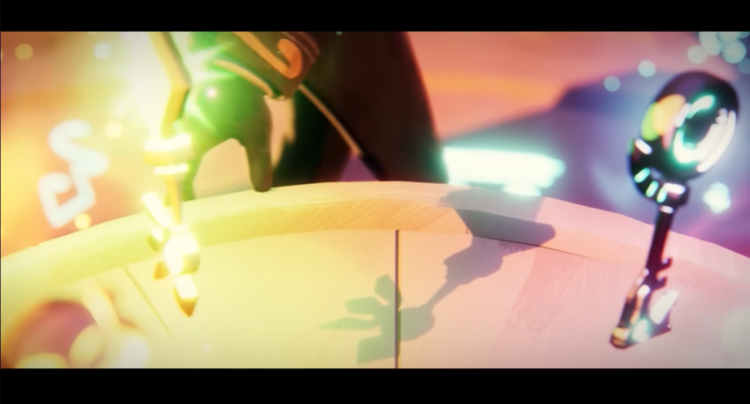
The worldbuilding goes all the way with its musical conceit. Gear references real bands: one item is called the Linkin Parka. Players travel "uptone" and "downtone." A nightclub dungeon is named Whirls' Generation, after the K-pop group Girls' Generation. One puzzle requires lining up clock hands to create a Total Eclipse of the Heart. Enemy designs follow the same logic. The Sea Bass is an aquatic interpretation of a bass guitar. The Queen Bee is a buzzing insect wearing an Elizabethan ruffle. Humor leans on puns and pop-culture references at a frequency comparable to Borderlands 2 or Saints Row IV, and every conceivable musical term gets repurposed into fantasy society, plotline, or geography.
Cadence and Her Band
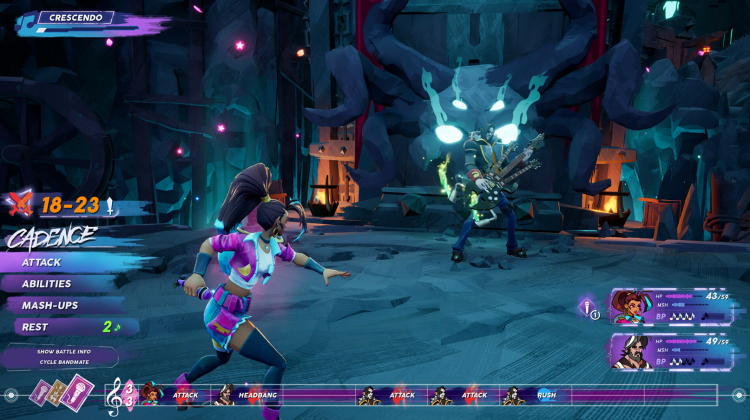
Cadence starts as a pop-focused singer with blue-highlighted hair and a dream of winning Noteworthy, the world's equivalent of American Idol. She believes her prepared pop song lacks the range to impress judges, so she sets out to learn from specialists in other genres. Each chapter deposits her in a new city with a new mentor who eventually joins her RPG party. Fret, voiced by Jason Charles Miller of Godhead and Final Fantasy XIV, is an aging rocker from Durandis who feels abandoned by the fragmentation of his genre into subgenre tribalism. Synthia is a DJ from Lumina dealing with imposter syndrome. Vox is a rapper, a prince whose vision for his kingdom clashes with his traditionalist mother.
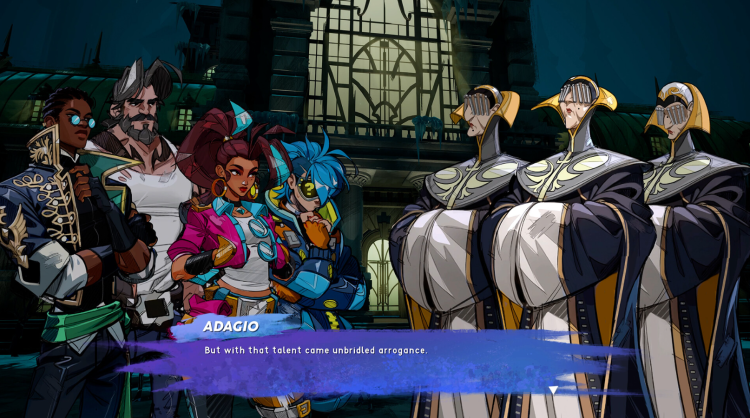
The party fills out across three acts, and each member slots into a combat role: Cadence as an all-rounder, Fret as healer and support, Synthia as a turn-order manipulator, Vox as a debuff specialist. The problem is pacing. Vox joins in Act 3, and his late arrival leaves him with noticeably less characterization than Fret or Synthia. Act 3 also forces Cadence and her band to confront every villain in back-to-back conflicts. The narrative gets so crowded that neither the new party member nor the antagonists receive the closure their arcs need.
Cadence herself presents a subtler issue. Her main flaw, prioritizing fame over artistic passion, is established early but rarely generates friction with her mission. She learns lessons quickly, arrives at correct answers almost instinctively, and seldom pauses for serious self-reflection. The central premise that art should innovate rather than conform to audience expectations is treated as immutable truth, accepted by the right characters without question. This leaves the central theme inert. The game flirts with exploring what each character's circumstances bring to their art but never commits to that exploration with any rigor.
Stanzas, Beats, and Songstones
Combat operates on a turn-based system where turns are called stanzas and actions are called beats. Each party member carries a genre preference that, depending on the stanza, combines with the area's theme to produce musical variations in the battle soundtrack. When a character's genre takes center stage during a given stanza, that character grows stronger. Two teams trade beats based on party size, and the goal is to position the right character with the right buffs so their strongest attack lands when their melody plays.
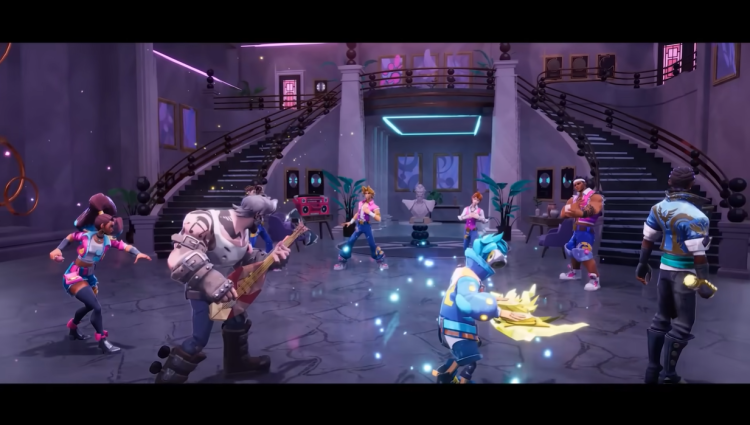
Characters equip accessories called Songstones, each granting a different ability. Weapon choice determines the number and type of Songstone slots available. Some weapons offer standard skill slots; others include auxiliary slots for support buffs that boost connected skills. Any party member can specialize as healer, attacker, or support depending on loadout. Fret can stack healing, buffing, debuff-curing, and revival abilities, or pivot into a tank build that absorbs hits before unleashing a headbang attack. The flexibility recalls Final Fantasy's materia and job systems.
Enemies place modifiers on the turn order — the first character to act on a given stanza might deal reduced damage, or a party member gets stunned for a full turn. Synthia's arrival adds the ability to remix the turn order and delete enemy modifiers. Vox counters with his own collection of debuffs and modifiers aimed at opponents. At full party strength, fights become exchanges where both sides deploy and strip modifiers in sequence. Outmaneuvering the opposition on a crowded turn order feels earned.
Dungeons eliminate random encounters and fully heal all party members after every fight. Each battle stands alone as a puzzle of resource management and positioning rather than an endurance test — at least until Act 3.
The Act 3 Problem
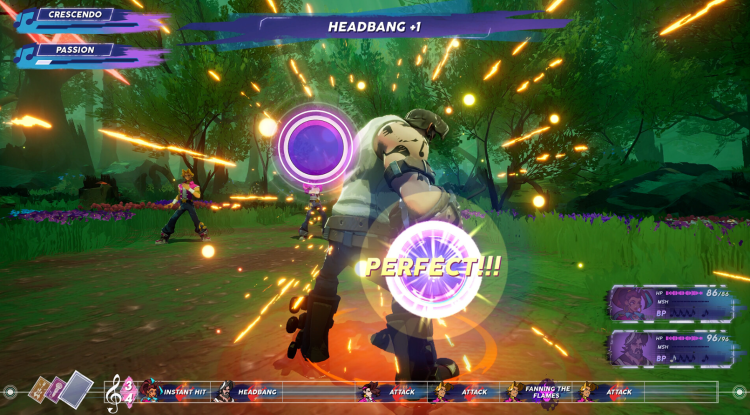
Once Vox joins, the game's approach to difficulty changes. Enemies and bosses gain larger health bars rather than more varied actions or smarter strategies. Fights stop getting harder and just get longer. A player can identify a boss's pattern, devise a winning strategy, execute it successfully, and then realize only a quarter of the health bar has depleted with 30 or more minutes of repetition ahead. The crescendo mechanic, where bosses grow stronger over time, rarely transforms a fight in a meaningful way — it typically adds one stronger attack that requires occasional healing without altering the fundamental loop.
I count at least six hours of the game's final stretch where combat plateaus into pure attrition, and the drag compounds because Act 3 is also where the story attempts its most dramatic turns. Boss fights that should punctuate climactic narrative moments instead stall them. The game provides accessibility options that let players skip fights entirely or disable quick-time inputs, and these features shift from convenience to near-necessity in the back half. Without them, the pacing damage to Act 3 would be severe enough to undermine the story it works so hard to deliver.
Music, Lyrics, and Missed Mashups
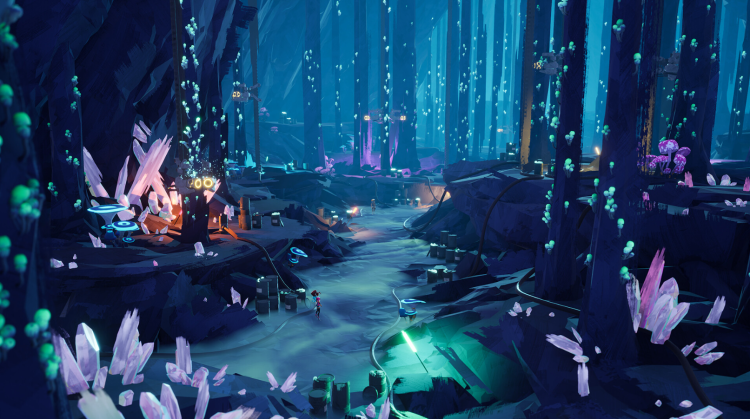
The soundtrack carries more weight than anything else in the game. Background tracks in hub areas and battles pin down the identity of each location and enemy type. The pop songs earworm by design, with choruses built to stick. Key story moments trigger fully animated musical performances styled like Broadway numbers or music videos, and voice acting across the cast holds up well. The pantomime villain Sharp and his sinister English accent are particular standouts.
The quality of individual songs varies depending on how much their lyrics carry. Cadence's "Under the Lights" communicates character through simplicity and evolves meaningfully during refrains throughout the game. "Spitting Image," Vox's rap theme, delivers a detailed portrait of his relationship with his mother, the state of their kingdom, and their conflicting views on power in two minutes of well-written verse. Both songs work because the lyrics do actual narrative work instead of gesturing at feelings.
Other songs fall short. "Imposter," Synthia's lament, tells the listener she feels like a fraud but never explains why, relying on the cultural familiarity of imposter syndrome to do emotional work the lyrics themselves don't perform. Several set-piece numbers fixate on simple ideas (unity, trusting yourself) without anchoring those sentiments to specific character detail. The game's spoken dialogue is sharp despite its pun density, which makes the gap between confident and meandering songwriting more conspicuous.
One structural disappointment stands out. Cadence's entire journey is about adding new sounds to her pop song, and her first duet with Fret delivers a satisfying pop-rock blend. One later song merges pop with classical to strong effect. Beyond those two examples, the game about blending genres together rarely blends genres in its showcase musical numbers. I find this a puzzling omission given how central the mashup concept is to both the plot and the combat system, where genre combinations happen constantly.
Puzzles, Side Activities, and Budget Constraints
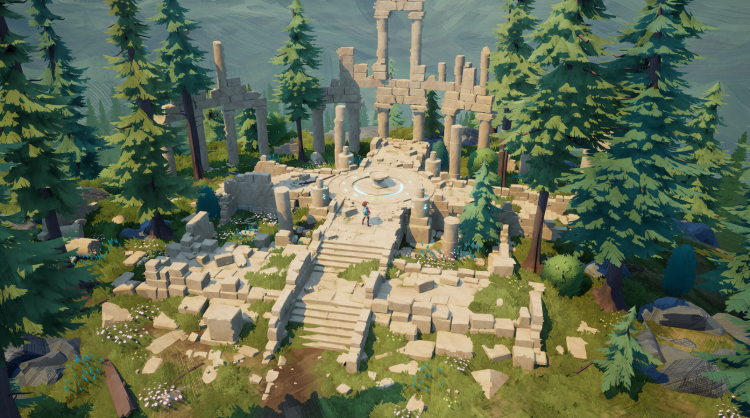
Outside combat, dungeons contain environmental puzzles built around musical powers Cadence unlocks progressively. Forte pushes heavy objects. Harmonize links two objects so actions on one replicate on the other. Early puzzles are simple, like blasting pieces of a giant recorder together, but complexity scales as the game layers all four powers into multi-step sequences. A mansion dungeon requires playing a piano to find a key item. The Choral Reef area, built around geyser-based platforming paths, drew criticism across reviews for frustration rather than satisfaction. All puzzles can be disabled in settings without penalty.
Side content includes Weird Owl puzzles, which are multiple-choice quizzes testing knowledge of in-game lore, storefront locations, and enemy attack names. A late-game whodunit mystery has Cadence interrogating suspects, objecting to falsehoods, and deducing criminal intent. The credits sequence shouts out individual development team members in song. None of this is essential, but it keeps the game feeling handmade even when the main story stumbles.
The game's budget shows at the edges. Cadence's run cycle looks awkward. Extended stretches of story rely on character portraits that, while colorful, flatten across a 20-plus-hour runtime. The PS5 version underuses the hardware: no haptic feedback despite the rhythmic combat system, and the light bar color changes lack clear purpose. The quick-time attack inputs, comparable to Clair Obscur: Expedition 33's system, have a basic design flaw. Each ability has a fixed timing pattern that never adapts to the evolving battle music, so muscle memory clashes with beat perception as the game progresses.
Verdict
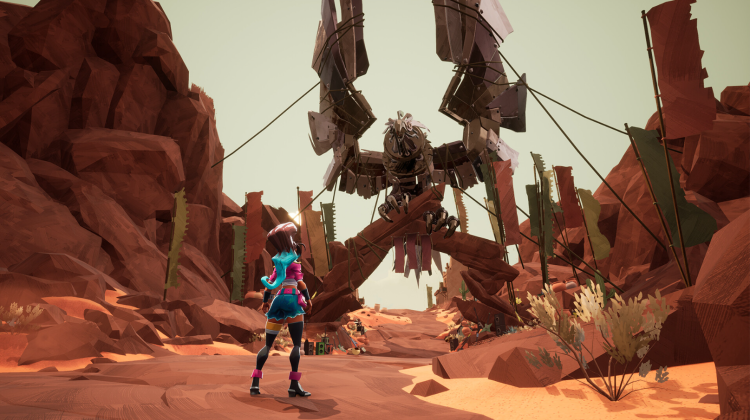
People of Note builds a creative, genre-obsessed world and pairs it with a turn-based system that rewards planning and build variety, but Act 3's bloated fights and underdeveloped final party member drag down an otherwise sharp package. People of Note is a 7/10 game.
Pros:
- Dynamic soundtrack shifts genre by location, combat phase, and party composition.
- Songstone loadouts let any party member fill any role, with enough depth to reward experimentation.
- Worldbuilding goes all in on the musical conceit and never breaks character.
Cons:
- Act 3 boss fights inflate health bars instead of adding strategic complexity.
- Vox arrives too late to receive characterization on par with other party members.
- Song lyrics frequently default to vague sentiment rather than specific narrative detail.
- Quick-time attack patterns ignore the evolving battle music, so timing feels wrong the longer you play.
People of Note runs about 20-plus hours with a world built on puns, genre tribalism, and enough strategic combat to sustain attention through two strong acts. Act 3 tests that goodwill with prolonged boss fights and a crowded story, though accessibility options soften the worst of the pacing damage. The soundtrack alone justifies the $20 asking price.


 Successfully copied... Thank you for sharing our content!:



5% deposit bonus up to 100 gems

a free Gift Case





EGAMERSW - get 11% Deposit Bonus + Bonus Wheel free spin


EXTRA 10% DEPOSIT BONUS + free 2 spins

3 Free Cases + 100% up to 100 Coins on First Deposit


5 Free Cases, Daily FREE & Welcome Bonuses up to 35%

3 free cases and a 5% bonus added to all cash deposits.

+5% to deposit




Comments