




Esoteric Ebb Review
 Review
 Steam
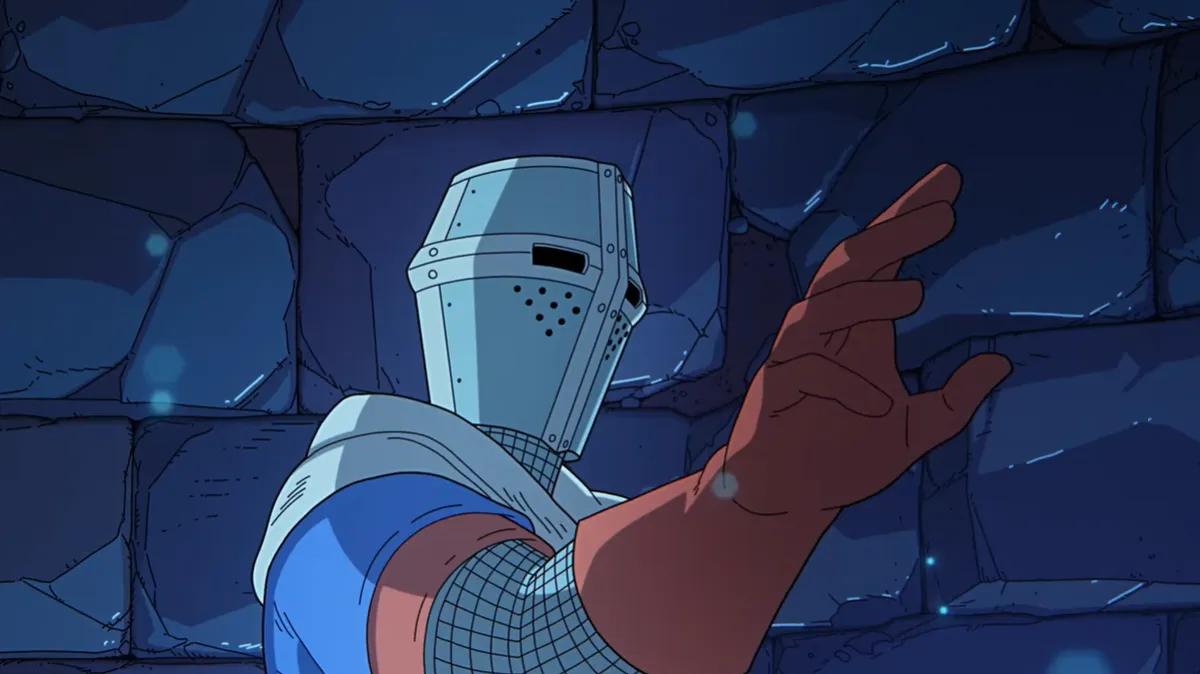
SteamEsoteric Ebb drops a bumbling government cleric into a fantasy city five days before its first election, hands the player a ruined spellbook, and asks them to solve a bombing. Developer Christoffer Bodegård built the game on modified D&D 5th Edition rules, filtered through the narrative-first design of Disco Elysium, and published it through Raw Fury on PC in March 2026. The result runs roughly 15 to 30 hours, depending on build choices and side content. It costs $25.
Esoteric Ebb was played on Steam and reviewed after that.
A Cleric Fished From the River
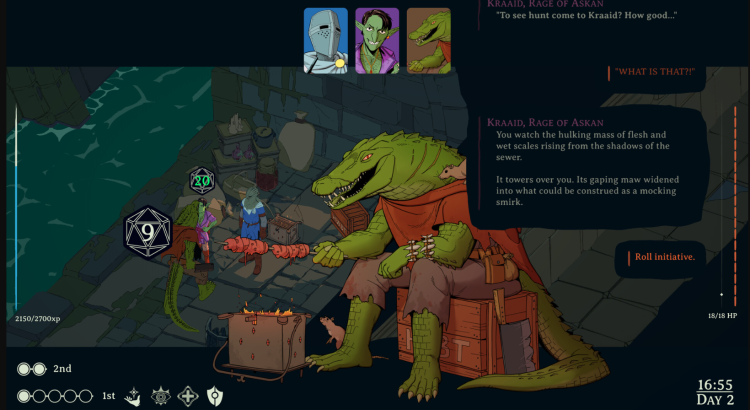
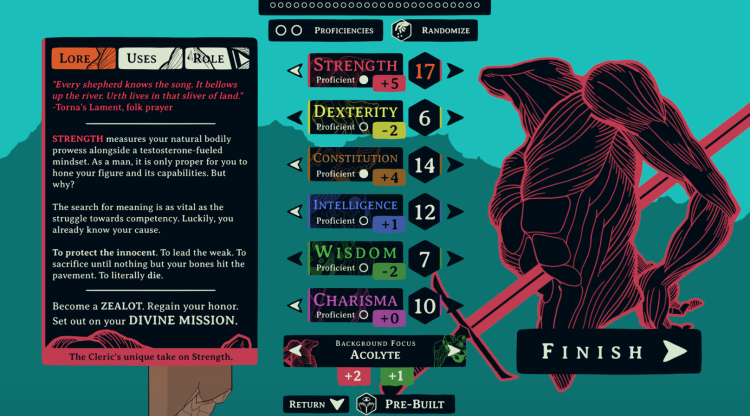
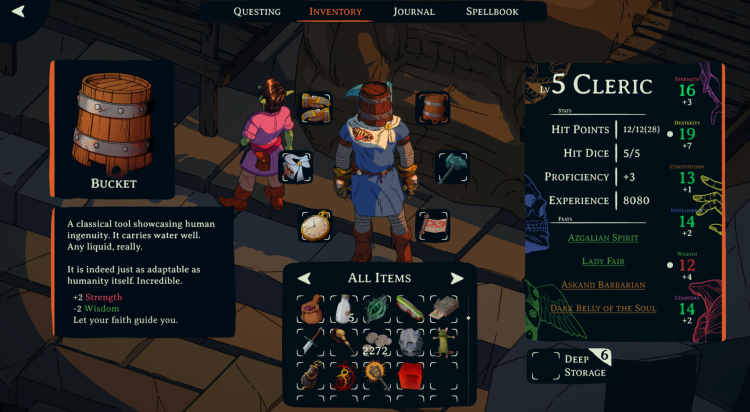
The player character wakes on a mortician's slab after being pulled dead from a river and resurrected. He remembers who he is — an Urthguard, a cleric of a god who died 30 years prior — but not who pushed him in. A tea shop in the district of Tolstad has exploded, and the magistrate wants answers before the city of Norvik holds a referendum that will decide its political future. Three factions compete: the nationalist Party of Urth, the deep-pocketed Freestriders, and the dwarven-born egalitarian Azgalists. Character creation lets the player set origin and stats across six D&D attributes, rolling a cleric who can later insist through dialogue that he belongs to another class entirely. The character sheet updates to reflect it — the game calls one such path the "Dick-Ass Rogue." Rogues, druids, warriors, and hidden classes unlocked through NPC conversations are all available paths. As a canonical "arcane cleric," the player character also has access to wizard spells, and the game treats him as a preternatural magical talent without pushing chosen-one territory. Time advances only when the player talks to people, and each of the five days ideally ends with an eight-hour-long rest, though all-nighters appear possible. An exhaustion system lowers health, increases check difficulty, and eventually kills the cleric outright.
Dice and Psyche
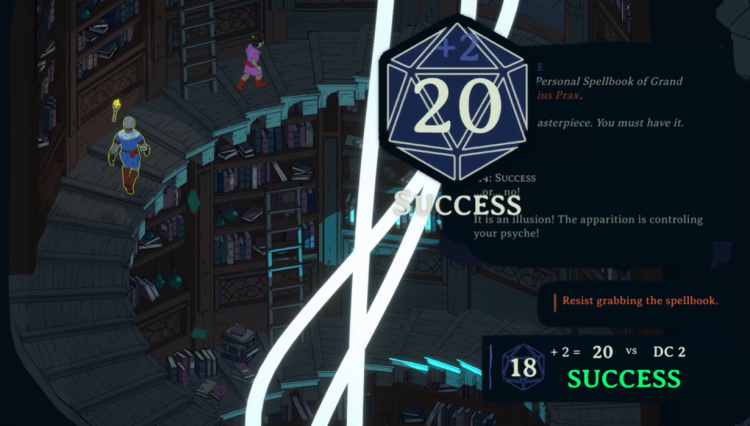
Every check runs against the player's raw ability bonus plus a proficiency in two chosen areas, a significant simplification from Disco Elysium's 24 discrete skills. Constitution alone covers the equivalent of Disco's Endurance, Shivers, and Half-Light. The six attributes speak directly to the player during dialogue, and their personality shifts depending on point investment. High Strength sounds like a stern, quest-loving paternal figure. Low Strength turns into a bootlicking authoritarian urging the player to bow before power. High Intelligence channels a deranged archwizard pushing to revive ancient magic empires. Low Intelligence chimes in with "can't think of one, sorry" or outright false information. Perceiving NPCs requires a "behold" check themed to each character — Dexterity for the rogue companion Snell, Strength for the angel Ettir — and higher rolls reveal alignment, attributes, and hidden secrets. One high-DC check unlocked a seemingly optional conversation containing a major plot reveal.
Spells, Scrolls, and Grease
Spellcasting operates on scroll-based learning, meaning the player can only acquire spells found in the world rather than selecting from a menu. Spells must be prepped at altars scattered across the map. The system mixes direct bonuses to rolls and damage with puzzle-solving utilities: Mage Hand to pull items from a gelatinous cube, Druidcraft to reveal hidden forest sprites, Speak with Animals to interrogate a telepathic ant. Combat encounters play out through text and dice rolls rather than animation, and the largest fights rival the complexity of Disco Elysium's climactic Tribunal sequence. Companion presence, spell preparation, initiative order, and prior dialogue choices all feed into these encounters. An early bridge ambush by an assassin stumped multiple reviewers until they noticed the spell Grease highlighted during battle — casting it produced an instant environmental knockout. The game tracks seemingly minor items across its full runtime. One reviewer carried a broken magic item through the entire playthrough and was eventually offered the option to use it as a makeshift trap against a late-game boss.
The Election and Its People
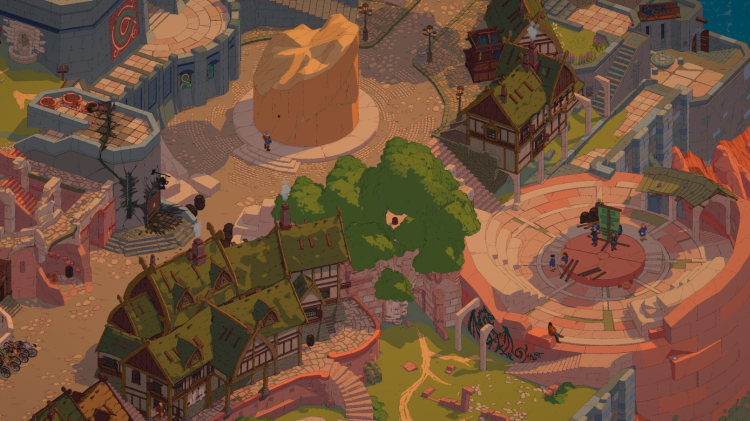
Norvik's referendum anchors the game's political system. The player can ask virtually every NPC — primary, secondary, tertiary — who they plan to vote for. Repeatedly identifying as apolitical draws withering disdain from fellow citizens, including dwarves fighting for labor rights and the player's own companion. The Azgalists function as the clear progressive option but are portrayed as annoying serial losers, a deliberate parallel. The Freestriders use money to muscle toward victory. The nationalists carry the weight of founding-era governance and hardened attitudes. Even the cryptofascist faction advocating for a return to magelord rule gets one supremely likable advocate. Political alignment shifts through verbalization — the more the cleric identifies with a position aloud, the more it shapes his stats and story. The primary companion, Snell, is a goblin rogue with an understandable distrust of humans, especially the Urthguard. Also available is Ettir, an angel of the "terrible and unfathomable" variety who met the cleric's god personally. She has no normal eyes — instead, a rotating ring of dozens of eyes functioning as a halo, a riff on biblically accurate angels. A tough Charisma check lets the player ask her on a date. I think the game's sharpest trick is making the player feel genuine shame for indifference, then earned relief when the cleric finally commits to a cause. At major quest conclusions, the player enters long conversations with their own attributes, processing events and selecting a "feat" from multiple possible takeaways — a hybrid of D&D feats and Disco Elysium's Thought Cabinet.
Comedy, Camp, and One Bad Joke
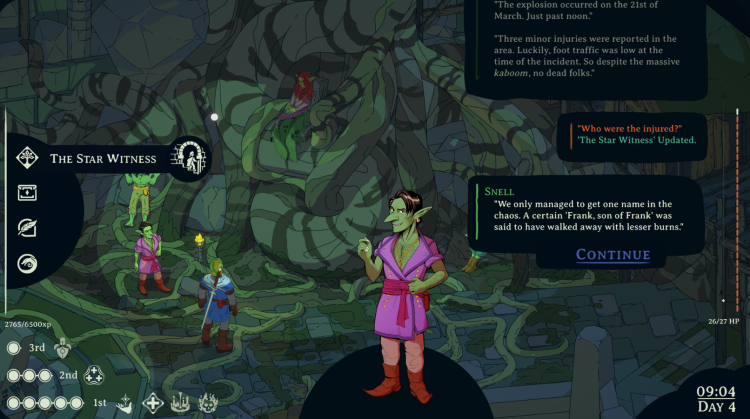
The writing operates at a density few games attempt. Cat-people speak Spanish. Clerics ride bicycles. A sphinx drinks river wine in the center of a tavern. The game's calendar establishes that the story takes place in March, the one normal month name — the remaining nine use invented fantasy names. The setting itself resists easy mapping: some characters believe the world is a globe, but the prevailing theory describes a hollow dome, a single hemisphere with landmasses on the outside. The game's version of the Underdark sits on the inside of that hemisphere, and digging deep enough hits a gravity flip where descent turns to climbing. A tooltip system lets the player click terms in dialogue to pull up encyclopedia-style summaries of world history and theology, delivering worldbuilding without halting conversation. A "feat" system awards gameplay buffs tied to narrative themes after completing objective sets, and these can be swapped throughout the game for build flexibility. The humor runs from situational comedy (the cleric fails a check while admitting something embarrassing and dies from it) to political satire (a pile of smuggled goods includes the esoteric equivalent of Ozempic). Terry Pratchett, Terry Gilliam, Shrek, and The Venture Bros. all register as reference points across the three source reviews. The writing falters in spots. A corridor sequence involving cat-people in the catcombs drags in execution. Stretches of banter occasionally lose the tension needed to hold the game's tone together. One specific misstep drew sustained criticism: a lore book listing the world's peoples — all invented fantasy folk types — ends with "the Japanese," described with the kind of hyperoriental mystique that reduces a real culture to exotic set dressing inside a setting that otherwise handles racism through direct, thoughtful subplots about second-class citizenship and discrimination against birdfolk. The developer likely intended it as self-aware satire of western fetishization of Japan. It lands as sloppy and self-indulgent, and omitting it would have cost the game nothing.
Rough Edges and Reactivity
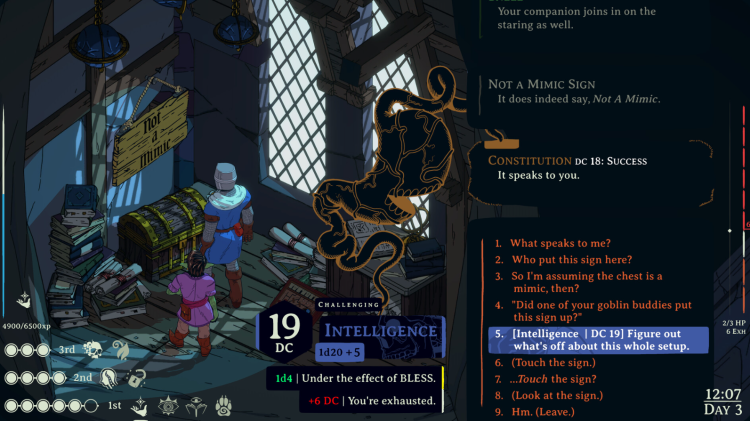
The UI clutters on gamepad, particularly during inventory management when swapping gear for difficult ability checks. Typographic errors stand out in a text-heavy game. Two feats shipped bugged in the review build — one failed to apply its effect, another swapped the player's selection for a different option. Pathfinding with analogue controls occasionally misbehaves. These are minor problems against the game's core strength: reactivity. An achievement exists for solving the case and reaching the minimum good ending without entering the bombed tea shop. NPCs remark on class and political choices. Pickpocketing works on most major and some minor characters. One reviewer pickpocketed reward money from one quest-giver while helping the rival faction, double-dipping on payouts. A failed pickpocket attempt on a friendly undead knight triggered a unique conversation where the knight caught the cleric's hand and nearly broke his wrist. I find fewer than a handful of games in recent memory that track player choice this granularly across 15 to 30 hours of content built by a single developer.
Verdict
Esoteric Ebb takes the Disco Elysium template, rebuilds it on D&D 5th Edition bones, and fills it with a fantasy world strange and specific enough to stand entirely on its own. Esoteric Ebb is a 9/10 game.
Pros:
- Reactive design tracks minor choices, items, and dialogue across the full runtime.
- D&D spellcasting and scroll-based learning create genuine puzzle-solving depth.
- Political alignment system ties mechanical consequences to verbal self-identification.
- Writing sustains comedy, pathos, and dense worldbuilding without collapsing under its own weight.
Cons:
- UI clutter and inventory management on gamepad, occasional bugs in feats and pathfinding.
Esoteric Ebb ships at $25 for a game that multiple critics compared favorably to one of the most celebrated RPGs ever made. It delivers a reactive, funny, politically engaged RPG built almost entirely by one developer, with enough alternate paths, builds, and political alignments to justify a second playthrough before the credits have finished rolling. Anyone who cares about the genre should play it.


 Successfully copied... Thank you for sharing our content!:



5% deposit bonus up to 100 gems

a free Gift Case





EGAMERSW - get 11% Deposit Bonus + Bonus Wheel free spin


EXTRA 10% DEPOSIT BONUS + free 2 spins

3 Free Cases + 100% up to 100 Coins on First Deposit


5 Free Cases, Daily FREE & Welcome Bonuses up to 35%

3 free cases and a 5% bonus added to all cash deposits.

+5% to deposit




Comments