




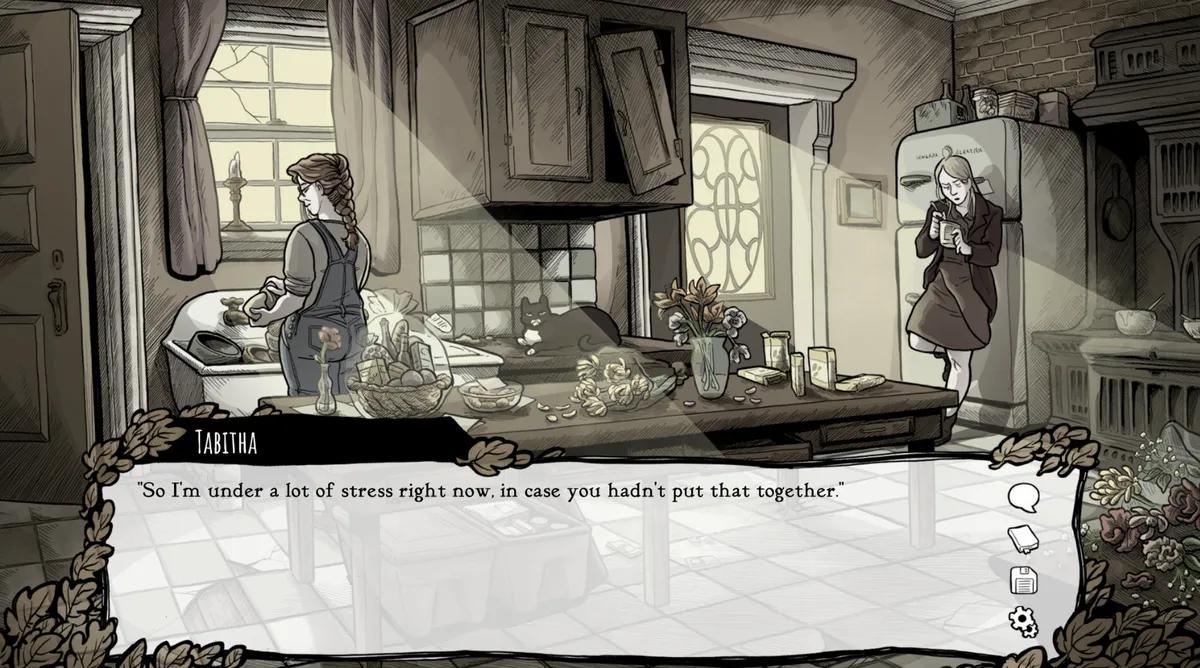
Scarlet Hollow: How Two-Person Horror Game Forced the RPG Genre to Look at Itself
Black Tabby Games did not set out to make Scarlet Hollow. Abby Howard and Tony Howard-Arias — the two-person studio behind the horror visual novel — originally treated it as a warm-up for the project they actually want to build, which remains unannounced. Five years after the first chapter launched, the game carries a 98% positive rating on Steam and has reopened a problem the RPG genre has mostly avoided: what does it mean when story choices carry actual weight?
The Polygon’s text by Josh Broadwell frames Scarlet Hollow against the landscape of narrative RPGs — the Larians, the BioWares, the isometric RPGs built on the promise of consequential decision-making that frequently deliver mechanical workarounds instead. I read that framing as broadly right, though I'd stop short of calling Scarlet Hollow a harbinger of genre-wide change: the RPG genre establishes its role-playing contract before the story starts — at character selection, at stat allocation — and Scarlet Hollow operates in different territory altogether.
Howard-Arias had shut down a nonprofit-facing startup before turning to games. Howard, a graphic novelist, was dissatisfied with a body of work she described as too kid-focused. A conversation about visual novels drew them into the same project.
"Neither of us knew what we were going to do next with our careers," Howard-Arias told Polygon.
"I wasn't in love with my next book. A lot of my work was kind of kid-focused. And I really like horror, I really like complicated subject material, and I wanted to continue to pursue that."
— Abby Howard
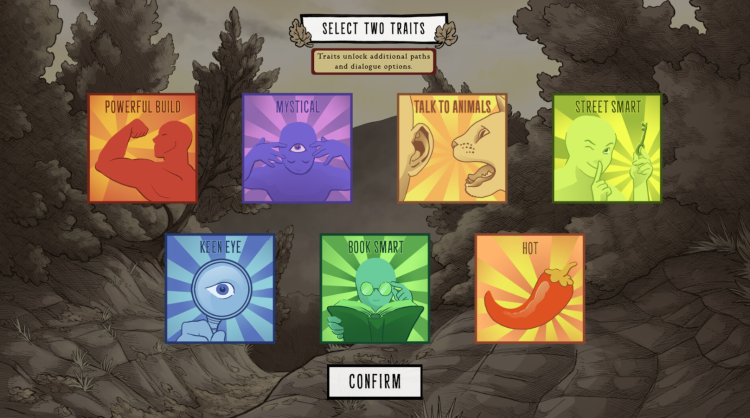
The game follows a young adult returning to rural North Carolina for a funeral. Technically a visual novel, it runs on systems closer to a traditional RPG: traits selected at the start alter available outcomes, and the game tracks choices and consequences in ways Howard-Arias compares to Larian Studios or classic BioWare titles. Early builds included an inventory system he eventually scrapped, as adding nothing beyond familiarity. An earlier version modeled itself on dating simulators, routing character stories toward increasingly dark outcomes. Both got discarded. What remained: choices, consequences, and horror.
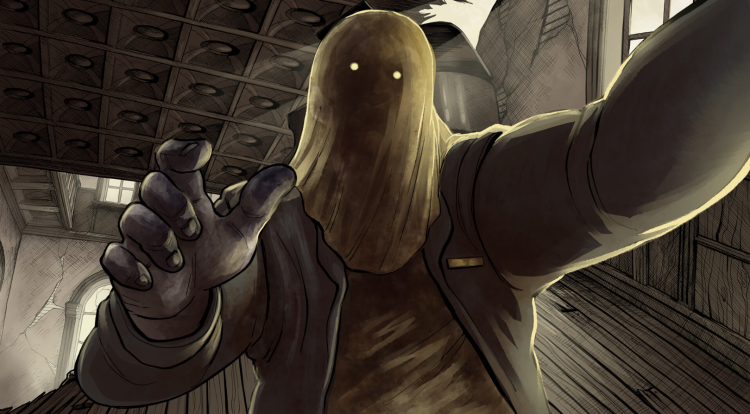
Howard's affinity for horror developed at home — her parents raised her on the genre — and became her primary lens for storytelling. She draws a direct line to Shirley Jackson, particularly The Haunting of Hill House and We Have Always Lived in the Castle, in constructing a setting where the gap between public persona and private reality generates dread. In Scarlet Hollow, certain neighbors are literal monsters, a sneaker-wearing god trails the player without moral alignment, and no character offers a clean real-world parallel. The design resists labeling.
"That level of abstraction, just the slight shift from the normal to something that is off, is really the draw for me," Howard said. "It's a nice way to kind of safely distance yourself from topics by making them more abstract, by adding a supernatural element that does not exist in the real world, so you can process the real world in a way that's a little bit safer."
— Abby Howard
Howard-Arias points to Dragon Age: Origins as the specific example he wanted to move away from: a quest built around a genuine moral dilemma — the possessed child — with an item-based workaround buried in the mechanics for players who know where to look. He identifies the same structural problem in Mass Effect, where choosing evil options results in fewer interactions and more deaths rather than any examination of what those choices mean to the character making them.
The fifth chapter, released in February, tested Black Tabby's commitment to the approach. A specific chain of events can push Stella — one of the first friendly characters the player meets — toward serious harm. A vocal section of the audience concluded this made Stella inherently villainous. Howard and Howard-Arias treat that reaction as inevitable rather than correctable.
"You're going to upset people, and you just have to take it. Which, I think, is a very healthy way to create things, because otherwise you always wind up at the beck and call of someone."
"And if you strive as a creator to make every single person happy, are you saying anything at all?"
— Tony Howard-Arias
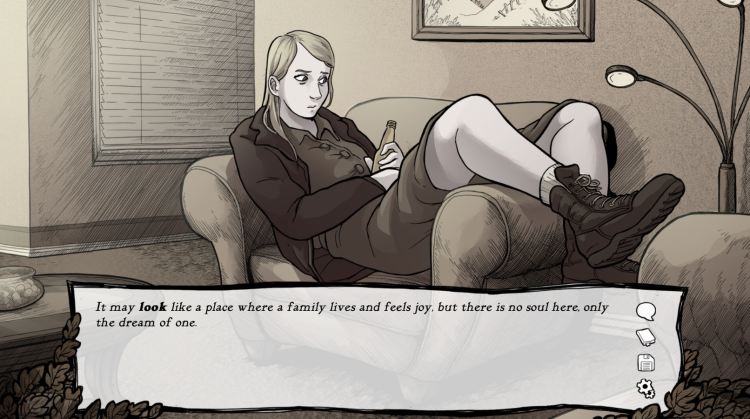
Most players engage differently. The subreddit hosts lengthy analytical essays and longer replies. Howard drew every image by hand — thousands of them. She and Howard-Arias share writing credit across thousands of lines of dialogue. No voice cast, no outside staff.
I think what Scarlet Hollow actually signals is not a genre redefinition but a pressure building inside more traditional and action RPGs — toward story branches where choosing X places you genuinely far from Y across the entire sequence of events, not just at the ending. That tendency is visible and real. Whether it hardens into a new expectation for the genre or stays a characteristic of a particular group of developers is still open.
"There's this mentality that I feel must come from too many years of disappointment and rug pulls, where people have this attitude of 'well, you can't expect your choices to actually matter in video games. That would be too hard,'"
"I feel very good about being able to leave a definitive statement with Scarlet Hollow. This was an extremely difficult project, but we are a two-person team, and we did it. And everyone else is gonna have to look at this and know that it's possible, and maybe that'll push us to really embrace interactivity and agency within crafted stories."
— Tony Howard-Arias
If you want a practical answer to which RPGs currently deliver on the genre's promise of divergent paths and real consequences, a current roundup of the best RPGs to try right now covers the widest available range across the genre, from sprawling open-world titles to narrative-first entries that prioritize the cost of each decision.


 Successfully copied... Thank you for sharing our content!:



5% deposit bonus up to 100 gems

a free Gift Case





EGAMERSW - get 11% Deposit Bonus + Bonus Wheel free spin


EXTRA 10% DEPOSIT BONUS + free 2 spins

3 Free Cases + 100% up to 100 Coins on First Deposit


5 Free Cases, Daily FREE & Welcome Bonuses up to 35%

3 free cases and a 5% bonus added to all cash deposits.

+5% to deposit




Comments