




The Seven Deadly Sins: Origin Builds a World Worth Seeing and a Game Worth Questioning
 Steam
Steam Review
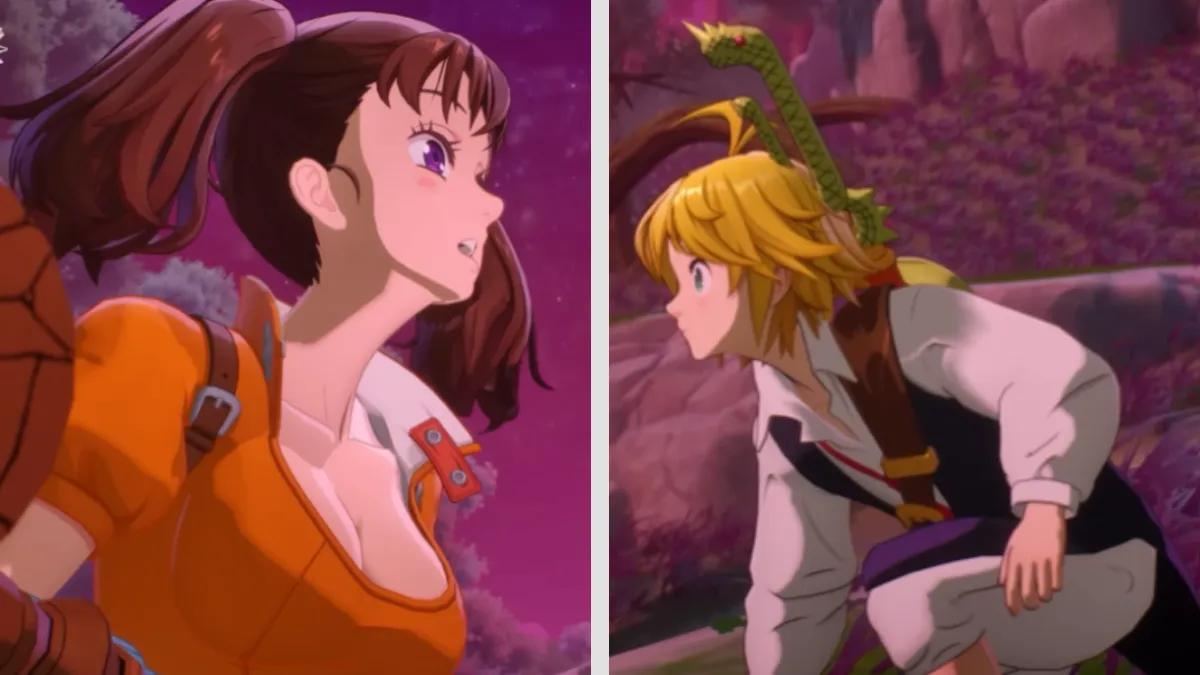
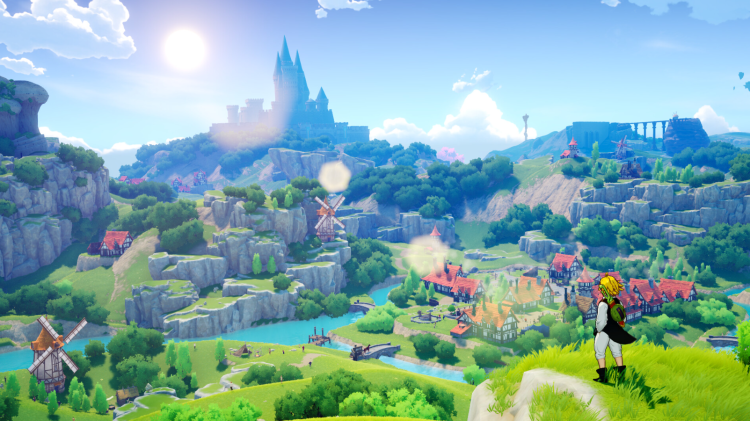
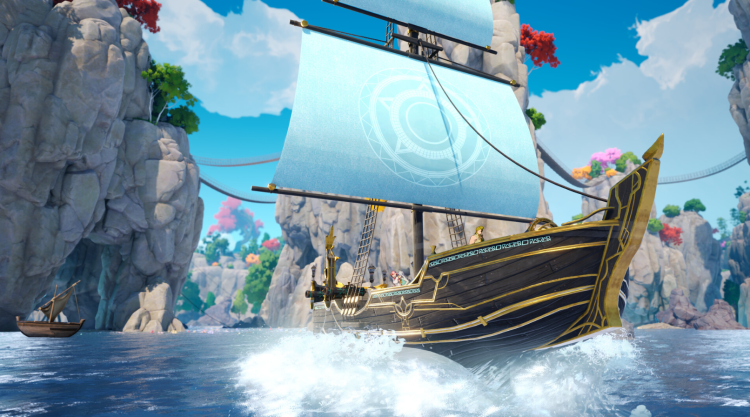
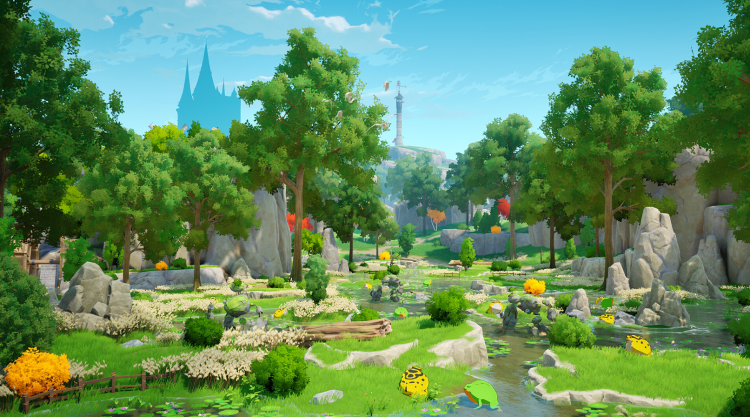
Netmarble drops players into a seamless open world covering approximately 30 square kilometers. The Kingdom of Liones, the Fairy King's Forest, dragon-bone graveyards, pastoral glades, and castle grounds all appear without loading screens between them. The visual style stays faithful to Yasuhiro Nightow's original manga aesthetic — cel-shaded, colorful, and dense with detail at a distance. Character models carry expressive animation during story cutscenes, and the in-game cinematics deploy dynamic camera work that makes combat abilities read more like anime sequences than button presses.
From the first hill, the map reads as a genuine open world rather than a corridor dressed in foliage. Treasure chests hide behind rock formations and inside elevated bird nests. Environmental puzzles gate certain collectibles. Fishing spots, crafting nodes, and cooking mechanics distribute themselves across the terrain. Early traversal rewards patience — players who detour from the golden path find materials that feed directly into potion crafting and equipment upgrades, which connect exploration to progression rather than treating it as decoration.
The technical side undercuts all of this. Rabbit NPCs move in synchronized loops, like synchronized swimmers who received the same script. Textures blur at close range, which becomes noticeable when the objective marker places the player against a wall or inside a cramped interior. Tristan's climbing animation does not sell weight or effort. Camera angles break in specific geometry configurations, requiring a full restart to resolve. These issues do not collapse the experience individually, but they compound across hours of play and chip steadily at whatever immersion the art direction builds.
A Story That Uses the Timeline Intelligently
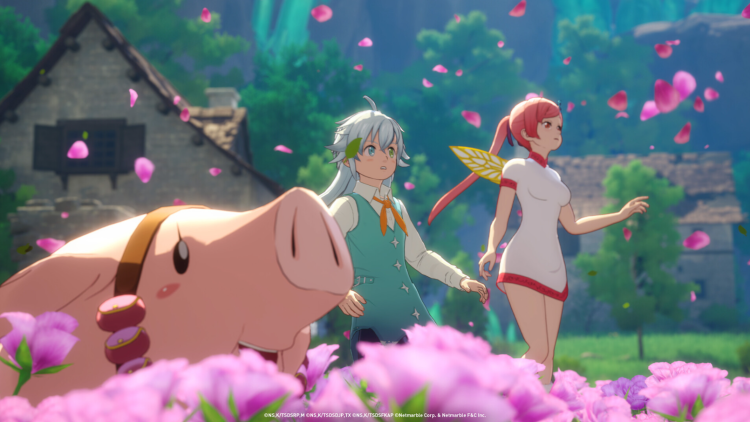
Rather than retelling the original Seven Deadly Sins arc, Origin positions itself as an original story set three years after the manga's conclusion and three years before the events of Four Knights of the Apocalypse. The gap is not accidental. It gives the writing room to introduce characters and events that cannot contradict established canon in either direction.
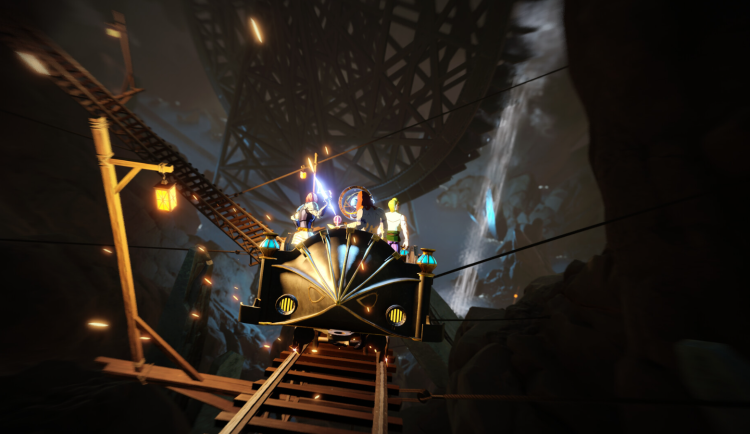
Prince Tristan of Liones and Tioreh, children of key figures from the source material, discover a hidden dungeon early in the game. Inside, they find the Book of Stars — an artifact capable of bending space and time. The Book functions as both a narrative device and a mechanical justification: dried lakes refill, characters who died in the original manga reappear, and timeline-displaced events create the game's central mystery. Locations from the source material now exist as traversable spaces rather than static backdrops.
The setup works for two distinct audiences. Fans of the anime recognize returning characters and understand the weight of encounters that the original story never made possible. New players encounter a self-contained RPG narrative with enough internal logic to follow without prior knowledge. The Book of Stars prevents the game from feeling like a greatest-hits compilation, though it does lean on that familiarity whenever the original story momentum slows.
The story holds attention in ways the broader gameplay does not. Tristan and Tioreh's dynamic moves with enough specificity to distinguish them from generic anime protagonists, and the time-collapse premise generates questions the game is in no hurry to answer cheaply.
Combat Built Well, Enemies Built Poorly
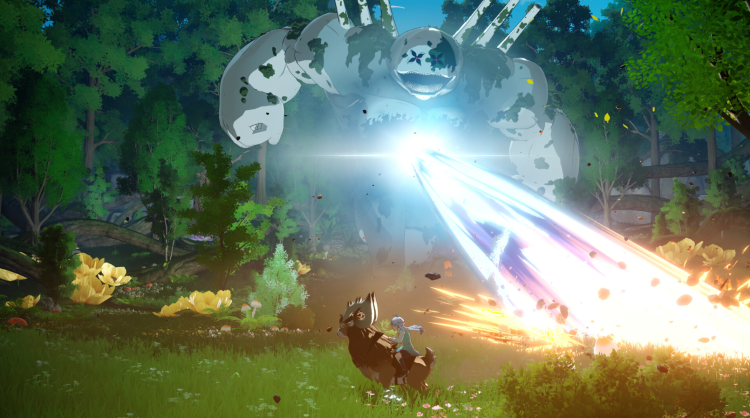
The combat system places four characters in a party with instant switching between them during fights. Each character carries a normal attack, two skills on cooldown, and an ultimate ability tied to a separate gauge that fills through sustained combat. Tag mechanics allow players to chain abilities between characters mid-fight, and certain pairings unlock synergy attacks — joint ultimates that combine gauge charges from two specific characters into a single, amplified sequence.
Tristan demonstrates the weapon-switching system most clearly. He can shift between dual blades and a greatsword mid-combat, changing his speed, reach, and damage profile depending on what the encounter demands. Tioreh's skill reduces enemy flame-attribute defense, which pairs with Tristan's flame-generating abilities to stack a Burst condition faster than either character manages alone. These synergy relationships reward deliberate party construction without making the system impenetrable to players who prefer to experiment first.
The problem is that the enemies provide no meaningful resistance to any of this. Standard enemies patrol fixed zones, detect the player on proximity, and chase without varying their attack rhythm. They do not adapt, reposition strategically, or pressure the player into spending defensive resources. Boss encounters arrive with imposing visual designs — the Albion, for instance, pulls directly from the source material — but their patterns reduce to a loop: chase, attack, expose a weak point, repeat. One early boss fight requires the player to climb the creature Shadow of the Colossus-style and strike a glowing orb on its torso. The stamina bar limits how long the player can remain on the creature's body, which forces idle waiting periods between climb attempts. The pacing suffers for it.
I find the gap between the combat system's mechanical ceiling and the enemies' inability to push the player toward it genuinely frustrating — not because the fights are broken, but because they leave the most interesting parts of the system untouched. Mashing through the attack sequence reaches each checkpoint as reliably as any considered approach. Nothing in the enemy design rewards mastering the tag interrupt system, which can stagger certain bosses out of telegraphed patterns but never becomes necessary.
Exploration: Genuine Freedom, Hollow Returns
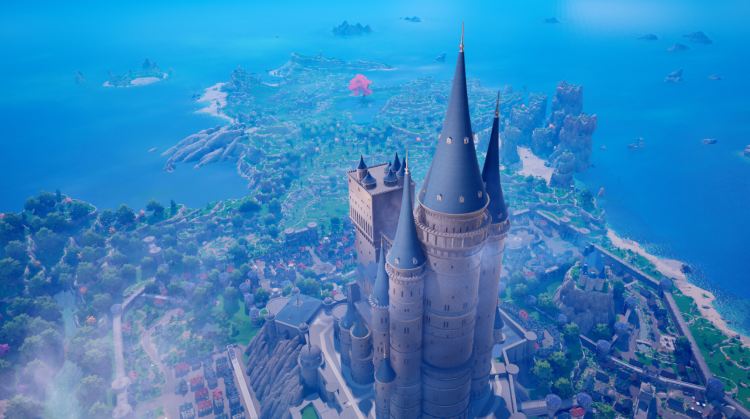
Movement abilities unlock early. Players gain access to climbing, swimming, a wooden glider for aerial traversal, and a mount in the form of Hawk — the garbage-eating pig from the original series — which accelerates travel along roads. The stamina bar governing climbing and gliding is described across multiple play sessions as more generous than expected, which allows players to reach elevated positions and bypass conventional routes without heavy resource investment.
Warp Points function as fast-travel anchors and map-reveal triggers. Reaching them requires physical traversal, which encourages genuine exploration rather than menu navigation. The system works. Early hours reward the player who strays from the marked path with map completion, hidden treasure, and the occasional puzzle that uses character field skills — Jericho's cold-air ability freezes water surfaces for crossing, while Slader's intimidation skill converts to a stealth mechanic that suppresses enemy detection.
The problem surfaces once the initial map density thins. Missions repeat their structural template — reach location, clear enemies, collect item, return — without introducing new variables. The open world stops generating questions and starts generating task lists. Progression gates lock certain areas behind mandatory mission completion and specific item acquisition, which forces players into the mission queue before any genuine exploration of new regions. The world remains visually varied — environments shift from dense forest to coastal terrain to castle interiors — but the activities within those environments do not change with the scenery.
Gacha Architecture and What It Costs
The primary currency for pulls is called Star Memory, earned through gameplay and spent on randomized gear and new characters. Over fifty-plus hours of play, the pull count from organic earnings lands in the single digits. The gap between time invested and premium currency returned is not competitive with peers in the genre. Pulls frequently return duplicates or gear outside the player's current team composition.
The shop interface appears without fanfare after a failed pull — a direct transition from the results screen to a payment prompt. The mid-to-late game introduces additional currency layers, upgrade systems, and resource conversion menus that multiply the friction between play and reward. New characters arrive through these systems rather than through story beats or milestone completions, which separates character acquisition from the narrative and reduces the roster to a monetization surface.
The game does not require spending to progress through the main story. That distinction matters and should be stated plainly. But the organic pull rate removes any practical sense of momentum from the gacha loop. Completing fifty hours of content without accumulating enough currency for a meaningful pull sequence means the system functions primarily as a pressure mechanism rather than a reward structure.
Score & Verdict
The Seven Deadly Sins: Origin is a 6/10 game that earns its score through a strong visual presentation, an intelligently structured story, and a combat system with genuine mechanical depth — then spends that goodwill on repetitive mission design, technically unfinished traversal animations, and a gacha economy that returns almost nothing to the player who refuses to spend.
Fans of the source material will find value in the story's use of the timeline gap and the recreation of Britannia as a traversable space. Players without attachment to the IP encounter a gacha RPG that competes poorly against Genshin Impact on exploration depth and against Arknights: Endfield on systemic creativity. I think the version of this game that existed at the closed beta stage — pre-launch, still tuning its balancing and resource systems — may have been closer to what the full release needed to be.


 Successfully copied... Thank you for sharing our content!:



5% deposit bonus up to 100 gems

a free Gift Case





EGAMERSW - get 11% Deposit Bonus + Bonus Wheel free spin


EXTRA 10% DEPOSIT BONUS + free 2 spins

3 Free Cases + 100% up to 100 Coins on First Deposit


5 Free Cases, Daily FREE & Welcome Bonuses up to 35%

3 free cases and a 5% bonus added to all cash deposits.

+5% to deposit




Comments