




Pokémon Pokopia Review: Ditto Takes Center Stage in the Franchise's Most Creative Spin-Off
 Review
 Nintendo
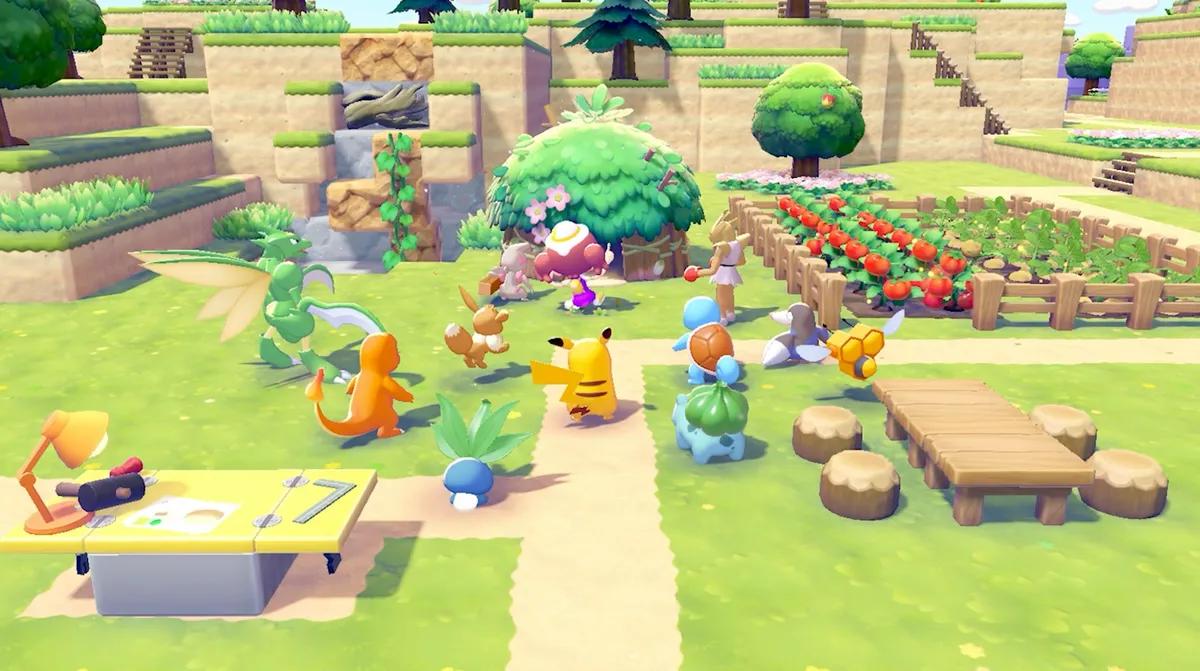
Pokémon Pokopia arrived on Nintendo Switch 2 on March 5, 2026, developed by Game Freak and Koei Tecmo's Omega Force — the studio also behind Dragon Quest Builders 2 — and published by Nintendo and The Pokémon Company. It retails for $69.99. The premise sounds unlikely on paper: you play as a humanoid Ditto wandering a post-apocalyptic wasteland, working to restore the land and draw Pokémon back to a barren world. What emerges from that setup is one of the most well-constructed entries in the franchise's long history of spin-offs.
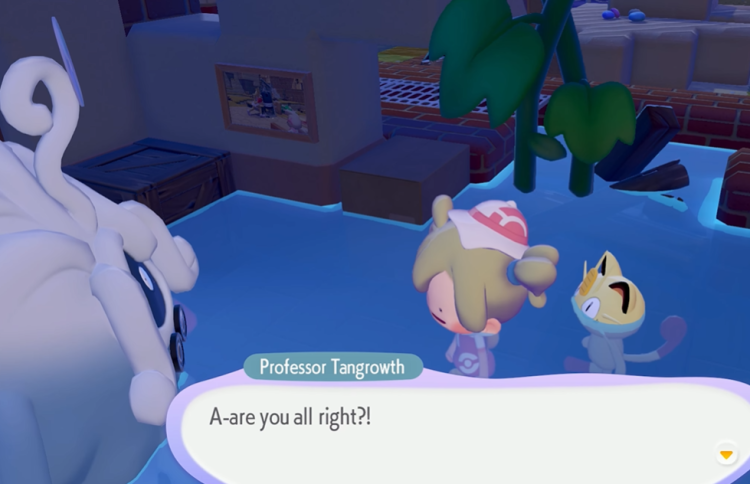
The story opens with Ditto waking alone in a ruined landscape, with no humans in sight and no explanation for the desolation. It assumes the form of its missing trainer and encounters the only other Pokémon present — a Tangrowth who has appointed itself a professor of human behavior. Together, the two establish the game's central objective: terraform the wasteland, build habitats, attract Pokémon, and eventually coax humans back to the world. It is darker in premise than the franchise's usual tone suggests, but Pokopia does not dwell on that darkness. It moves quickly into the work of rebuilding.
A Ditto Unlike Any Before It
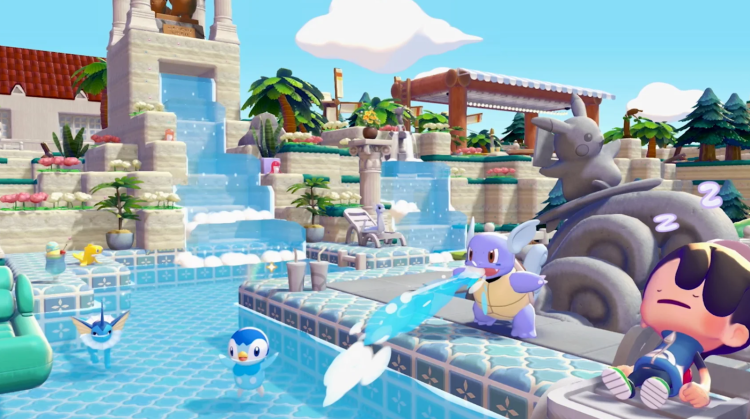
That work forms the spine of the entire game. The world consists of Minecraft-style blocks — soil, grass, stone, sand — layered with scattered debris, ruins, and environmental variety across several large biomes. Ditto can smash blocks with Rock Smash, grow grass with Leafage, water terrain using Splash, and eventually transform fully into other Pokémon through moves called Transformations. The most striking of these is Surf, which converts Ditto entirely into a Lapras. The transformations are not cosmetic flourishes. Each one serves a direct mechanical function: clearing paths, cultivating land, gathering resources, or unlocking access to new areas.
Game Freak and Omega Force built Ditto's imperfect transformation as a deliberate design choice. The humanoid form is unsettling in a precise way — dot-eyes that never change, fingers slightly too long, arms that flap loose when running. Ditto reverts to its blob form to squeeze through narrow spaces or to convince other Pokémon it is not human. Those small transitions reinforce what the game is actually doing: making you feel like a Pokémon navigating a world built for humans, rather than a human character inhabiting a Pokémon world. It is a distinction the Mystery Dungeon series never fully achieved.
Habitats, Comfort Levels, and the Loop That Holds Everything Together
The habitat system is where the game's deepest mechanics live. To attract a Pokémon, you must first construct a habitat suited to that species. Some are straightforward — four clumps of tall grass will draw certain Grass-types. Others demand specific furniture arrangements, particular atmospheric conditions such as humidity, and in some cases a working electrical supply. Habitat requirements are discovered through Pokémon traces scattered across maps, by completing tasks, or through direct experimentation. One habitat, the Grave Offering, is obtained by interacting with a grave marker. It works for Ghost-types.
Attracting a Pokémon does not end the process. Once a species arrives, you raise its Comfort Level by improving its habitat to match its specific preferences. Zubat needs dark, enclosed space. Bulbasaur wants light. Their habitats can overlap physically, which helps when species share preferences and creates friction when they conflict. You can view habitat boundaries by pressing an analogue stick, and relocating Pokémon is not difficult, but the overlapping system encourages spatial thinking from early on. Comfort Levels feed into an Environment Level, which unlocks additional items in the shop. The layering of these systems feels native to Pokémon without being mechanical in the franchise's usual battle-focused sense.
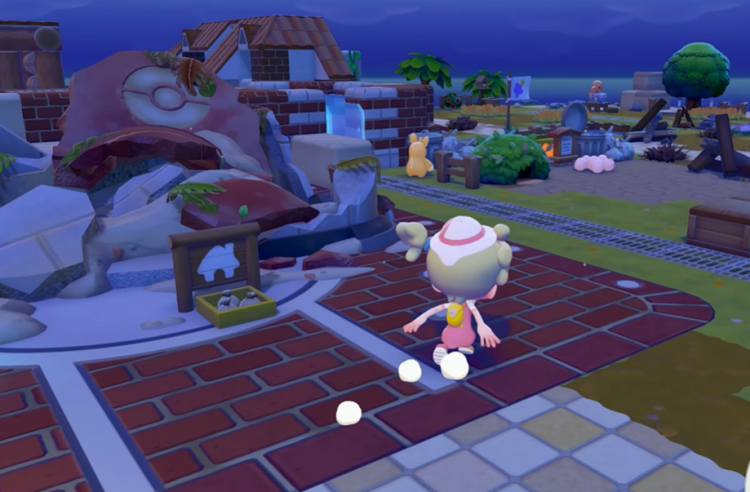
Each Pokémon also carries at least one skill: Build, Burn, Cut, Water, Grow, and others. Fire-types like Charmander operate furnaces to convert clay into bricks and ore into ingots. Water-types cover polluted blocks with soap so the terrain can be cleaned. You can bring up to five Pokémon along at any time to assist with terrain work and resource refinement. Some structures — cottages, windmills, habitat monuments — cannot be assembled without specific Pokémon skill combinations. Construction times range from ten minutes for a simple leaf den to a full in-game day for a metal-heavy structure. The game runs on a real-time 24-hour clock, kept out of the main interface and tucked into the menu, which keeps the screen clear while still making time a relevant strategic variable. Certain Pokémon only appear at night. Some buildings are only completed during periods when you are not actively playing.
Eurogamer noted that the clock mechanic initially seems minor but becomes a central planning tool, shaping decisions about which habitats to prioritize, which Dream Islands to visit on a given day, and when to return to long-dormant areas. Dream Islands are resource-rich maps you can revisit, but are limited to one per day, creating a quiet pressure to plan rather than grind.
Security cameras, purchasable from the shop, let you monitor habitats remotely without constantly returning to check on them. The freedom they provide for exploration is practical rather than decorative. A camera notification alerting you that a Pokémon has finally settled into a habitat you built days earlier produces a different kind of satisfaction than combat systems typically offer.
Constructing buildings goes beyond habitat support. Residential structures with at least three pieces of furniture inside can house Pokémon permanently, acting as an alternative to their natural habitat preferences. Each structure with walls, a roof, and a door also becomes a fast-travel anchor. You plant a Ditto flag and can warp there from anywhere in the game. The fast-travel system integrates cleanly into the building loop rather than sitting apart from it.
Building, Crafting, and Where the Controls Fall Short
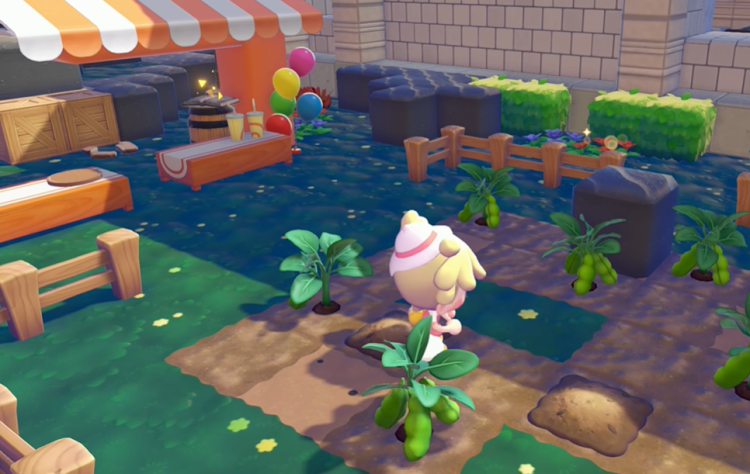
The block-based construction controls work well in most situations and become clunky in specific ones. Placing or breaking a single block above or below Ditto requires precise camera adjustment and analog stick manipulation. The early Splash ability, used to water dry terrain, only covers a plus-shaped area of five blocks at a time, which makes large-scale terrain work slow until the watering capacity increases. PCMag described these frustrations as minor and something players adjust to quickly — a fair assessment, though the precision problems are real enough that players attempting detailed builds will feel them before developing the right rhythm.
The broader connection to Dragon Quest Builders 2 is documented rather than speculated. Both Pokopia and DQB2 were developed by Omega Force and share the same director, Takuto Edagawa. The structural similarities are present — block-based terrain, crafting systems, the goal of restoring a ruined world through community building — but Pokopia eliminates combat entirely and places heavier emphasis on habitat design and resource management. There is no combat in the game at all. The cozy-game categorization is accurate.
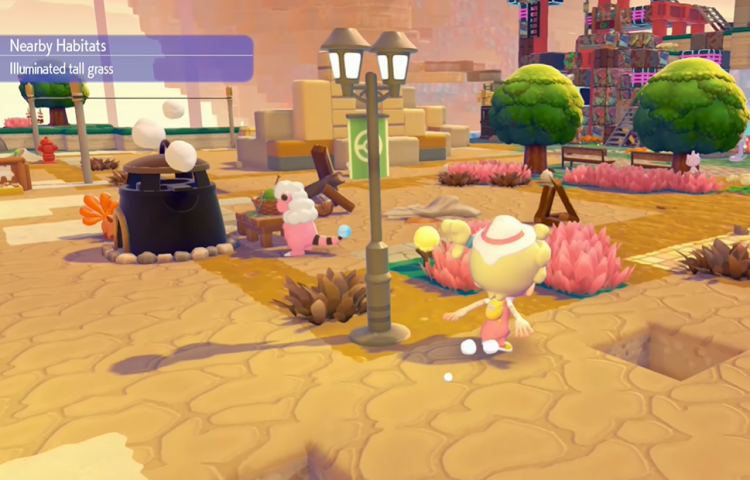
Outside the main campaign, the game unlocks an open creative zone — an empty map with several environments but no ruins or major obstacles to navigate around. It functions as a blank canvas for building outside the structured story zones. The main campaign itself runs through several biomes, each large enough to sustain extended exploration and each introducing new resources, new moves, and new Pokémon. Over 100 species are present, with representatives drawn from all nine generations. The nostalgia callbacks are calibrated carefully, landing as recognition moments rather than requiring franchise knowledge to appreciate.
I think the decision to center the game on Ditto rather than Pikachu is the most interesting creative choice Pokémon has made in a spin-off in years — Ditto has spent most of its franchise existence as a breeding utility, and giving it the lead role in a game where transformation is the core mechanic rather than a gimmick feels like a genuine match of character and design.
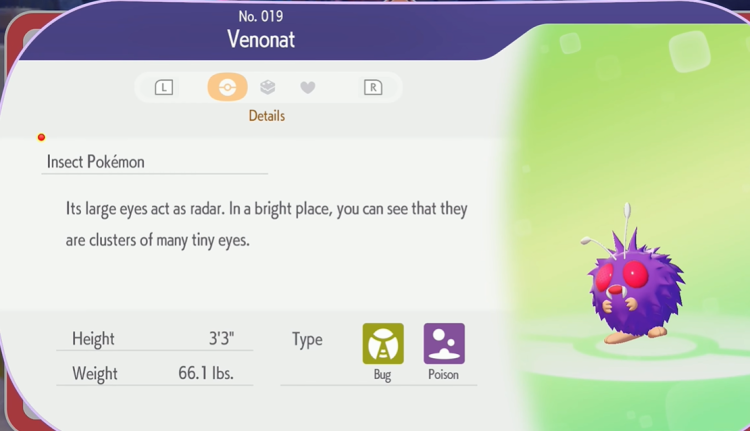
The visual approach fits the gameplay. The graphics use a squishy, block-adjacent aesthetic that suits the construction focus. Pokémon designs are rendered at close range without the distancing effect of battle camera angles, and the expressions respond to context — Bulbasaur using vines to form a heart shape when pleased, Pokémon becoming visibly distressed if they get lost. The unique species introduced for Pokopia, including Peakychu and Mosslax, sit alongside existing designs without jarring visually. Performance on Switch 2 runs close to 60fps in docked mode and around 30fps in handheld mode, with minimal stuttering even when the screen is populated with structures and Pokémon. Draw distance drops at range, with distant land masses visible only as blocky contours under fog, but that does not affect moment-to-moment play.
Multiplayer lets other players visit your constructed world through local wireless or online. Players who do not own Pokopia can still view creations using GameShare. Neither reviewer was able to test these features before launch.
A 30th Anniversary Entry That Earns Its Place
I see the broader implication of what Pokopia attempts: a mainline-adjacent Pokémon experience where the franchise's 30th anniversary is marked not by adding new combat systems but by removing combat entirely and rebuilding the interaction model around habitat, community, and terrain. That reorientation works because the replacement systems carry enough depth to sustain extended play. The habitat loop, the Comfort Level progression, the real-time construction and clock mechanics, and the creative zone together form a game that holds together under extended engagement rather than exhausting its mechanics within the first few hours.
Read also, Shift Up has teased that Stellar Blade may be heading to Xbox and Nintendo Switch following its successful 2024 PlayStation debut and subsequent PC port in 2025.


 Successfully copied... Thank you for sharing our content!:



5% deposit bonus up to 100 gems

a free Gift Case





EGAMERSW - get 11% Deposit Bonus + Bonus Wheel free spin


EXTRA 10% DEPOSIT BONUS + free 2 spins

3 Free Cases + 100% up to 100 Coins on First Deposit


5 Free Cases, Daily FREE & Welcome Bonuses up to 35%

3 free cases and a 5% bonus added to all cash deposits.

+5% to deposit




Comments